Fine Motor Skills Adding up to 100 Misc Worksheets for Ages 3-7
5 filtered results
-
From - To
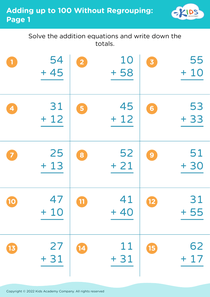
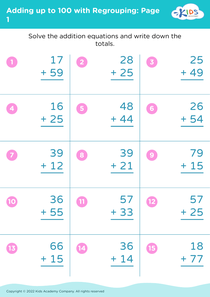
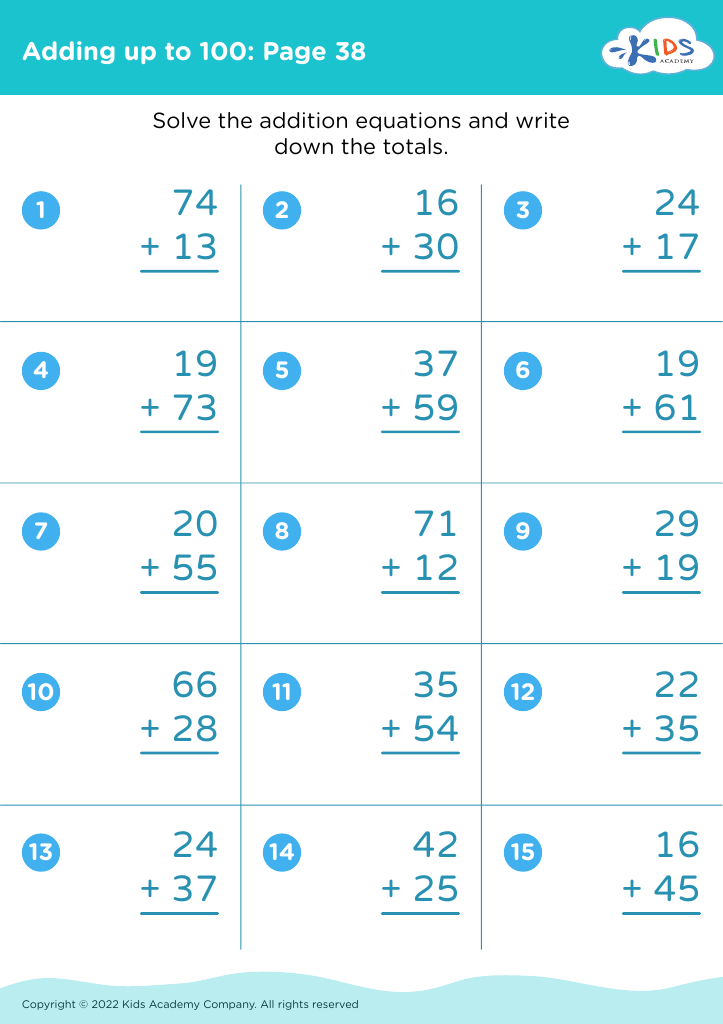
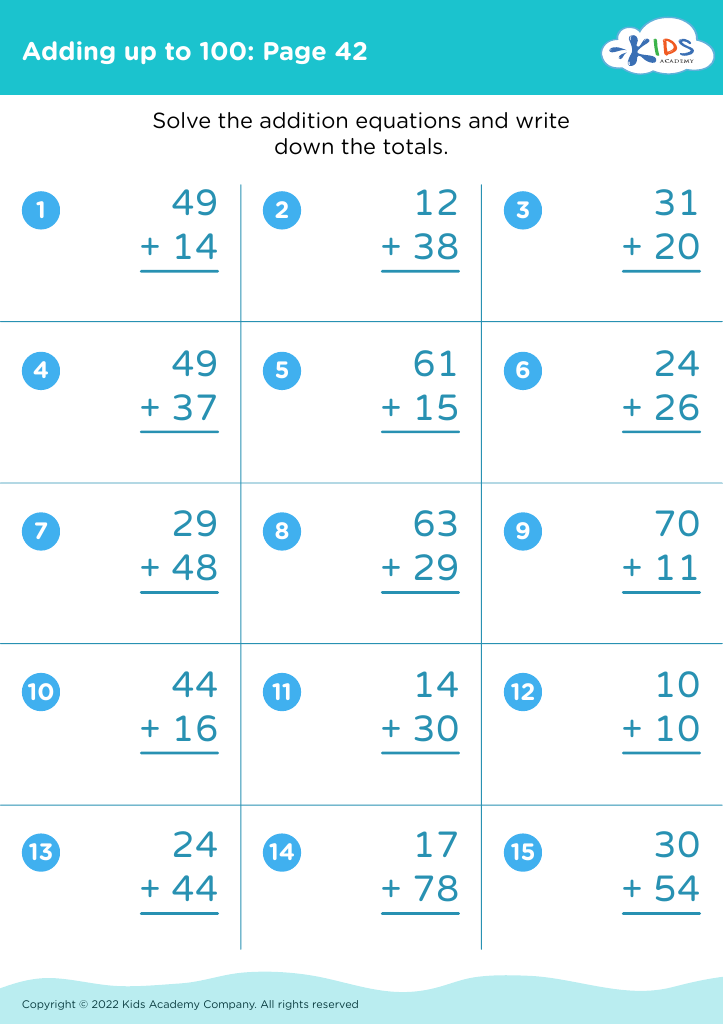
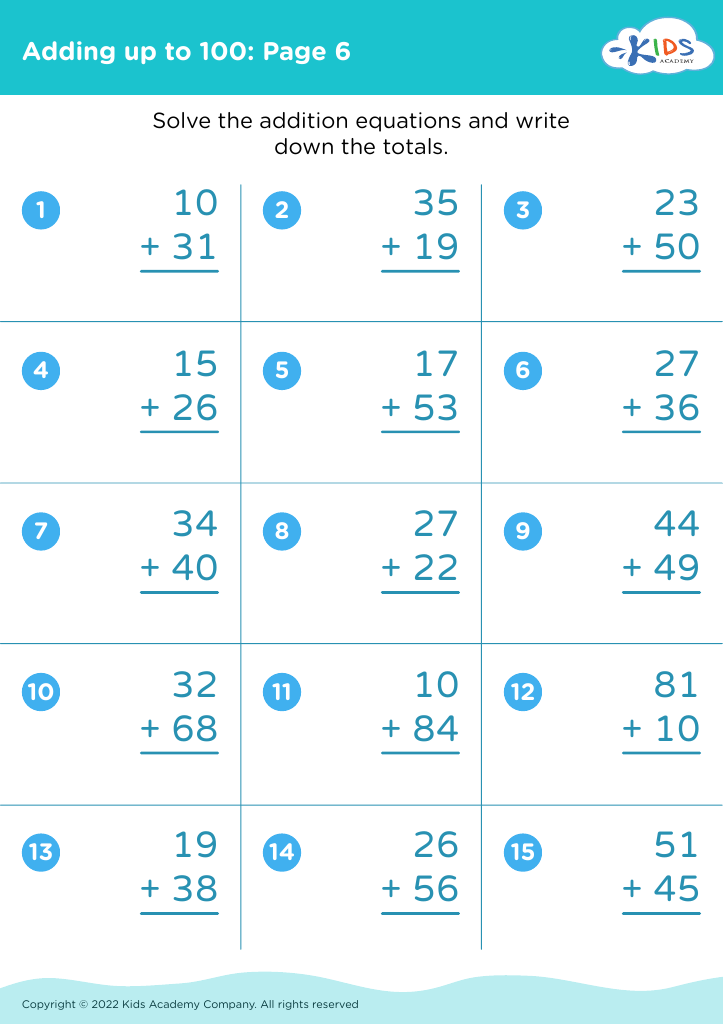
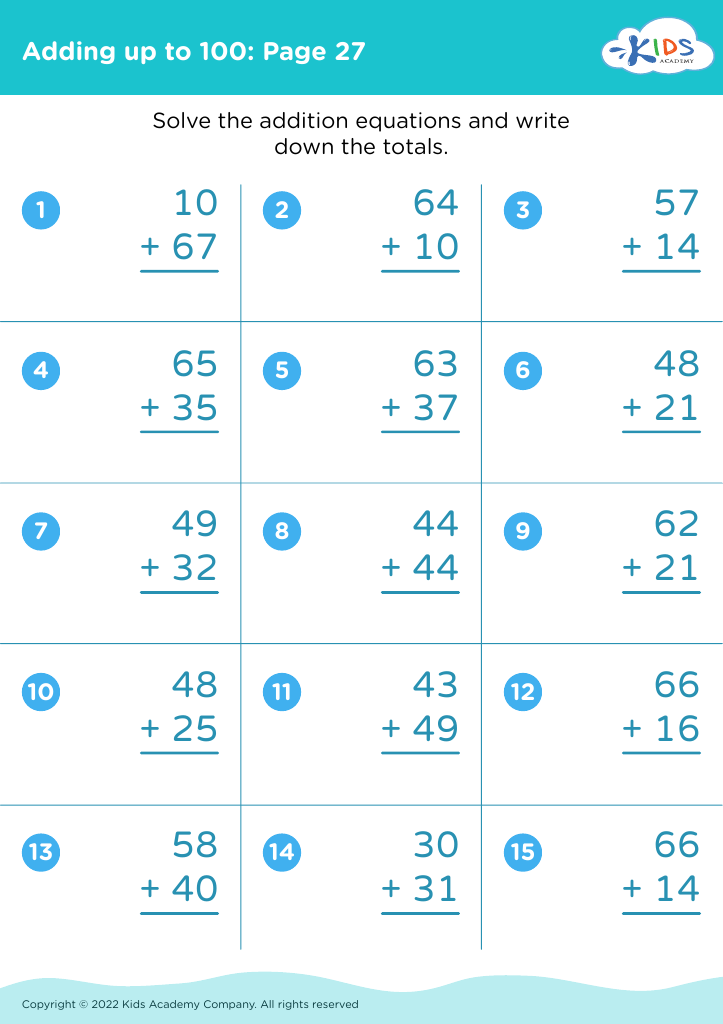
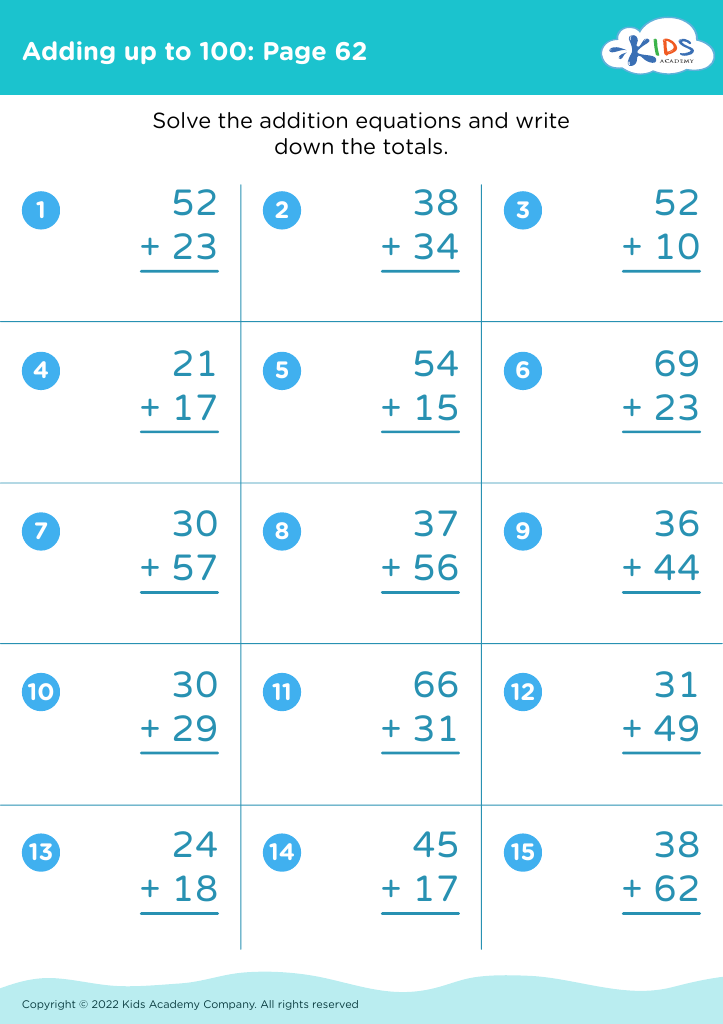
Enhance your child's fine motor skills with our "Adding up to 100 Misc Worksheets," designed for ages 3-7! These engaging printable worksheets combine math practice with activities that promote hand-eye coordination, dexterity, and control. Children will enjoy connecting dots, tracing numbers, and engaging in creative tasks that support their development while reinforcing their math knowledge. Each worksheet is thoughtfully crafted to keep young learners motivated and excited about honing their skills. Ideal for classrooms or homeschooling, these resources will help your child master counting and number recognition, all while building essential fine motor abilities. Download now and watch your child's confidence soar!


Fine motor skills are essential for children aged 3-7 as they lay the foundation for effective physical coordination and academic success. These skills involve the use of small muscles in the hands and fingers, crucial for tasks such as writing, drawing, buttoning clothes, or using utensils. When children develop fine motor skills, they gain greater control over their movements, enhancing their ability to interact with their environment and engage in self-care activities.
Parents and teachers should care about fine motor skills because they significantly impact a child's overall development, including cognitive and social-emotional growth. Activities that promote fine motor skills, such as cutting, gluing, or manipulating small objects, not only help refine hand-eye coordination but also boost concentration and problem-solving abilities. Furthermore, mastering these skills instills a sense of accomplishment and confidence in children, fostering positive attitudes towards learning.
Incorporating fine motor skill development into daily routines provides children with the tools they need to succeed in school and beyond. By prioritizing these skills, parents and teachers can empower children to explore their creativity, remain engaged in hands-on learning experiences, and prepare for future academic challenges. Promoting the development of fine motor skills is crucial for holistic growth during these formative years.