Fraction simplification Adding up to 100 Misc Worksheets for Ages 3-7
6 filtered results
-
From - To
Discover an exciting collection of Fraction Simplification and Adding up to 100 worksheets designed specifically for children aged 3-7! These fun and engaging worksheets help young learners grasp the essential concepts of fractions and basic addition skills. Ideal for preschool to first grade kids, our worksheets are perfect for both classroom use and at-home practice. Help your child build a strong mathematical foundation through vibrant graphics and interactive exercises that make learning enjoyable. Boost their confidence and understanding with Kids Academy’s thoughtfully crafted activities that turn challenges into triumphant learning moments.
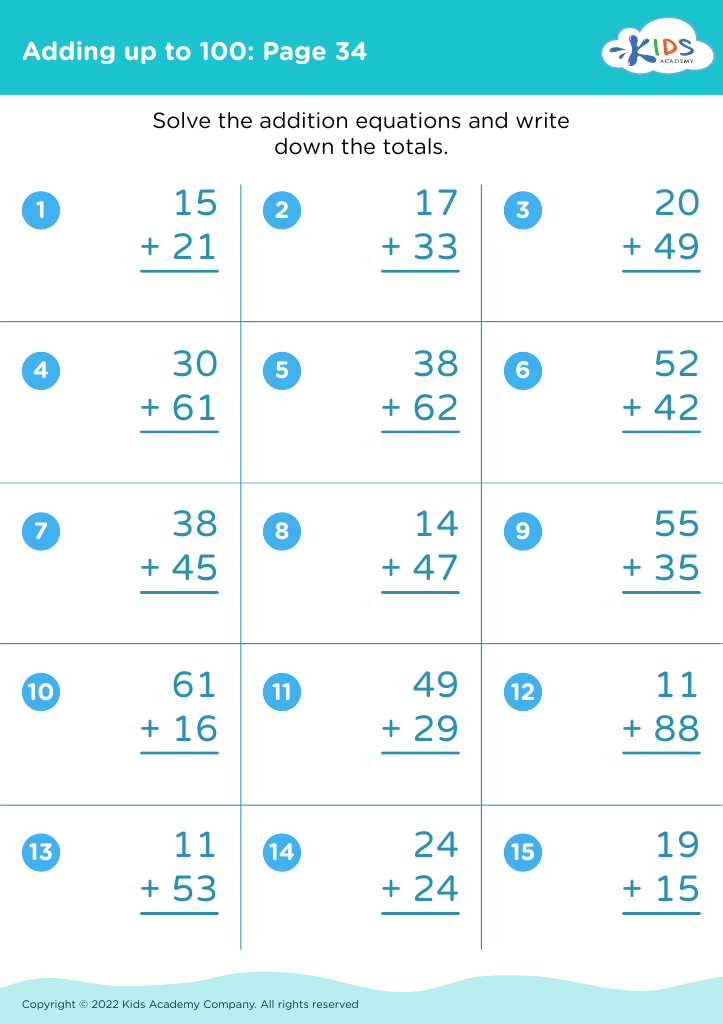
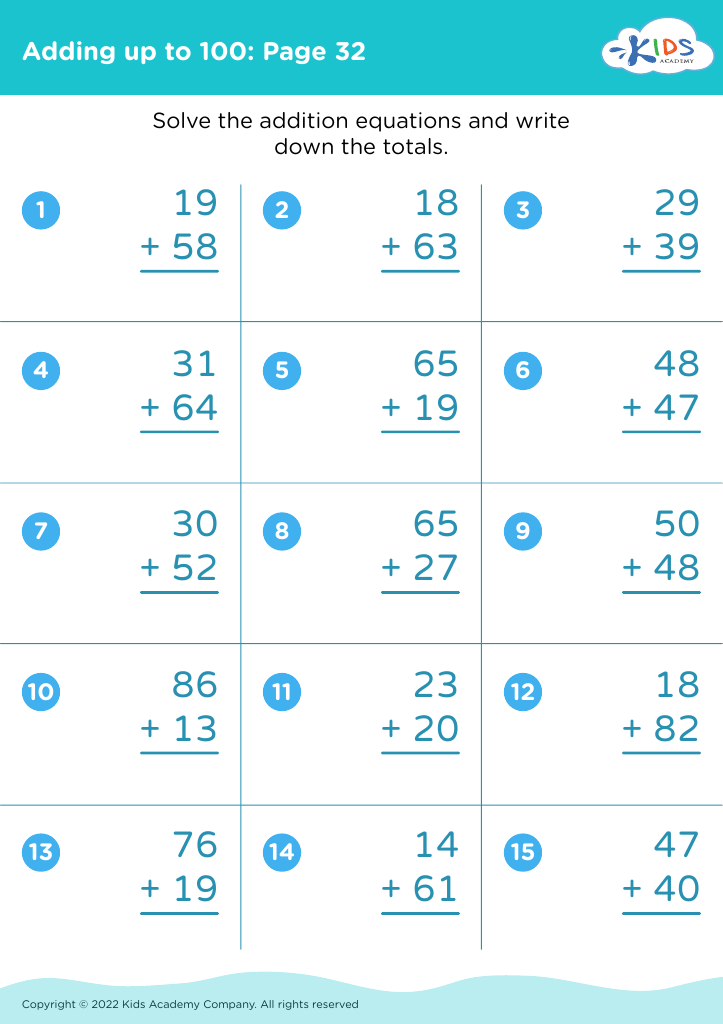
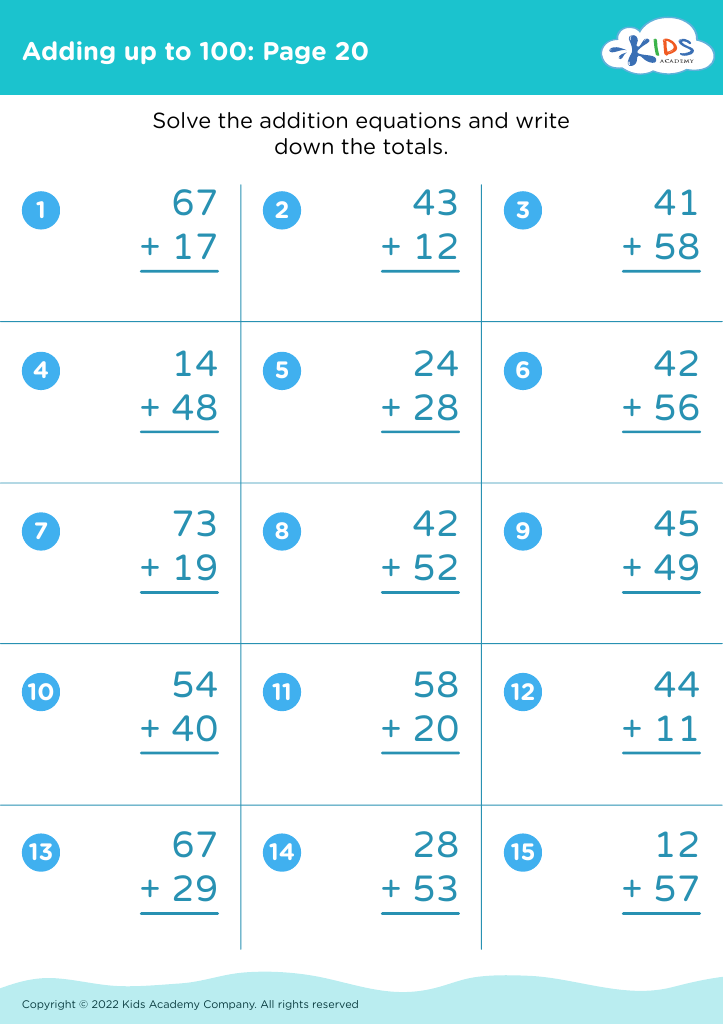
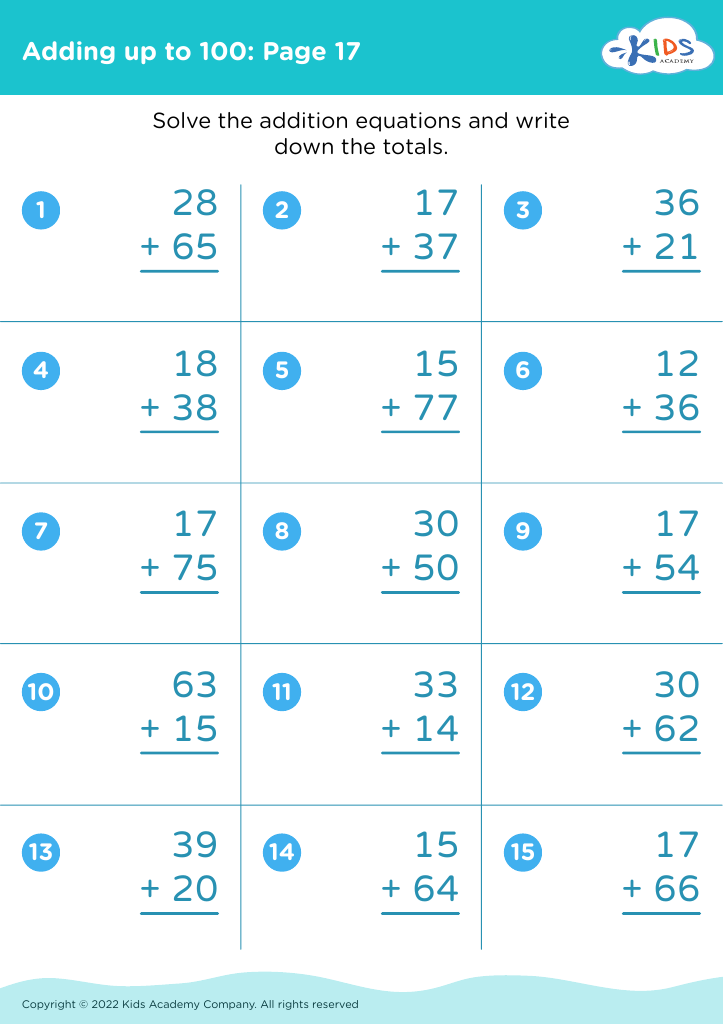
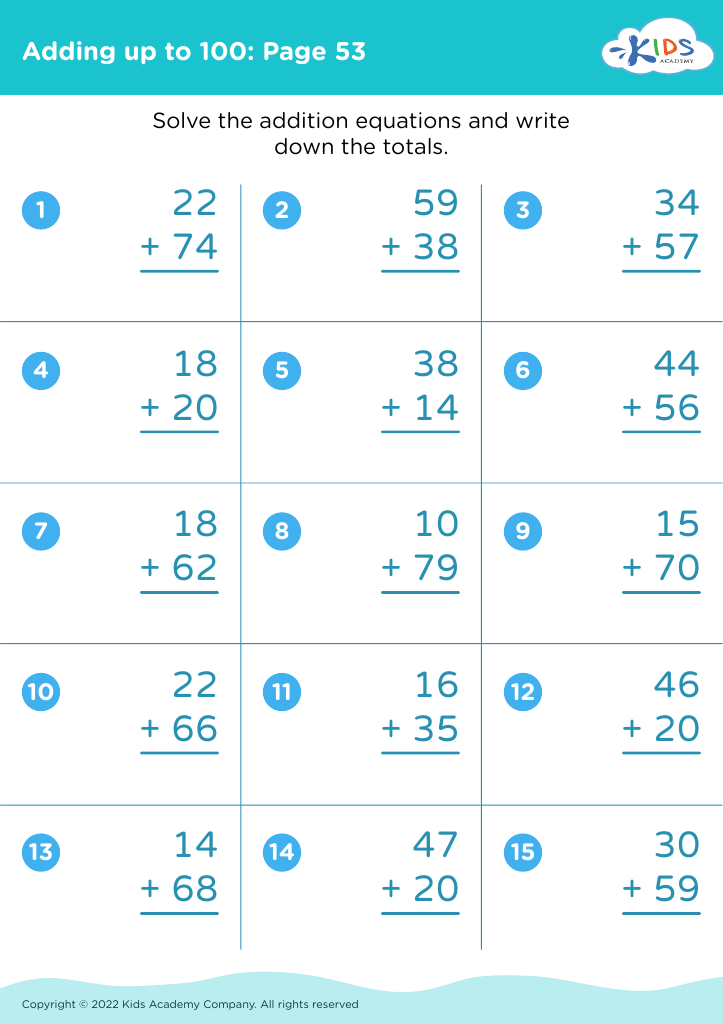
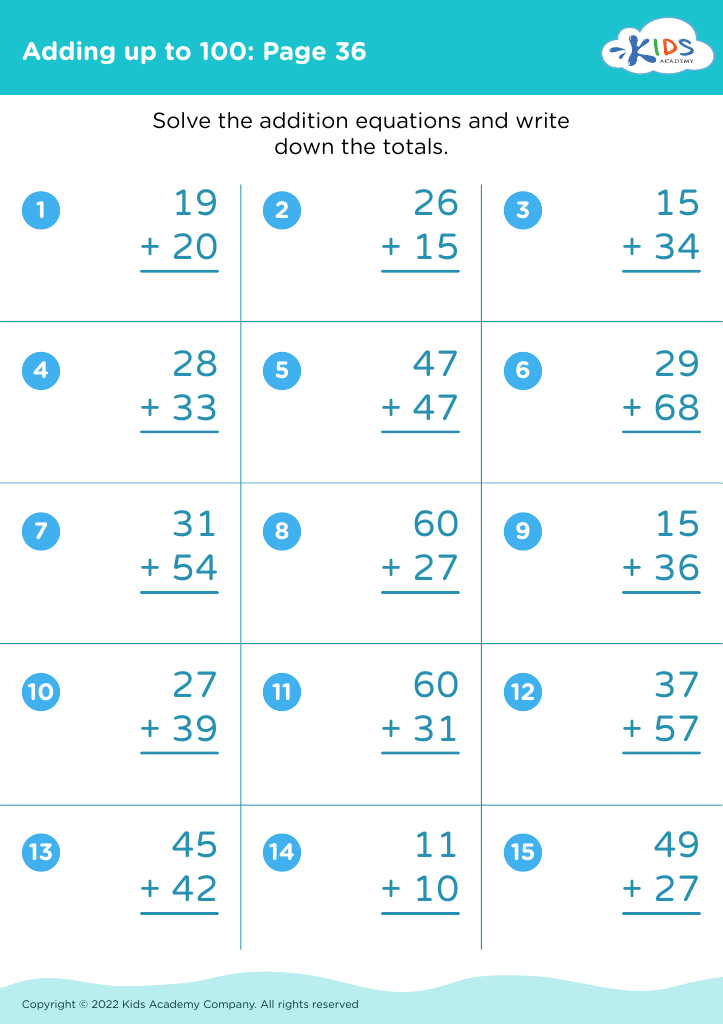


At ages 3-7, children are embarking on their first steps in academics. Understanding and practicing fundamental math concepts such as fraction simplifications, adding up to 100, and other basic miscellaneous (misc) topics can significantly benefit their cognitive development, setting a strong foundation for future learning.
Firstly, introducing fraction simplification at an early age nurtures critical thinking and problem-solving abilities. Even simplified ideas about fractions (like understanding "a half" or "a quarter") help children grasp the concept of parts of a whole, which is foundational for more complex math learning later on.
Secondly, basic addition up to 100 improves numerical fluency. By encounter numbers in different contexts and hands-on activities, kids build number sense—a key component of mathematical literacy. This prepares them for more advanced operations by solidifying their basic arithmetic skills.
Additionally, incorporating miscellaneous mathematical exercises encourages versatility and adaptability in mathematical thinking. Whether it's recognizing shapes, measuring objects, or understanding patterns, these concepts enrich their comprehension and appreciation of how math applies to the world around them.
Investing time into these early math activities bolsters children's confidence and curiosity, making them more eager and proficient learners. Math no longer appears daunting but rather an exciting puzzle they are capable of solving, fostering a positive educational mindset that can last a lifetime.