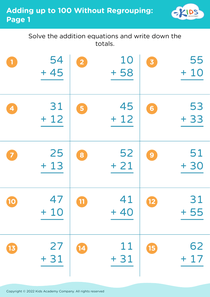
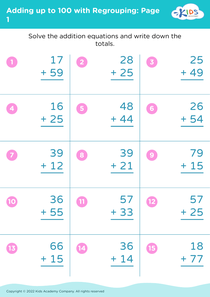
Identifying shapes Adding up to 100 Misc Worksheets for Ages 3-7
3 filtered results
-
From - To
Discover an array of fun and engaging worksheets designed for kids aged 3-7 to master their math skills! Our "Identifying Shapes Adding up to 100 Misc Worksheets" help young learners explore and recognize various geometric shapes while reinforcing their addition skills. Each activity combines colorful illustrations with educational prompts to capture your child's interest and foster cognitive development. Perfect for classrooms or at-home learning, these printable worksheets support early math proficiency by making learning both enjoyable and effective. Boost your child's confidence as they seamlessly navigate the fundamentals of math with our exciting, skill-building exercises!
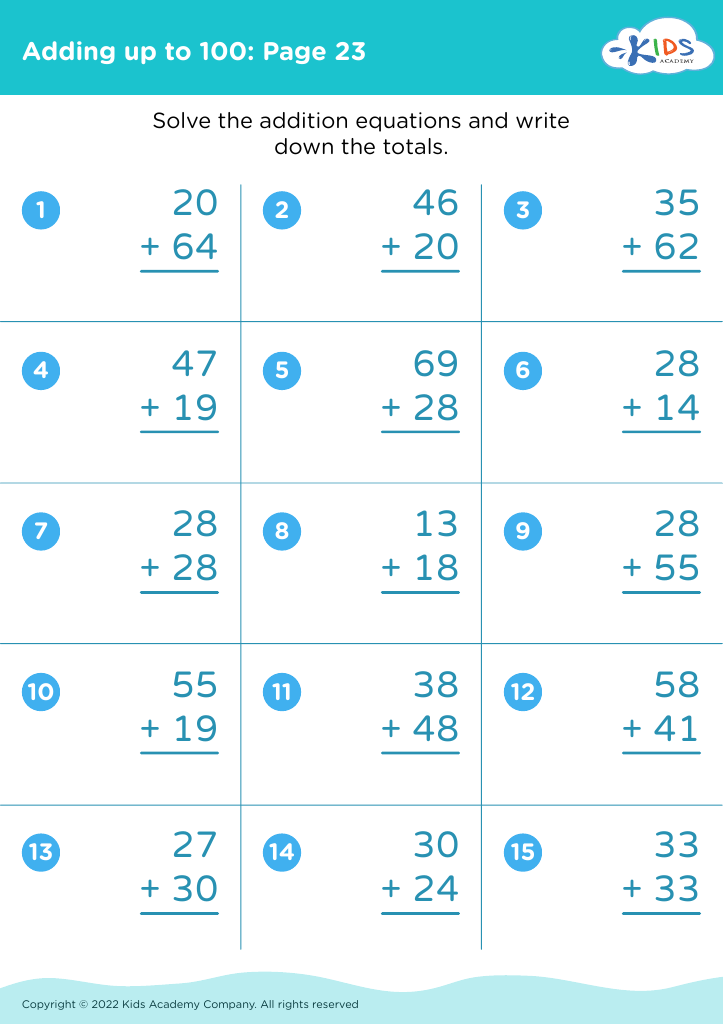
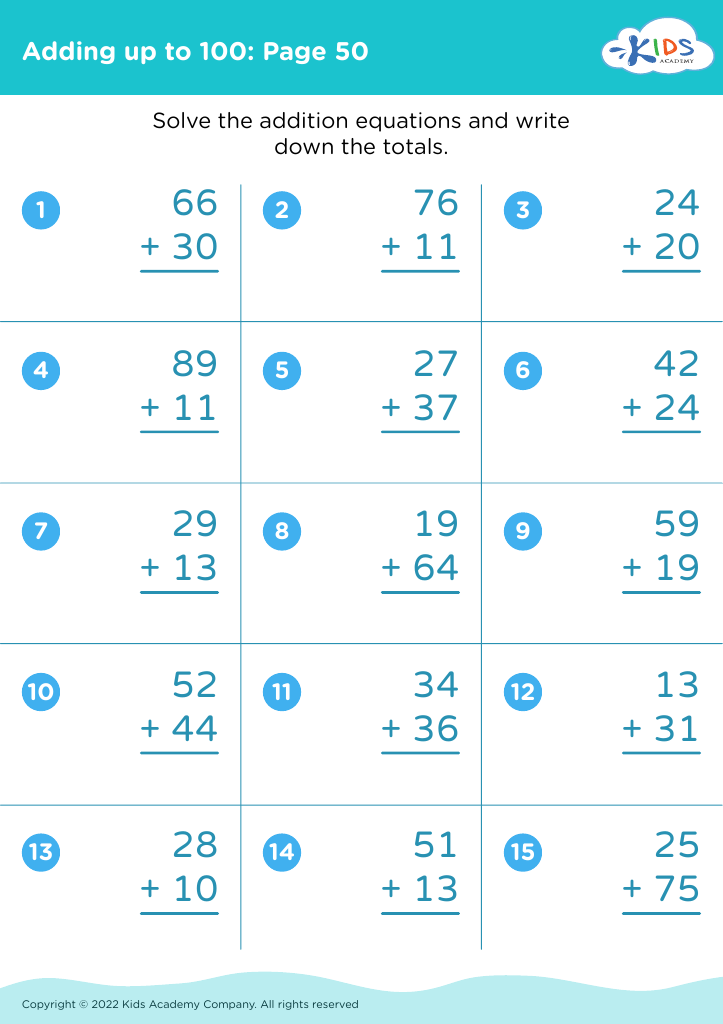
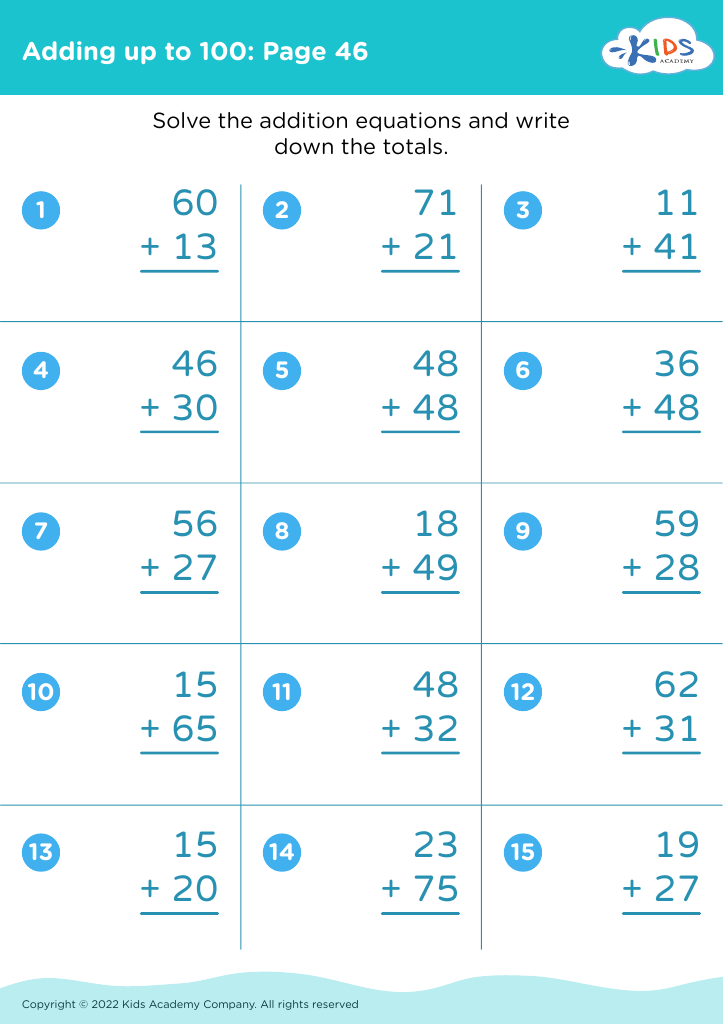


Parents and teachers play a crucial role in a child's early development, and focusing on foundational skills like identifying shapes, and adding up to 100 can have significant benefits for children ages 3-7.
Identifying shapes is fundamental for young learners as it supports cognitive development and spatial awareness. Recognizing shapes fosters early math skills and is the basis for learning geometry. It also enhances problem-solving abilities, as children learn to categorize and sort objects based on different attributes. Moreover, these skills are essential for tasks ranging from reading and writing to understanding more complex concepts in mathematics and science.
Adding up to 100 introduces young learners to linear progression in numbers and basic arithmetic, critical skills that build a foundation for more advanced math. Early mastery of these concepts can lead to greater confidence and interest in math as children progress in school. It teaches them about numerical relationships, patterns, and problem-solving.
Caring about these foundational activities ensures that children develop essential cognitive skills early on. Engaged parents and teachers can make learning fun and meaningful, setting children up for lifelong academic success. Both identifying shapes and basic arithmetic skills like adding up to 100 build a robust platform for their future learning experiences and academic endeavors.