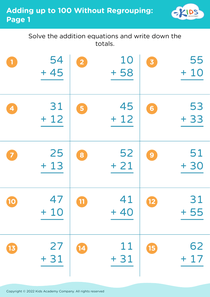
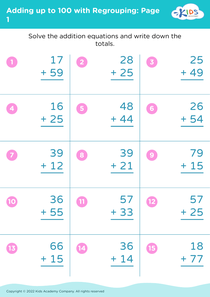
Understand fractions Adding up to 100 Misc Worksheets for Ages 3-7
3 filtered results
-
From - To
Explore our engaging "Understand Fractions Adding Up to 100 Misc Worksheets" designed for children ages 3-7! This collection of printable worksheets introduces young learners to the concept of fractions through fun and interactive activities. Each worksheet fosters essential math skills by encouraging kids to visualize and manipulate fractions, making math both enjoyable and accessible. Your child will engage in various exercises that promote understanding and application of fractions while adding up to 100. Enhance your child's early math journey with our vibrant resources, designed to make learning fractions a delightful experience in their formative years! Perfect for home or classroom use!
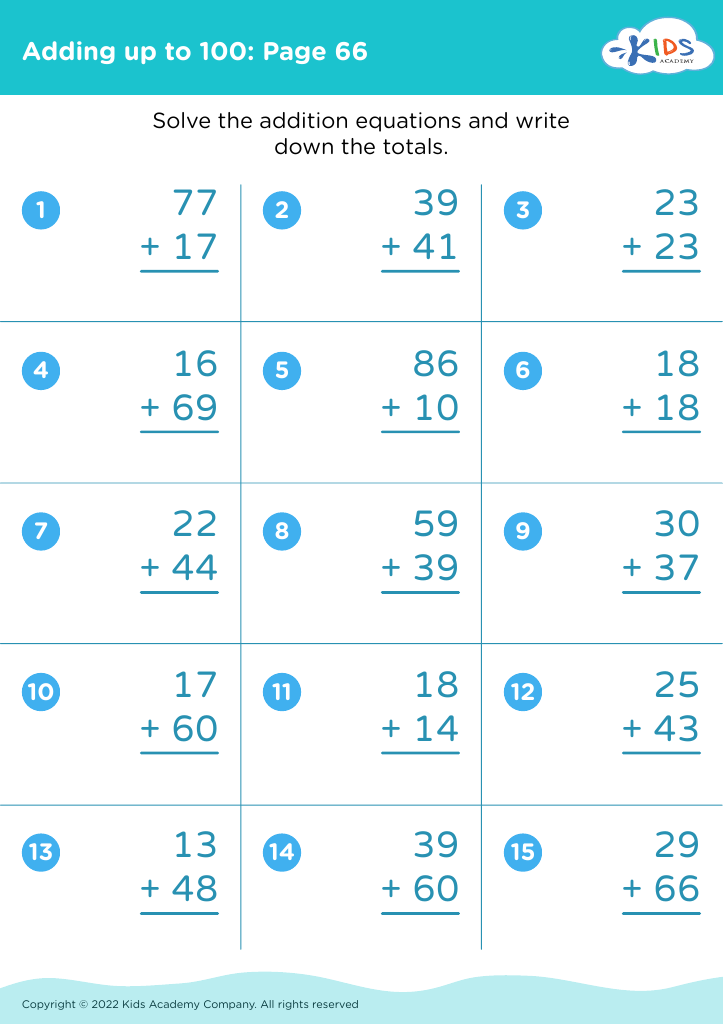
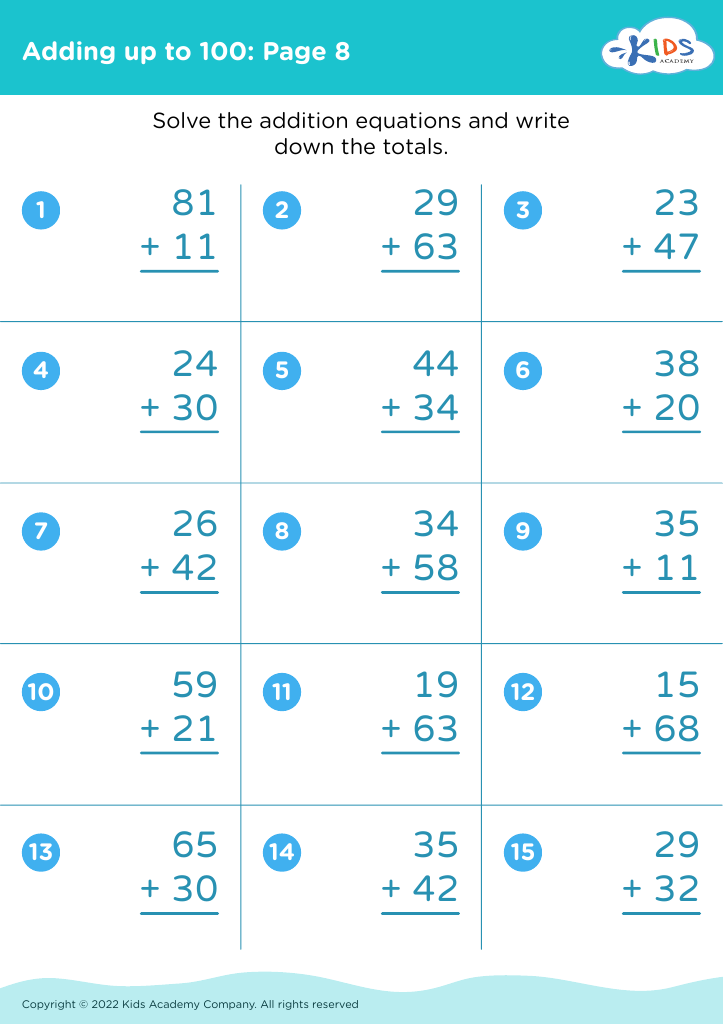
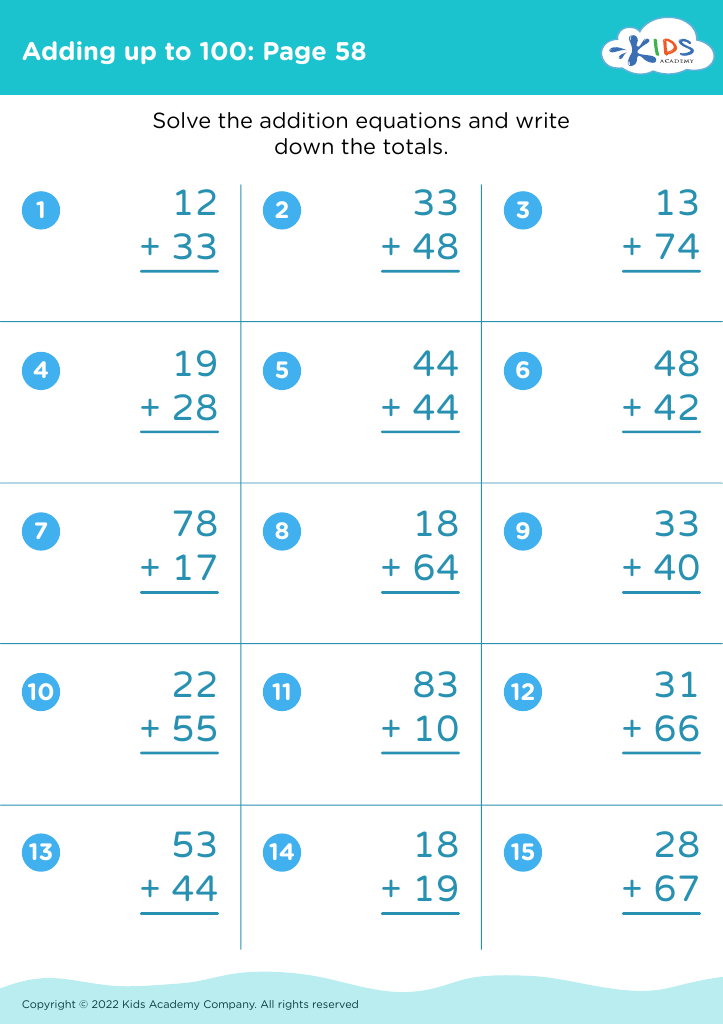


Understanding fractions and their relationship to the whole is crucial for young children's mathematical development. Teaching kids to recognize that fractions represent parts of a whole lays the foundation for more complex math concepts they will encounter later. For children aged 3-7, learning to add up to 100 using fractions can promote critical thinking skills and encourage early number sense, an essential aspect of early mathematics education.
As parents and teachers, fostering an environment where children can explore and manipulate numbers helps to demystify math and builds confidence. Engaging activities, such as using visual aids like pie charts or interactive games, can make the learning process enjoyable and memorable. This foundational knowledge equips children with skills needed for everyday problem-solving.
Moreover, early exposure to fractions supports cognitive development, paving the way for a smooth transition to advanced mathematical concepts in the future, such as algebra and geometry.
Finally, understanding fractions is not just about numbers; it enhances children’s ability to approach real-world scenarios, such as sharing equally or measuring ingredients. By emphasizing this knowledge, parents and teachers can nurture responsible, capable learners who value math throughout their education. Igniting a passion for numbers at an early age empowers lifelong learning.