Understanding fractions Adding up to 100 Misc Worksheets for Ages 3-7
16 filtered results
-
From - To
Explore our engaging "Understanding Fractions: Adding Up to 100" worksheets designed for children ages 3-7. These interactive resources introduce young learners to the essential concepts of fractions through fun activities that capture their imagination. Each worksheet is thoughtfully crafted to strengthen mathematical skills while ensuring that children grasp the idea of parts of a whole. Perfect for parents and educators, these worksheets provide a playful approach to learning fractions, promoting critical thinking and problem-solving abilities. Help your little ones develop a solid foundation in math with our variety of exciting and educational fraction-themed activities that make learning enjoyable!
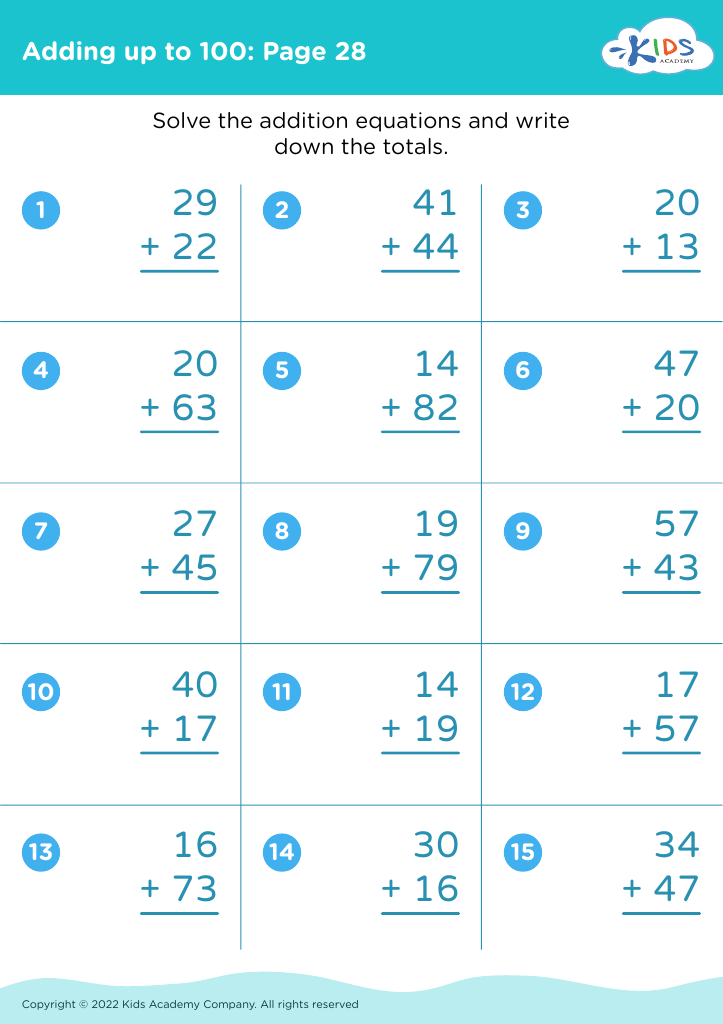
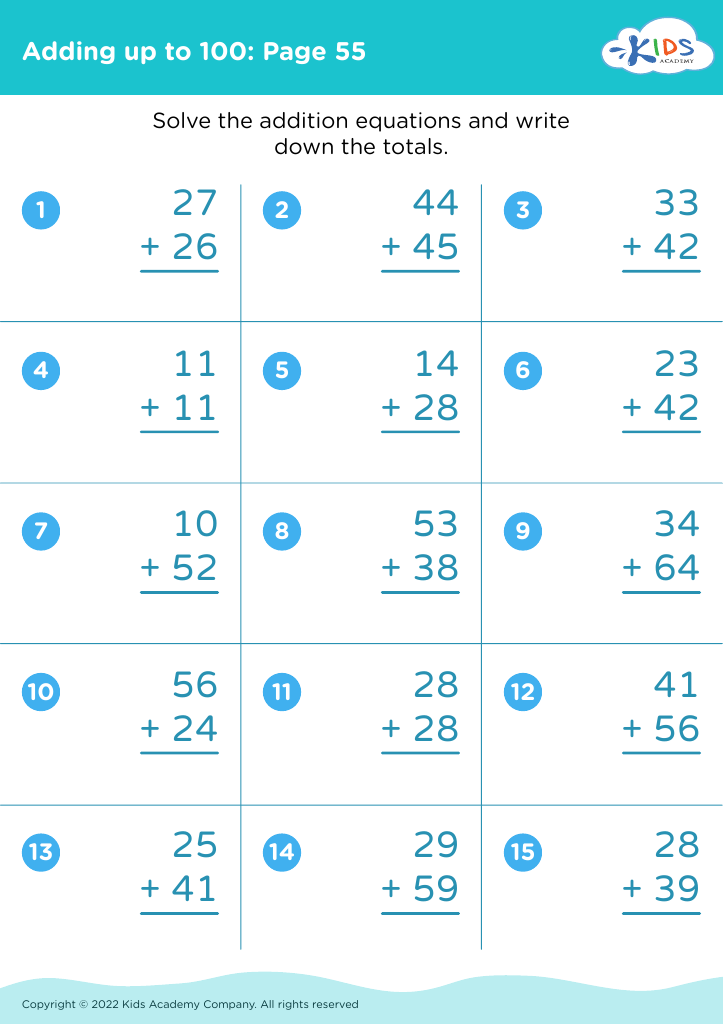
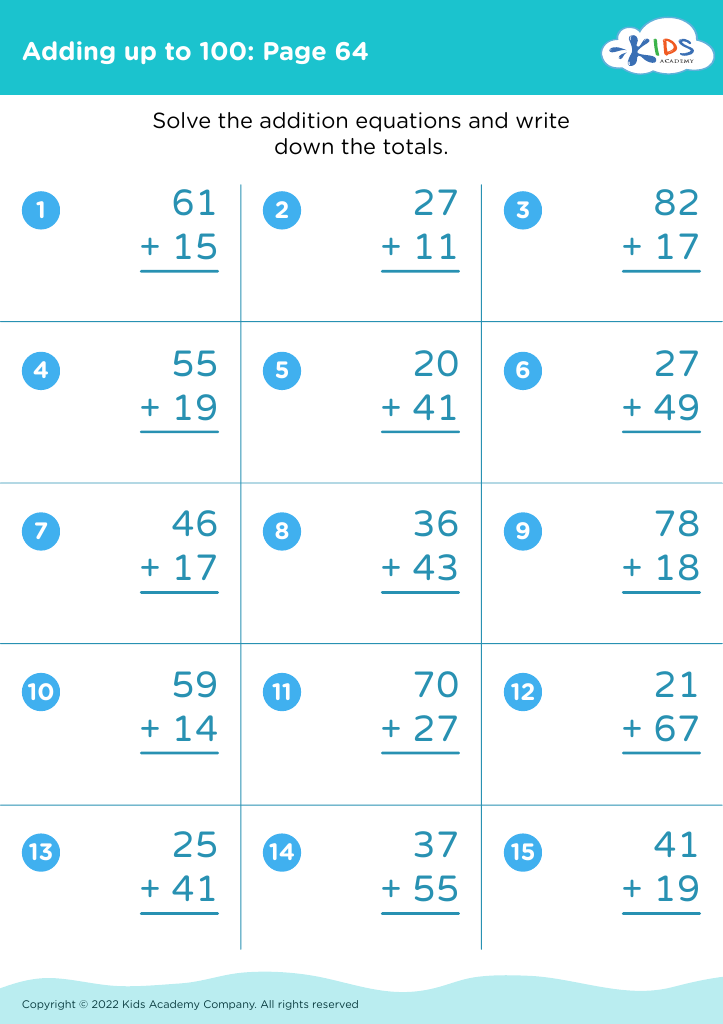
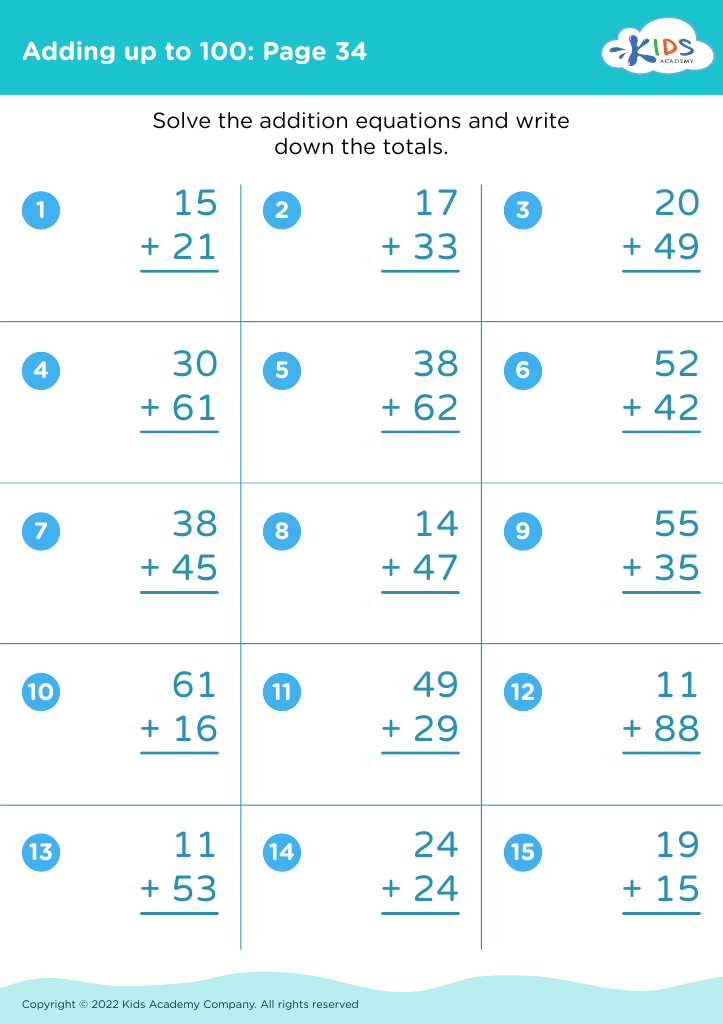
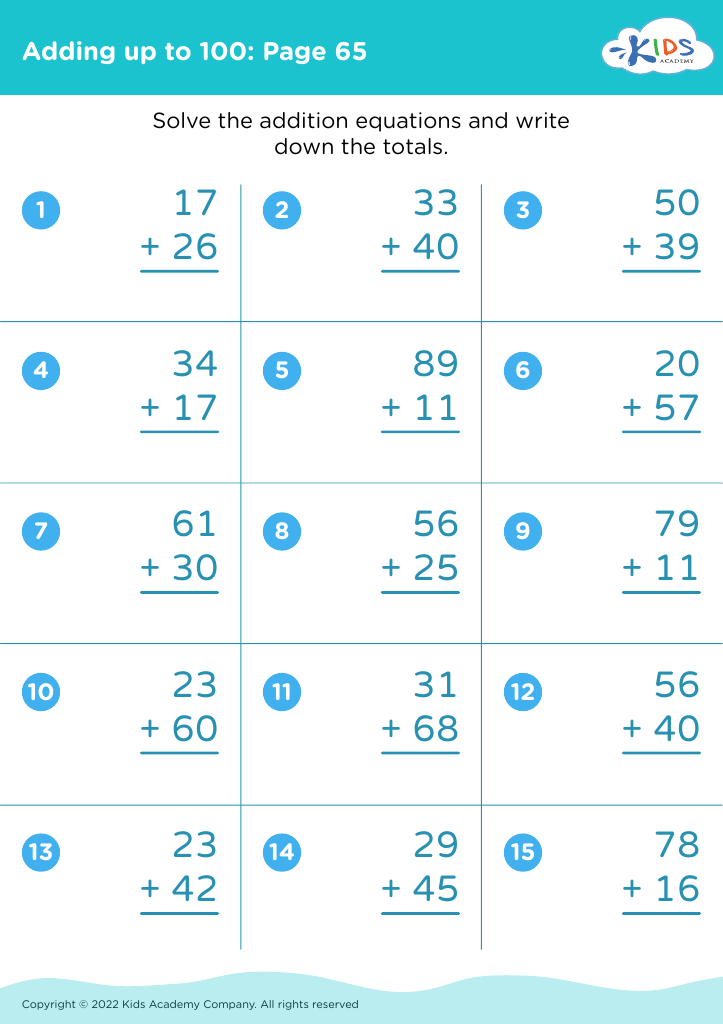
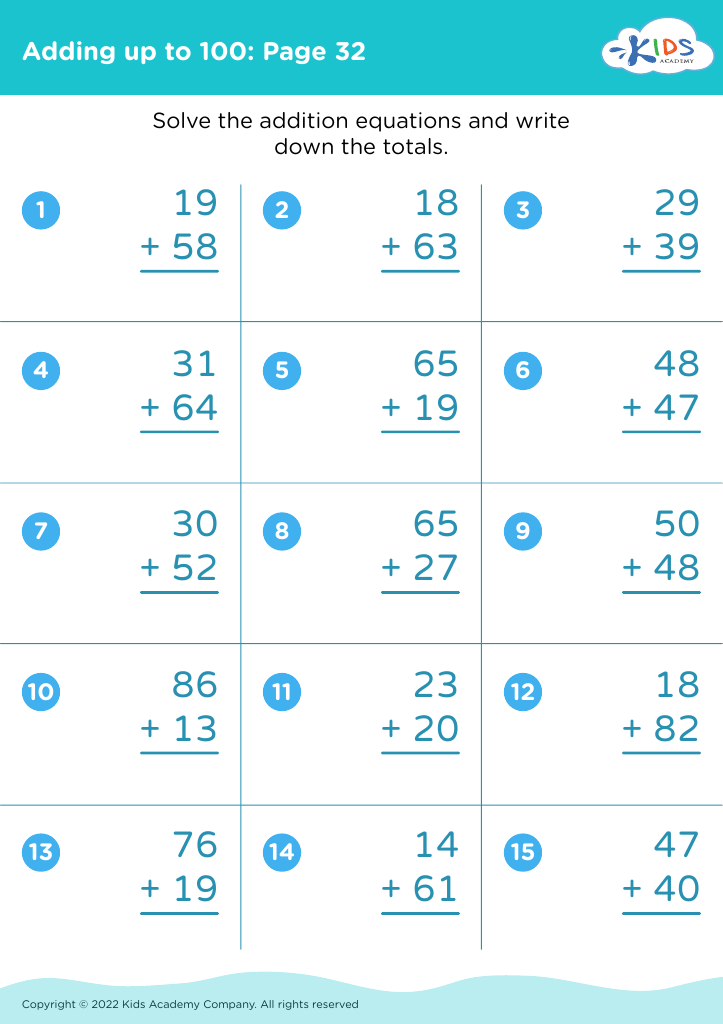
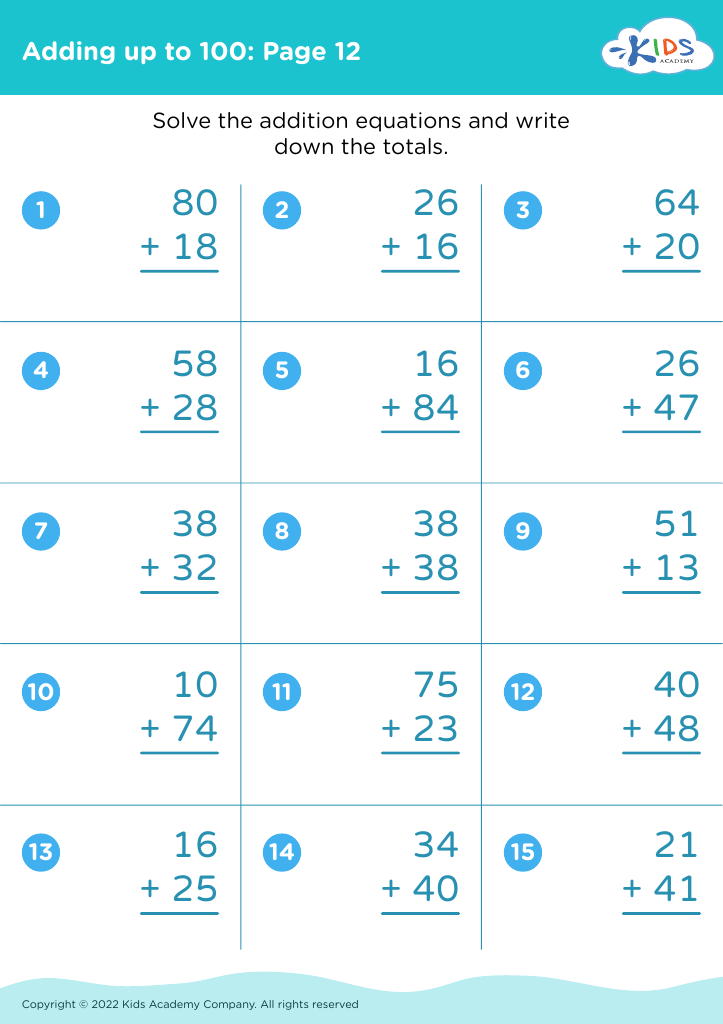
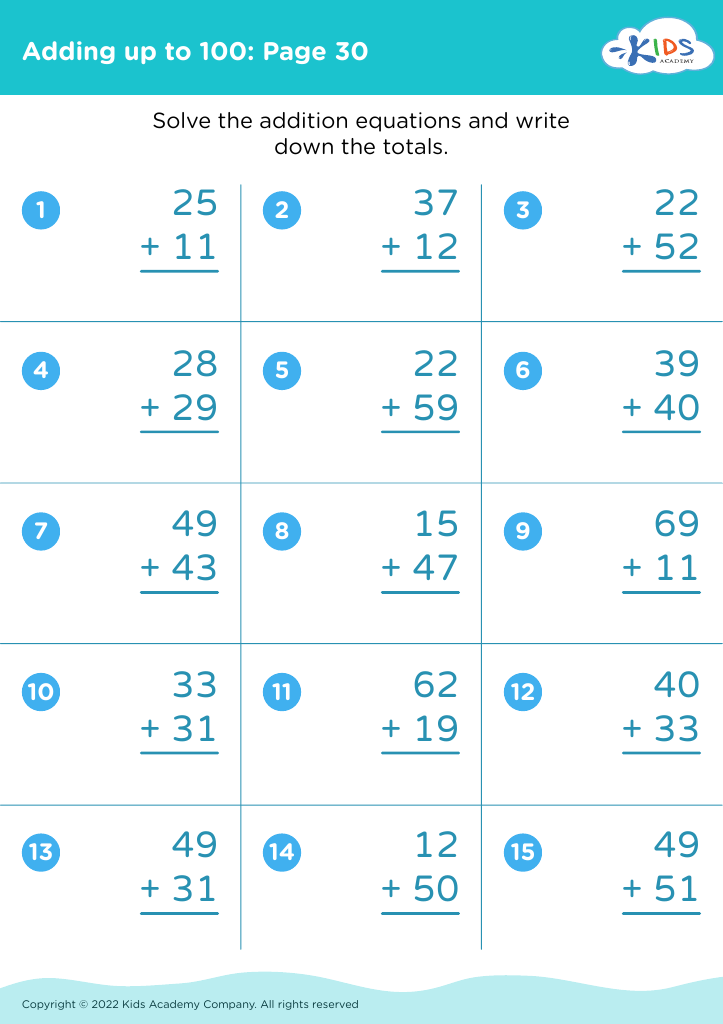
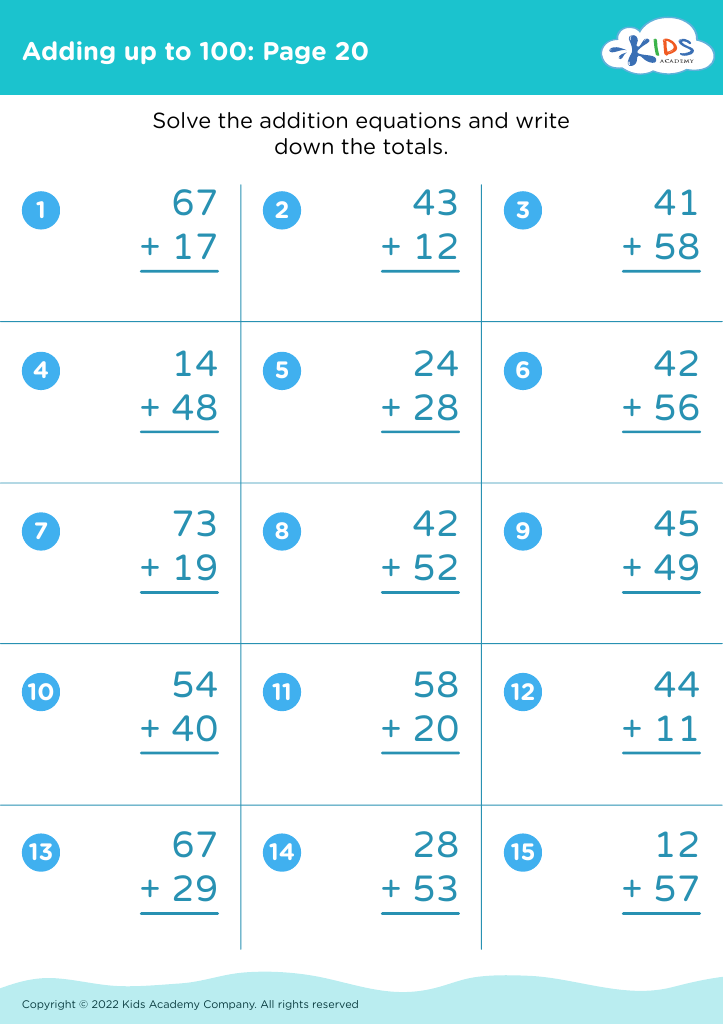
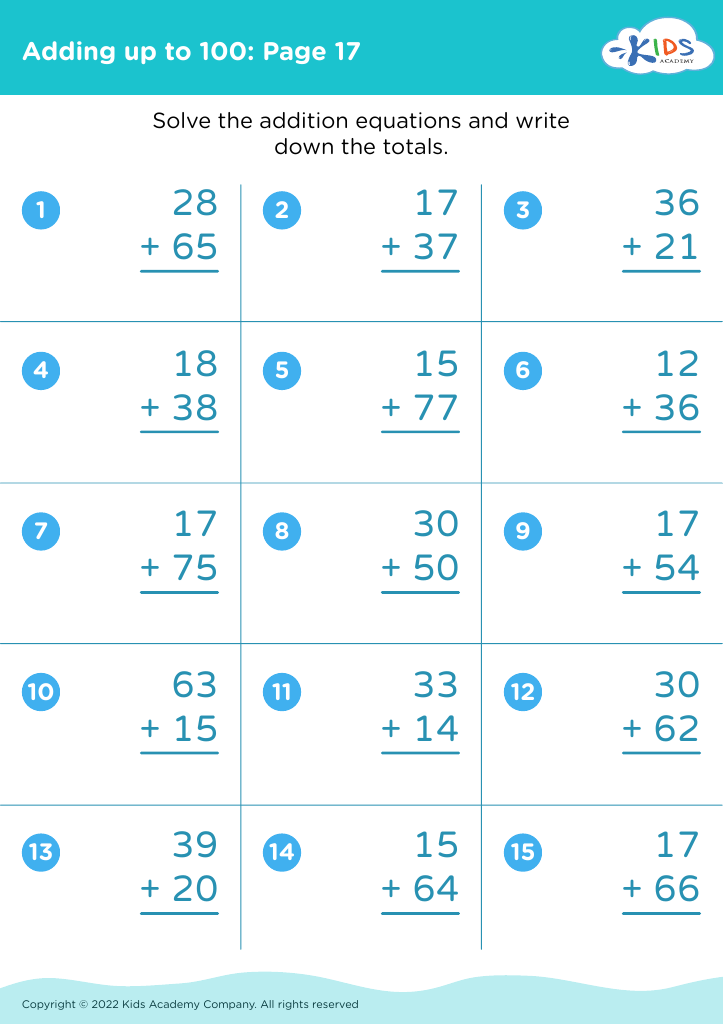
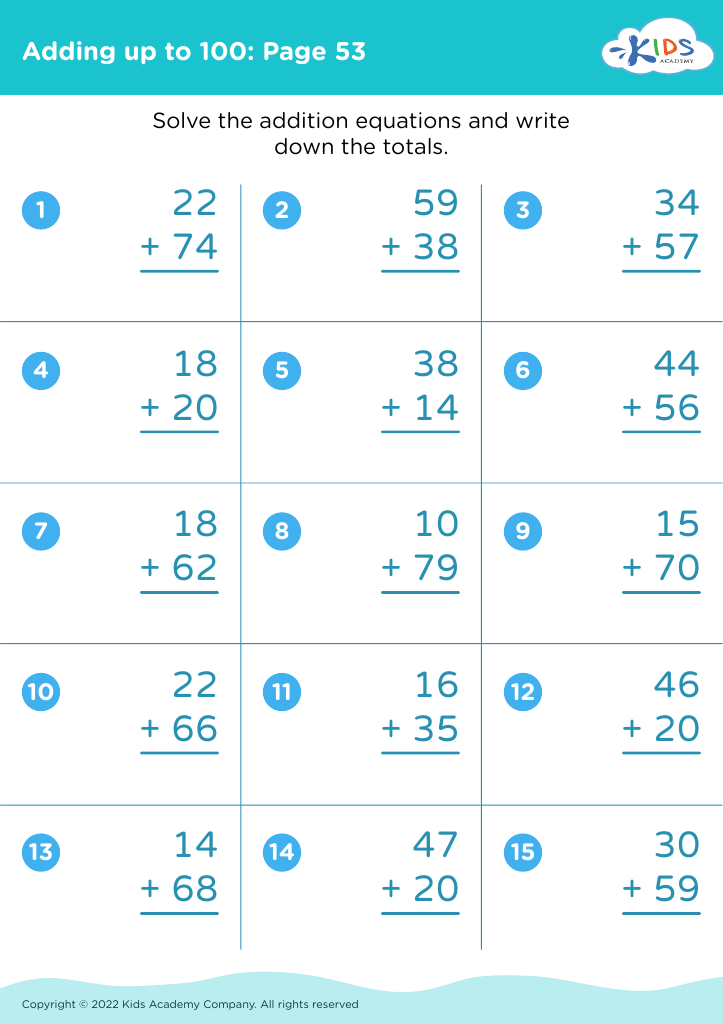
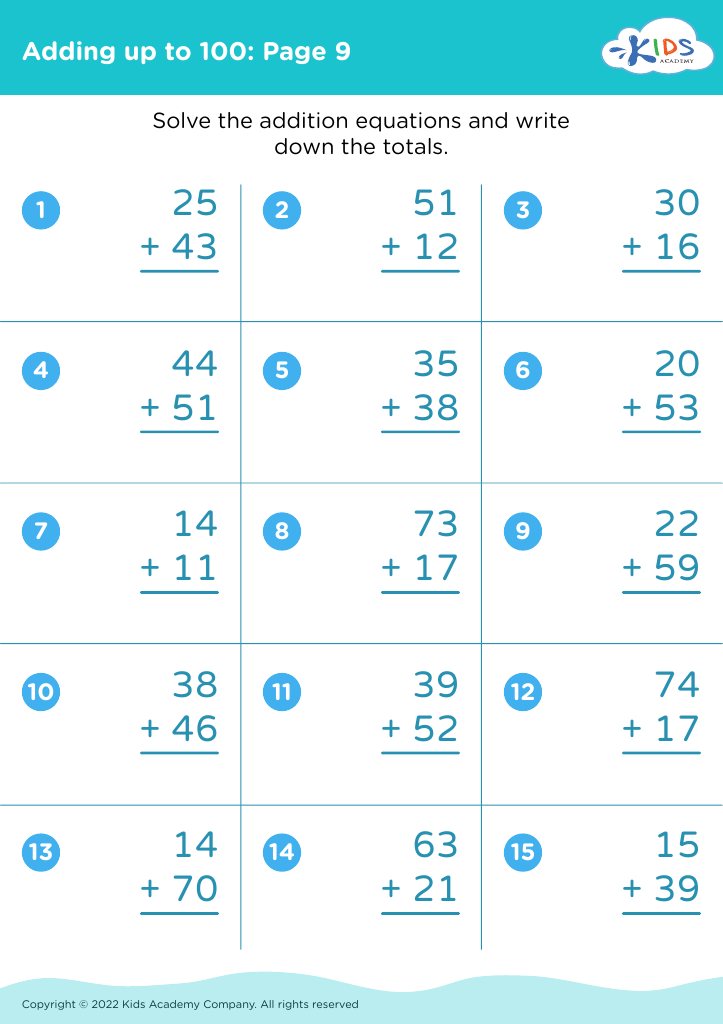
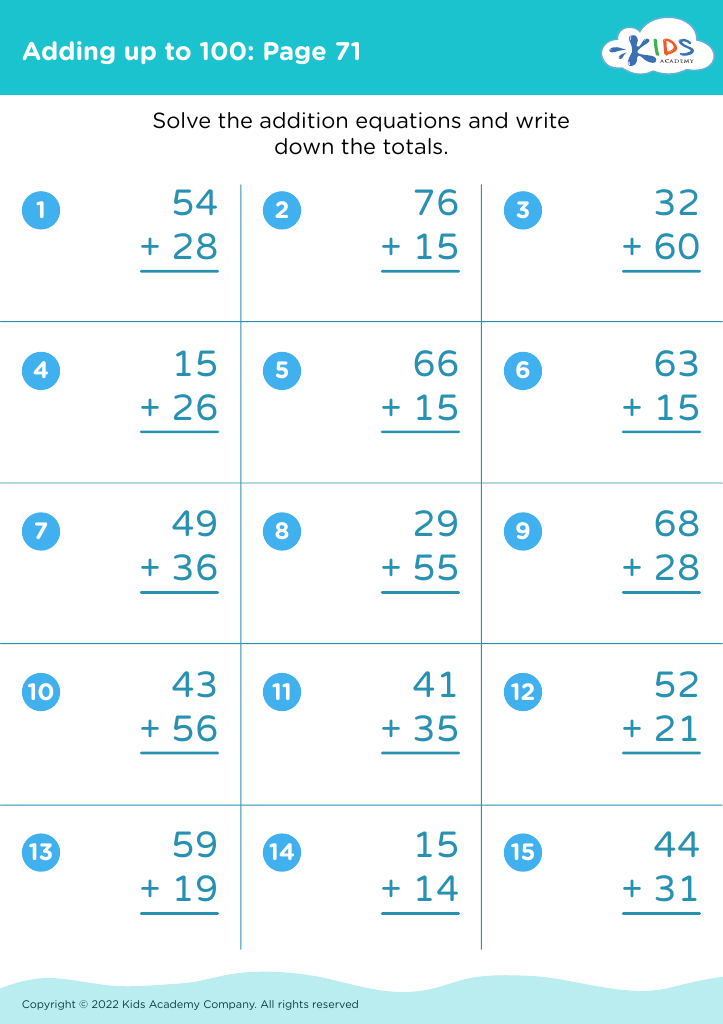
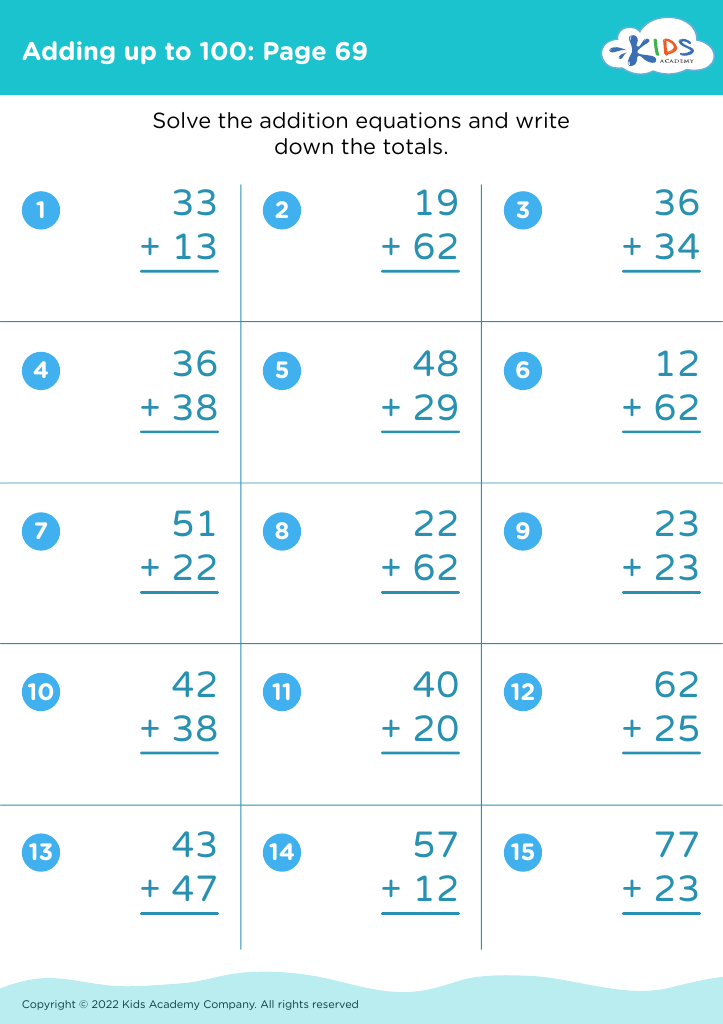
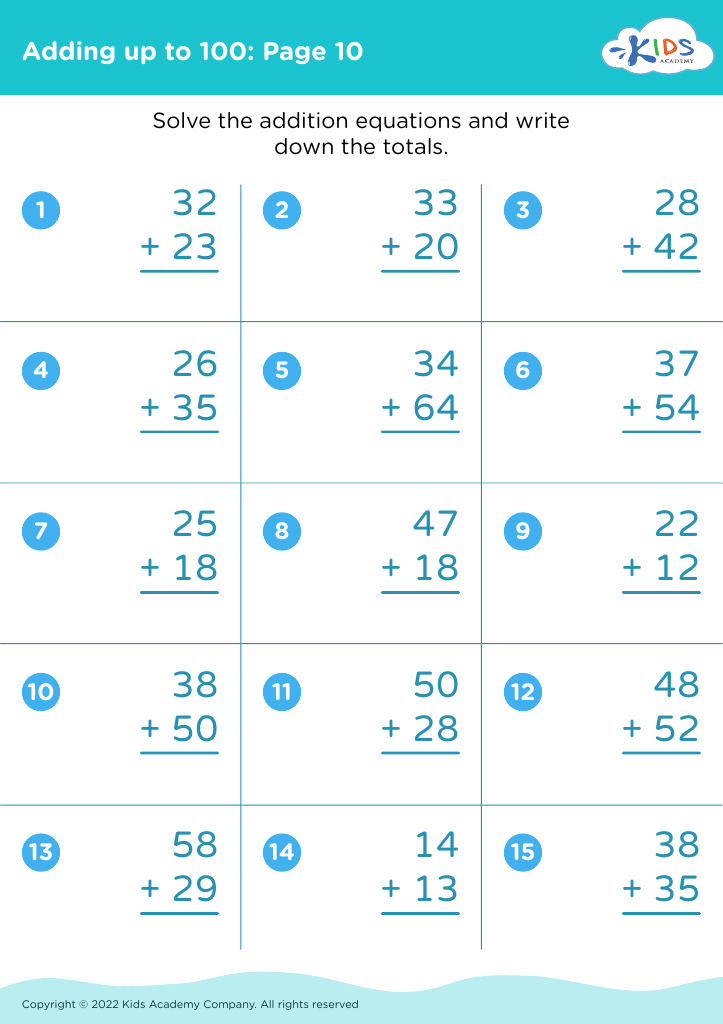
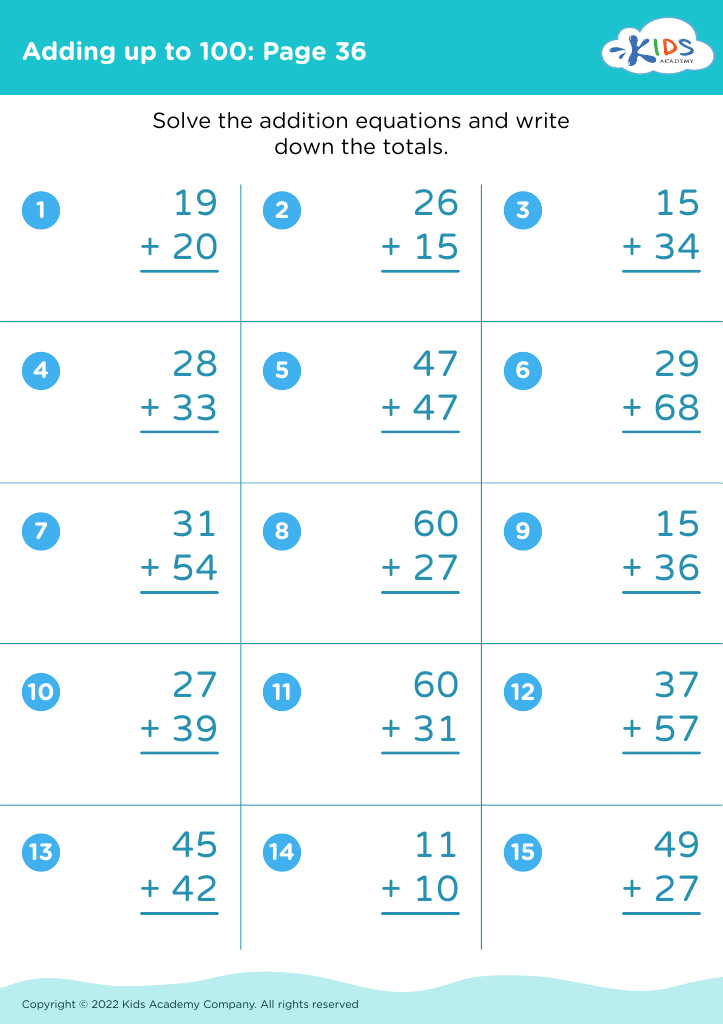


Understanding fractions and concepts like "adding up to 100" is crucial for young children, as it lays the groundwork for their mathematical development. For parents and teachers of ages 3-7, grasping these concepts fosters cognitive skills and boosts confidence in math.
Firstly, fractions introduce the idea of parts of a whole, enabling children to comprehend division and sharing in practical terms. This foundational knowledge translates into later math skills such as ratios and proportional reasoning. Helping children to understand concepts like "adding up to 100" strengthens their number sense, emphasizes the importance of whole numbers, and builds the ability to perform basic arithmetic.
Moreover, early math skills promote problem-solving abilities and logical thinking. As children engage with these concepts, they encounter real-life situations involving measurement, cooking, and budgeting, integrating math into everyday experiences. Parents and teachers can facilitate discussions that inspire curiosity and facilitate explorations in fractions and whole numbers, making math more relatable.
By prioritizing these early mathematical concepts, parents and teachers not only enhance children's educational foundation but also cultivate a positive attitude towards math. Consequently, fostering a love for learning and helping young learners build essential skills becomes invaluable for their ongoing academic journey.