Understanding Sequences Adding up to 100 Misc Worksheets for Ages 3-7
4 filtered results
-
From - To
Explore our "Understanding Sequences Adding up to 100" worksheets, specially designed for young learners aged 3-7. These engaging activities are crafted to enhance foundational math skills by introducing concepts of sequences and addition in a fun and interactive way. Children will strengthen their number recognition, improve their counting abilities, and grasp the principles of addition through colorful visuals and varied exercises. Perfect for parents and educators alike, these worksheets provide valuable practice that aligns with early math education standards. Unlock your child's mathematical potential and build confidence with our creative, easy-to-use resources!
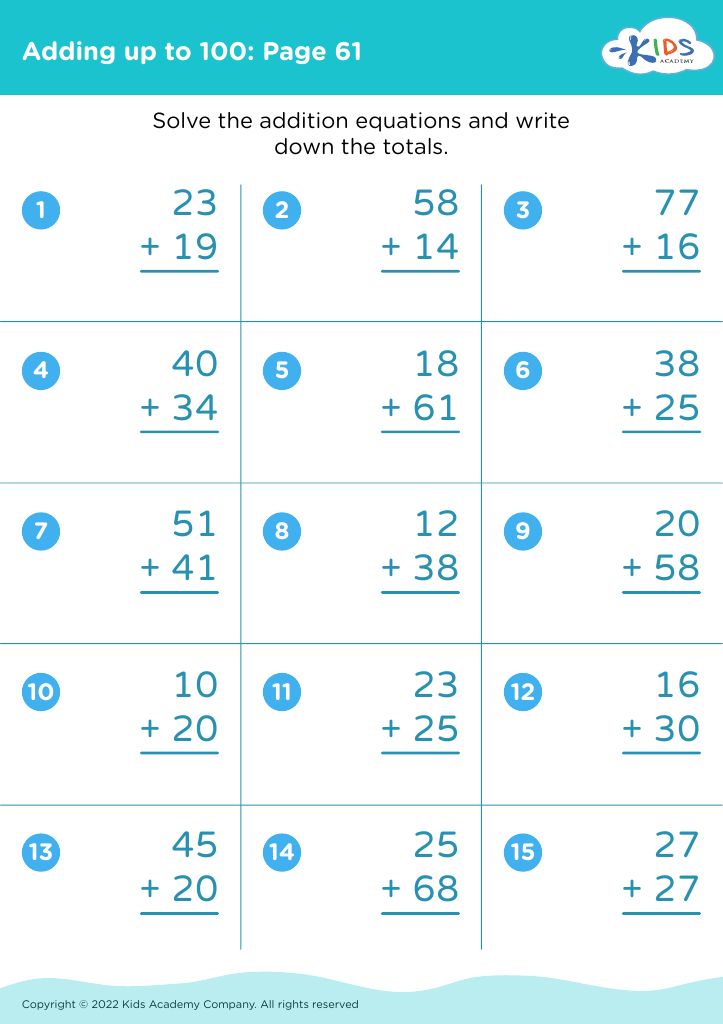
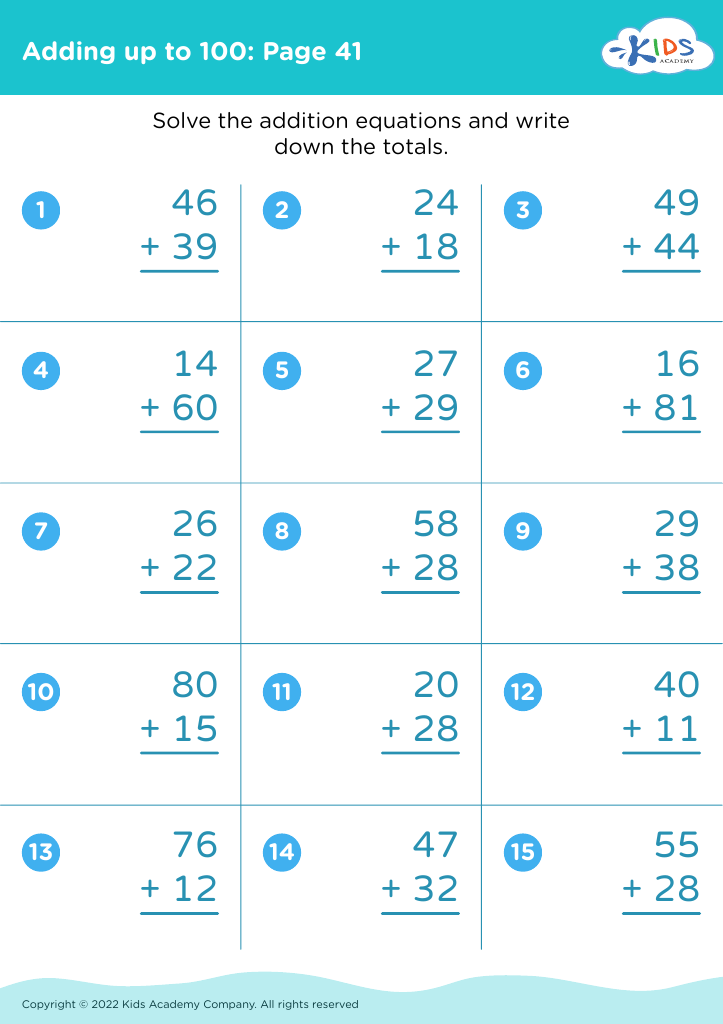


Understanding sequences, particularly in the context of adding up to 100, is crucial for young learners aged 3-7. At this developmental stage, children are building foundational numerical concepts that will serve them throughout their academic journey. Recognizing and working with sequences helps children grasp patterns, which are fundamental in mathematics and critical for problem-solving skills.
For parents and teachers, fostering this understanding promotes cognitive development and boosts early math skills. Engaging children in activities that explore sequences can enhance their numeracy, leading to a better understanding of addition and subtraction, as well as laying the groundwork for more complex operations in later years.
Moreover, exploring sequences can ignite a child's natural curiosity and encourage a love for learning, making math feel less daunting and more approachable. It also presents opportunities for collaborative learning experiences, where parents and teachers can create engaging activities that involve real-life contexts, turning abstract concepts into relatable ones.
Ultimately, supporting children's understanding of sequences—especially with fun concepts like adding up to 100—instills confidence, fosters a positive attitude towards math, and prepares them for future academic success. Investing time in these foundational skills will pay dividends as children progress in their learning journey.