Comparing Fractions Adding up to 1000 Misc Worksheets for Ages 3-7
5 filtered results
-
From - To
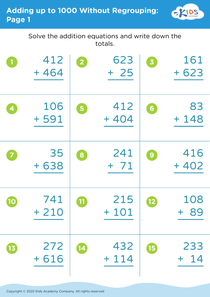
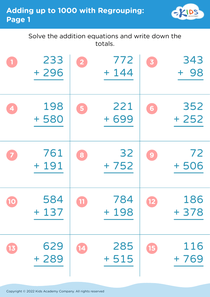
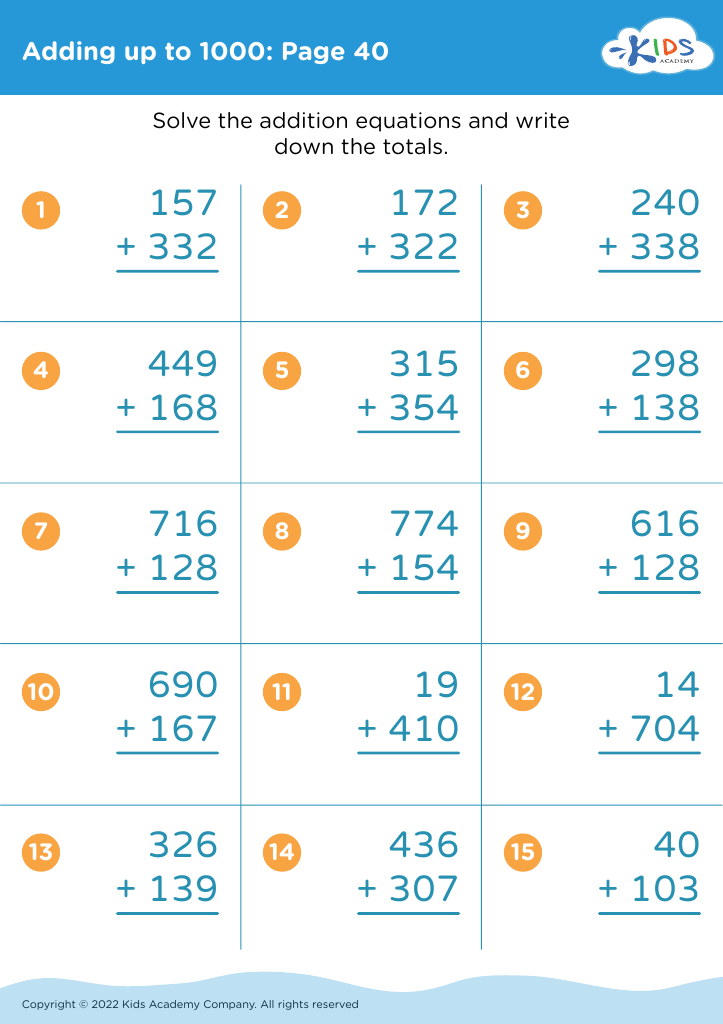
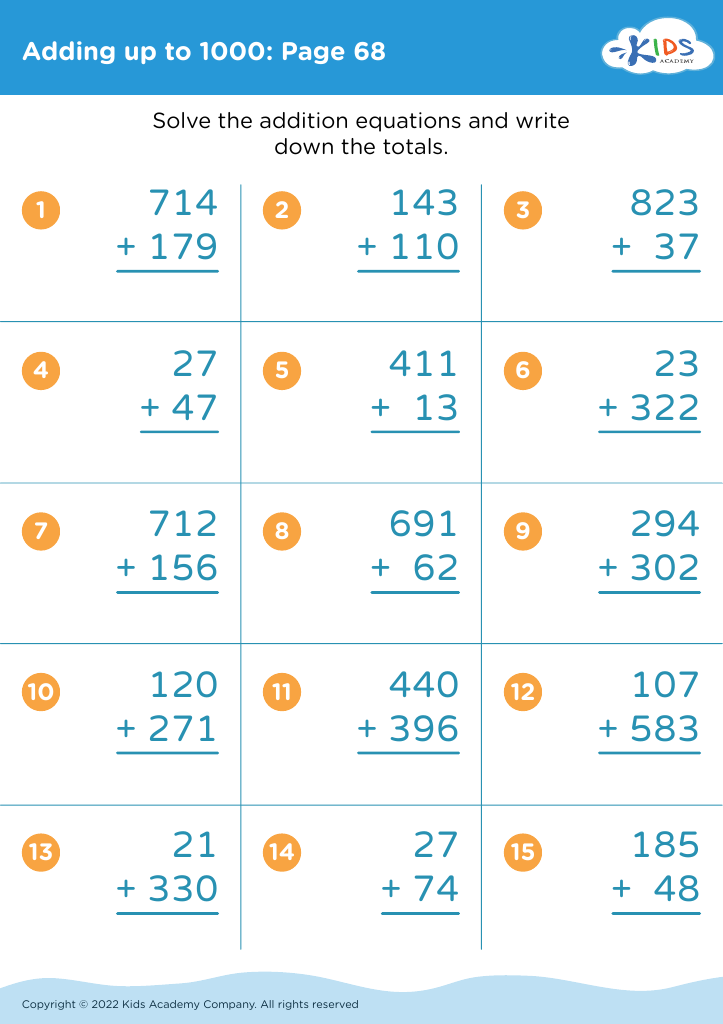
Discover our engaging worksheets designed for children ages 3 to 7, focusing on comparing fractions that add up to 1000. These resources are crafted to make learning math fun and accessible for young learners. Our worksheets incorporate vibrant visuals and hands-on activities that help kids strengthen their understanding of fractions in engaging ways. Perfect for home or classroom use, these materials are aligned with early educational standards, promoting critical thinking and foundational math skills. Help your child build confidence in their math abilities while developing essential skills through playful learning experiences. Start exploring the world of fractions today!
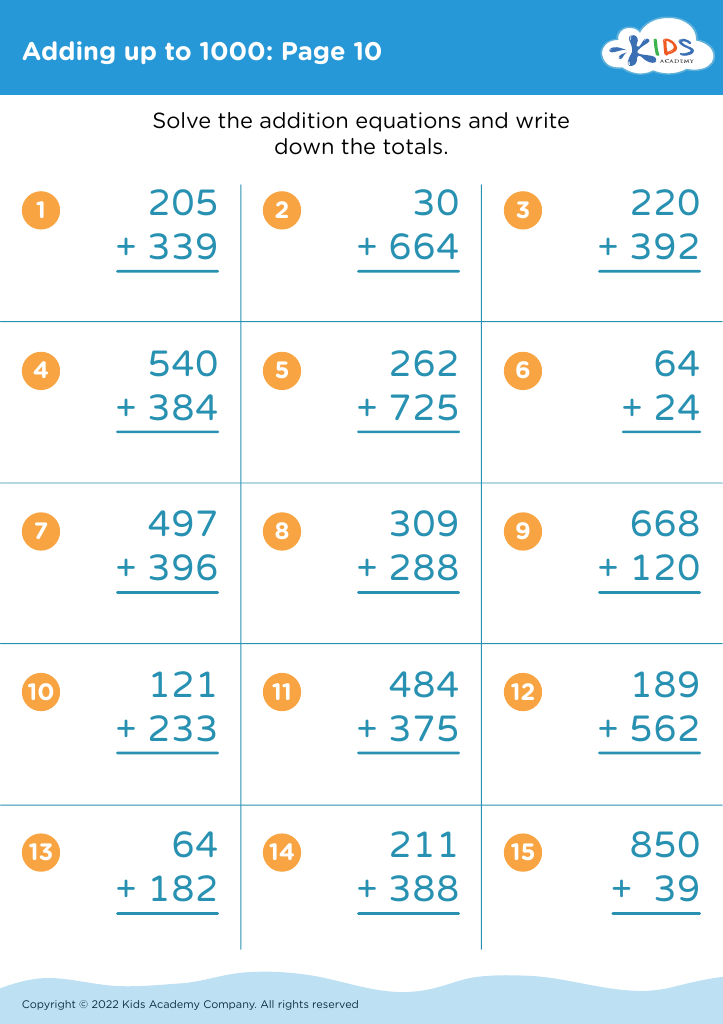
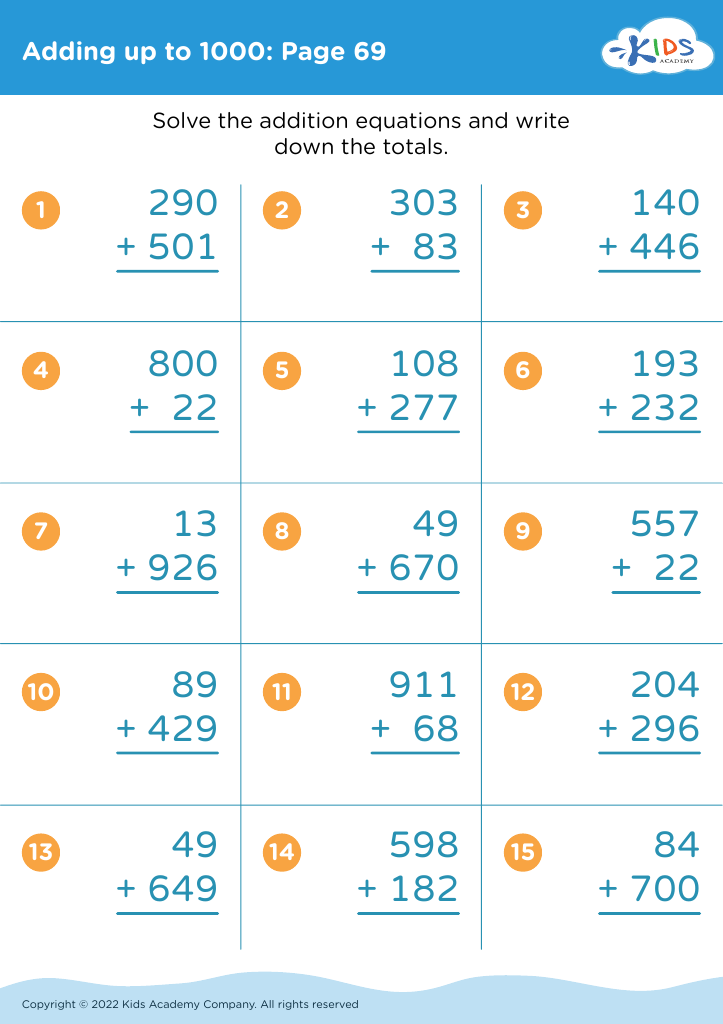
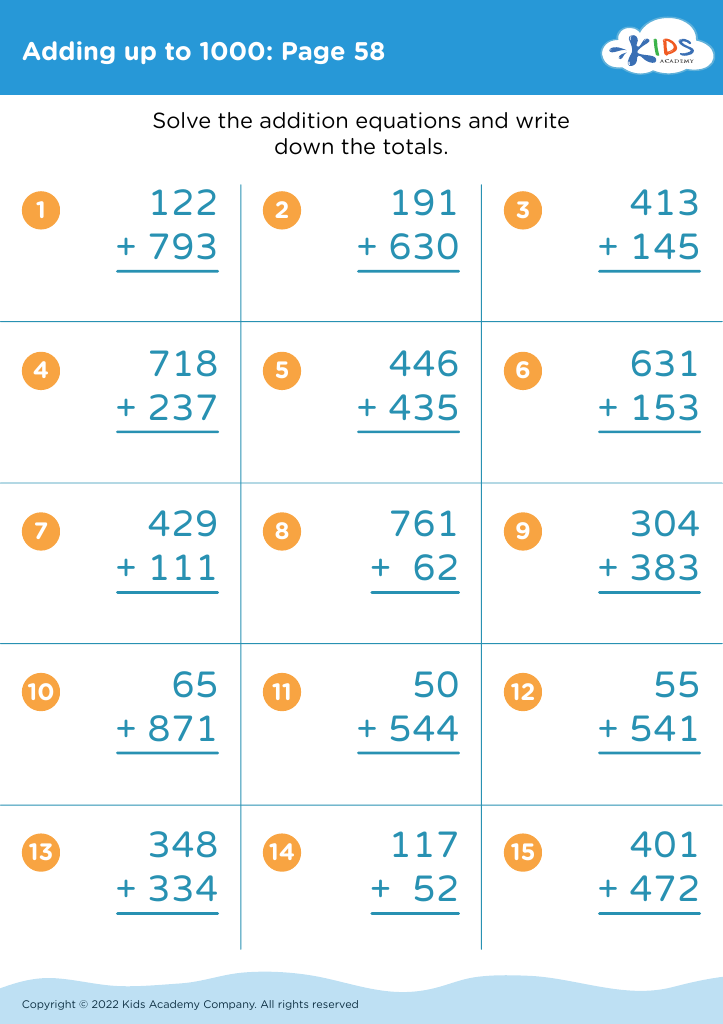


Understanding comparing fractions is essential for children aged 3-7 as it lays the foundation for their mathematical skills. Early exposure to fractions helps children learn about parts of a whole, essential for developing critical thinking and problem-solving abilities. Engaging with comparing fractions fosters classroom interactions, encourages conversations about how quantities relate to each other, and builds a logical approach to math.
For parents and teachers, emphasizing this topic is vital because it enhances numeracy skills that transcend simply understanding numbers. It helps children make connections between concepts they encounter in everyday life, from cooking to sharing, which can increase their engagement and interest in mathematics.
Moreover, mastering fractions early on prepares children for more advanced mathematical concepts as they progress through school – providing a smoother transition into topics like addition, subtraction, and even algebra later on. For children ages 3-7, using visual aids and hands-on activities to compare fractions makes learning more effective and joyful. Ultimately, instilling a strong grasp of comparing fractions early allows children to feel more confident in their math skills, creating a positive attitude toward learning in general and establishing a solid foundation for future academic success.