Counting practice Adding up to 1000 Misc Worksheets for Ages 3-7
8 filtered results
-
From - To
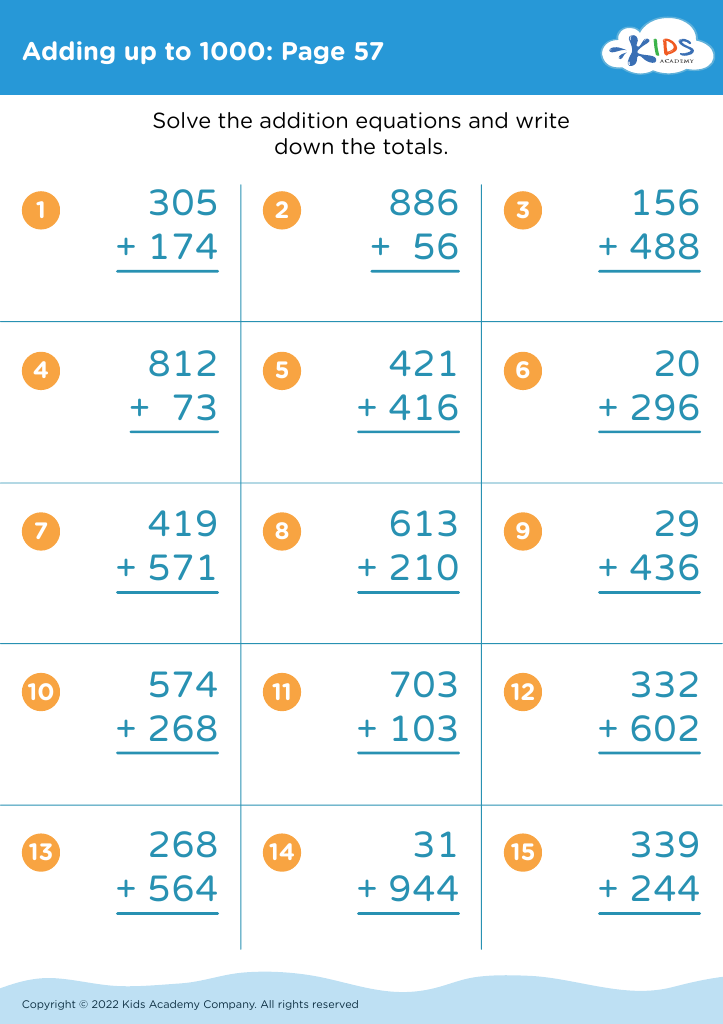
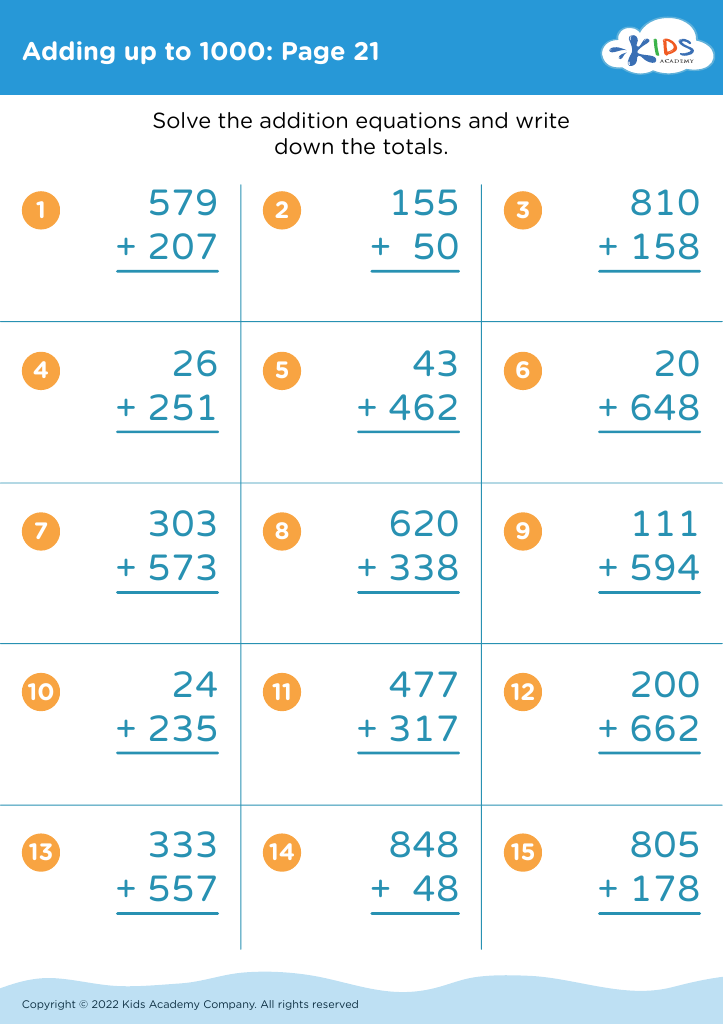
Welcome to our Counting Practice Worksheets page, specially designed for children aged 3-7 to master the fundamental concept of adding up to 1000! These engaging and diverse worksheets provide an excellent opportunity for young learners to develop strong counting skills through interactive and fun activities. From colorful number lines to captivating counting games, our resources cater to various learning styles. Each worksheet promotes critical thinking and problem-solving, helping children build confidence in their mathematical abilities. Whether for home or classroom use, our Counting Practice Worksheets are the perfect tool to make learning addition enjoyable and effective. Let's embark on a fun math journey!
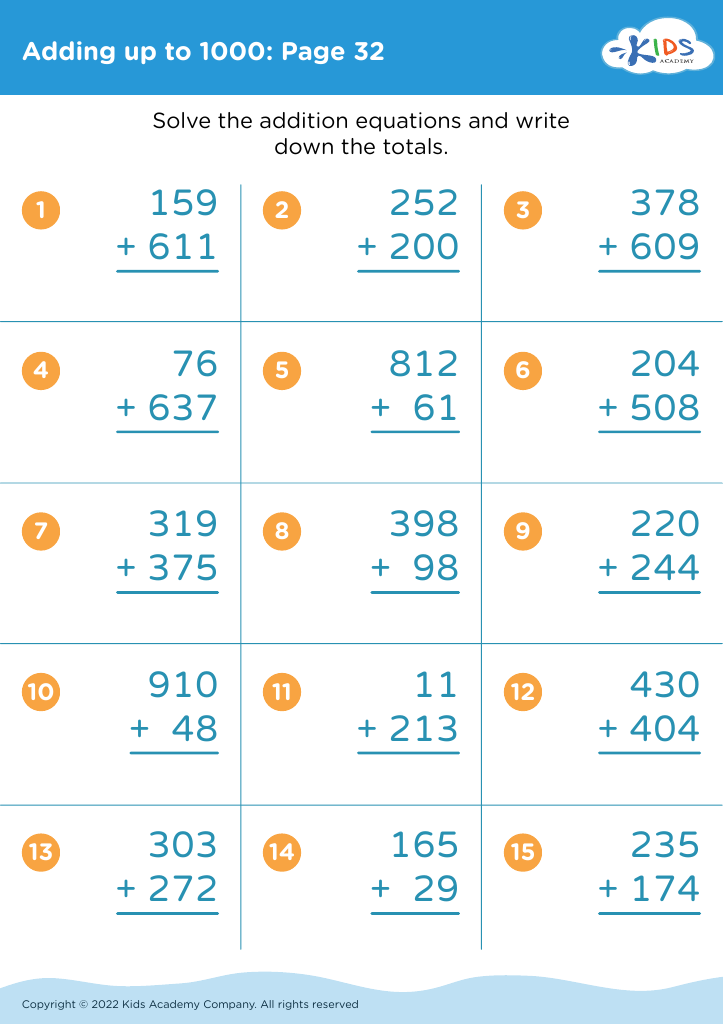
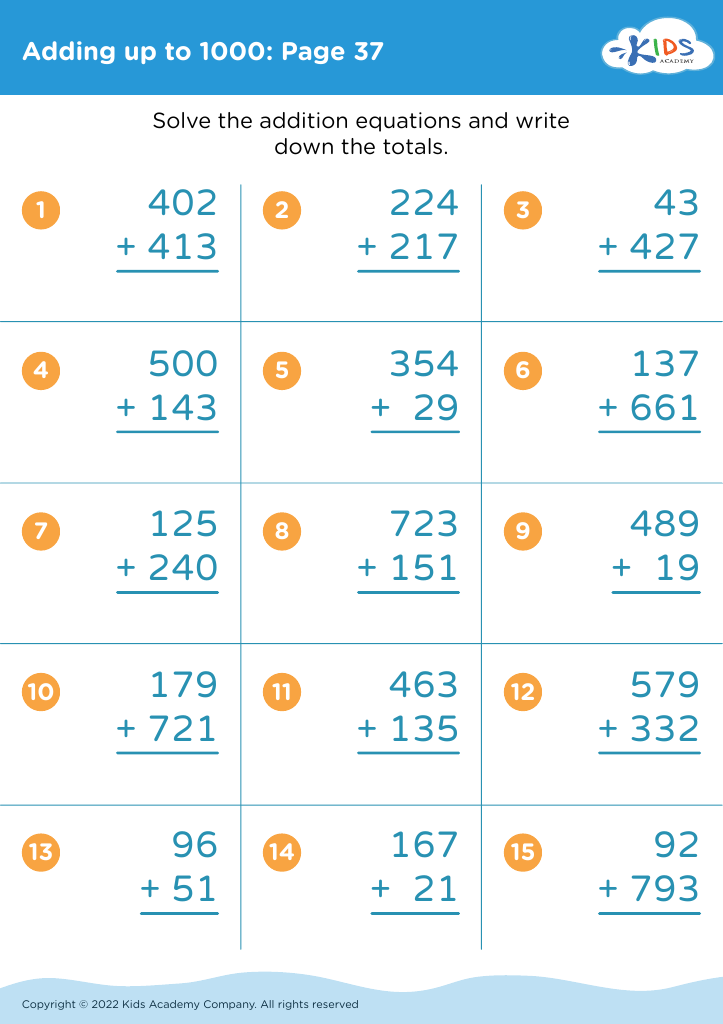
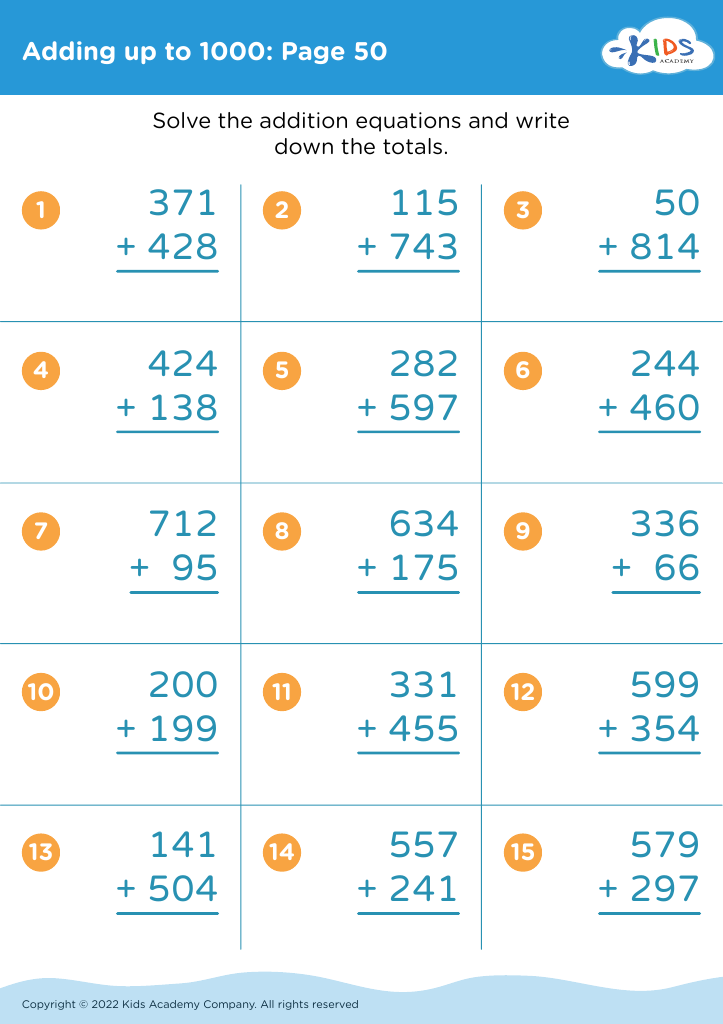
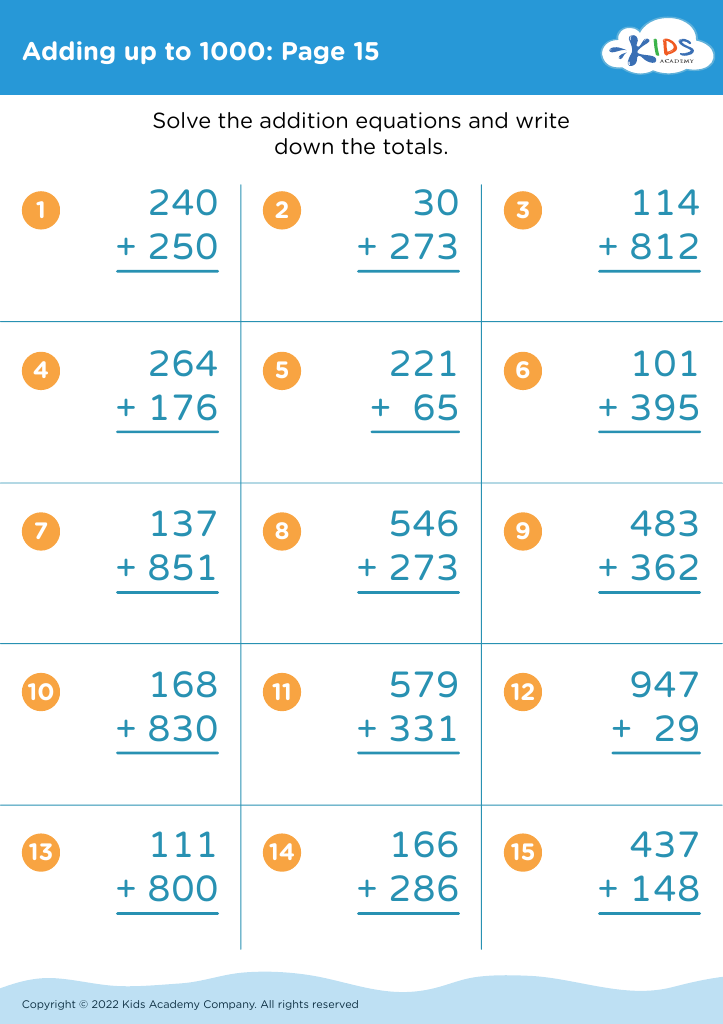
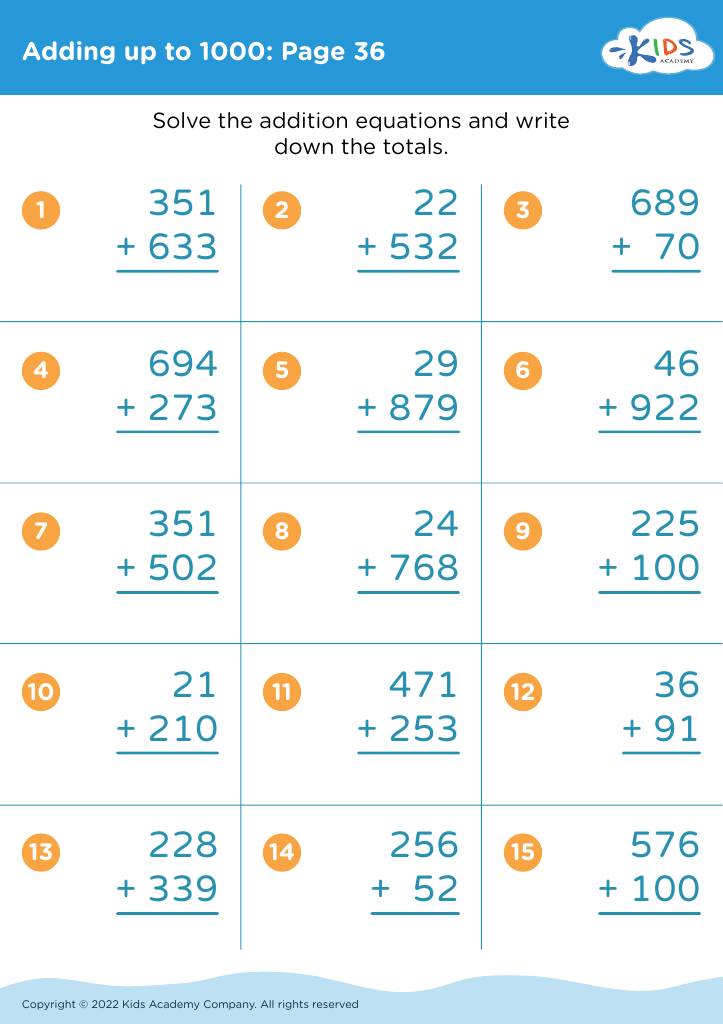
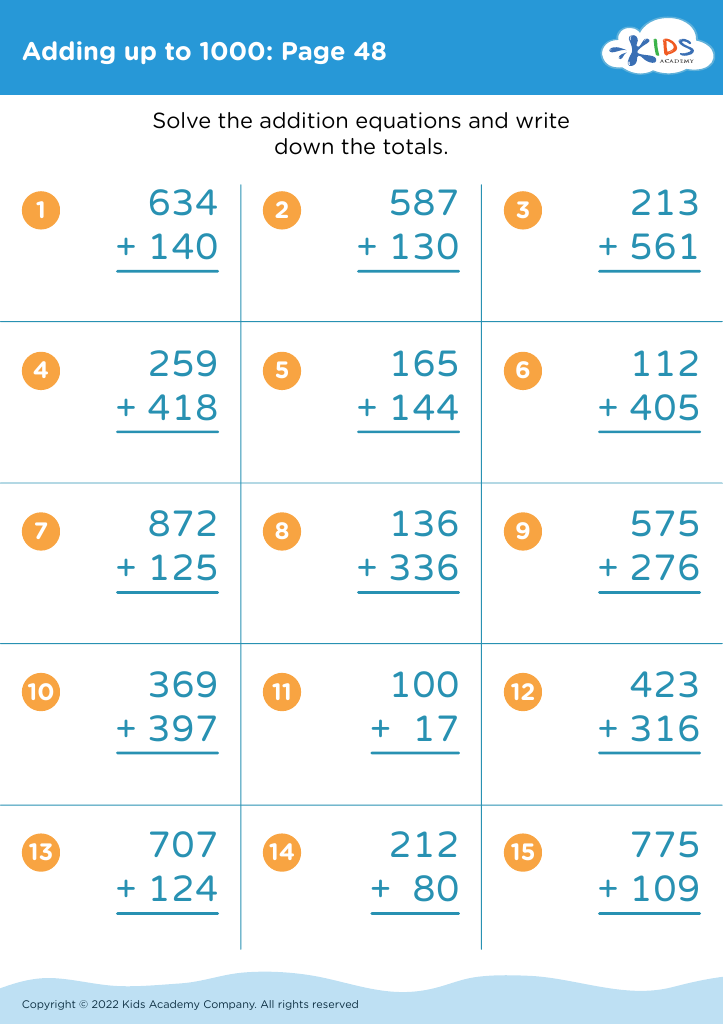


Counting practice and addition skills are fundamental building blocks of mathematics for children aged 3-7. This crucial stage of development lays the groundwork for future academic success and daily living skills. Engaging in exercises that encourage adding up to 1,000 allows young learners to reinforce their understanding of numbers, improve their problem-solving abilities, and enhance their cognitive skills.
For parents and teachers, these practices offer more than just arithmetic skills; they encourage critical thinking, pattern recognition, and logical reasoning. Understanding numbers up to 1,000 helps children grasp concepts of larger quantities, fostering a sense of scale and numerical variety. Additionally, such skills boost confidence as children begin to tackle more complex math problems in later grades.
Moreover, counting activities nurture fine motor skills and hand-eye coordination when approached through interactive methods like manipulatives or games. By incorporating counting practices into daily routines—like counting objects or engaging in playful competitions—children can practice these abilities in a fun and engaging way.
Ultimately, focusing on counting and addition lays a strong foundation for children’s future learning, paving the way for lifelong skills in mathematics, scientific reasoning, and logical analysis. Parents and teachers should prioritize these activities for nurturing well-rounded young learners.