Fraction simplification Adding up to 1000 Misc Worksheets for Ages 3-7
5 filtered results
-
From - To
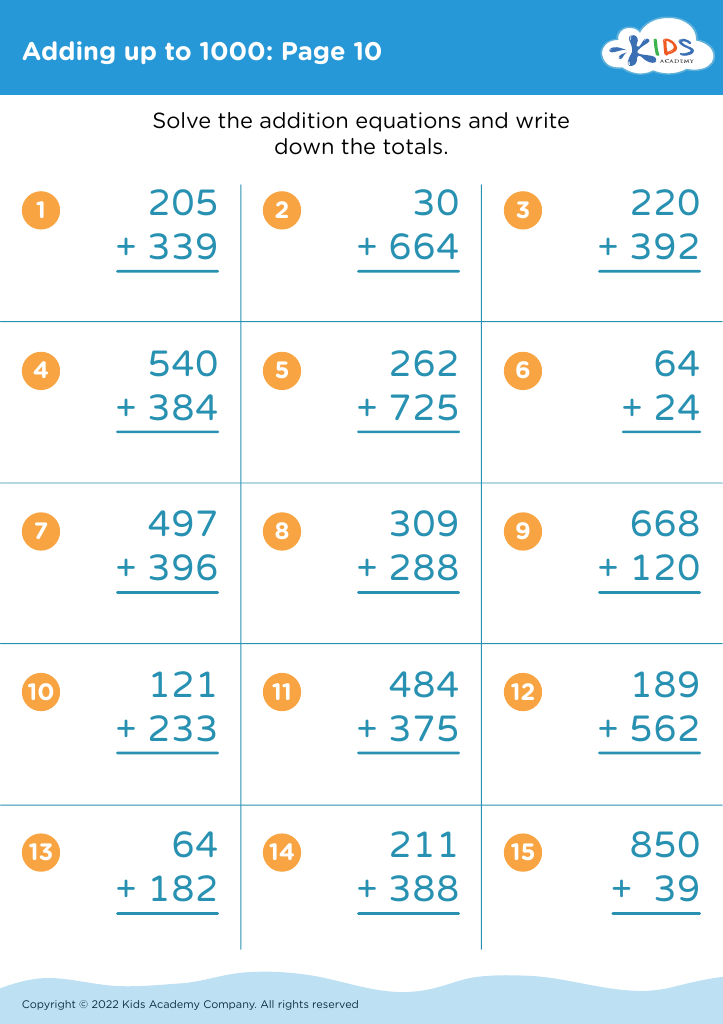
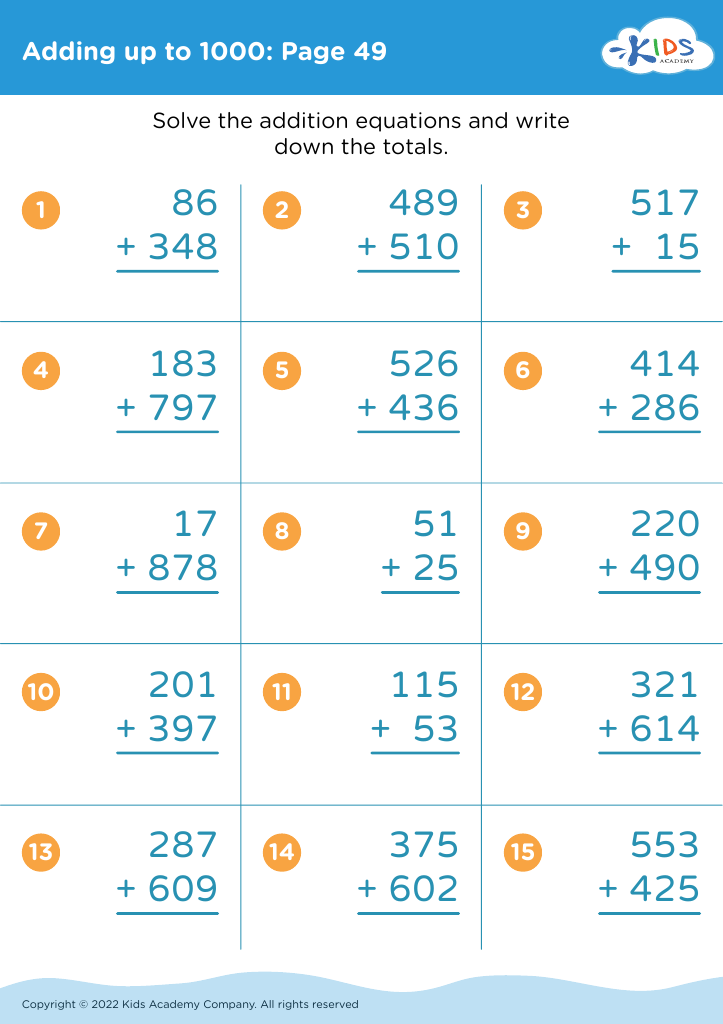
Introduce young learners to the basics of fractions with our engaging "Fraction Simplification Adding up to 1000 Misc Worksheets for Ages 3-7." These carefully designed worksheets make math fun, helping kids understand and master the simplification of fractions through vibrant activities and visual aids. Each worksheet aims to build foundational skills, promote logical thinking, and boost confidence in handling fractions. These worksheets offer a variety of exercises catering to children aged 3-7, making early math learning an enjoyable and rewarding experience. Perfect for both classroom and home use, they align with early grade math standards, ensuring quality education.
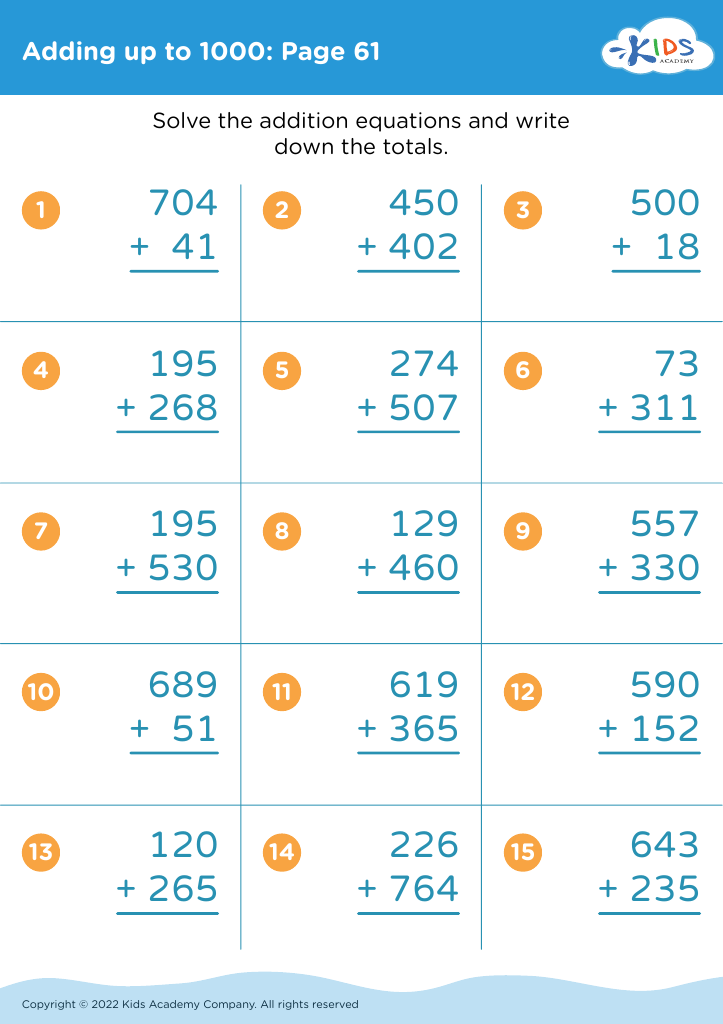
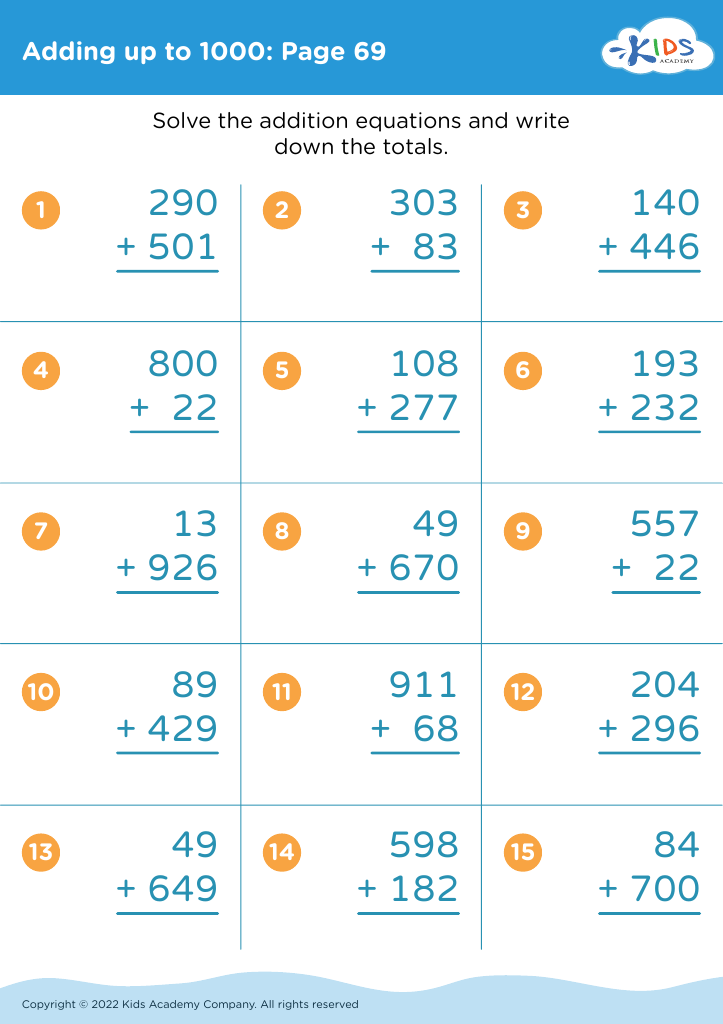
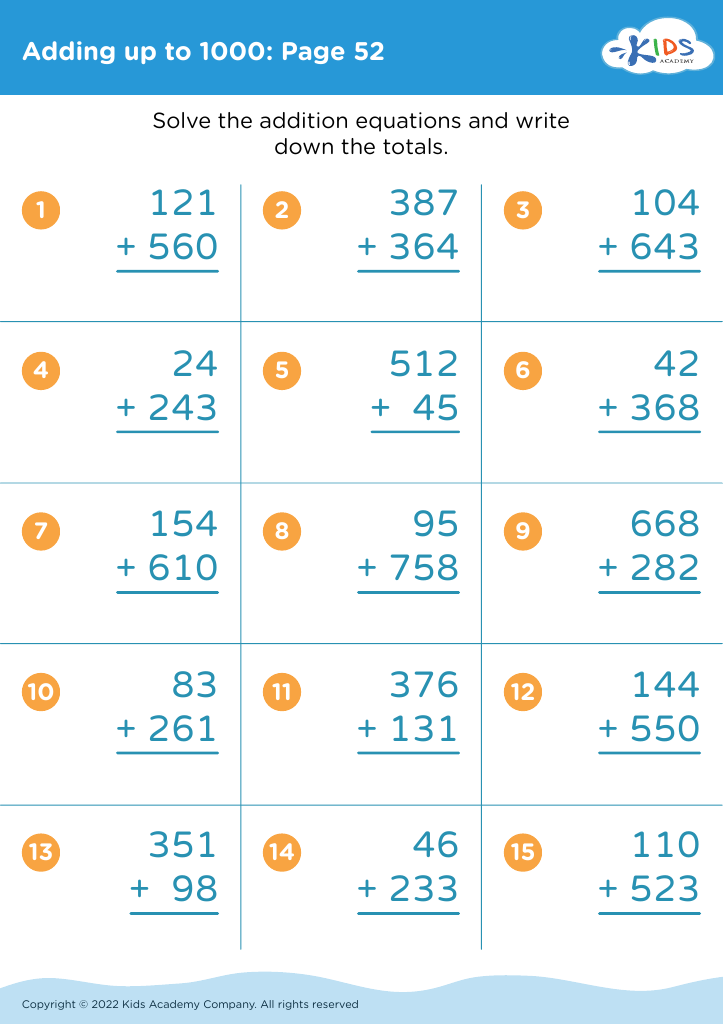


It's essential for parents and teachers to care about introducing fraction simplification and other age-appropriate math concepts to children aged 3-7 because it lays a foundational understanding of mathematics that is crucial for future learning. At this young age, children are especially receptive to absorbing new information, and early exposure to math concepts can enhance cognitive development, problem-solving skills, and logical thinking.
Teaching fraction simplification helps young learners grasp the idea of parts and wholes and how they relate to each other. Simplifying fractions, though it might seem advanced, can be presented in simple and engaging ways, fostering a deeper intuitive understanding of numbers and ratios. For instance, comparing slices of a pie or pieces of LEGO can make these concepts tangible.
Introducing skills like counting up to 1000 helps children develop number sense, sequencing, and the ability to recognize and work with larger quantities. This builds their confidence and prepares them for more complex math tasks they'll encounter later.
Furthermore, integrating diverse mathematical activities refines motor skills, promotes persistence, and gives a sense of accomplishment. When parents and teachers show enthusiasm for these subjects, they instill a positive attitude toward learning, setting children on a path to academic success and promoting a lifelong love of math.