Addition Practice Adding up to 1000 with Regrouping Worksheets for Ages 3-7
3 filtered results
-
From - To
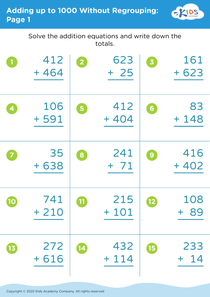
Mastering addition early on is crucial for building strong math foundations. Our "Addition Practice Adding up to 1000 with Regrouping Worksheets for Ages 3-7" empowers young learners through engaging exercises. These worksheets offer a fun and effective way to practice adding numbers up to 1000, with a focus on regrouping techniques. Tailored for children ages 3 to 7, they simplify complex concepts with colorful, kid-friendly examples and clear instructions. Ideal for preschool and early elementary students, our worksheets make learning addition enjoyable and rewarding. Download now and watch your child’s confidence in math soar!
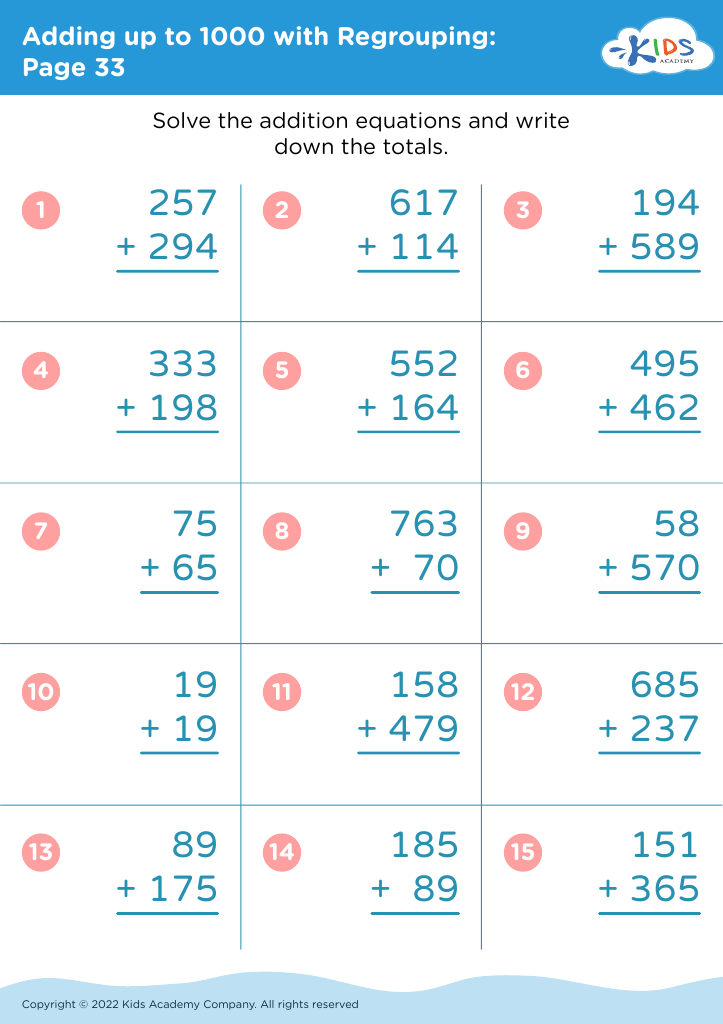
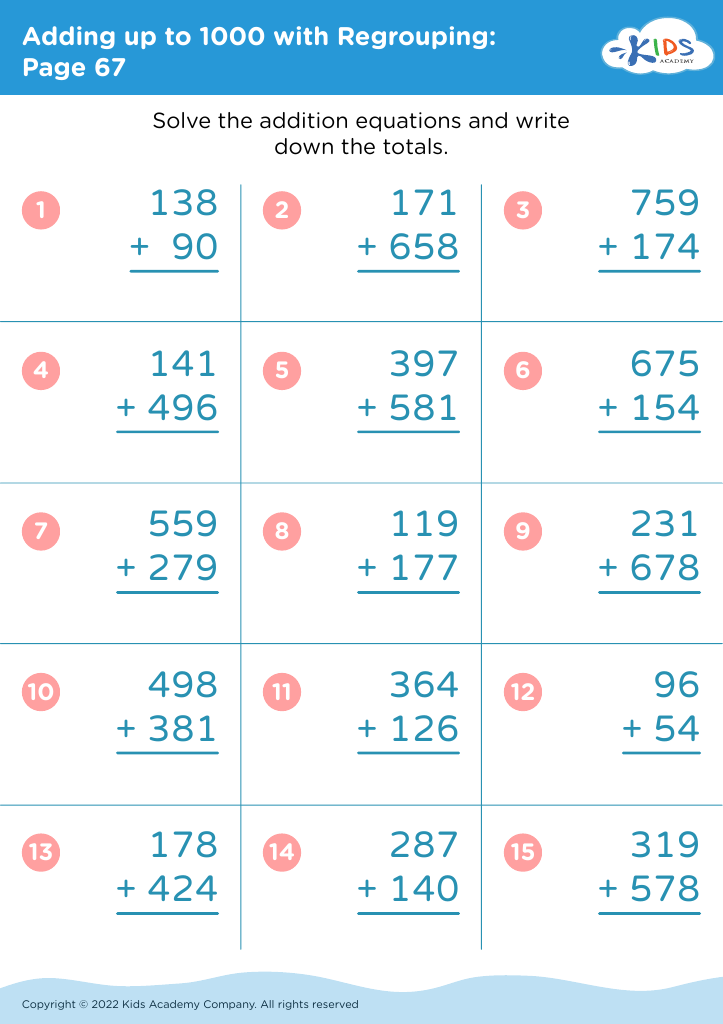
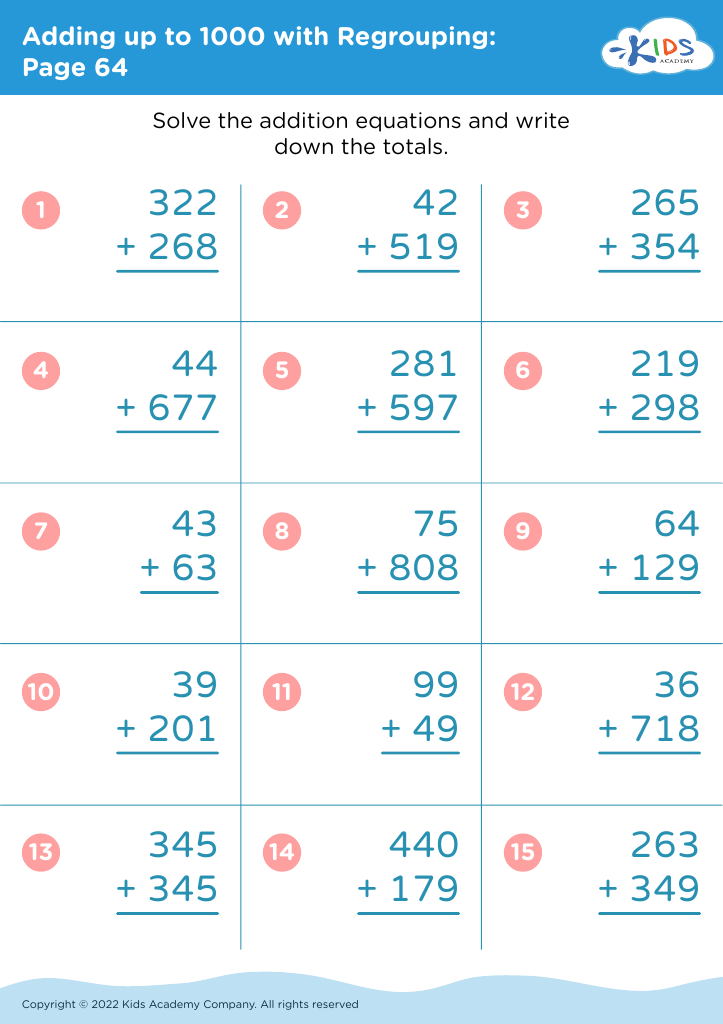


Parents and teachers should care about Addition Practice Adding up to 1000 with Regrouping for children aged 3-7 because it's foundational for their numerical understanding and cognitive growth. Initially, addition-within-1000 helps children grasp larger numbers and understand how smaller parts can combine to make a whole. Regrouping, commonly known as carrying over, builds their ability to tackle more complex mathematical problems in the future.
By practicing these skills early, children develop fluency that contributes to their overall math literacy, which is critical for later success in more demanding subjects like science and technology. Engaging with these exercises cultivates essential problem-solving skills, patience, persistence, and attention to detail. It also boosts memory, concentration, and logical reasoning, important aspects of cognitive apparatus applicable in numerous real-world scenarios, from personal finance to planning tasks.
Finally, showing care and support for these practices highlights to children the importance of learning and the joy of mastering challenging tasks. Encouraging this process during the substantial neurodevelopmental phase at ages 3-7 ensures better readiness for academic challenges, inculcating a positive attitude towards education and laying the groundwork for lifelong learning and curiosity.