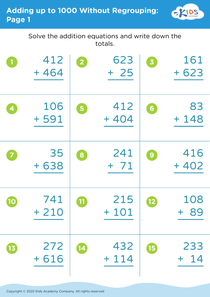
Color Identification Adding up to 1000 with Regrouping Worksheets for Ages 3-7
5 filtered results
-
From - To
Welcome to our "Color Identification Adding up to 1000 with Regrouping Worksheets" designed specifically for children aged 3-7! This engaging resource combines essential math skills with vibrant color identification activities, making learning both fun and effective. Through carefully crafted worksheets, young learners will practice their addition skills while also enhancing their ability to recognize and name colors. Each worksheet offers interactive exercises that reinforce the concept of regrouping, helping children build a solid mathematical foundation. Perfect for home or classroom use, these worksheets provide a playful approach to learning that keeps little minds active and excited about math!
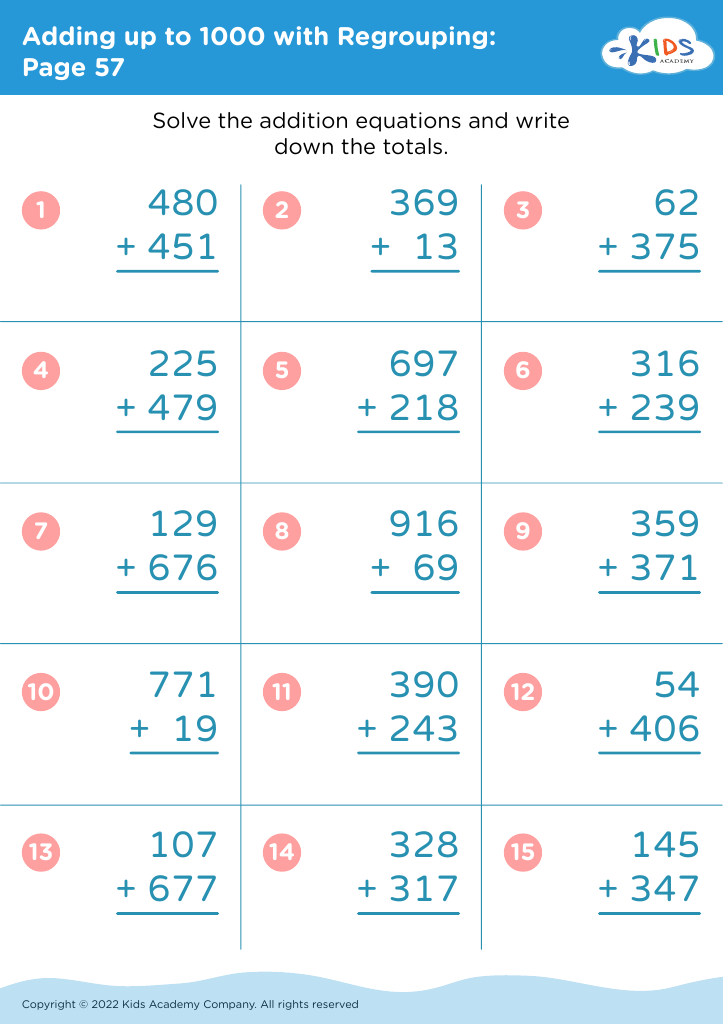
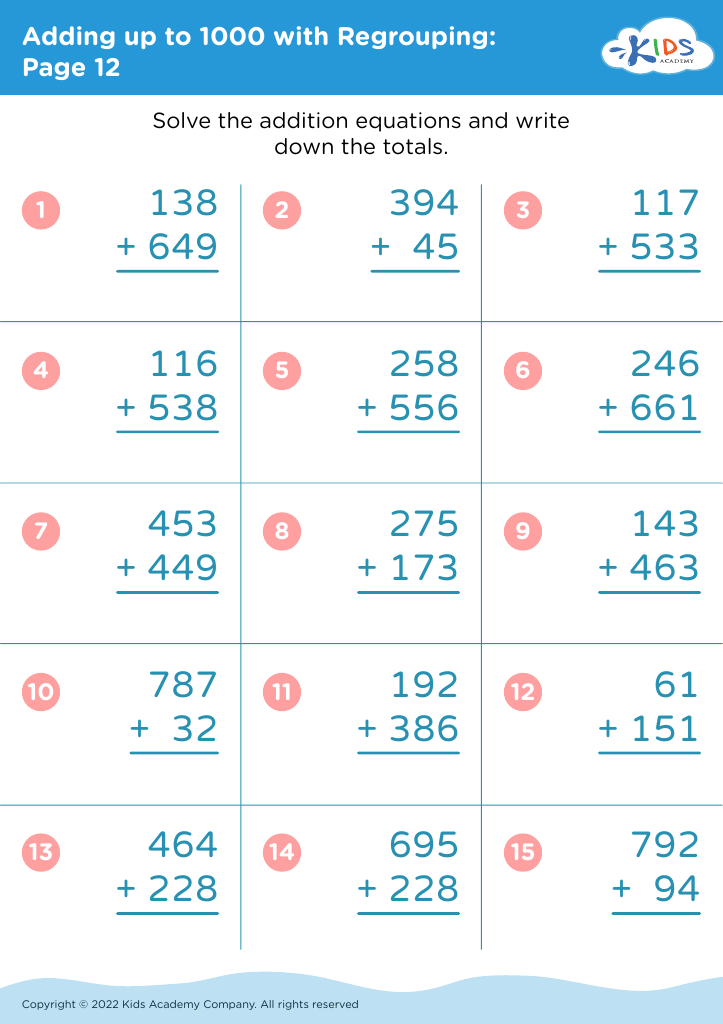
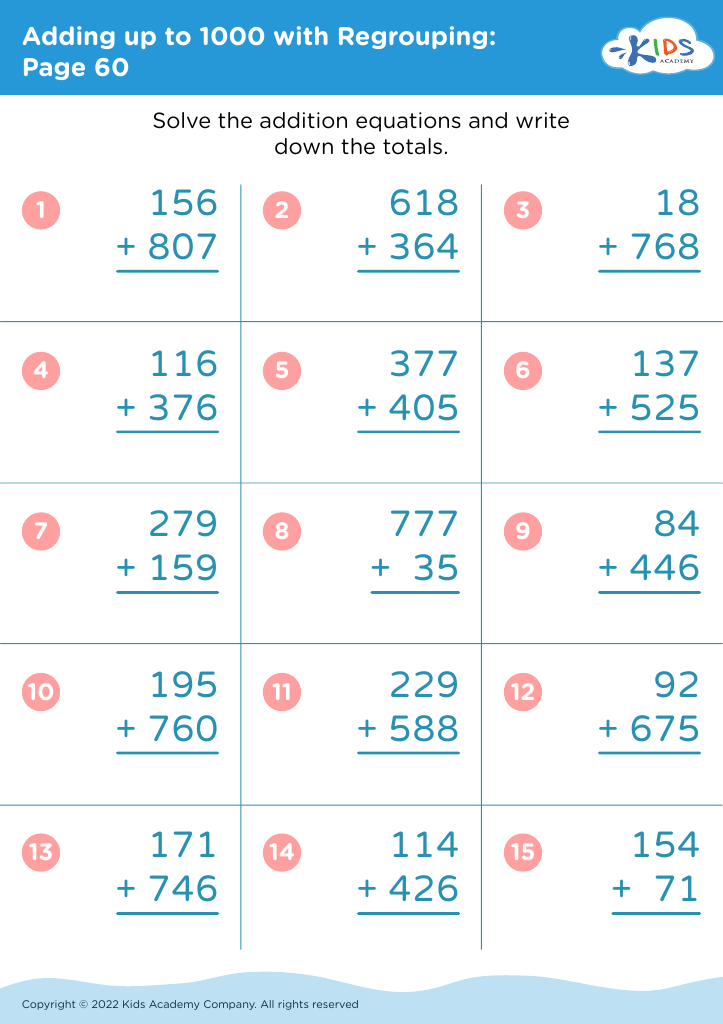
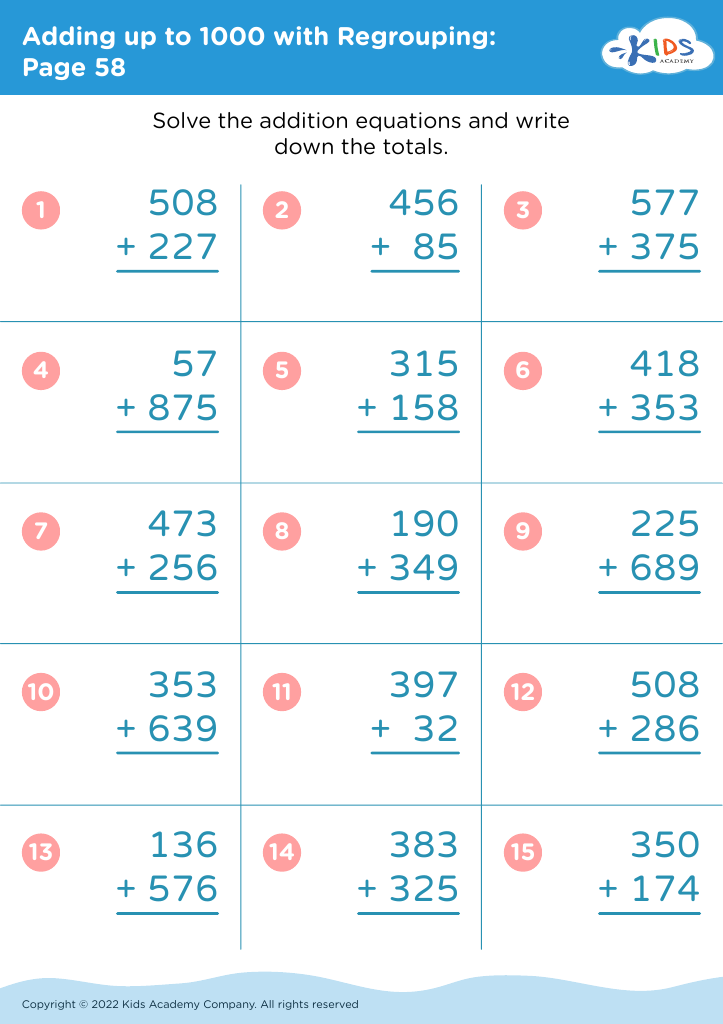
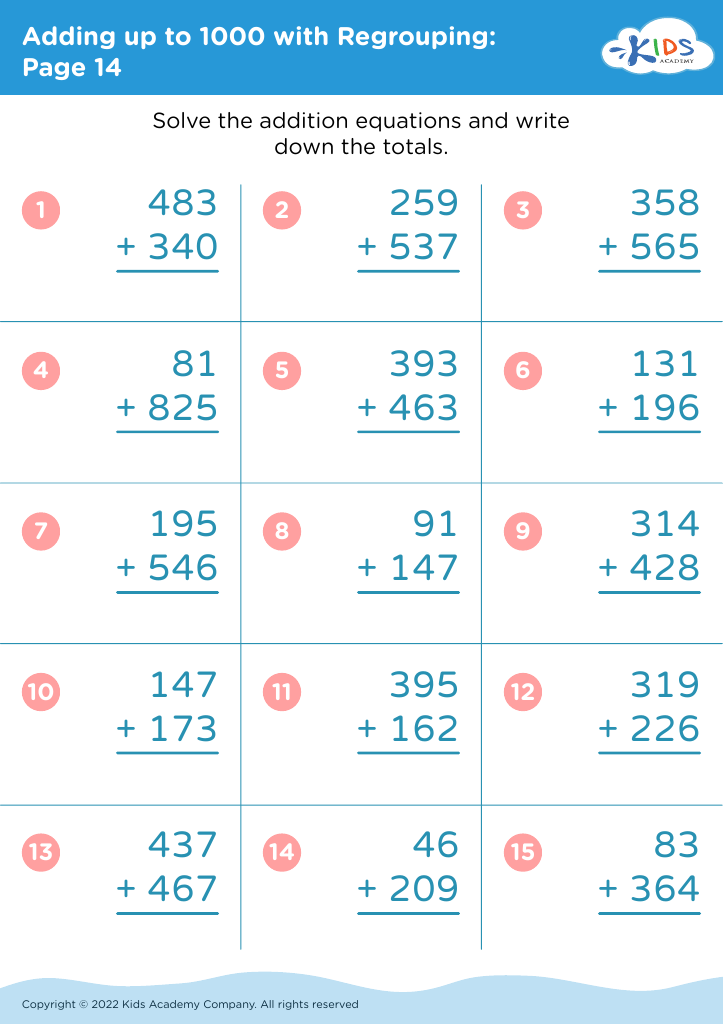


Color identification and foundational math skills like adding up to 1000 with regrouping are both crucial for children aged 3-7. Parents and teachers should care about these areas for several reasons.
First, understanding colors is vital for cognitive development. It enhances a child’s visual perception and helps in language development as they learn to describe and categorize their world. Identifying colors can also foster creativity and artistic expression, allowing children to experiment and explore.
Similarly, mastering basic addition and concepts like regrouping lays the groundwork for more complex mathematical operations. This early grasp of numbers encourages logical thinking and problem-solving skills, essential components of later academic success. Regrouping, or "carrying over," helps children learn to manage larger numbers systematically, which is critical as they progress in their education.
Moreover, engaging in activities that combine color identification with math can make learning more interactive and enjoyable. This multisensory approach keeps children engaged and enhances memory retention. Ultimately, focusing on these foundational skills not only prepares children academically but also builds their confidence, independence, and overall enthusiasm for learning. Therefore, parents and teachers play a key role in nurturing these abilities during this formative age.