Comparing Fractions Adding up to 1000 with Regrouping Worksheets for Ages 3-7
8 filtered results
-
From - To
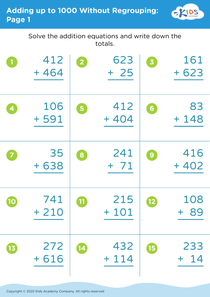
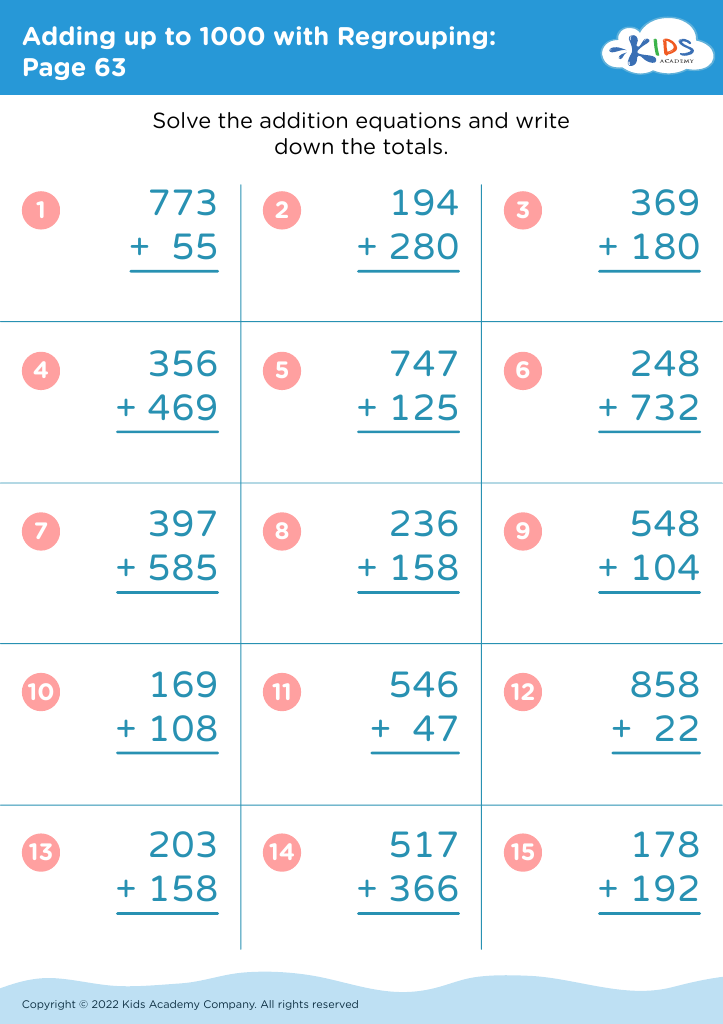
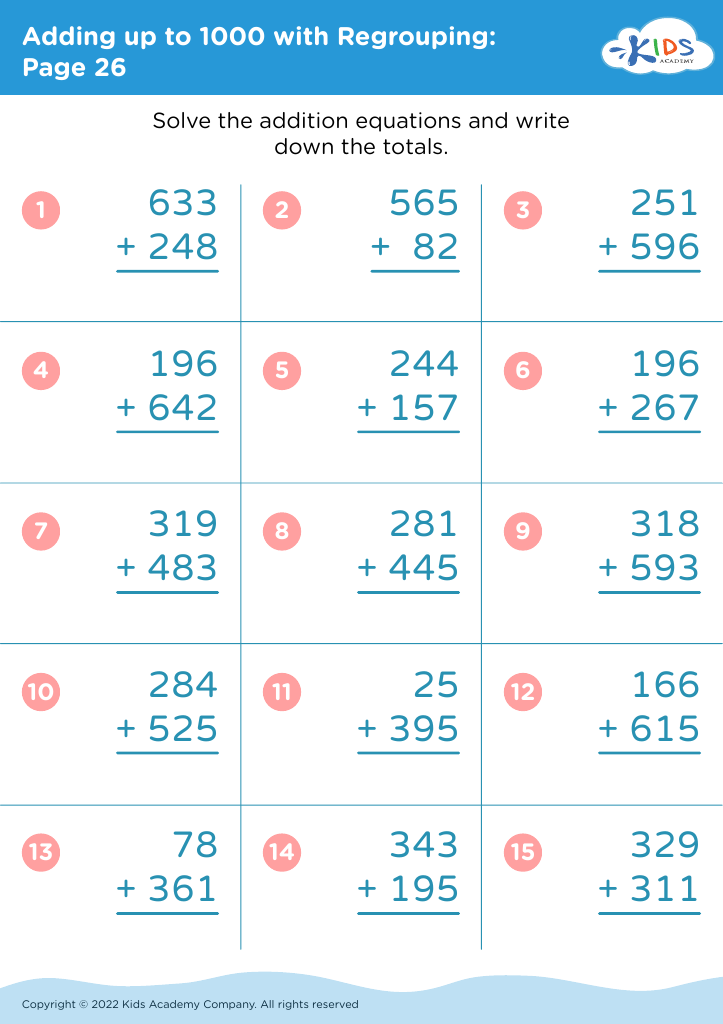
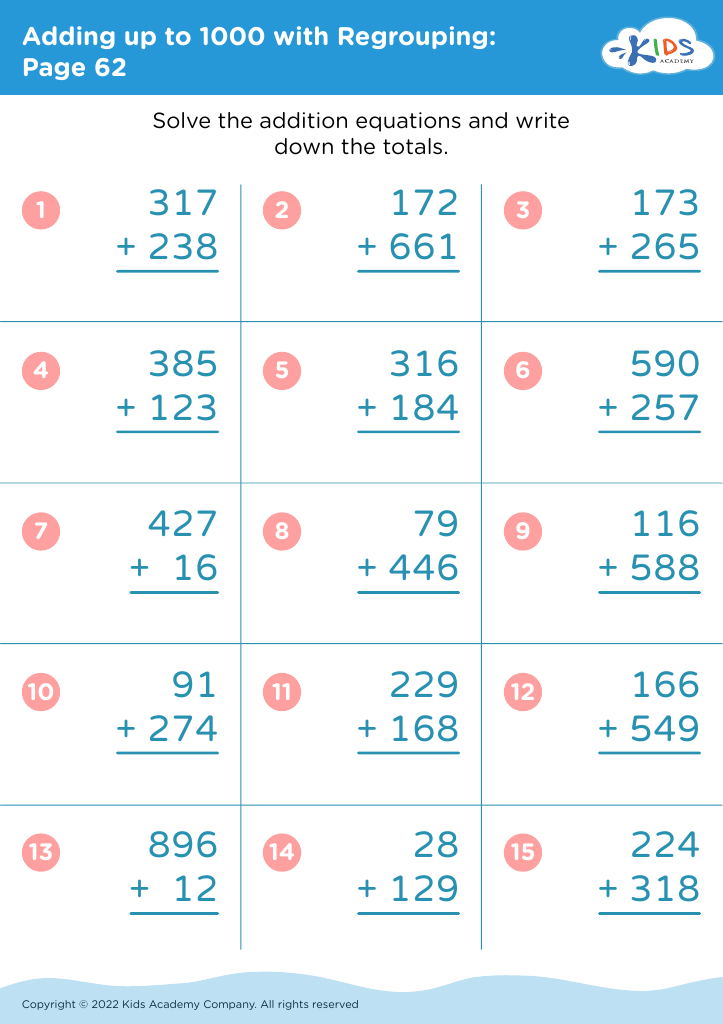
Explore our "Comparing Fractions Adding up to 1000 with Regrouping Worksheets," perfect for young learners aged 3-7! These engaging printables from Kids Academy help children build foundational math skills by comparing fractions and practicing regrouping. Through colorful visuals and fun exercises, kids will learn to understand fraction concepts and master addition, making progress in both precision and confidence. Ideal for early grade students, these worksheets turn math practice into a delightful adventure, ensuring kids develop critical thinking and problem-solving abilities. Enhance your child's numeracy skills and download our worksheets now to inspire a lifelong love for learning math!
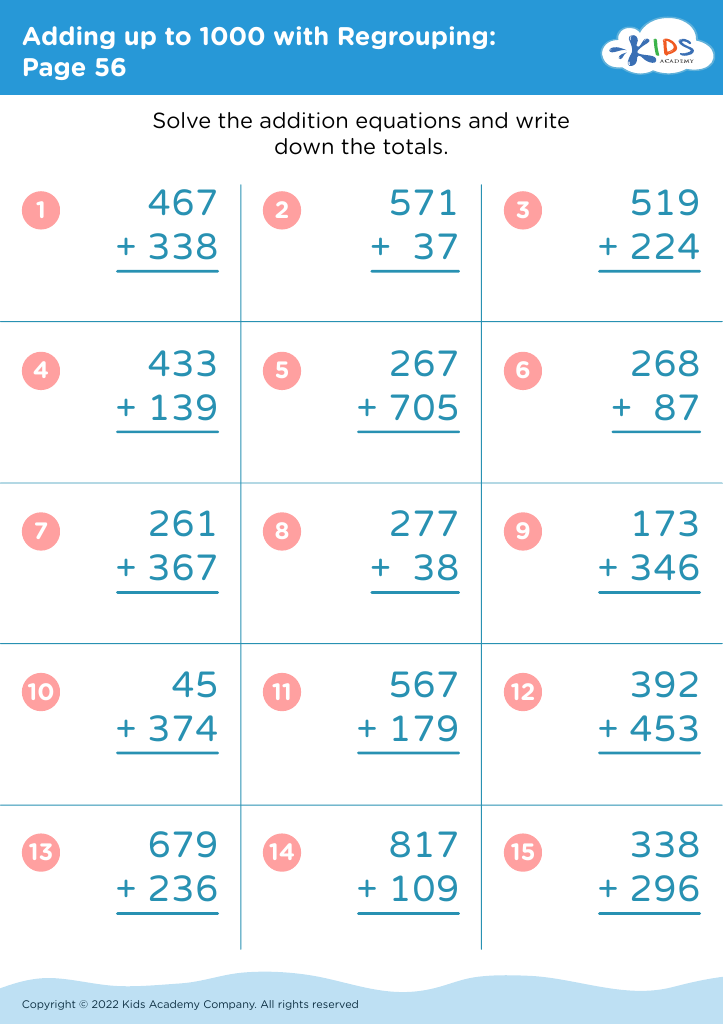
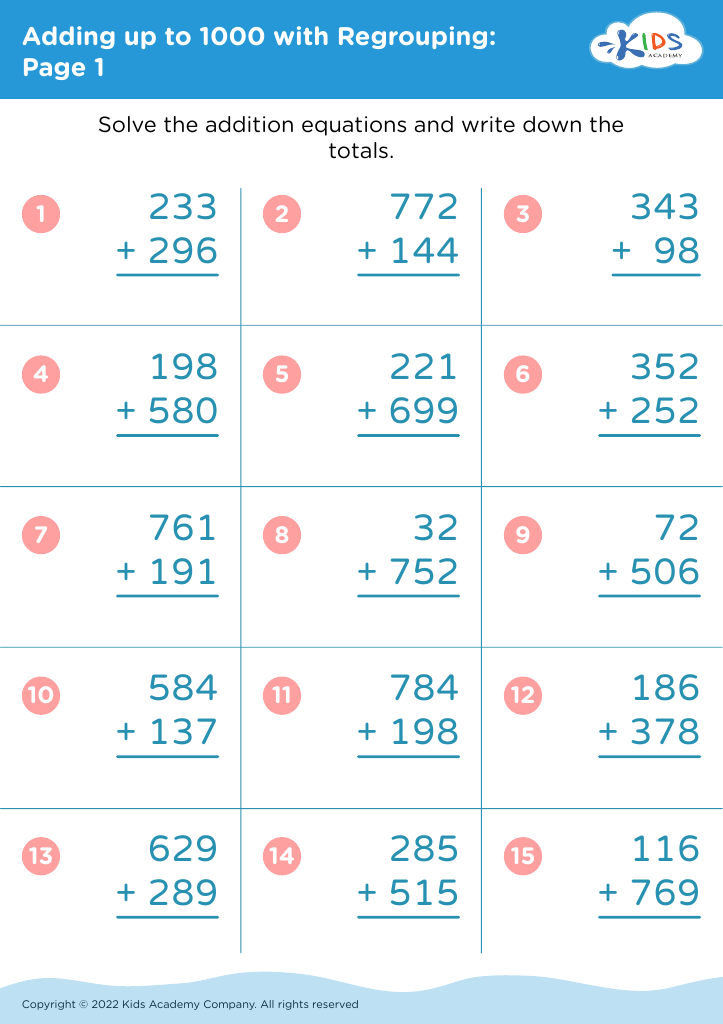
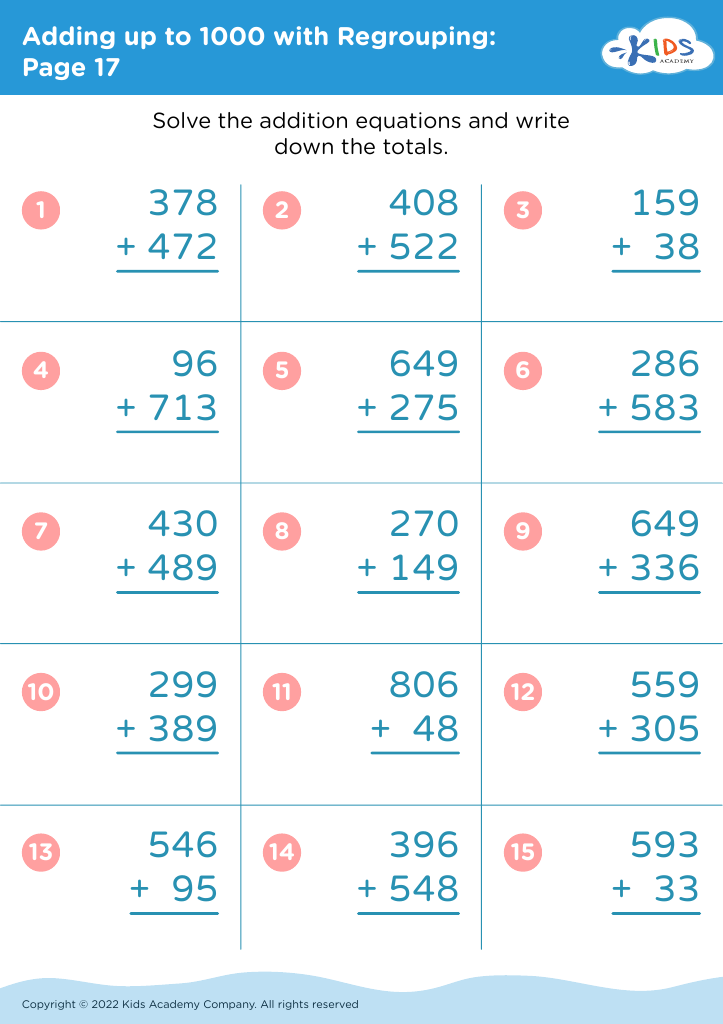
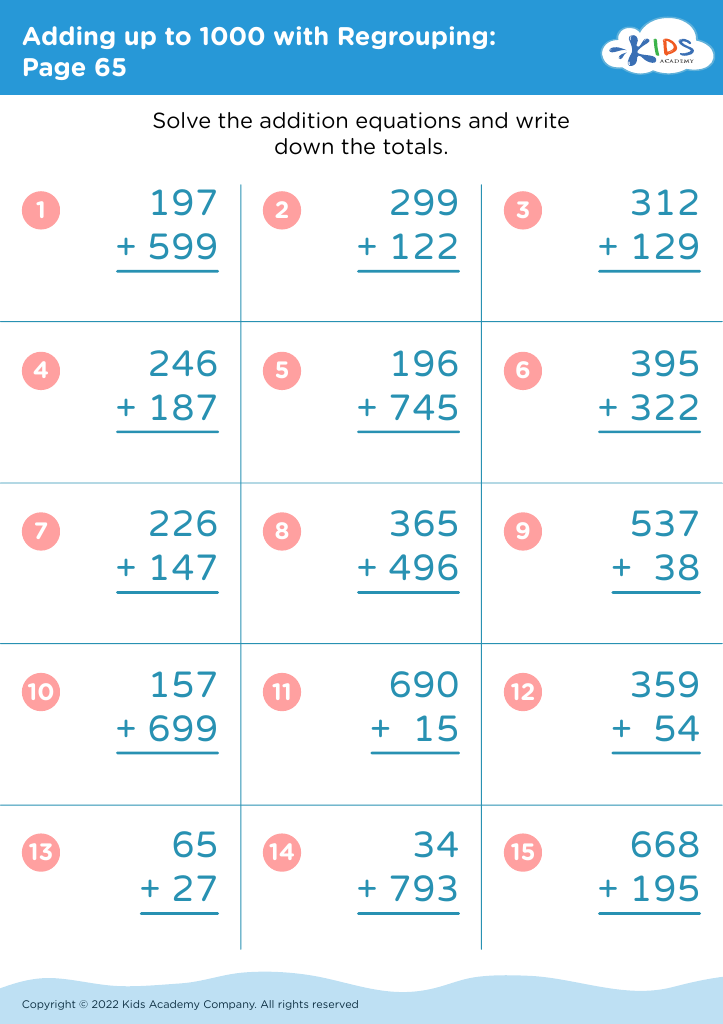
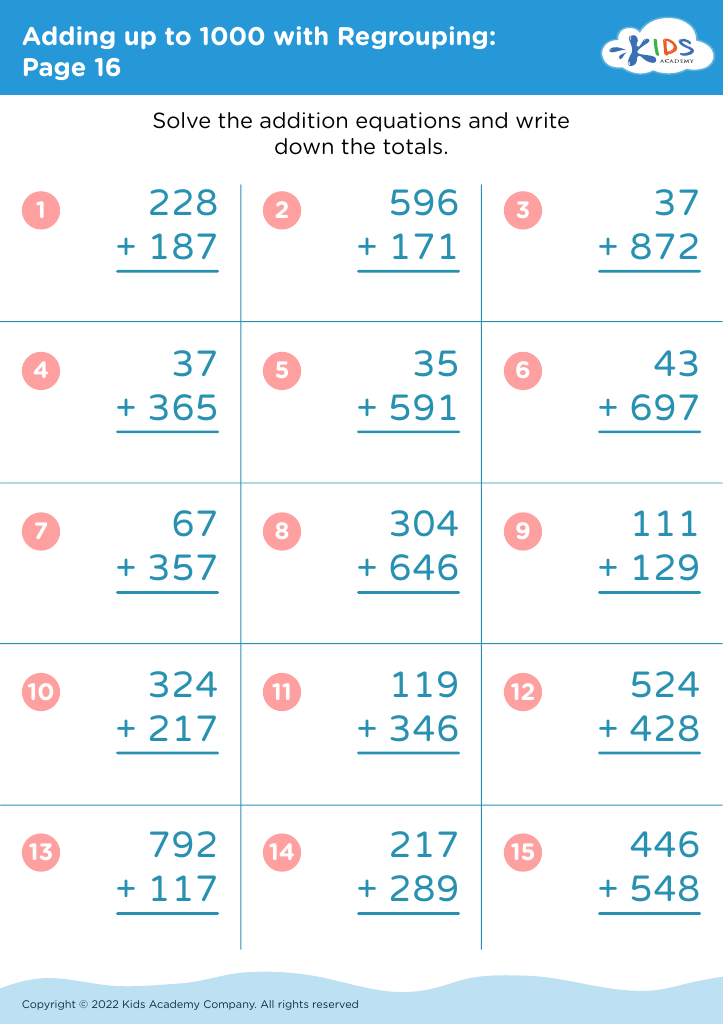


Teaching young children to compare fractions and to add up to 1000 with regrouping might seem advanced for ages 3-7, but foundational concepts introduced at these ages can significantly benefit their future mathematical understanding.
Understanding fractions at an early age fosters a strong sense of number relationships and proportional reasoning, which are crucial for later math proficiency. While direct instruction on comparing fractions might be adapted for these younger ages, providing them with simple puzzles and games helps them grasp these concepts intuitively. For example, through sharing toys or splitting snacks, children can get a hands-on sense of fractions, while swinging between whole numbers and parts of a whole.
Adding up to 1000 with regrouping helps reinforce their understanding of place value and the base-10 number system. Even though 3-7 year-olds aren’t typically ready to work directly with such high numbers, engaging activities that highlight place value principles set a solid groundwork. Utilizing manipulatives like block toys or game-based learning where regrouping is simplified, can instill these concepts clearly.
Parents and teachers should care about these areas because developing these early skills fosters critical thinking, problem-solving abilities, and a confident, positive attitude towards math. Ensuring children have a robust numerical foundation can ease their transition into more complex topics as they progress in their education.