Fine Motor Skills Adding up to 1000 with Regrouping Worksheets for Ages 3-7
4 filtered results
-
From - To
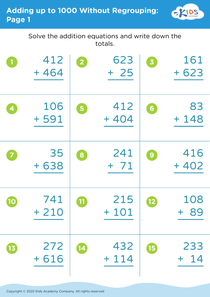
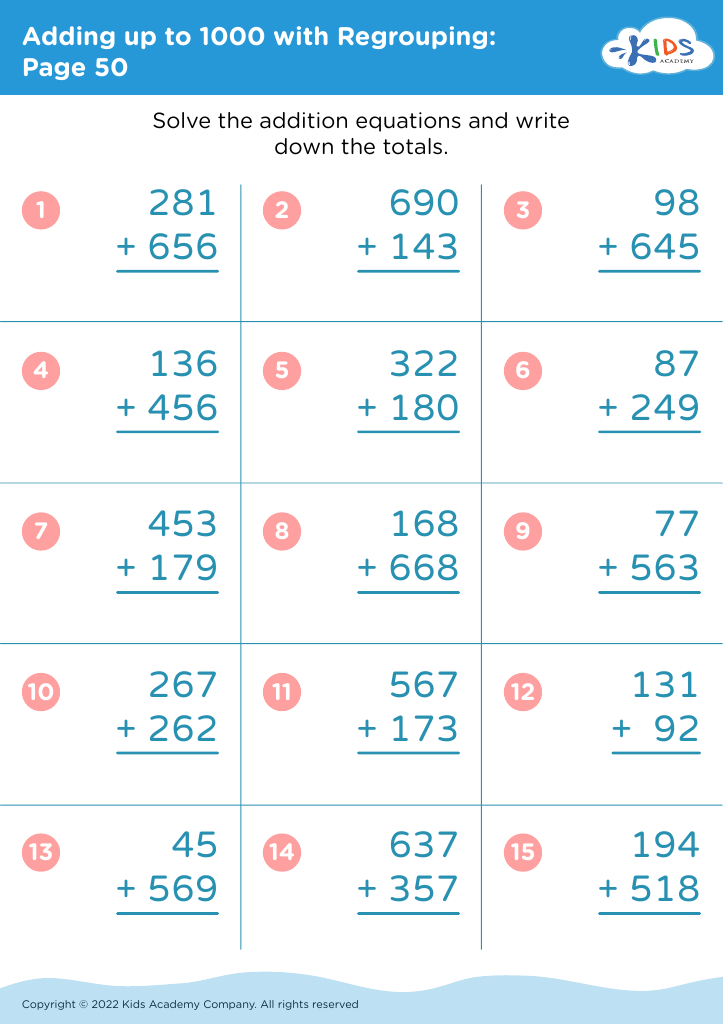
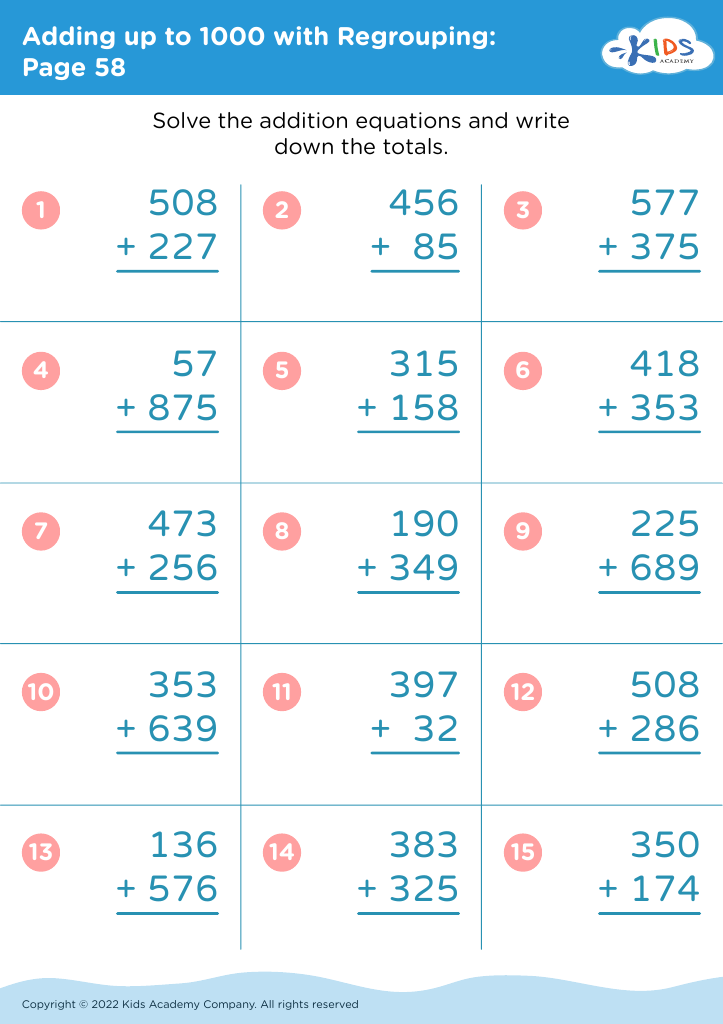
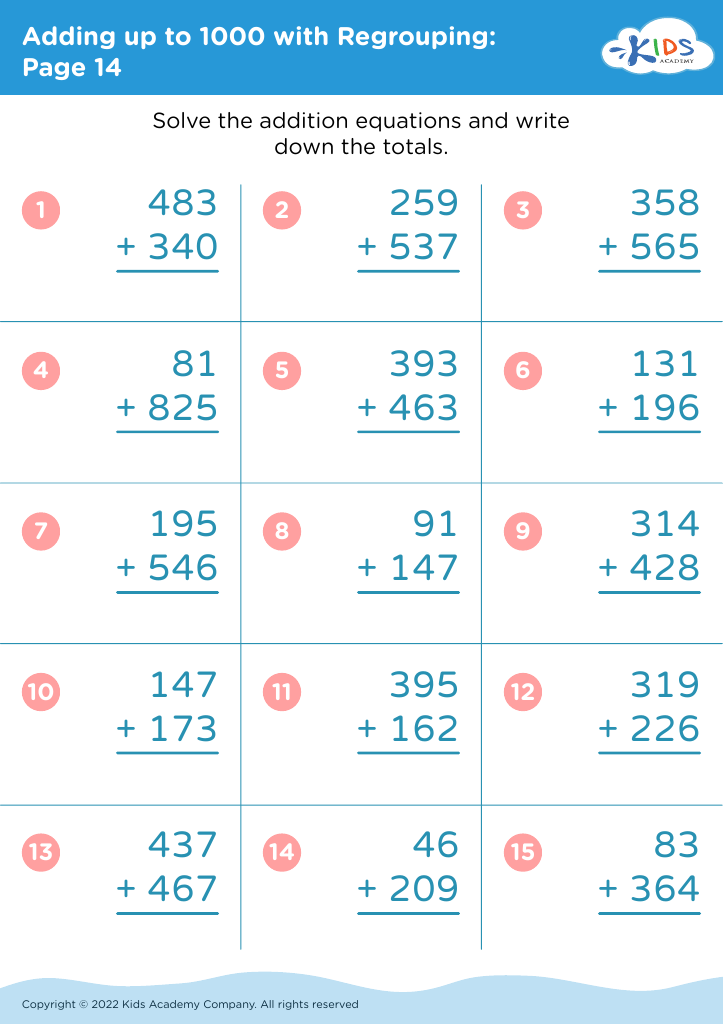
Enhance fine motor skills while mastering addition with our engaging "Fine Motor Skills Adding Up to 1000 with Regrouping Worksheets," designed specifically for children ages 3-7. These interactive worksheets combine essential math concepts with activities that encourage hand-eye coordination, pencil grip, and dexterity. Children will enjoy exercises that seamlessly integrate counting, adding, and regrouping, all while developing the physical skills necessary for writing and drawing. Perfect for classroom or at-home learning, these worksheets foster confidence in young learners as they embark on their mathematical journey. Discover the joy of learning through play and creativity today!
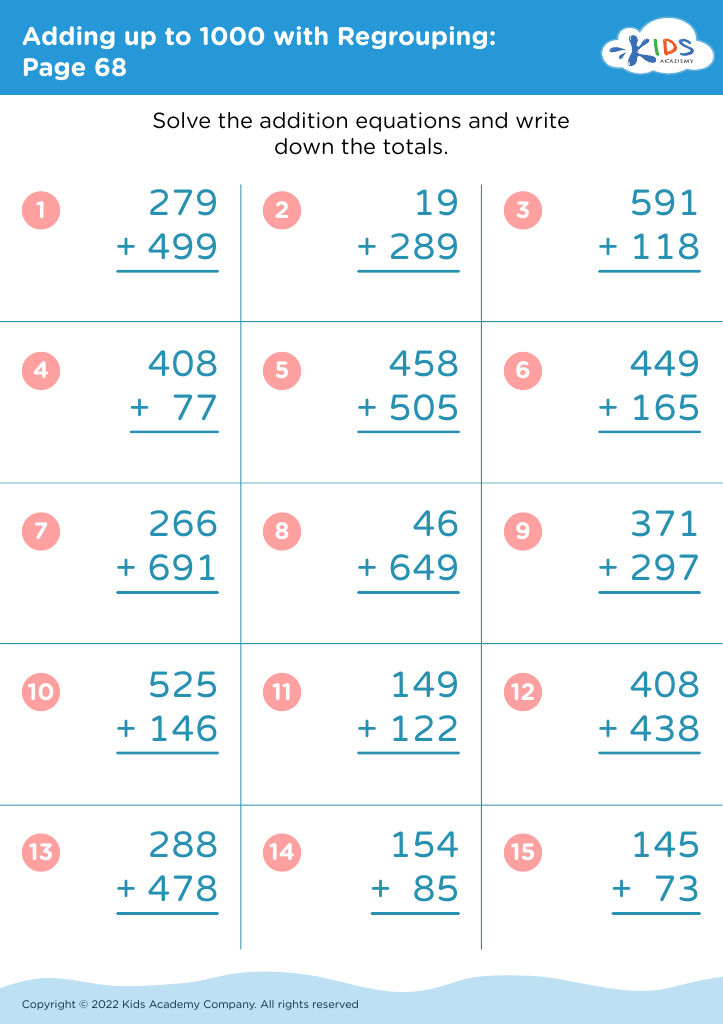


Fine motor skills are essential for the development of young children, particularly in ages 3-7, as they form the foundation for many everyday activities. From writing to tying shoelaces, these skills enhance a child's ability to manipulate objects, thereby fostering independence and self-confidence. Cultivating fine motor skills supports cognitive development as children learn to control their hand movements, which increasingly involves complex tasks like adding up to 1000 with regrouping.
Moreover, teaching children how to add large numbers using regrouping enhances their mathematical understanding and logical reasoning. When parents and teachers collaborate to integrate fine motor activities with math, children can effectively grasp the concept of regrouping by using manipulatives. This hands-on experience nurtures both motor skills and cognitive processes, making learning enjoyable and engaging.
Additionally, as children enhance their fine motor skills, they build the coordination needed for writing numbers legibly, a skill essential for future academic success. Encouraging activities that integrate fine motor skill development with mathematical concepts not only enriches their learning experiences but also lays the groundwork for confidence in both their numeric and physical abilities. Investing time in both areas simultaneously proves vital for well-rounded developmental growth in young children.