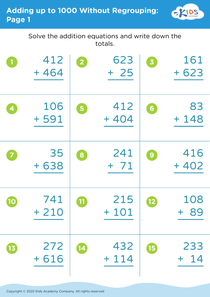
Fraction comparison Adding up to 1000 with Regrouping Worksheets for Ages 3-7
3 filtered results
-
From - To
Discover our engaging "Fraction Comparison: Adding up to 1000 with Regrouping Worksheets" designed for children ages 3-7! Our comprehensive worksheets are perfect for young learners to develop essential math skills through fun and interactive activities. Your child will learn to compare fractions, master addition up to 1000, and regroup numbers, all while boosting their confidence and proficiency in math. With beautifully illustrated exercises and clear instructions, these worksheets are an excellent resource for both classroom and at-home learning. Set the foundation for math success with our expertly crafted materials at Kids Academy!
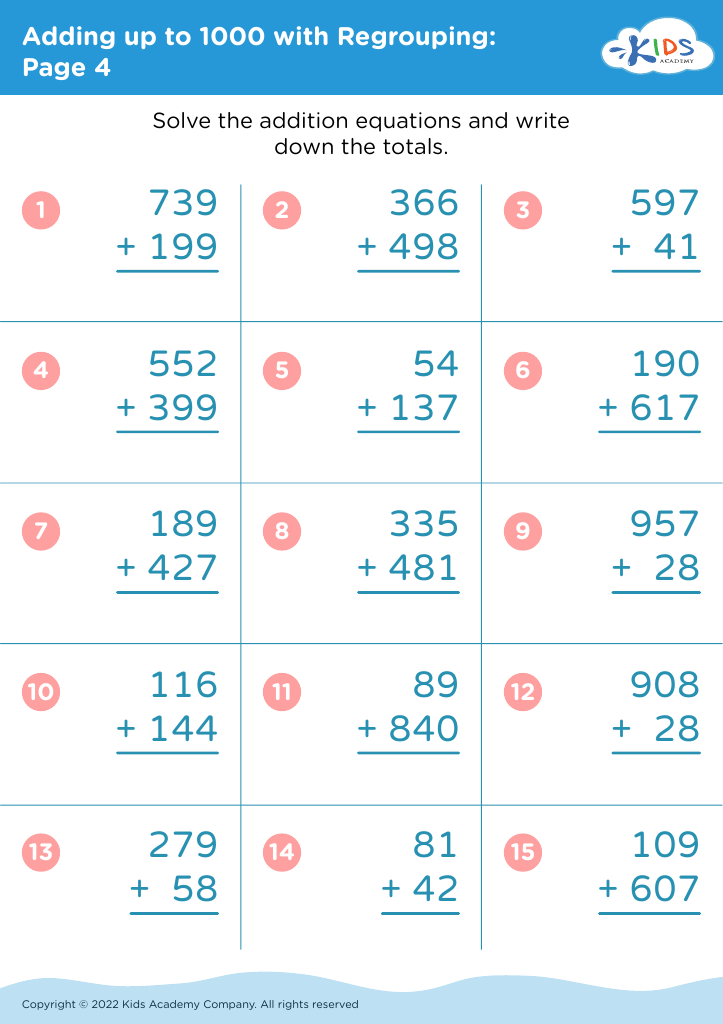
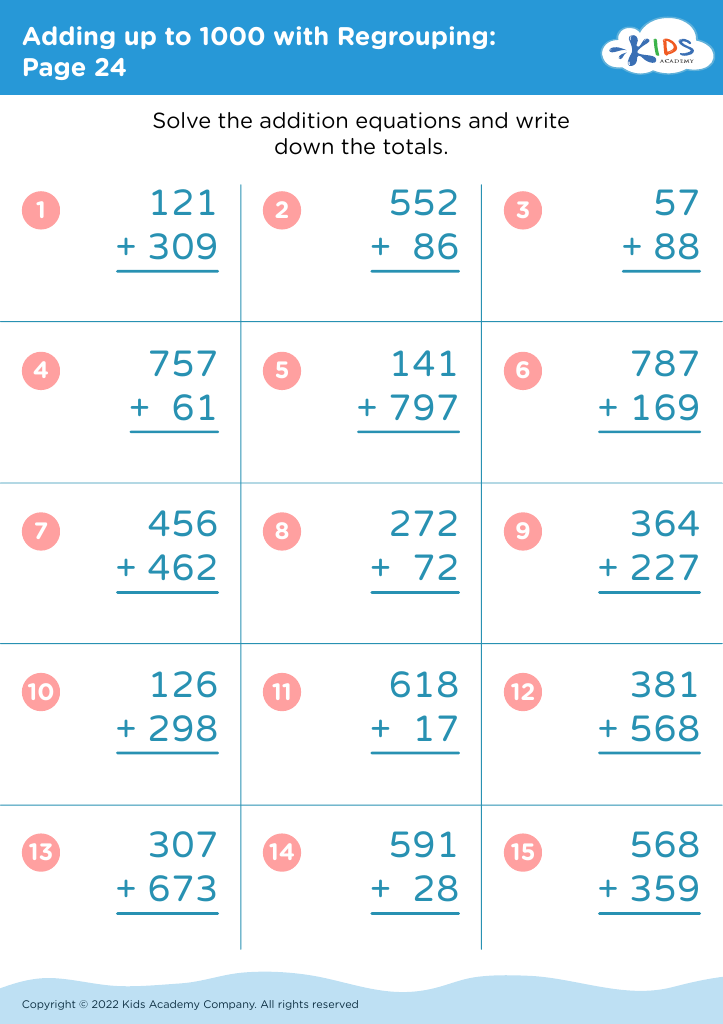
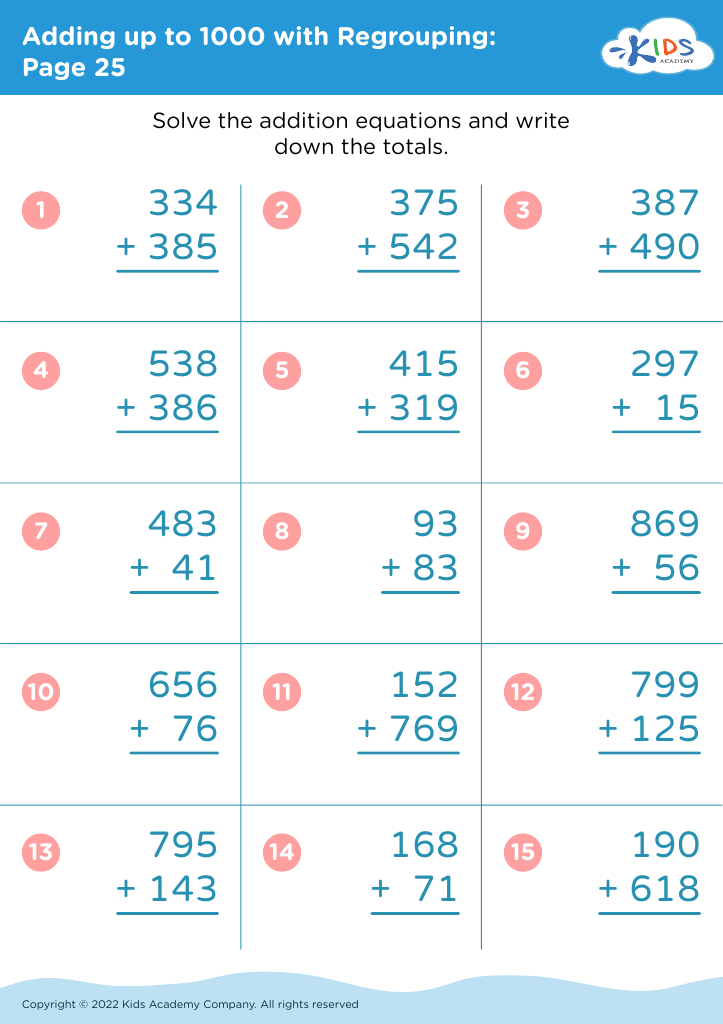


Fraction comparison and addition with regrouping for ages 3-7 may initially seem advanced, but introducing these concepts early lays a strong educational foundation. At this age, children's brains are highly adaptable and receptive to learning new concepts, even if presented in simplified forms. When parents and teachers engage young children with fraction comparison and addition up to 1000, they're fostering strong numerical understanding, critical thinking, and problem-solving skills.
Early exposure to these mathematical concepts helps children understand quantities, parts of a whole, and the relationship between numbers. This foundational knowledge is crucial for future math learning. For example, understanding fractions and regrouping promotes mental math flexibility and helps children grasp more complex arithmetic, algebra, and geometry topics later.
Using hands-on activities, visual aids, and playful methodologies can make these advanced concepts accessible and enjoyable for young kids. For instance, parents and teachers can use fraction pies, number lines, and grouping objects to illustrate these ideas.
Moreover, grasping these concepts reinforces confidence. Children who recognize they can master challenging ideas early on are likely to develop a positive attitude toward learning and mathematics in particular. This early intervention reduces math anxiety and positions children for academic success.
In summary, caring about these advanced mathematical concepts helps build cognitive skills, confidence, and a positive attitude towards learning, setting children up for long-term academic achievement.