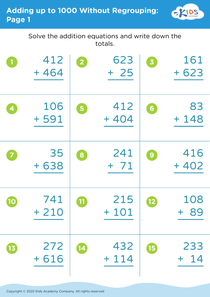
Math problem-solving Adding up to 1000 with Regrouping Worksheets for Ages 3-7
3 filtered results
-
From - To
Welcome to our collection of "Math Problem-Solving Adding Up to 1000 with Regrouping Worksheets" designed specifically for children ages 3-7. These engaging worksheets focus on developing essential math skills, helping young learners master addition with regrouping techniques. With vibrant visuals and interactive exercises, students will enhance their problem-solving abilities while gaining a solid understanding of place value. Perfect for home or classroom use, our resources aim to build confidence and foster a love for mathematics in early learners. Dive into fun math challenges that make learning addition enjoyable and effective! Start your math journey today!
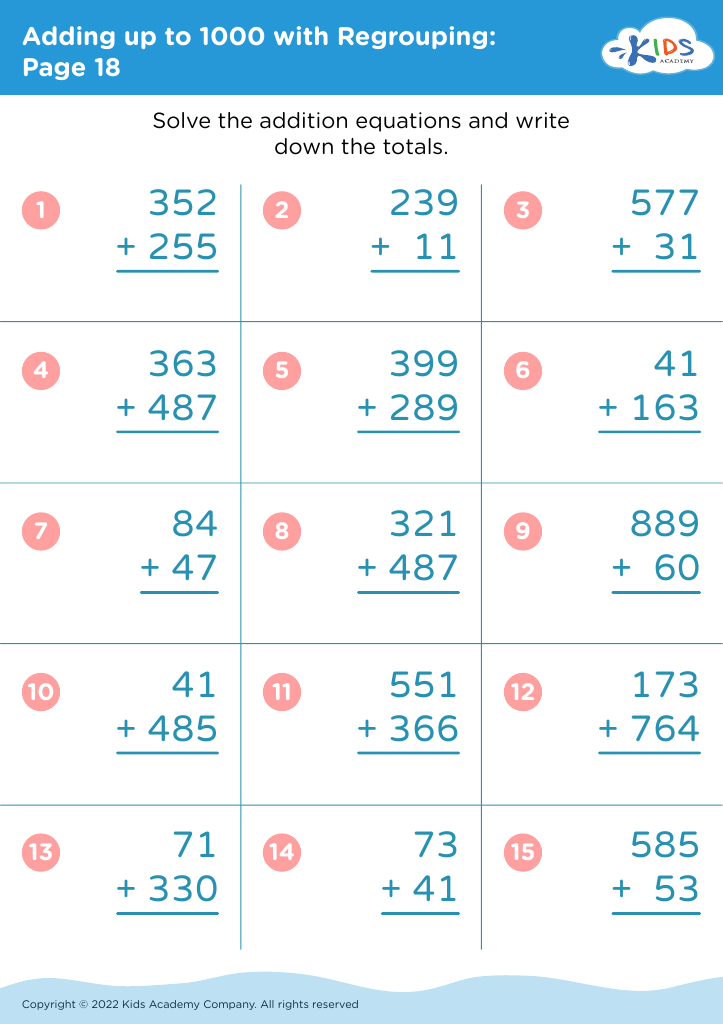
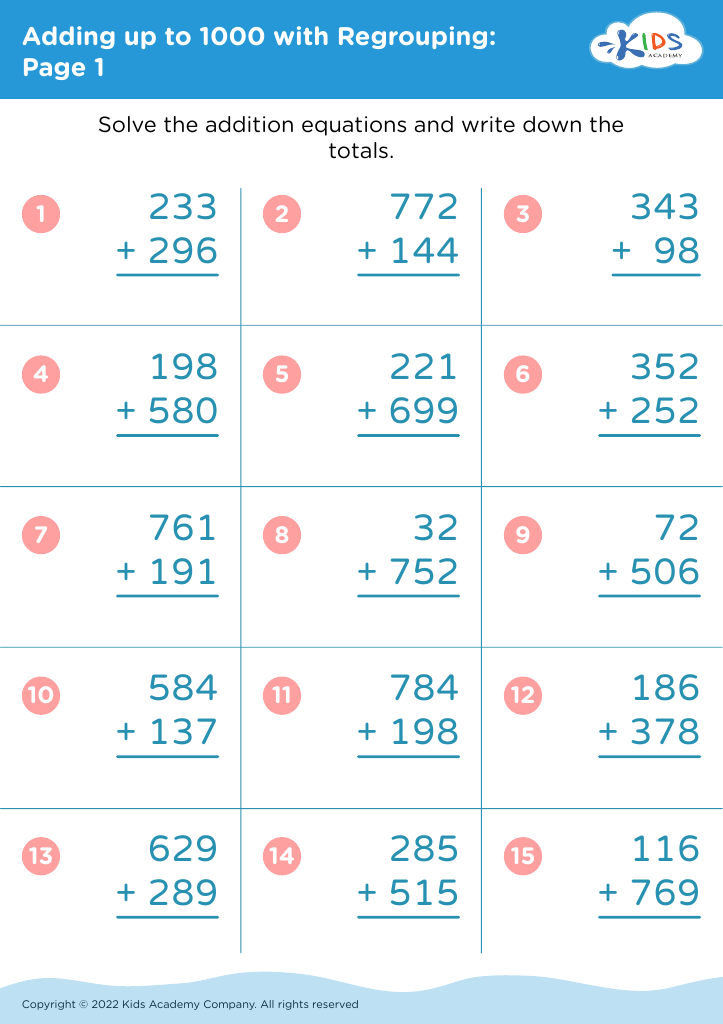
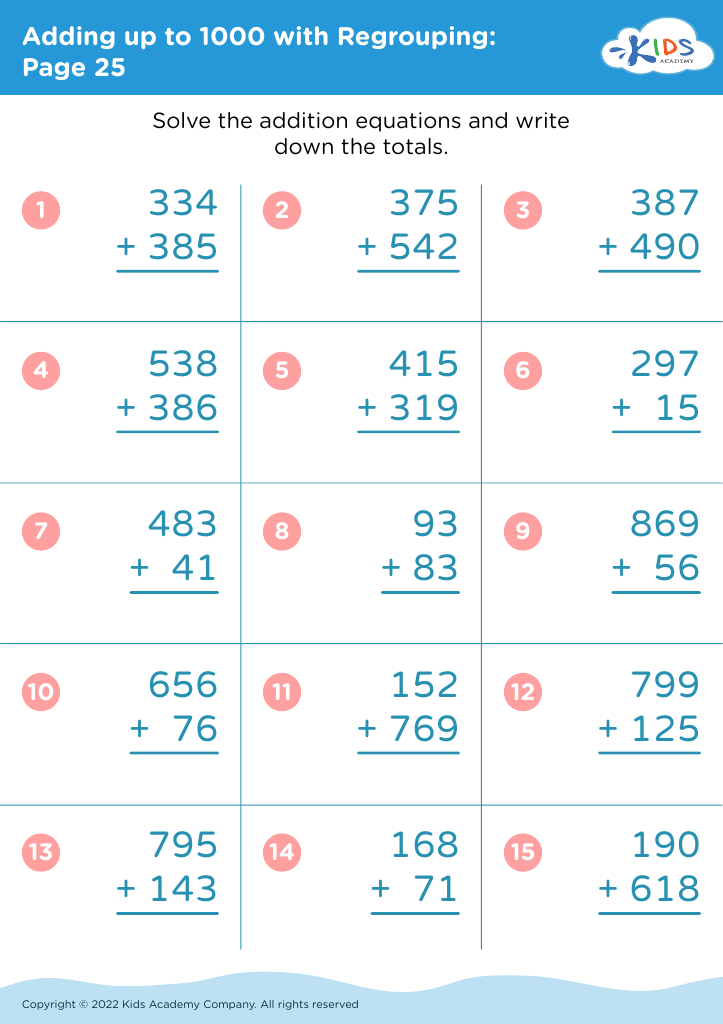


Math problem-solving, particularly in the context of adding up to 1000 with regrouping, is a crucial skill for children aged 3-7. This foundational concept helps young learners develop essential cognitive skills such as critical thinking, logical reasoning, and perseverance. Early exposure to problem-solving strategies encourages children to understand the value of numbers, fostering numerical fluency.
When parents and teachers focus on this area, they equip children with the ability to maneuver through complex mathematical challenges. Regrouping, or carrying over, teaches kids how to manage larger numbers, transforming daunting problems into manageable steps. This teaching method promotes a deep understanding of place value and arithmetic, ultimately laying a strong groundwork for advanced math concepts encountered later in their education.
Moreover, engaging in math through fun and interactive activities reinforces a positive attitude toward learning and promotes confidence. In a supportive environment, children learn to approach problems with curiosity instead of fear. By prioritizing math problem-solving, parents and teachers play a vital role in fostering a lifelong appreciation for mathematics, preparing children not just for academics, but for real-life problem-solving skills essential for their future.