Shape Recognition Adding up to 1000 with Regrouping Worksheets for Ages 3-7
6 filtered results
-
From - To
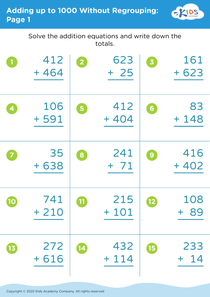
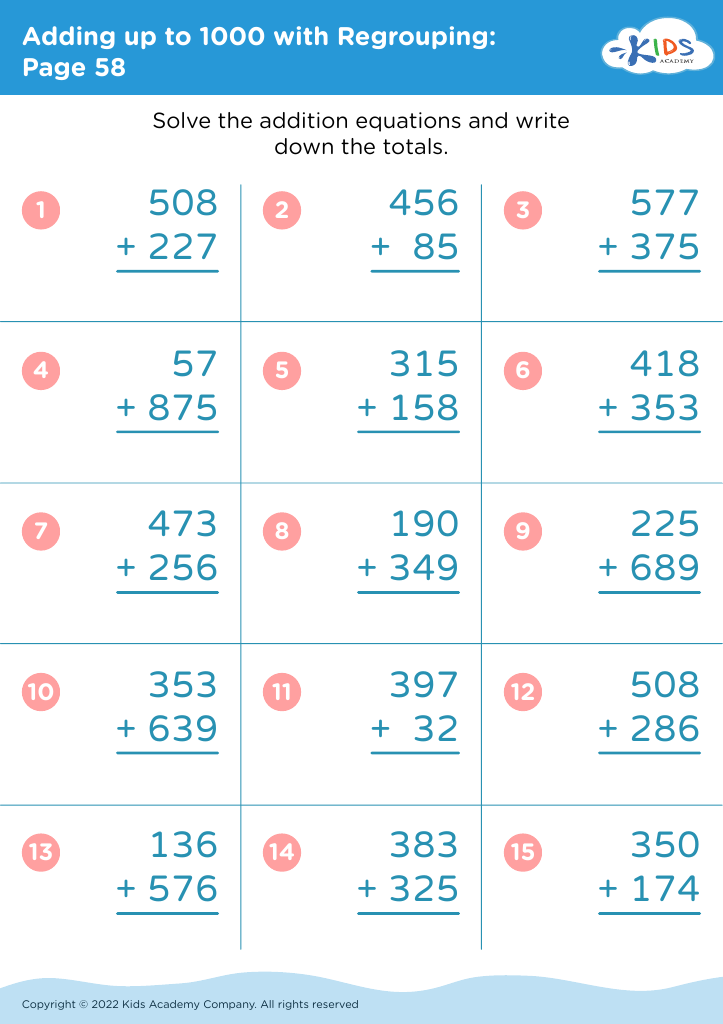
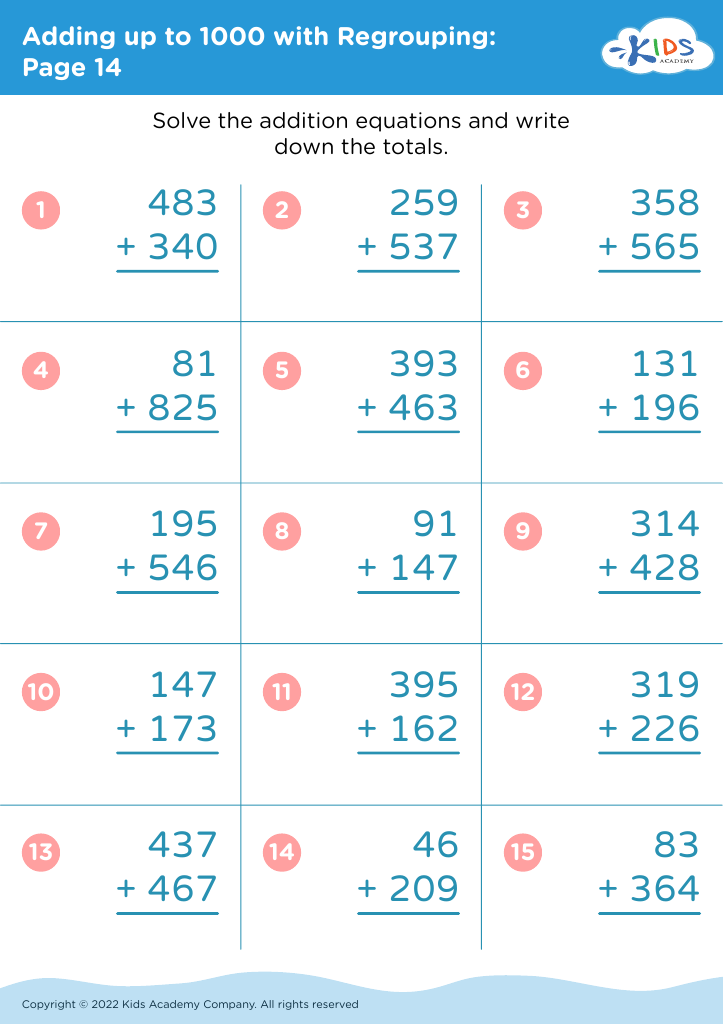
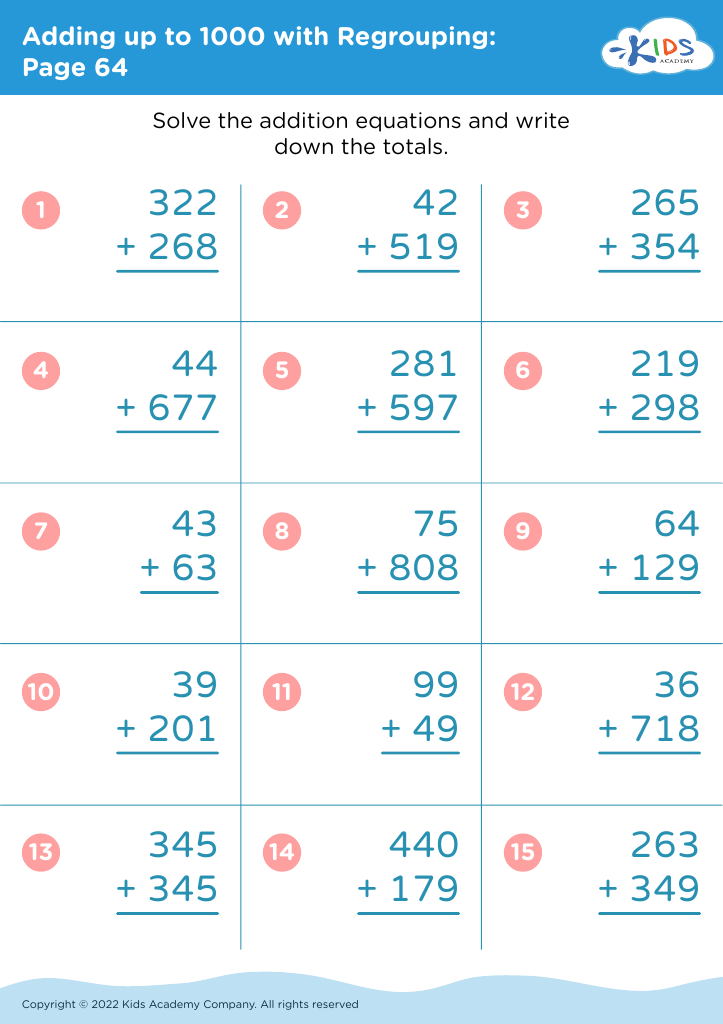
Introduce shape recognition and enhance math skills with our "Shape Recognition Adding up to 1000 with Regrouping Worksheets" designed for ages 3-7. Combining the fun of shape identification with the challenge of adding numbers, these worksheets help children master both foundational geometry and advanced arithmetic. The engaging content promotes critical thinking, attention to detail, and problem-solving abilities. Perfect for early learners, our worksheets ensure young minds stay captivated while reinforcing essential mathematical concepts. Give your child a head start in their education journey with activities that make learning enjoyable and effective. Boost their confidence and skills today!
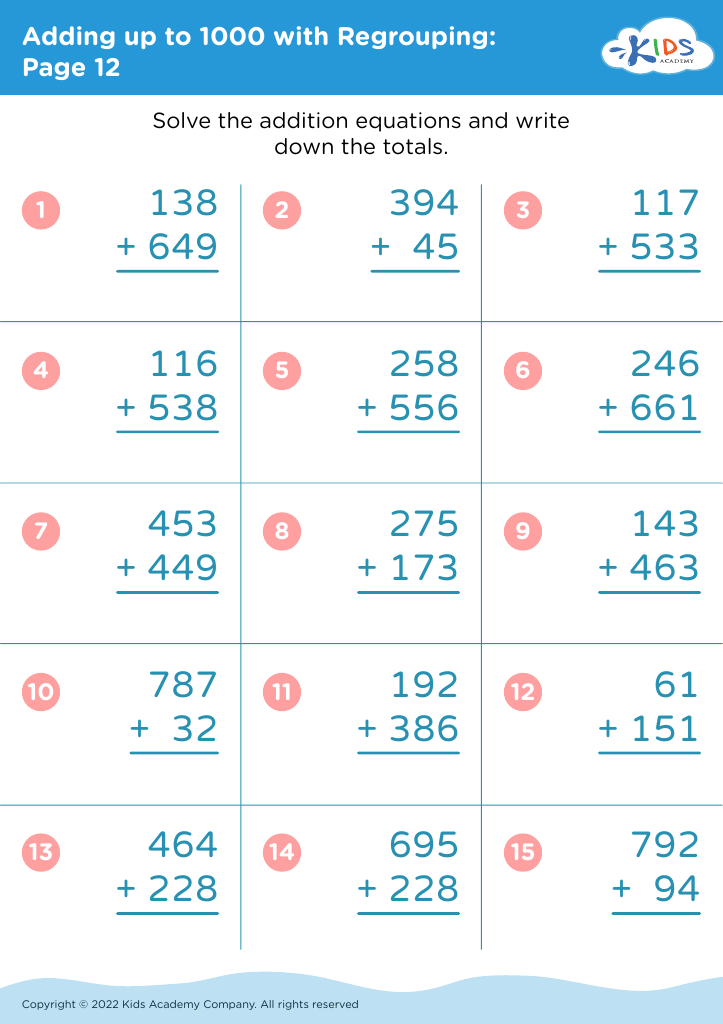
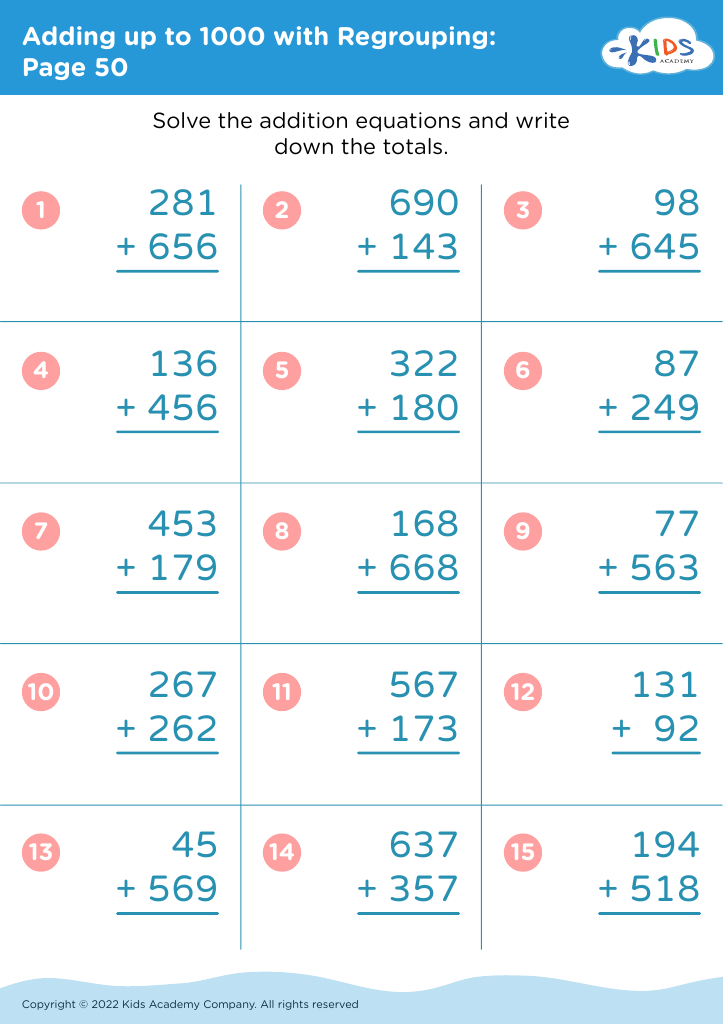
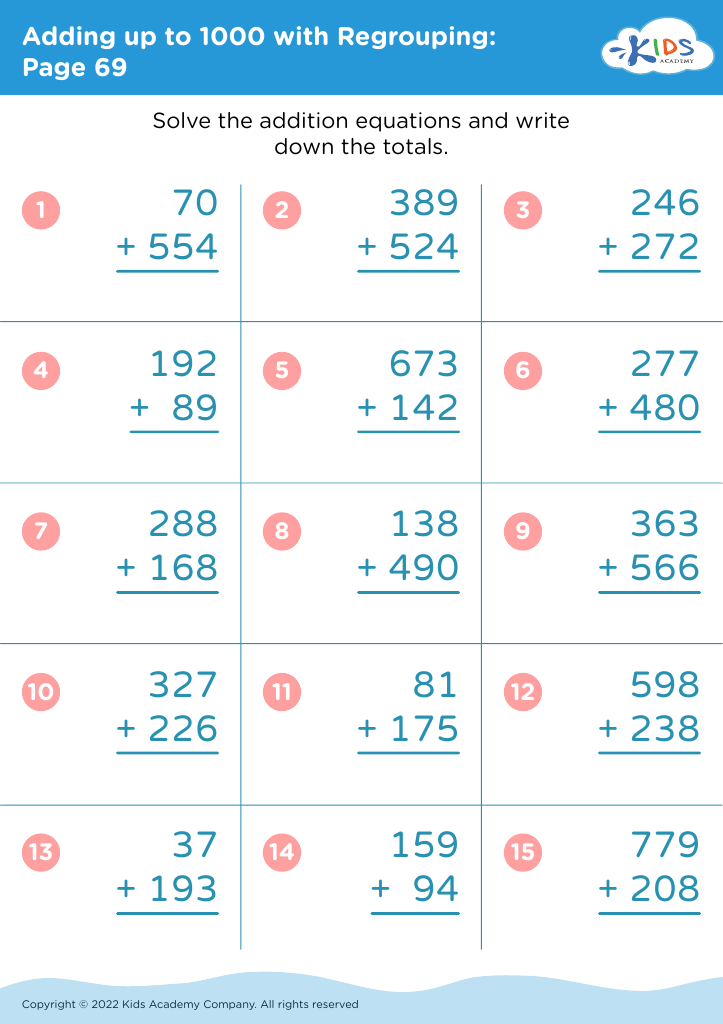


Shape recognition and learning to add up to 1000 with regrouping are foundational skills that greatly benefit young children, ages 3-7, in their early development. Parents and teachers should prioritize shape recognition as it enhances children's cognitive abilities, including spatial awareness and visual perception, essential for problem-solving and reading proficiency. Recognizing shapes also supports other math skills, such as understanding geometry, categorizing objects, and recognizing patterns.
Introducing the concept of adding up to 1000 with regrouping at an early age is equally important. Although children aged 3-7 may not fully explore these concepts, presenting them in engaging and age-appropriate ways can lay the groundwork for future arithmetic skills. Regrouping helps children understand the place value system, which is critical for advanced mathematical operations. Early familiarity with these concepts not only makes the transition to more complex math smoother but also boosts children's confidence in their abilities.
The combination of shape recognition and basic arithmetic fosters critical thinking and analytical skills, setting the stage for future academic success. Therefore, incorporating playful, hands-on activities that promote these skills can provide a strong mathematical foundation, making learning enjoyable and effective for young children.