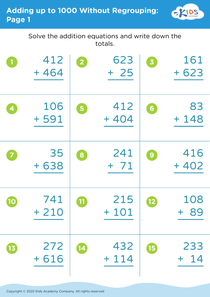
Simplifying Fractions Adding up to 1000 with Regrouping Worksheets for Ages 3-7
3 filtered results
-
From - To
Discover our "Simplifying Fractions Adding up to 1000 with Regrouping Worksheets" specially designed for ages 3-7. These engaging and educational printables focus on teaching young learners how to simplify fractions while adding numbers up to 1000 with regrouping. Each worksheet uses fun, themed exercises to hone addition, critical thinking, and basic arithmetic skills. Perfect for preschoolers and early elementary students, these resources make learning math enjoyable and stress-free. Equip your child with the foundational math skills they need through interactive practice and foster a positive attitude towards learning fractions and addition. Download now for hours of educational fun!
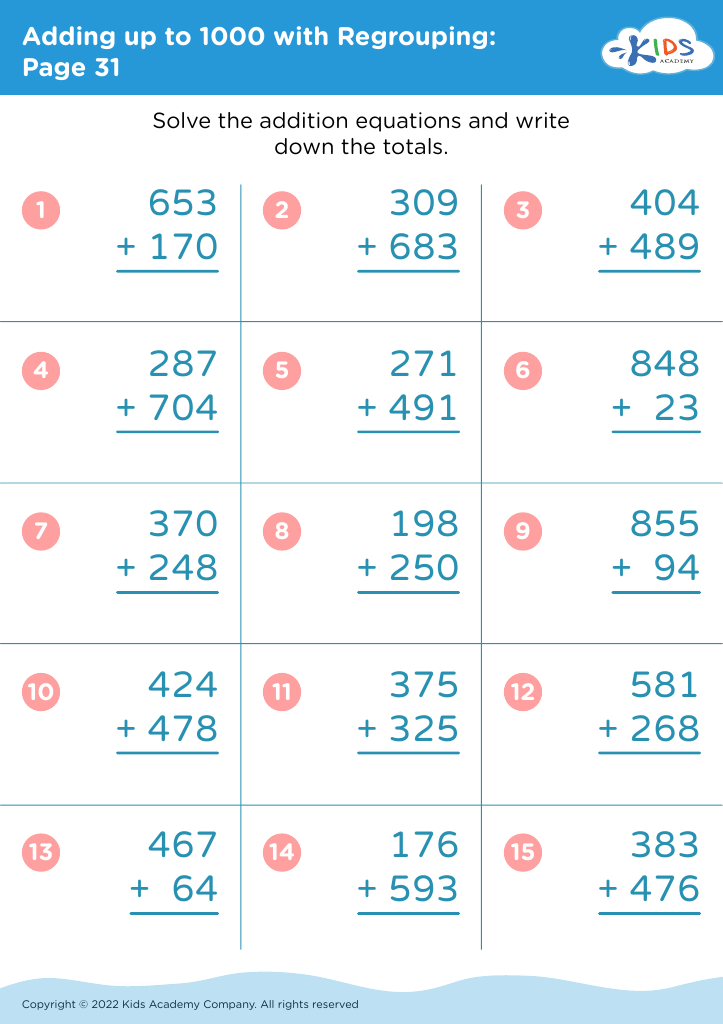
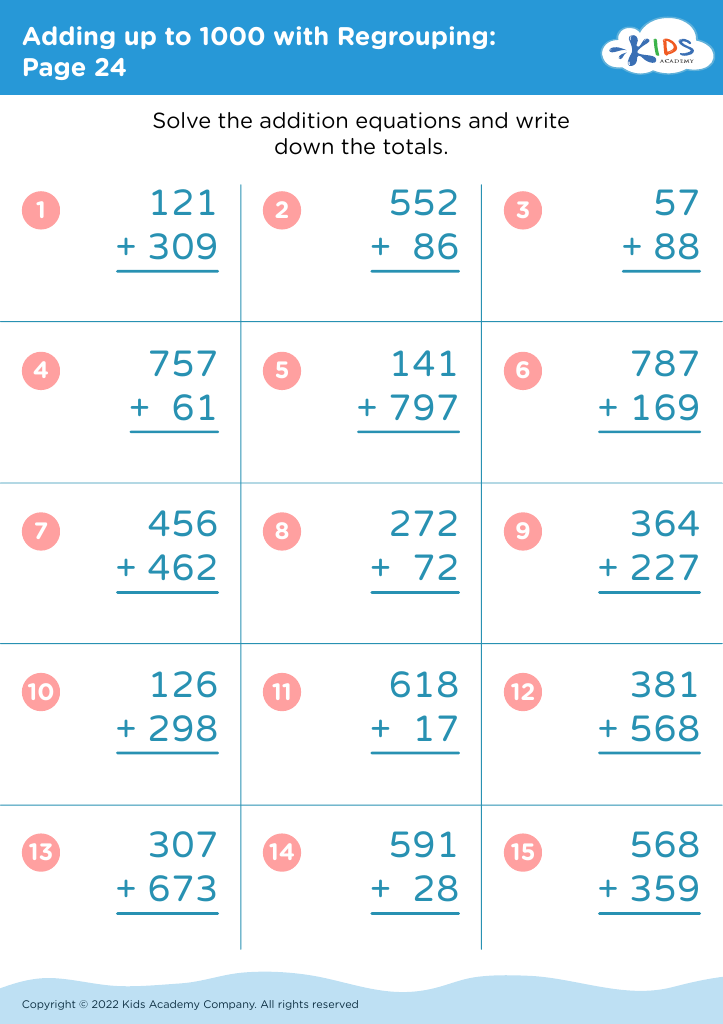
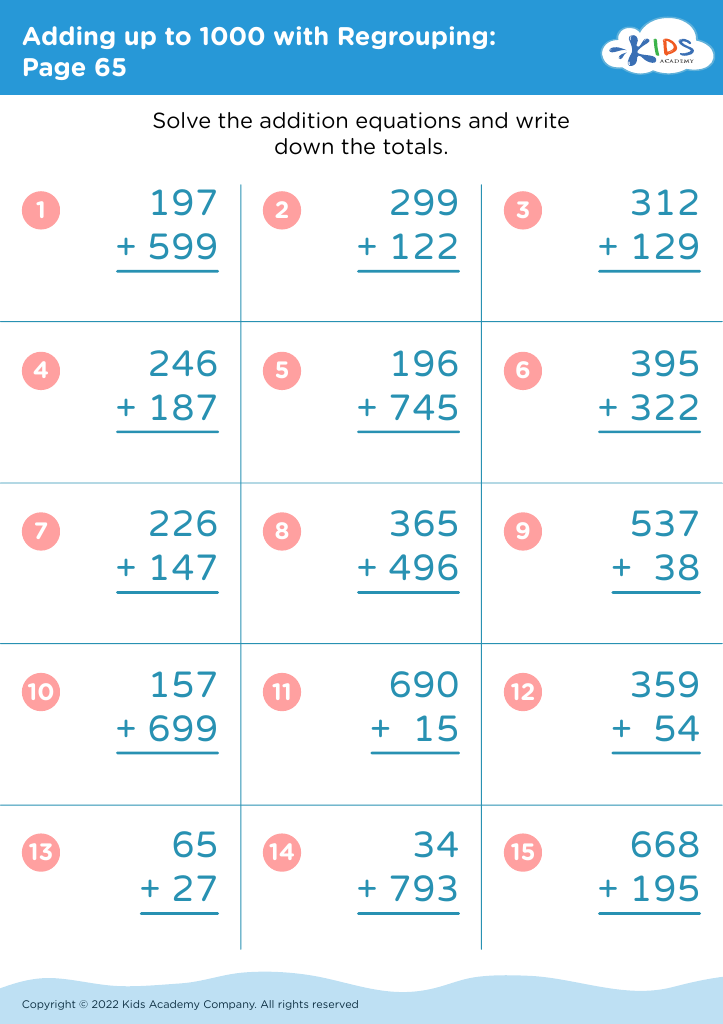


While simplifying fractions and regrouping numbers for sums up to 1000 may seem advanced for children aged 3-7, introducing these foundational concepts early offers significant long-term benefits. Early exposure helps young children develop critical thinking and problem-solving skills imperative for academic success. Simplifying fractions and regrouping instills a deeper understanding of number relationships, enabling children to approach math with confidence. This foundational knowledge enhances their ability to tackle more complex mathematical problems later.
Moreover, learning these concepts at a young age boosts cognitive development. It encourages children to recognize patterns, follow sequences, and understand mathematical operations, skills that translate into improved reasoning abilities. Such early engagement with math challenges mitigates the fear or anxiety often associated with the subject, fostering a positive attitude towards learning.
For parents and teachers, the effort invested in teaching these skills translates into realistic life benefits, including better performance in school and increased opportunities in STEM (Science, Technology, Engineering, and Mathematics) fields. Encouraging children through simplified, fun activities also promotes a collaborative learning environment, forging productive student-teacher and child-parent relationships.
Ultimately, fostering these skills early equips children with the tools to succeed academically and in everyday life, making it an immensely worthwhile investment.