Understanding fractions Adding up to 1000 with Regrouping Worksheets for Ages 3-7

Filters

18 filtered results

Clear all filters
Favorites
With answer key
Interactive

18 filtered results

Difficulty Level

Grade


Discover our engaging "Understanding Fractions Adding up to 1000 with Regrouping Worksheets," specifically designed for children aged 3-7. These interactive worksheets introduce young learners to the concept of fractions through hands-on activities and relatable examples. By incorporating regrouping techniques, children will develop essential math skills while building a strong foundation for future learning. Our resources foster critical thinking and problem-solving abilities, making math enjoyable. Ideal for both classroom and home use, these worksheets help kids grasp the importance of fractions, enhancing their numerical literacy in a fun and interactive way. Spark your child’s love for math with our creative learning tools!
Check out this FREE Trial Lesson on Adding up to 1000 with Regrouping for age 3-7!

A

Favorites
With answer key
Interactive
  • 3-7
  • Understanding fractions
  • Adding up to 1000 with Regrouping
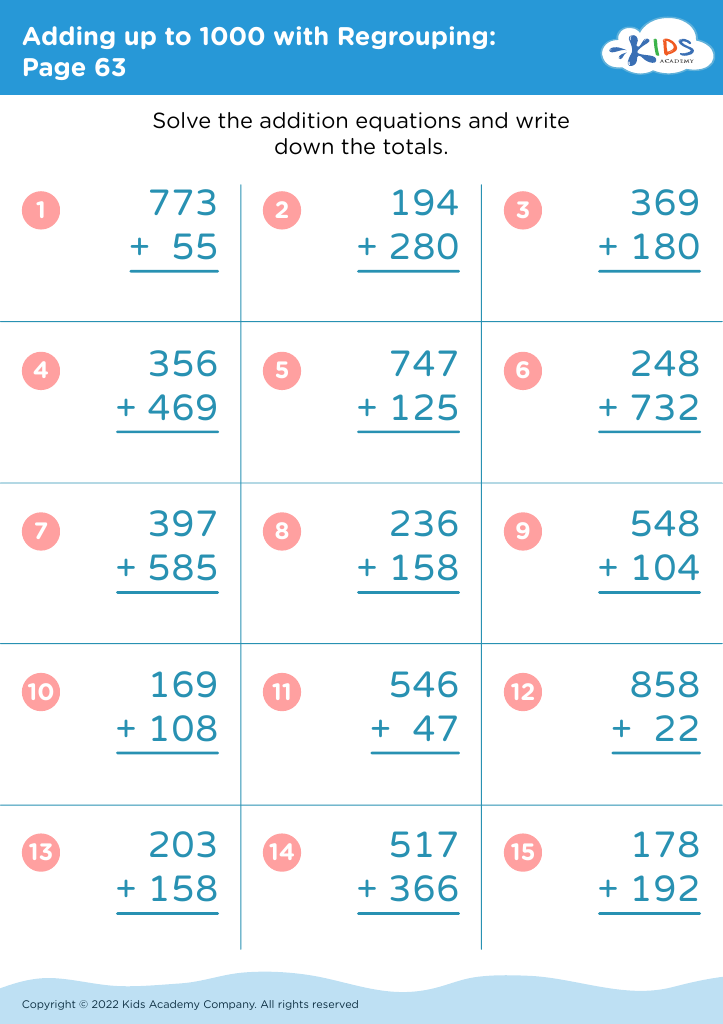
Adding up to 1000 with Regrouping: Page 63
Worksheet
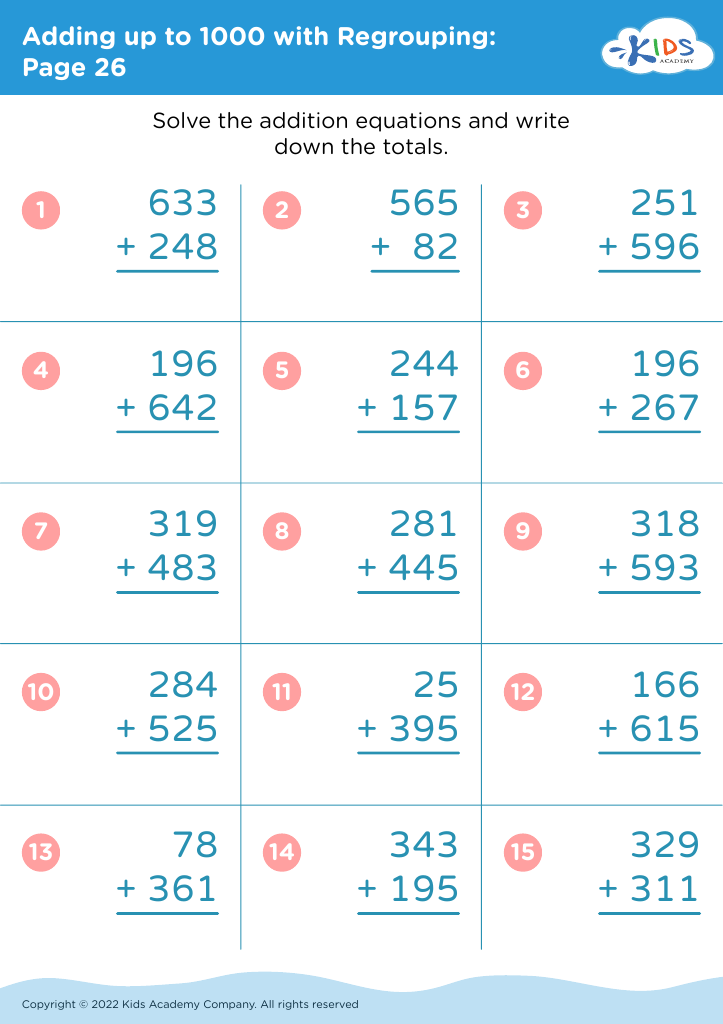
Adding up to 1000 with Regrouping: Page 26
Worksheet
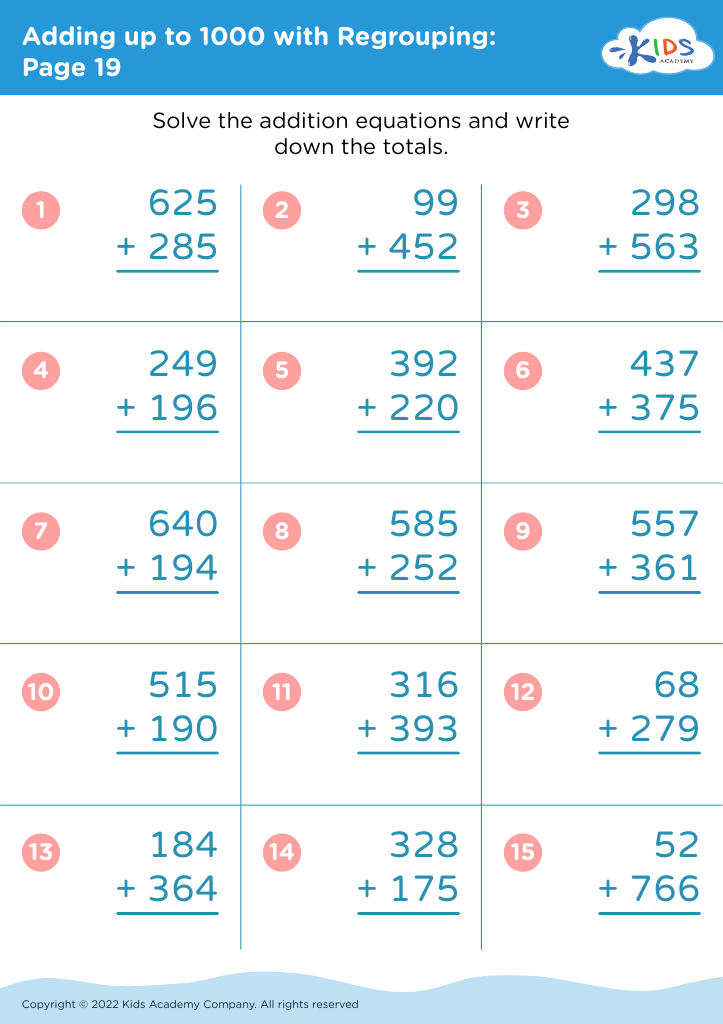
Adding up to 1000 with Regrouping: Page 19
Worksheet
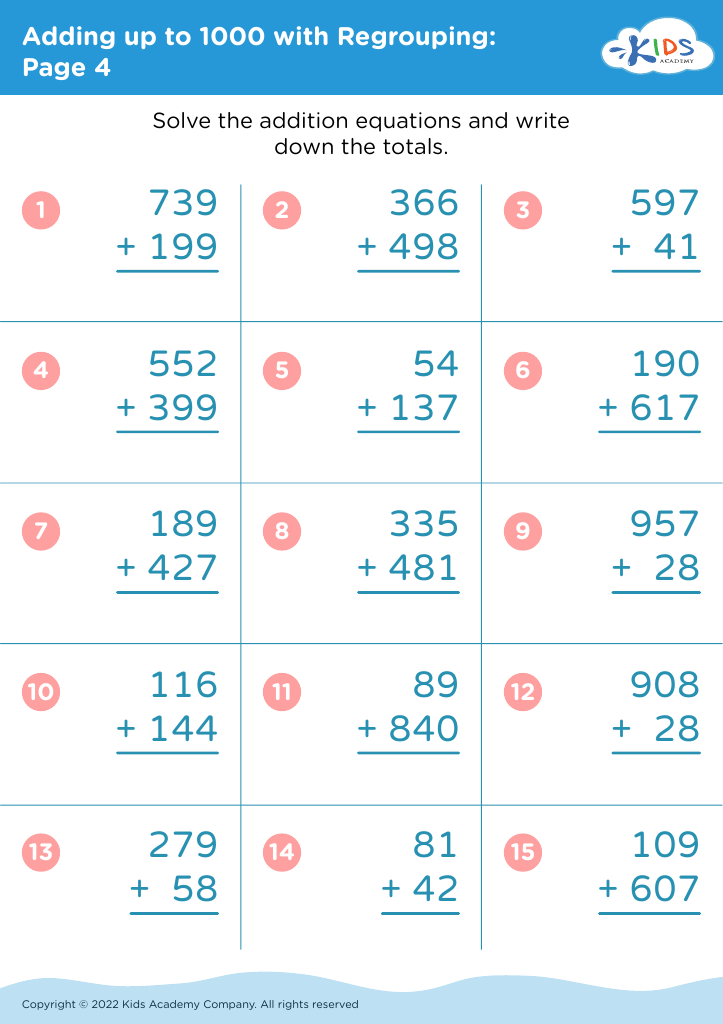
Adding up to 1000 with Regrouping: Page 4
Worksheet
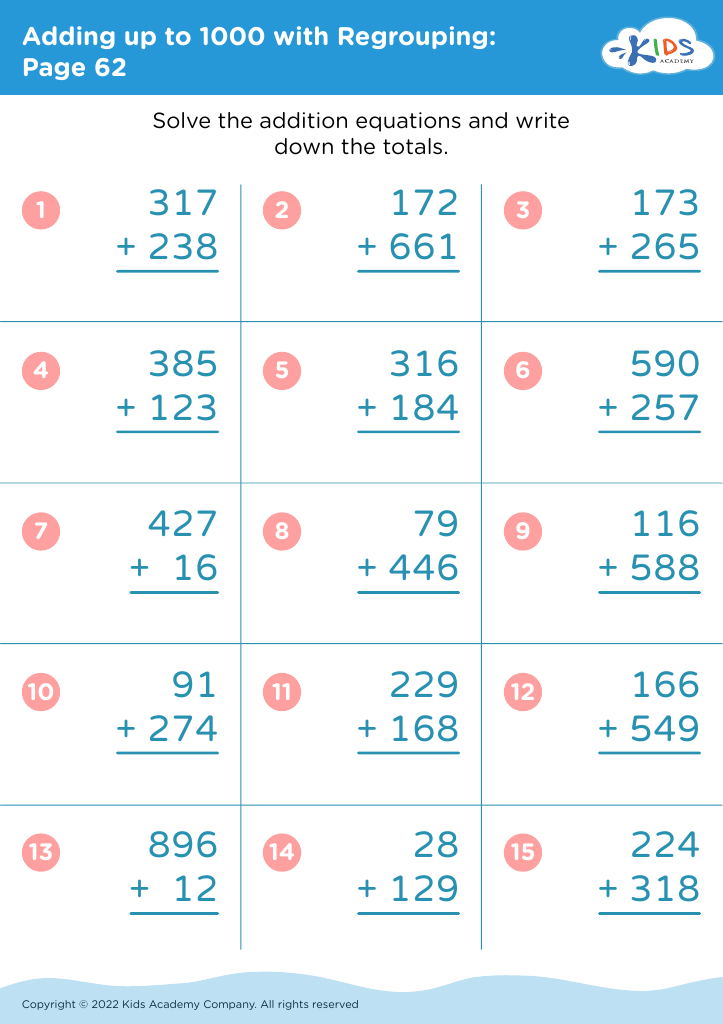
Adding up to 1000 with Regrouping: Page 62
Worksheet
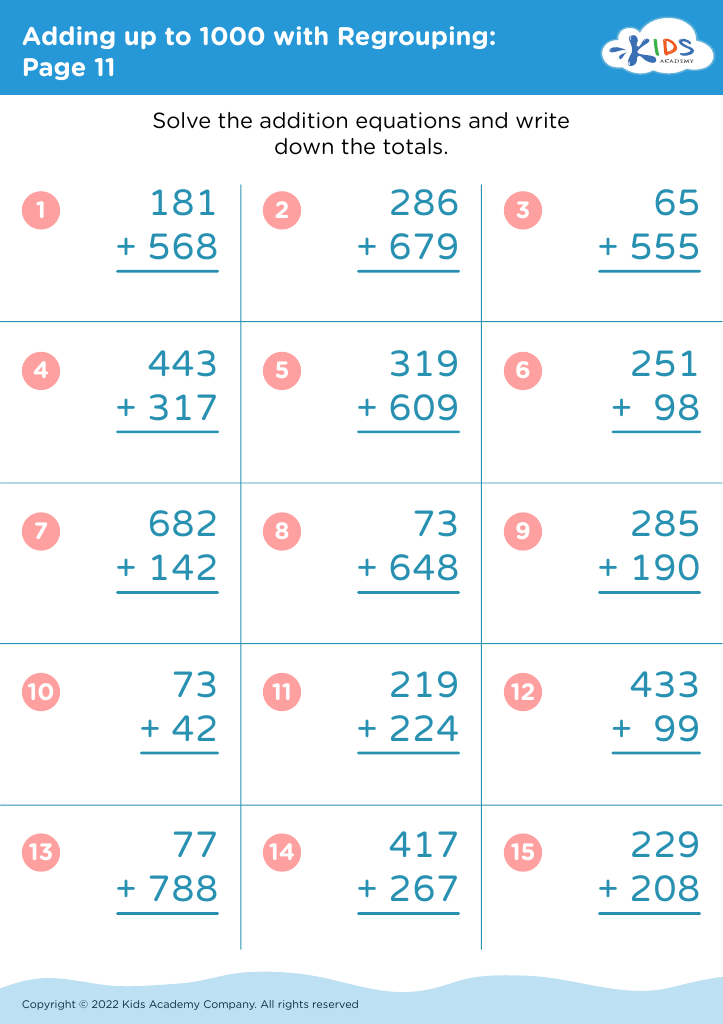
Adding up to 1000 with Regrouping: Page 11
Worksheet
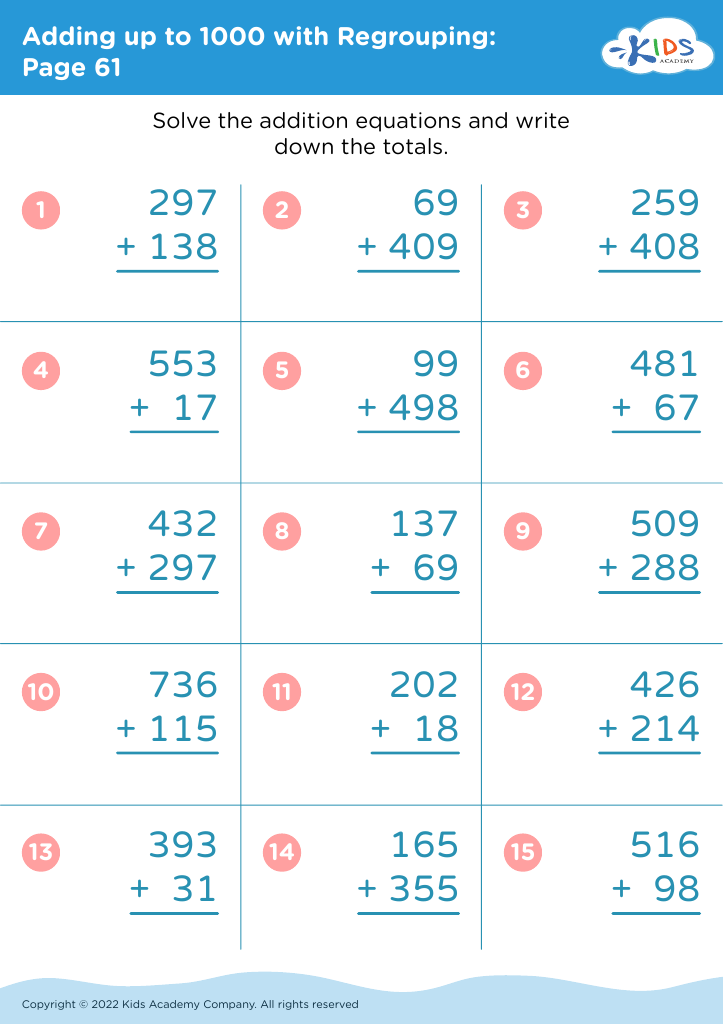
Adding up to 1000 with Regrouping: Page 61
Worksheet
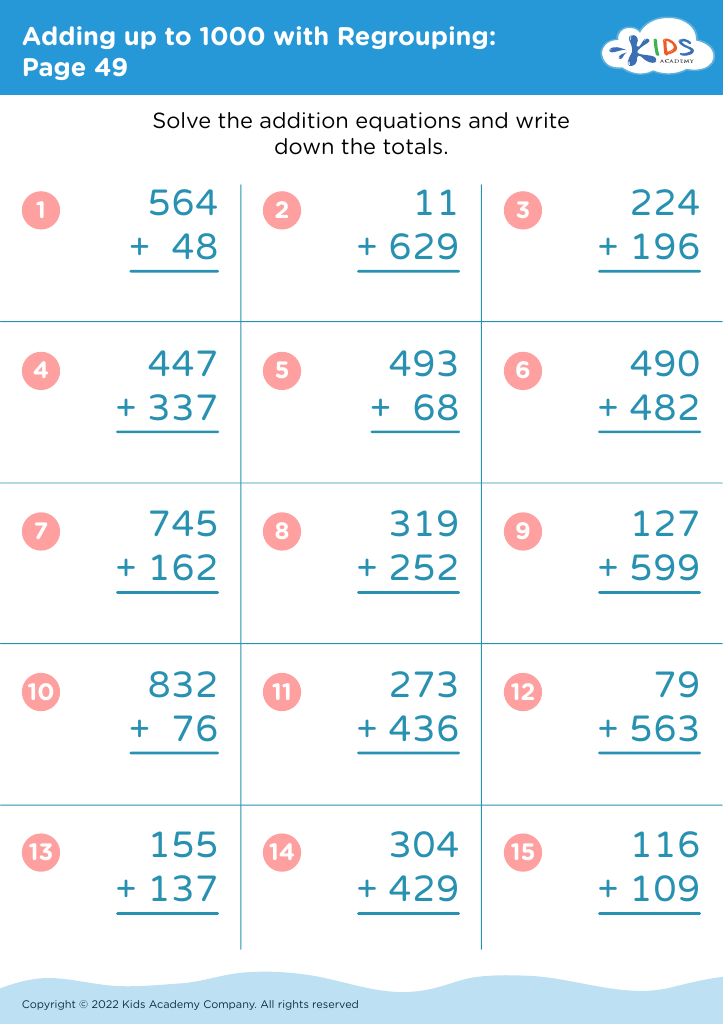
Adding up to 1000 with Regrouping: Page 49
Worksheet
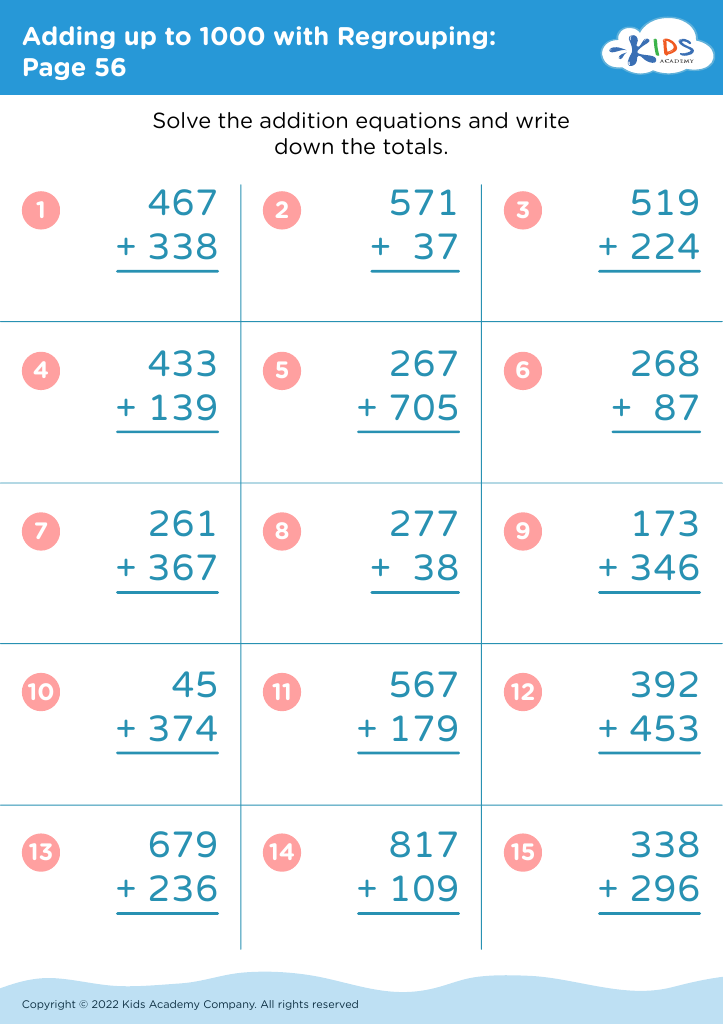
Adding up to 1000 with Regrouping: Page 56
Worksheet
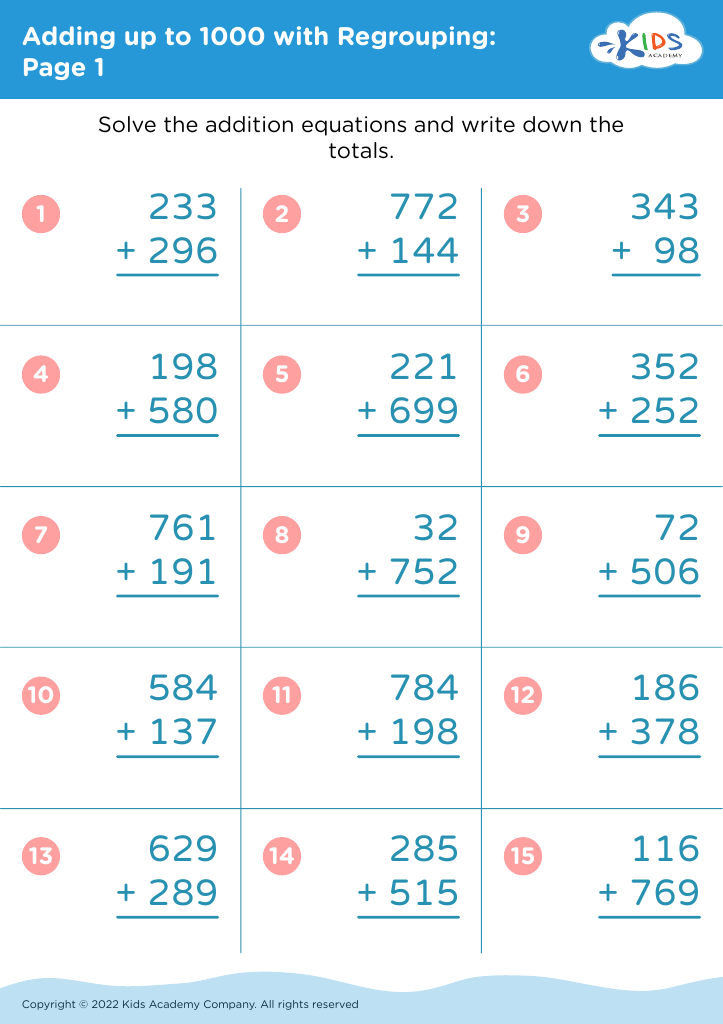
Adding up to 1000 with Regrouping: Page 1
Worksheet
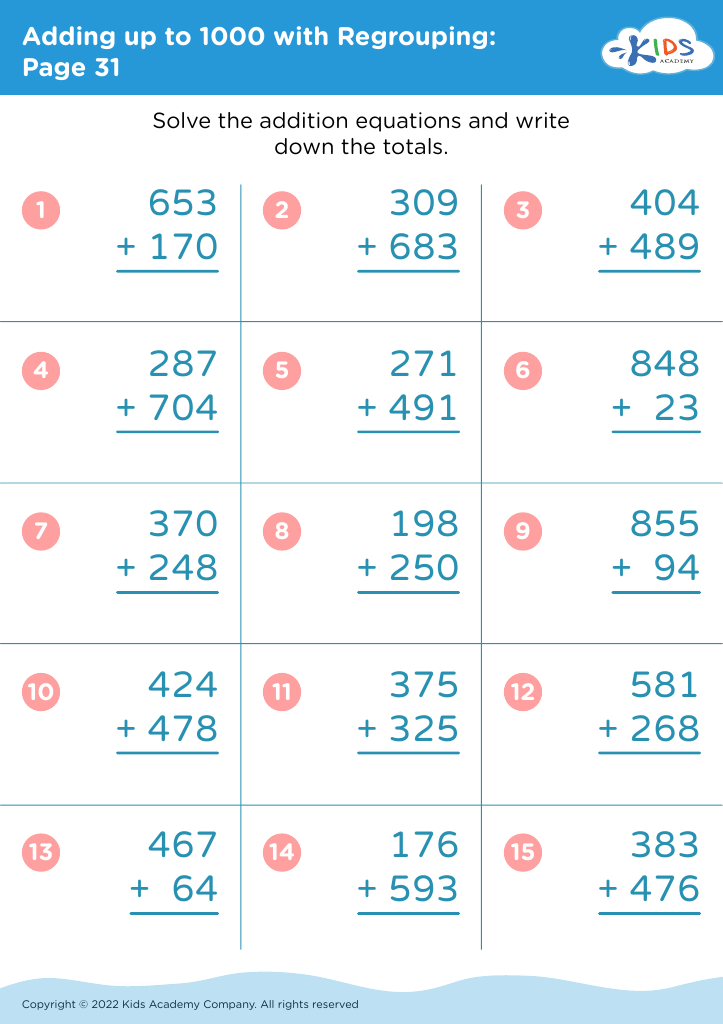
Adding up to 1000 with Regrouping: Page 31
Worksheet
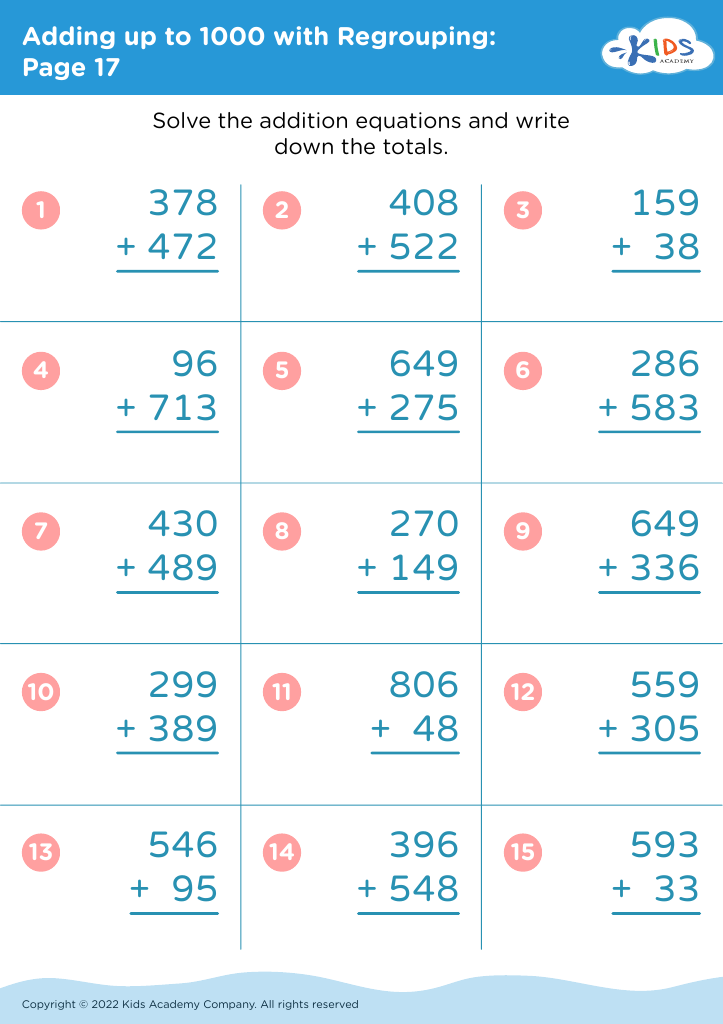
Adding up to 1000 with Regrouping: Page 17
Worksheet
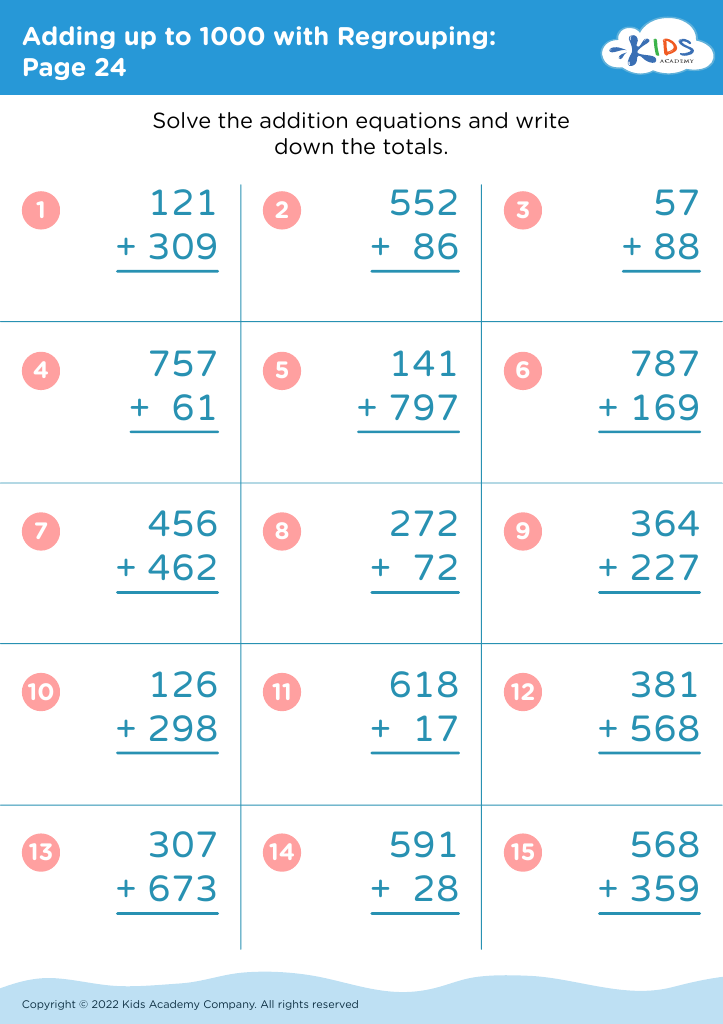
Adding up to 1000 with Regrouping: Page 24
Worksheet
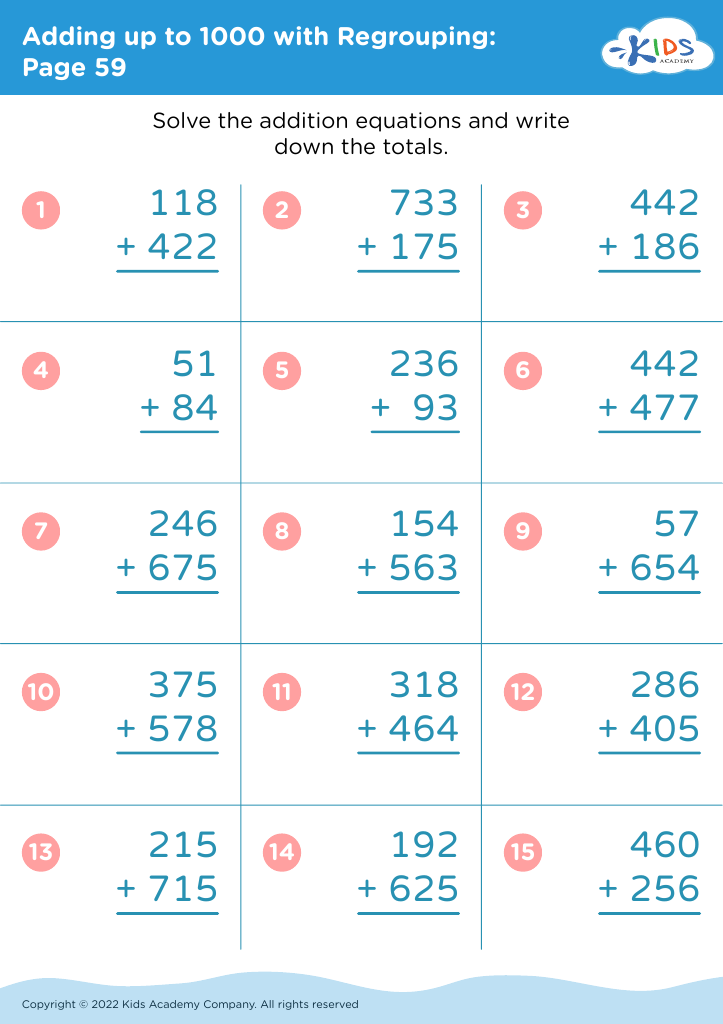
Adding up to 1000 with Regrouping: Page 59
Worksheet
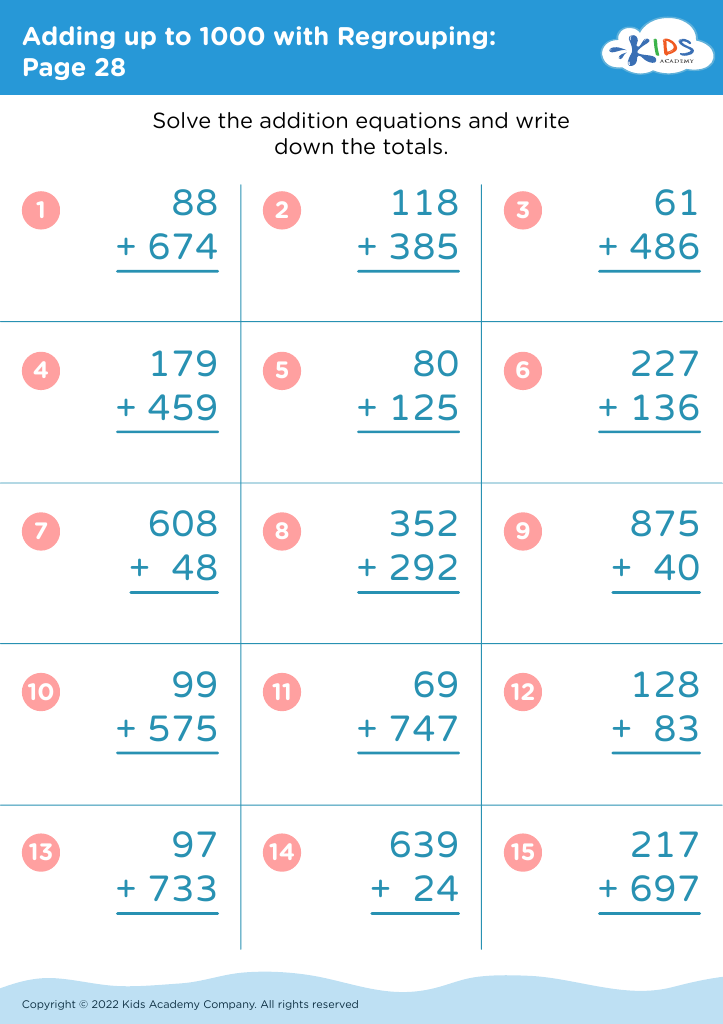
Adding up to 1000 with Regrouping: Page 28
Worksheet
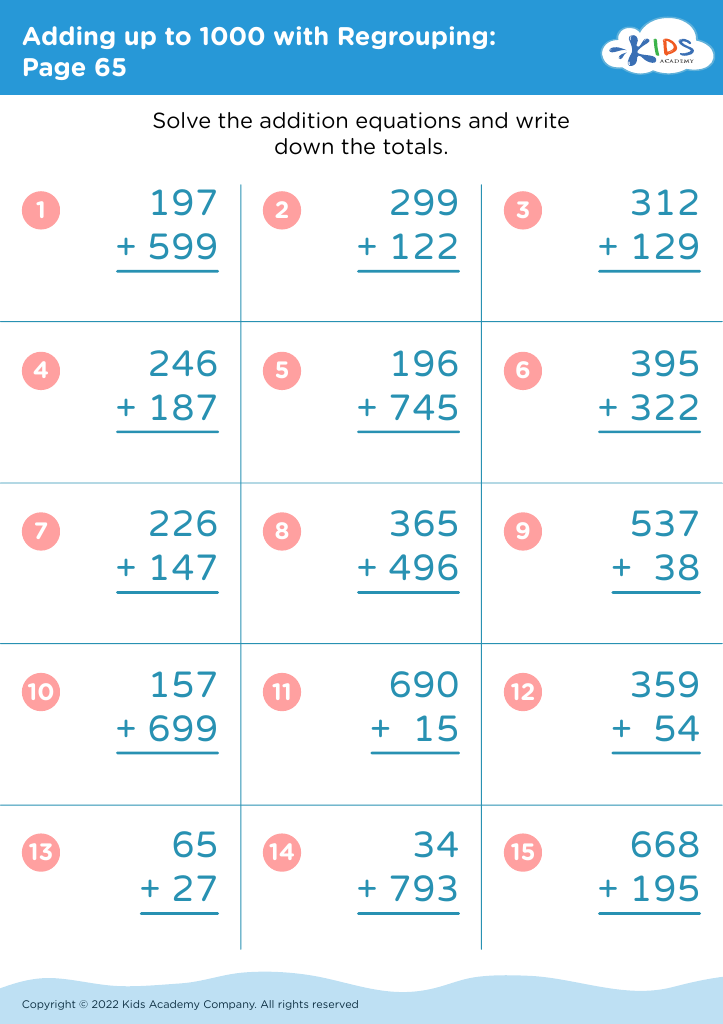
Adding up to 1000 with Regrouping: Page 65
Worksheet
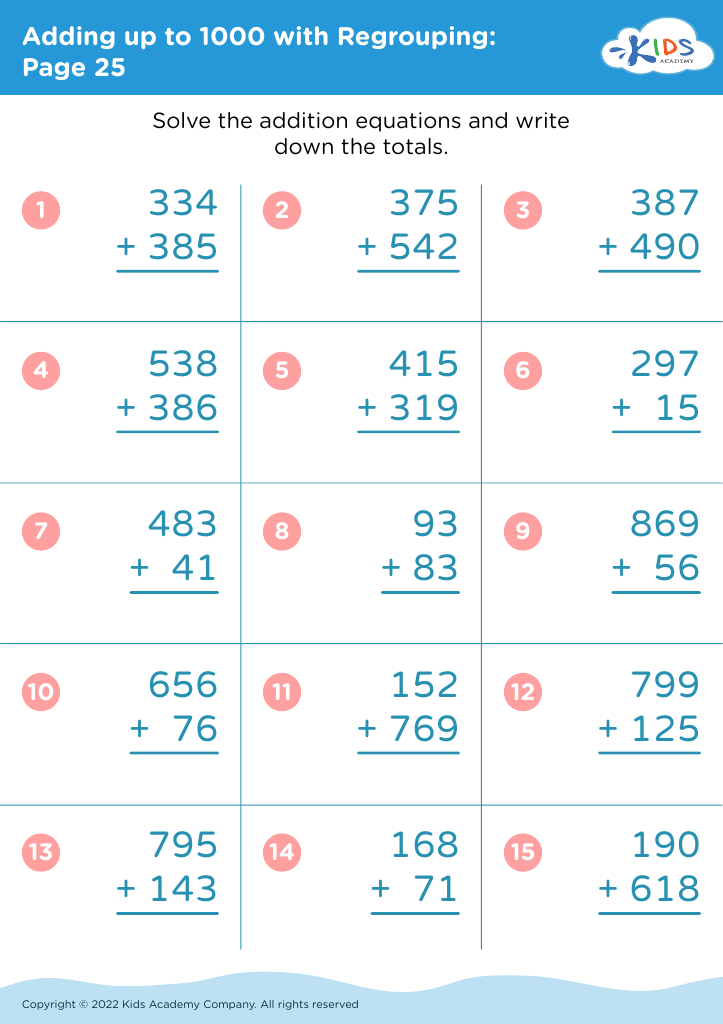
Adding up to 1000 with Regrouping: Page 25
Worksheet
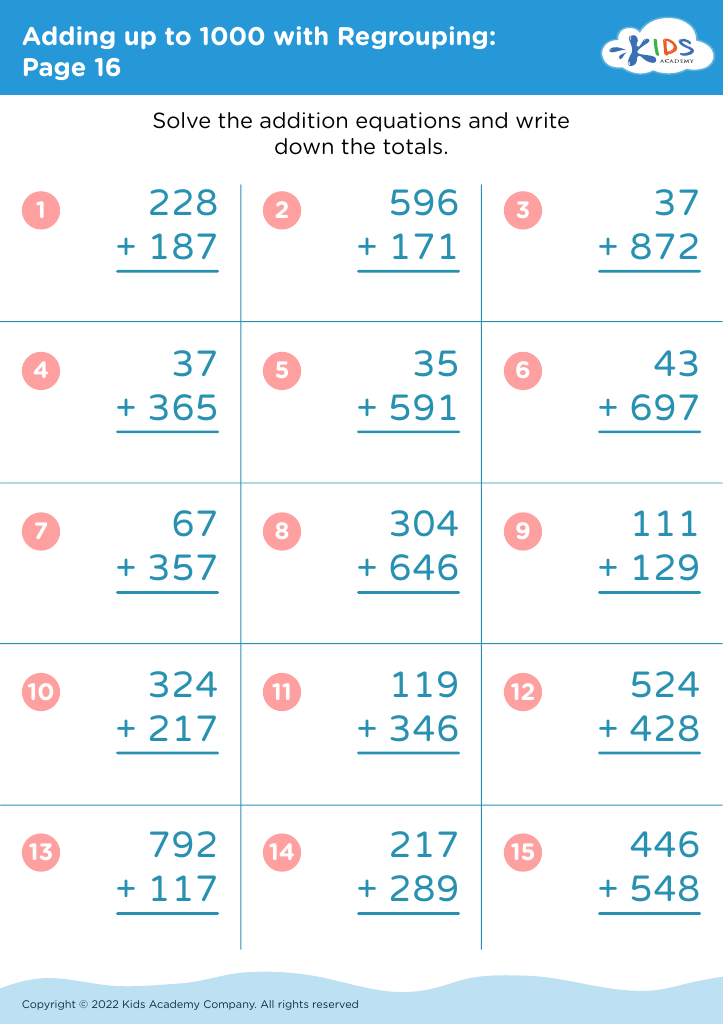
Adding up to 1000 with Regrouping: Page 16
Worksheet


Understanding fractions and their relationship to whole numbers is foundational for young learners, especially those aged 3-7. Introducing the concept of fractions and how they can add up to 1000 with regrouping nurtures critical numeracy skills. First, it helps children grasp the idea of partitioning a whole into manageable parts, which enhances their ability to compare, contrast, and compute with numbers.

By engaging with fractions, children develop a deeper understanding of concepts such as wholes, parts, and quantities. This lays a strong groundwork for further mathematical learning. Regrouping teaches flexibility in thinking and encourages problem-solving strategies, which are essential in everyday scenarios and future math challenges.

Parents and teachers should also recognize that exploring fractions can make math more relatable and enjoyable for young children. Using tangible objects like slices of fruit, pizza, or measuring cups can make learning more interactive. Additionally, this early exposure demystifies complex concepts encountered later in school, such as ratios, scaling, and multiplication/division of fractions.

In summary, adopting a fraction-focused approach to instruction promotes critical thinking, number sense, and mathematical confidence, equipping children with skills that benefit them far beyond their early years.