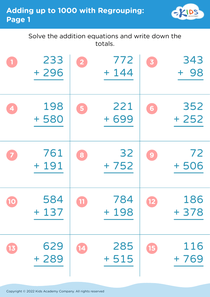
Alphabet Recognition Adding up to 1000 Without Regrouping Worksheets for Ages 3-7
3 filtered results
-
From - To
Enhance your child's learning journey with our engaging "Alphabet Recognition Adding Up to 1000 Without Regrouping Worksheets" designed for ages 3-7. These worksheets foster essential literacy and numeracy skills, blending alphabet practice with foundational math concepts. Each activity promotes letter recognition while asking children to solve addition problems without regrouping, reinforcing their understanding of numbers up to 1000. Perfect for young learners, these worksheets are interactive and fun, making math and reading enjoyable. Support your child's educational development at home and ensure they build confidence in both language and mathematics with our carefully curated resources. Start learning today!
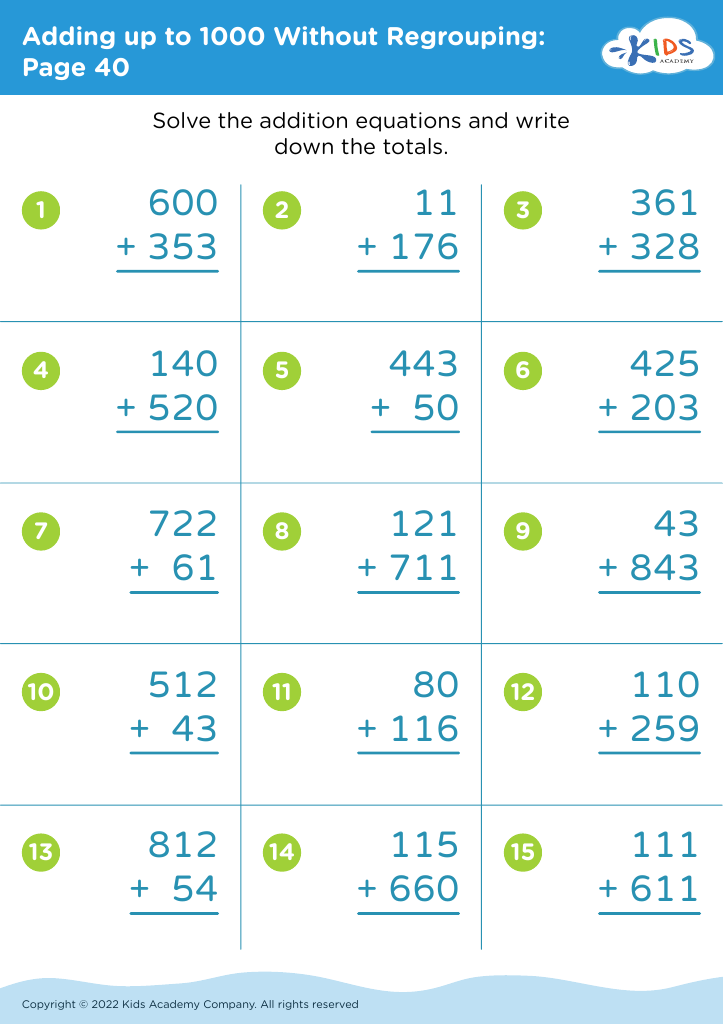
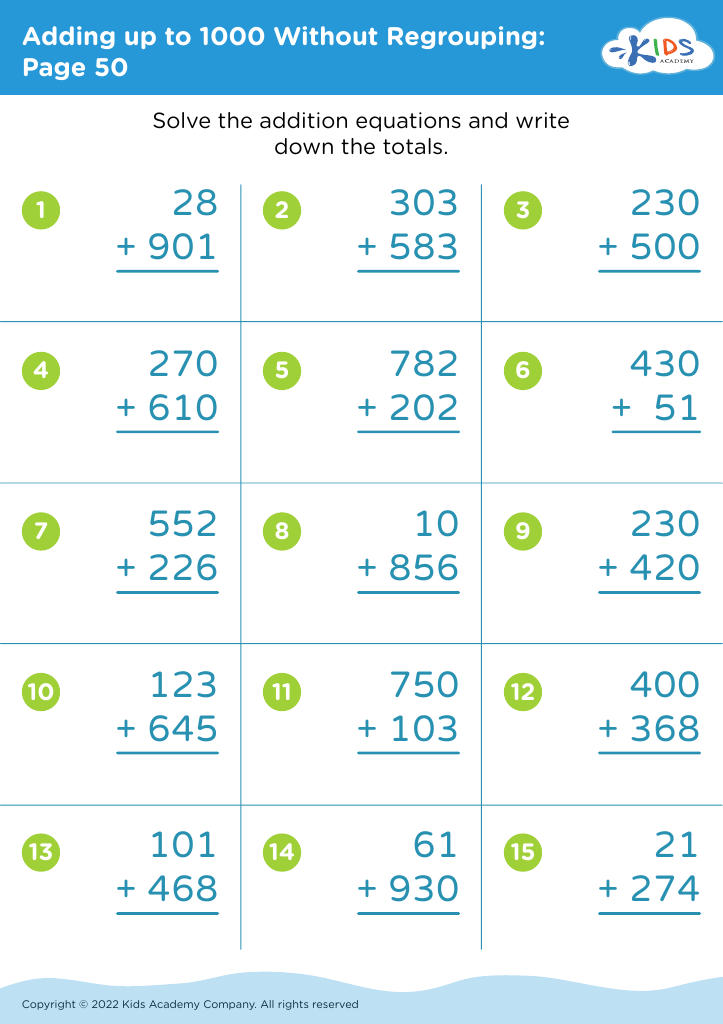
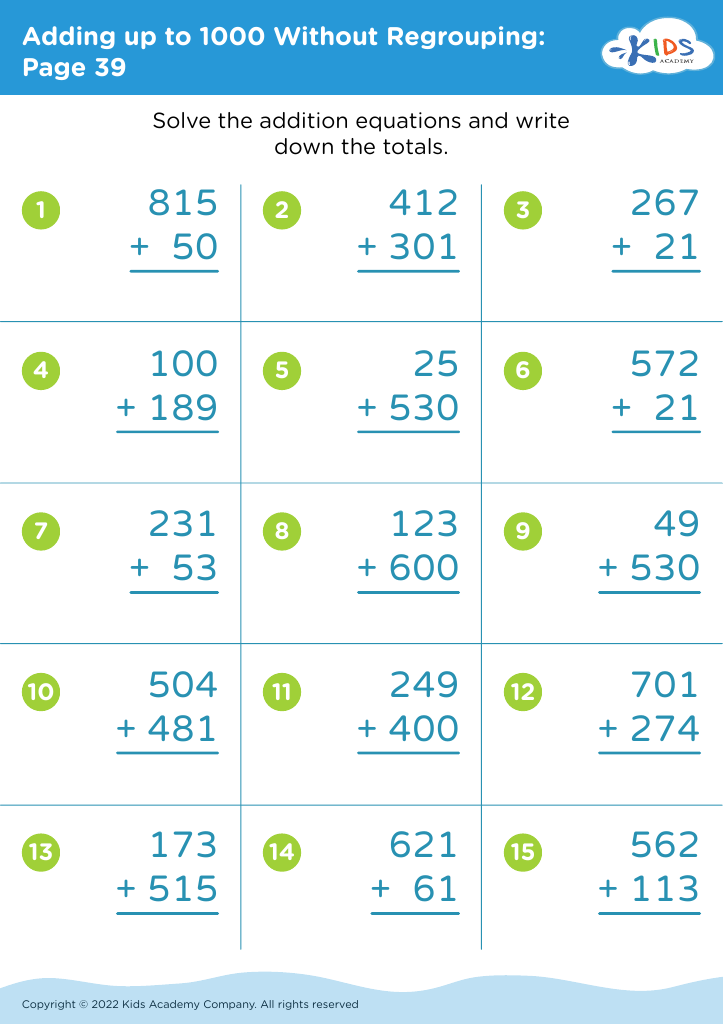


Alphabet recognition and foundational math skills, such as adding up to 1000 without regrouping, are critical for children aged 3 to 7 as they lay the groundwork for future academic success. Recognizing letters helps children develop strong literacy skills, which are essential for reading and writing. When children can identify and understand the alphabet, they gain confidence in their language usage and start to communicate effectively.
Additionally, developing early math skills is equally important. Learning to add without regrouping allows children to grasp basic number concepts, strengthens their problem-solving abilities, and fosters a clear understanding of arithmetic. It’s crucial for young learners to understand the relationships between numbers as they build their confidence in math. This adds to their overall cognitive development, as these skills interconnect and support each other.
Parents and teachers play an instrumental role in supporting children's growth in these areas. By providing engaging, hands-on activities and reinforcing learning through play, they can create a rich educational environment. Encouraging alphabet recognition alongside foundational math can help children thrive emotionally and academically, preparing them effectively for future learning experiences and challenges. Ultimately, investing in these skills will benefit children as they progress through their education.