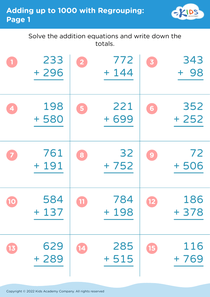
Fraction comparison Adding up to 1000 Without Regrouping Worksheets for Ages 3-7
4 filtered results
-
From - To
Explore our engaging "Fraction Comparison Worksheets" designed specifically for children ages 3-7! These fun and interactive worksheets help young learners develop essential math skills by comparing fractions within the context of adding up to 1000 without regrouping. Our thoughtfully crafted activities encourage kids to enhance their critical thinking and problem-solving abilities while building confidence in their understanding of fractions. With colorful visuals and age-appropriate challenges, mastering fraction comparison becomes an enjoyable experience. Perfect for both classroom settings and at-home practice, these worksheets ensure that your little learners can thrive in their mathematical journey. Get started today and foster a love for math!
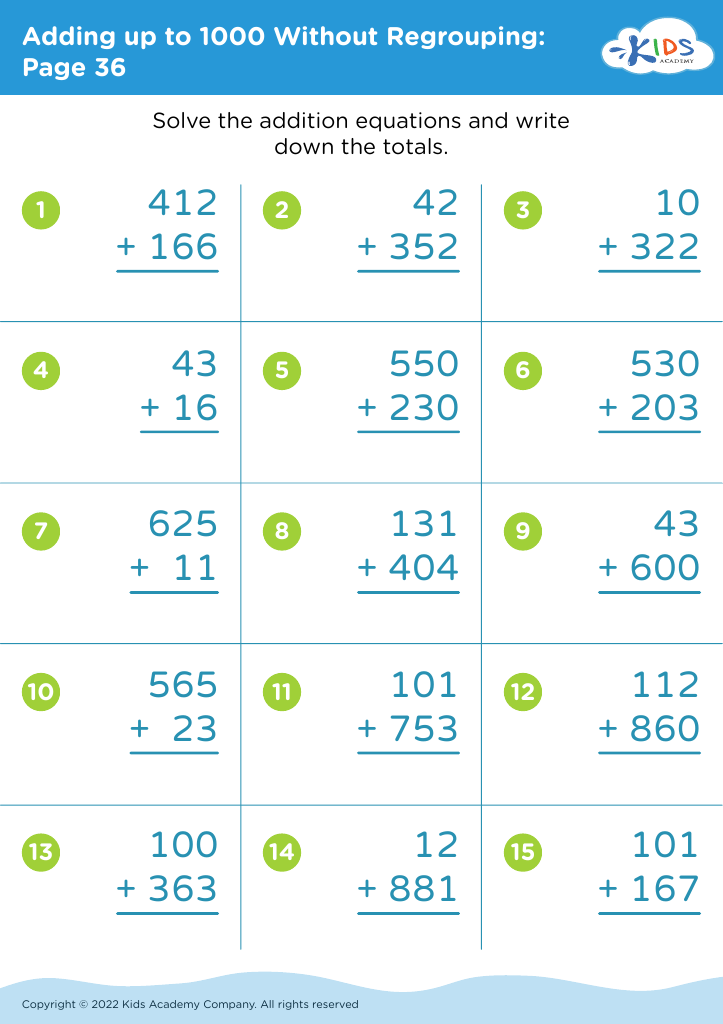
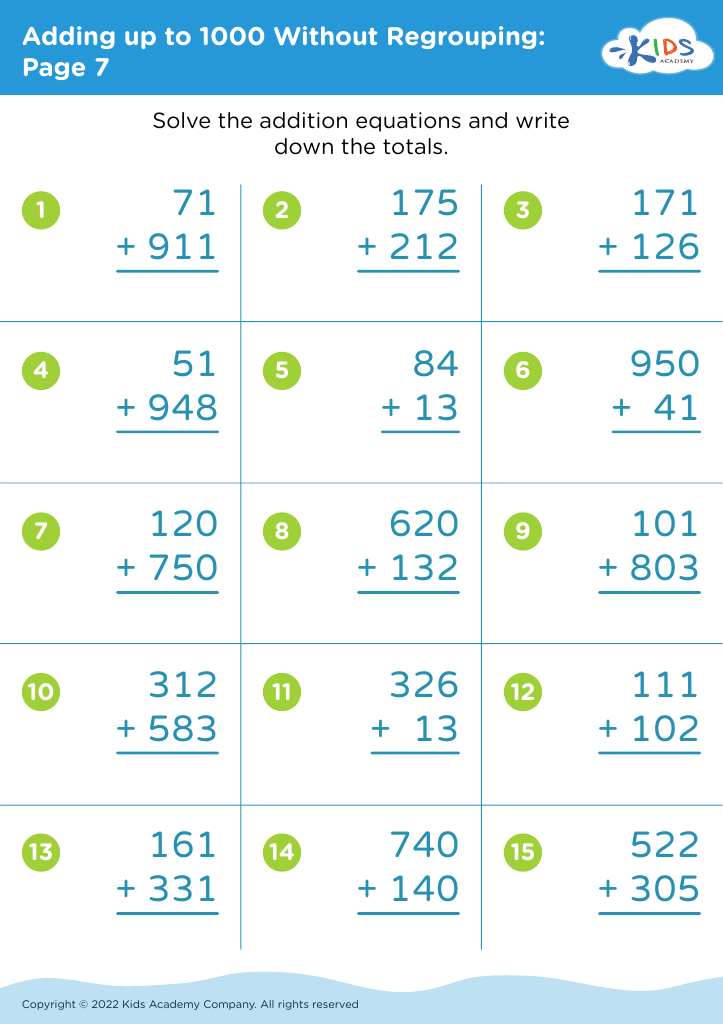
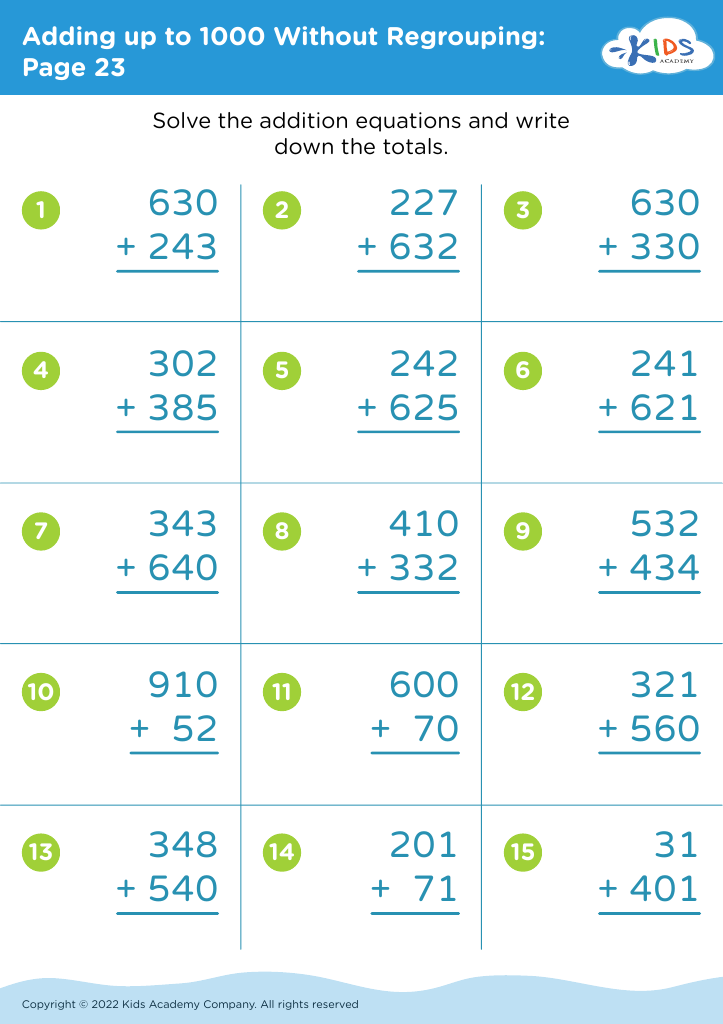
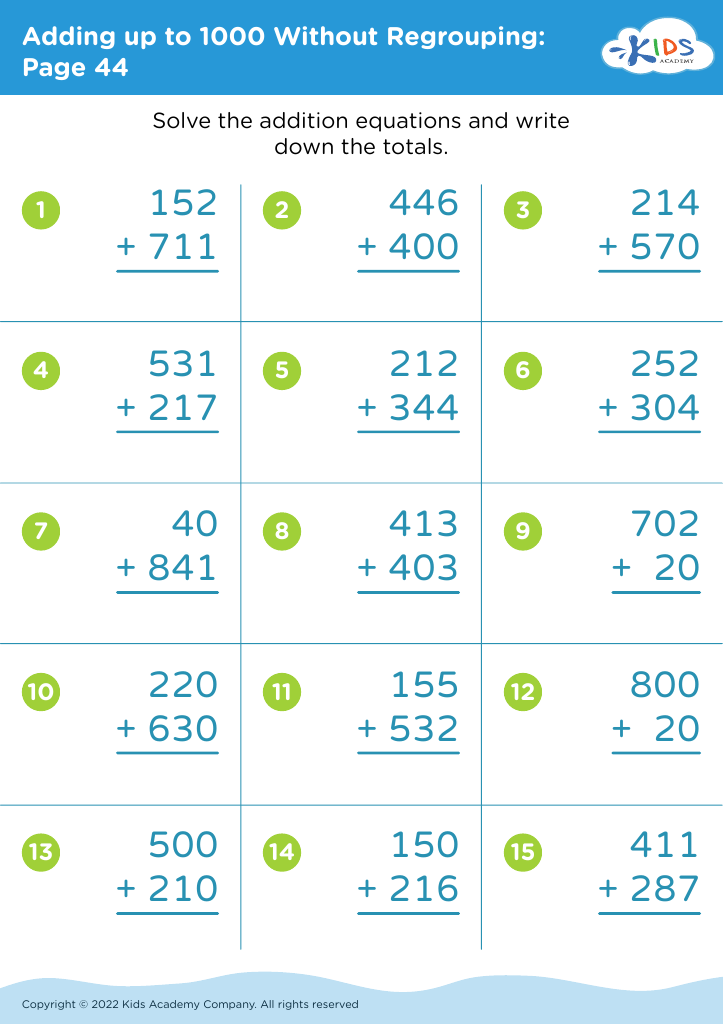


Fraction comparison and addition are foundational skills in early mathematics, particularly for children aged 3-7. Understanding fractions helps young learners develop a sense of part-to-whole relationships, essential for grasping more complex concepts later in mathematics. When children compare fractions, they learn to recognize differences in size, which enhances critical thinking and problem-solving abilities. Additionally, being introduced to the concept of adding fractions that add up to 1000 without regrouping allows children to practice their arithmetic in a simpler way, fostering confidence in their numerical skills.
For parents and teachers, nurturing these skills at an early age sets the stage for future academic success. Early mastery of fractions can lead to improved math fluency, vital in many subjects, including science and technology. When children grow accustomed to visualizing and calculating fractions, they’re more likely to engage with mathematics enthusiastically, reducing anxiety around the topic.
Furthermore, exploring fraction comparison encourages collaboration and communication as students share ideas and solutions with peers. This social aspect of learning enhances both interpersonal skills and mathematical understanding. Therefore, early engagement with fraction comparison and addition should be a priority, ensuring children build a strong foundation in mathematics that will serve them throughout their education.