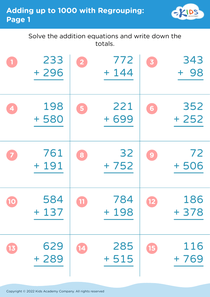
Reading comprehension Adding up to 1000 Without Regrouping Worksheets for Ages 3-7
4 filtered results
-
From - To
Enhance your child's math and reading skills with our "Reading Comprehension Adding up to 1000 Without Regrouping Worksheets for Ages 3-7." These engaging worksheets are designed to help young learners practice adding up to 1000 without regrouping while simultaneously building their reading comprehension abilities. Each page combines simple math problems with fun, age-appropriate stories and exercises that improve focus and understanding. Perfect for early graders, these worksheets encourage independent learning and retention. Boost your child's confidence and academic proficiency with these expertly crafted resources from Kids Academy! Suitable for classroom use or at-home practice.
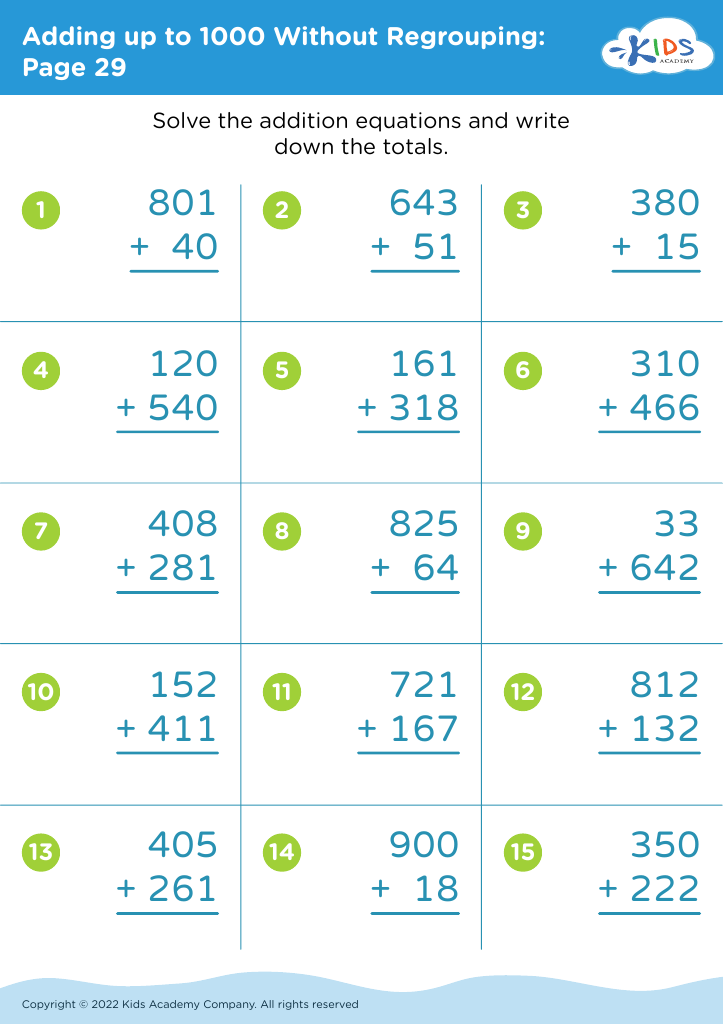
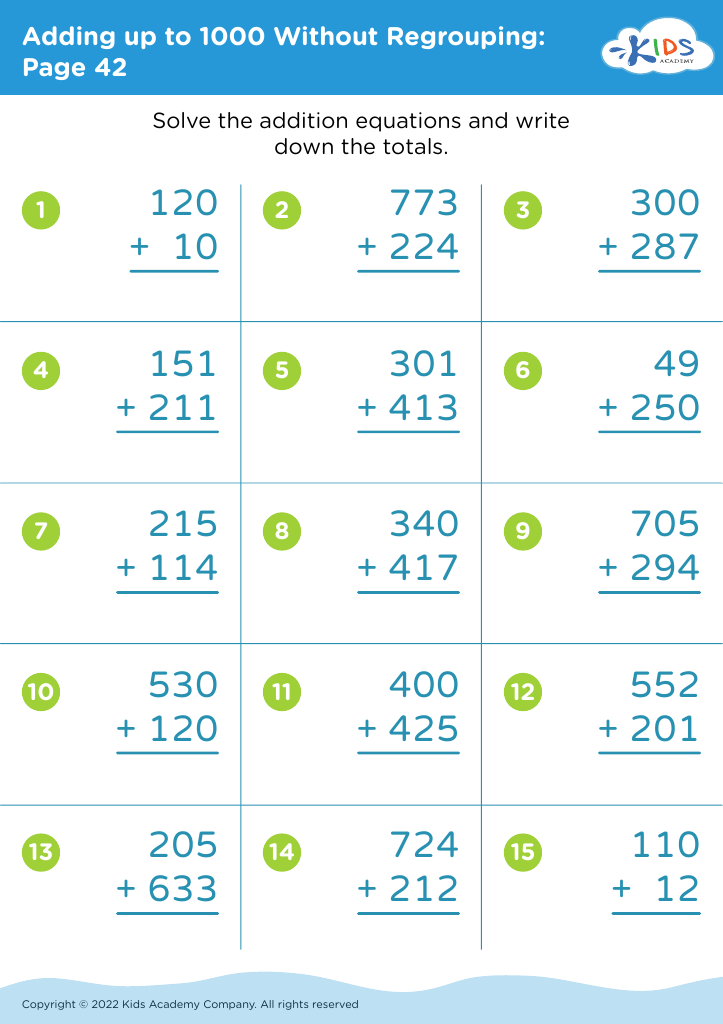
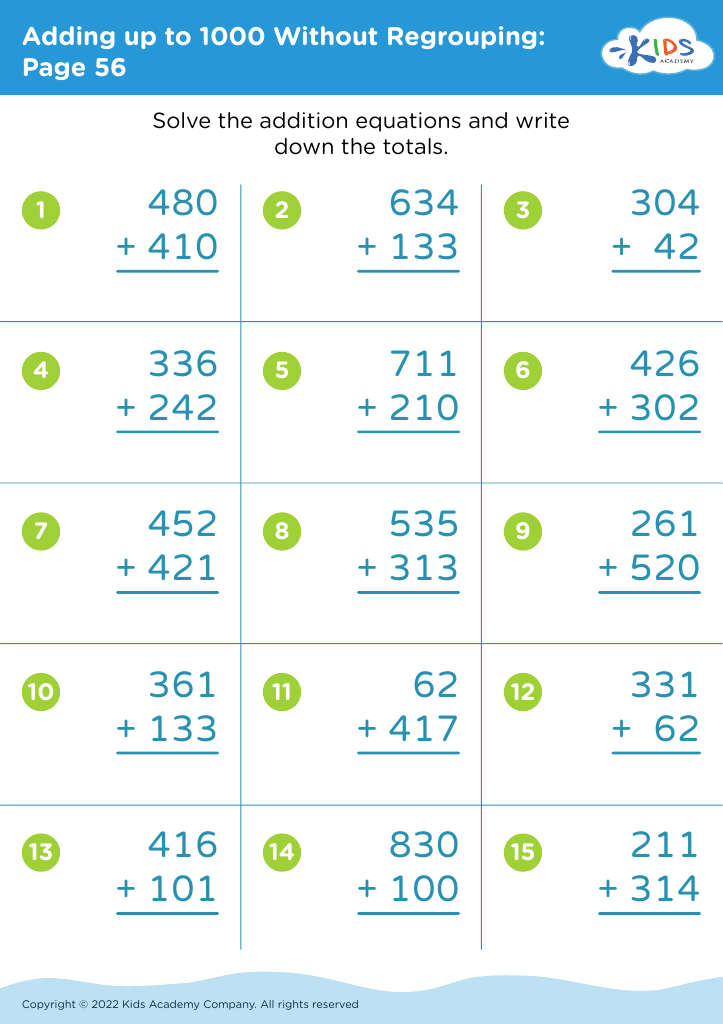
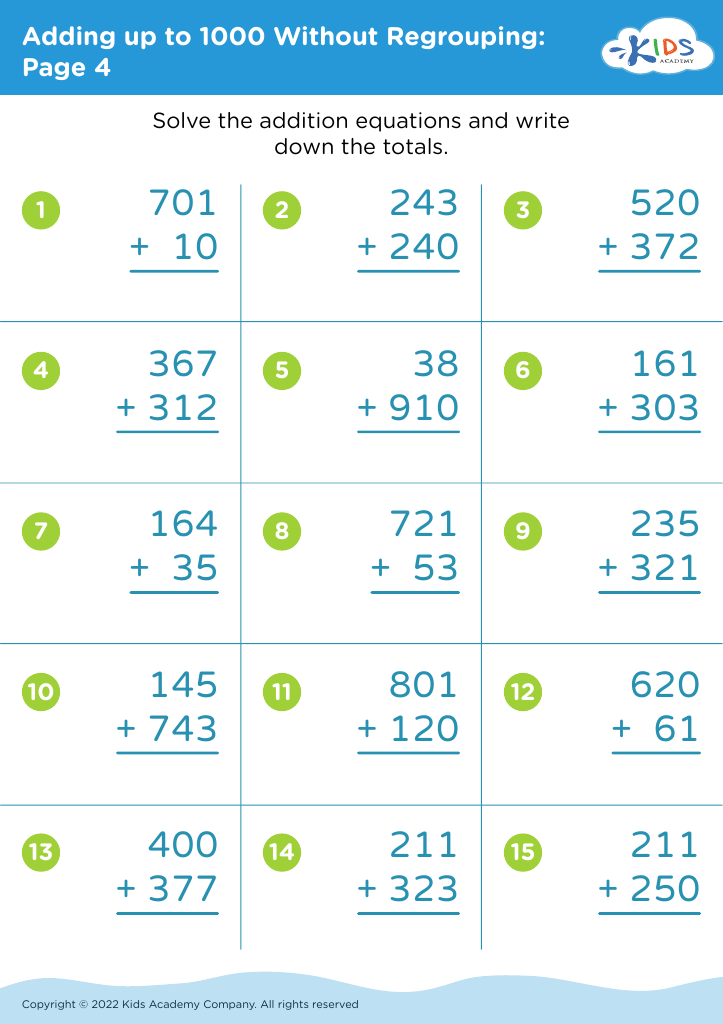


Reading comprehension and basic arithmetic are fundamental skills for young learners because they lay the foundation for future academic success and everyday problem-solving. For children aged 3-7, understanding how to add numbers up to 1000 without regrouping is an instrumental step toward numerical fluency—a critical aspect of mathematics.
When children engage with addition problems, they not only practice their arithmetic skills but also enhance their cognitive abilities. This learning process builds their capacity to analyze situations, follow sequences, and solve problems logically. These math exercises help foster a strong number sense, enabling them to perceive numbers more intuitively and recognize their relationships.
Coupled with reading comprehension, these skills reinforce one another. Good reading comprehension ensures that children can understand math problems stated in word form and follow instructions accurately. Thus, developing these skills simultaneously supports holistic intellectual growth.
Parents and teachers must recognize this integrated approach. By nurturing both reading comprehension and arithmetic skills without regrouping, they empower children to build essential competencies independently. This helps young learners develop confidence and a positive attitude toward learning, which promotes a lifelong learner mindset. Investing effort and time in these areas during early education significantly benefits students academically, socially, and emotionally.