Recognize patterns Adding up to 1000 Without Regrouping Worksheets for Ages 3-7
3 filtered results
-
From - To
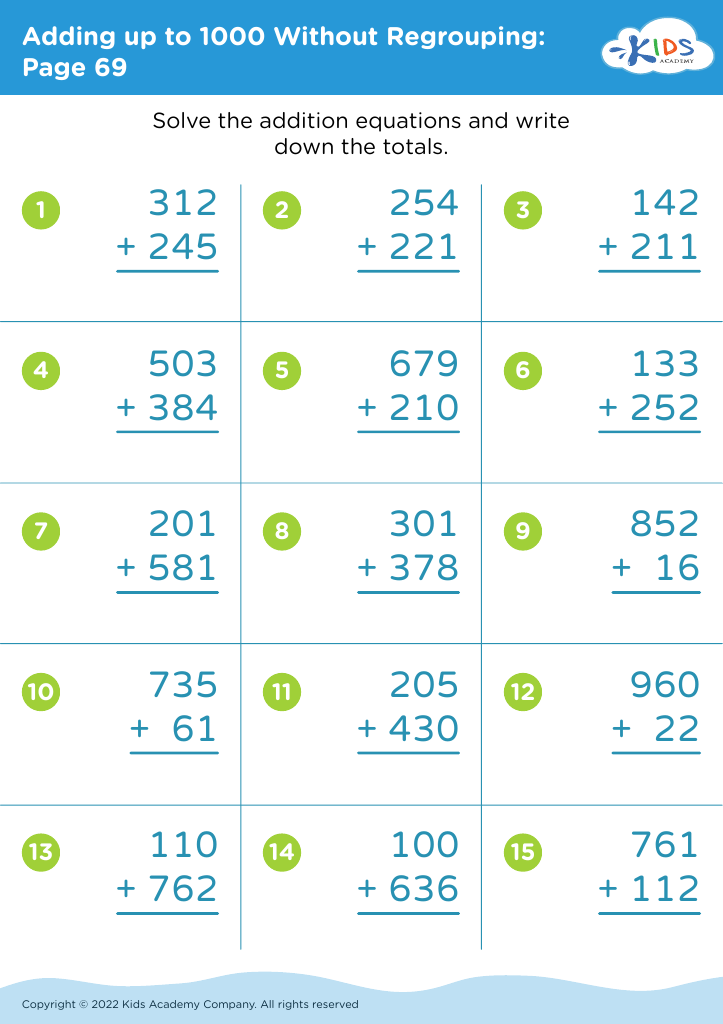
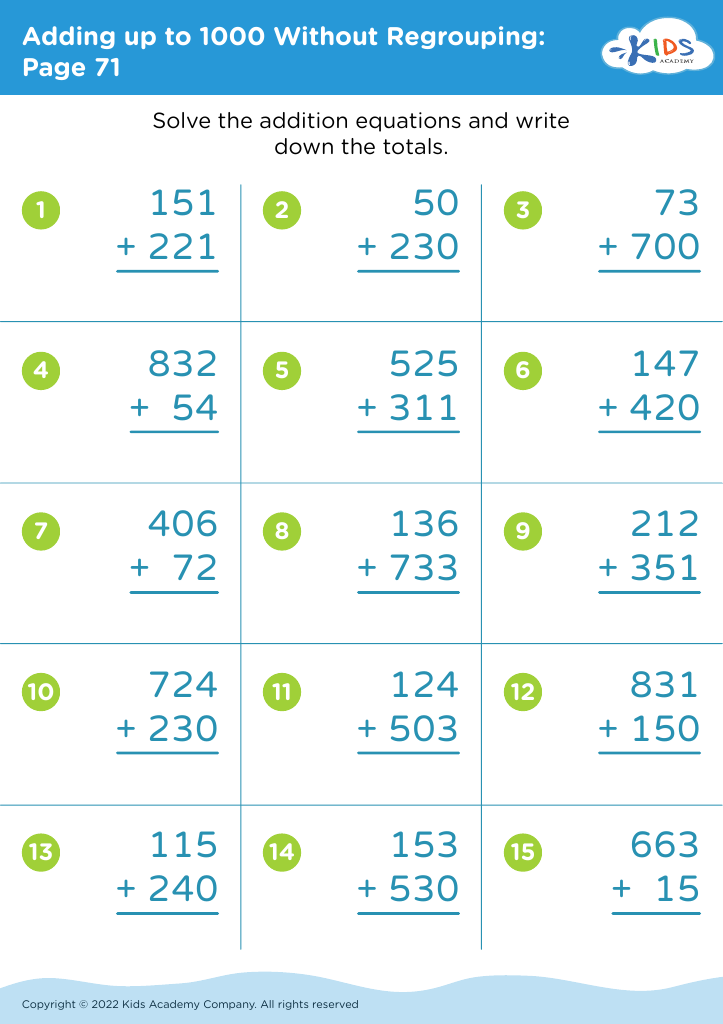
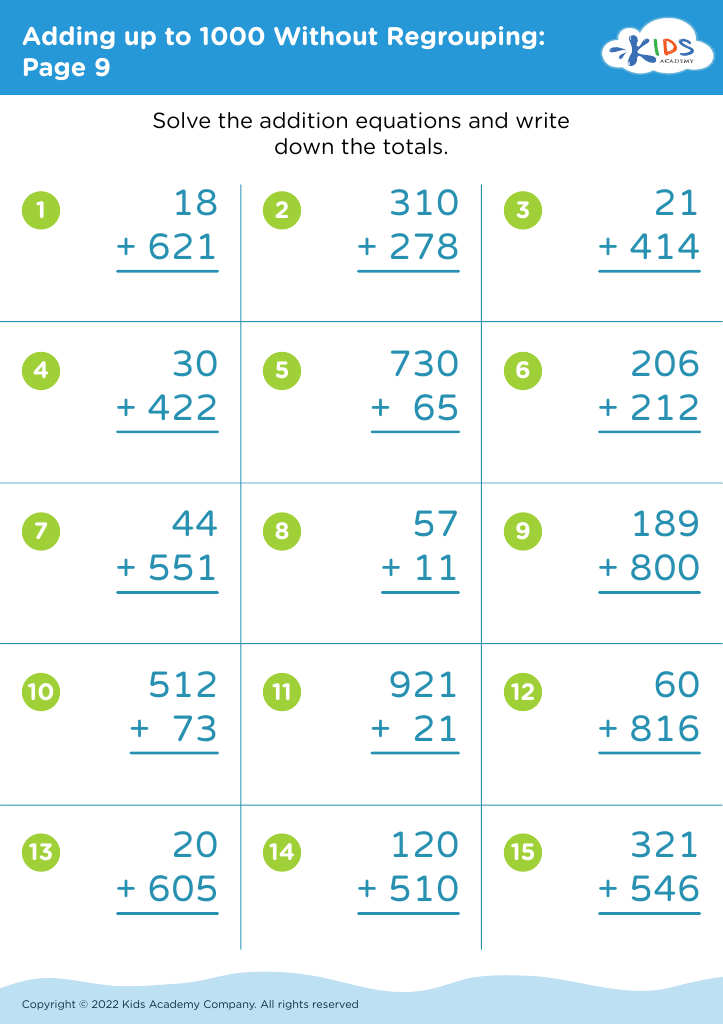
Our "Recognize Patterns: Adding up to 1000 Without Regrouping" worksheets are designed specifically for children ages 3-7. These engaging and educational printables help young learners develop essential math skills by introducing them to the concept of addition without the complexity of regrouping. Through fun and interactive activities, kids learn to identify number patterns and build their confidence in handling larger numbers. Perfect for early math practice at home or in the classroom, these worksheets foster a solid foundation in addition while encouraging pattern recognition and critical thinking. Make math exciting and accessible for your little one today!


Fostering the ability to recognize patterns and add numbers up to 1000 without regrouping in children ages 3-7 is crucial for several reasons. Firstly, recognizing patterns lays a foundation for higher-order thinking skills. Patterns teach children to predict outcomes, a skill essential not just in math but in everyday problem-solving situations. This thinking ability breeds analytical skills early on.
When it comes to adding numbers up to 1000 without regrouping, the emphasis is on understanding basic addition, place value, and the conception of large numbers, which bolsters math fluency. Being able to add larger numbers can provide children with confidence in their math skills, preparing them for more challenging concepts like regrouping, subtraction, multiplication, and beyond.
Moreover, achieving proficiency in these areas at a young age means that children will enter higher grade levels with a solid math foundation. They will avoid the common pitfalls that stem from basic misunderstandings, ensuring a smoother academic progression. Early and effective mastery of patterns and large number addition also fosters a growth mindset. Children who realize they can tackle what might initially seem like challenging math problems are more likely to view learning positively.
In essence, these foundational skills play a vital role in both cognitive developmental stages and long-term academic success, making them a priority in early childhood education.