Shape Recognition Adding up to 1000 Without Regrouping Worksheets for Ages 3-7
3 filtered results
-
From - To
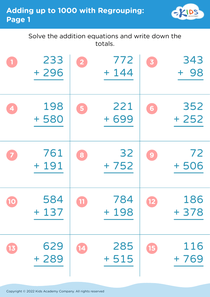
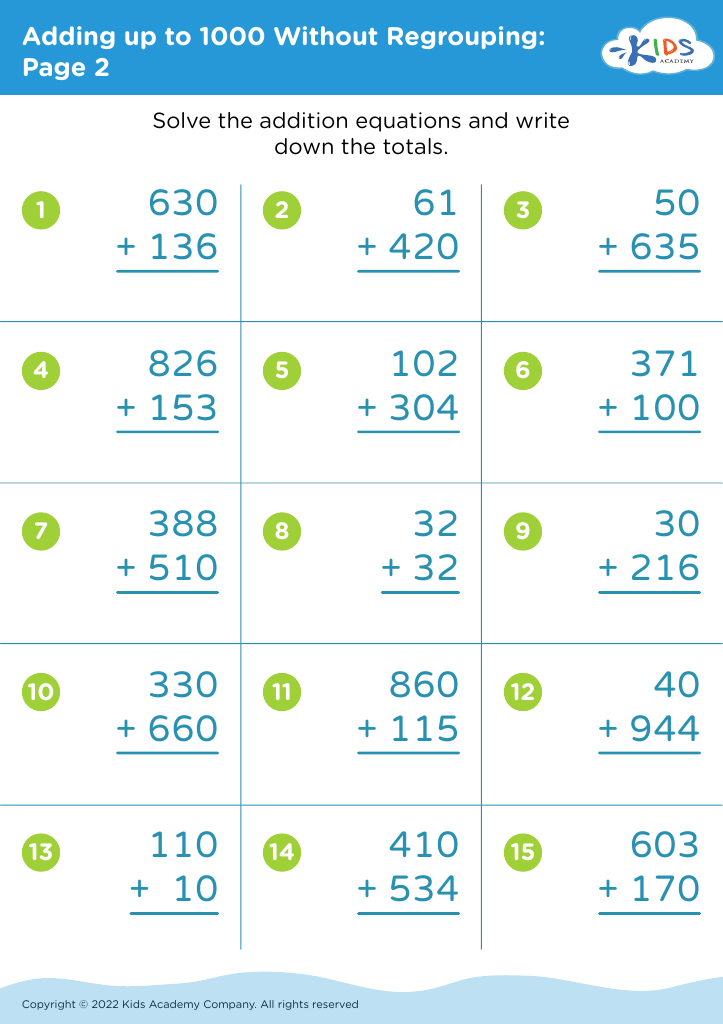
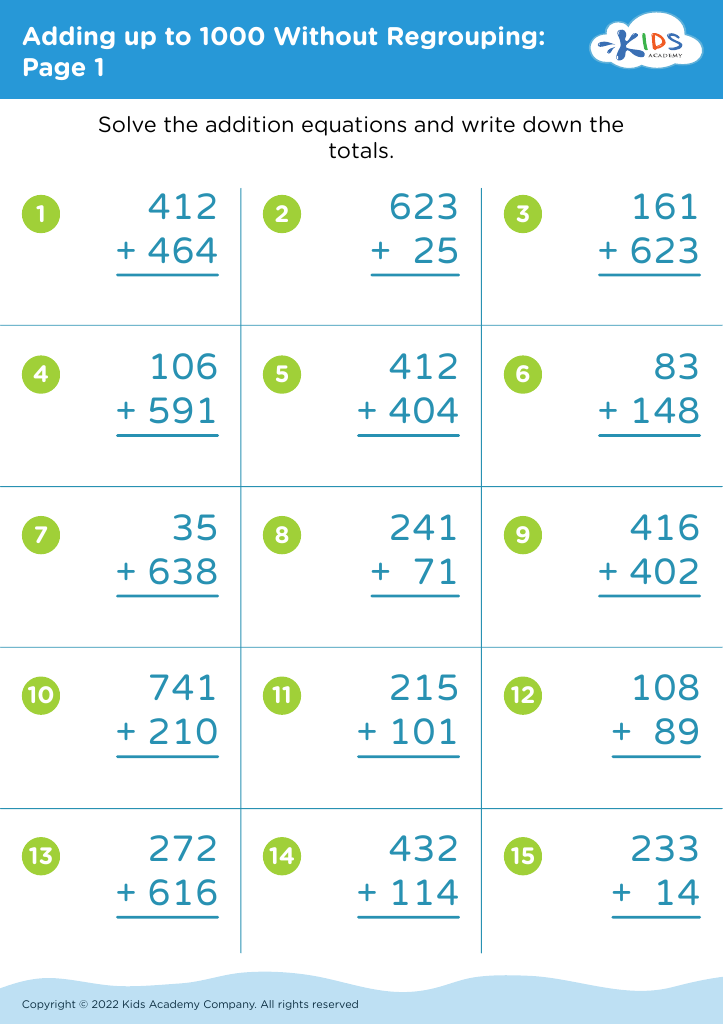
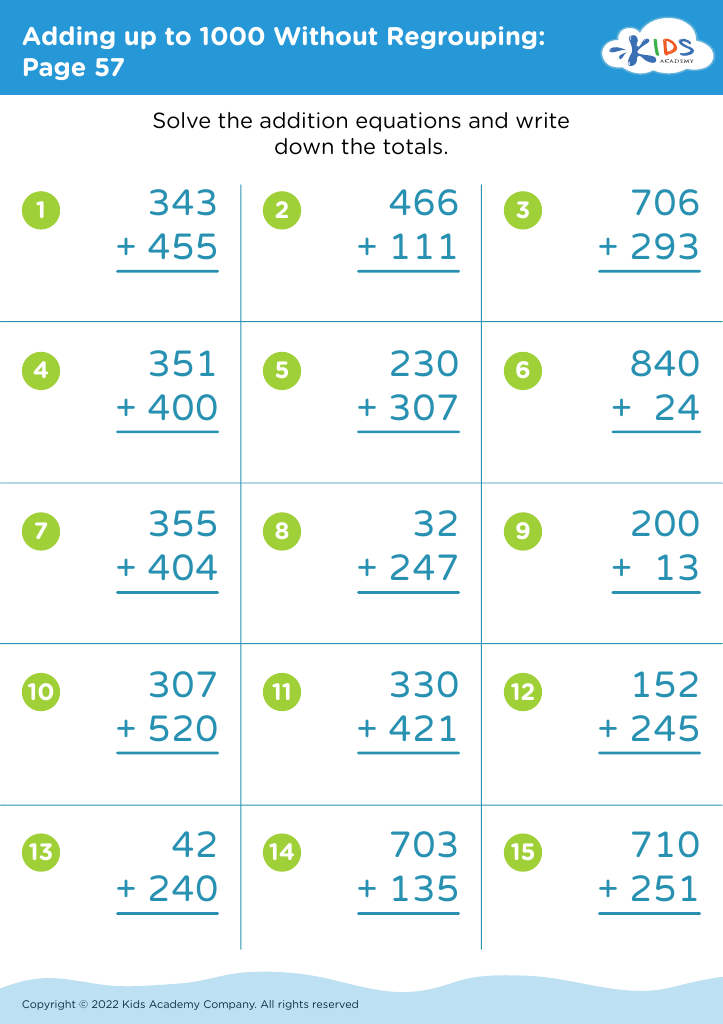
Discover our engaging "Shape Recognition Adding up to 1000 Without Regrouping Worksheets," designed for children aged 3-7. These worksheets combine the joy of learning mathematics with the fundamental skill of shape recognition. Our activities help young learners identify various shapes while practicing addition skills, empowering them to solve problems without regrouping up to 1000. Each worksheet is crafted to enhance fine motor skills, critical thinking, and visual perception, fostering a solid foundation in early math. Perfect for classroom or at-home learning, these worksheets make math fun and interactive, ensuring children build confidence while mastering essential concepts. Start shaping young minds today!


Shape recognition and the ability to add numbers up to 1000 without regrouping are two foundational skills that are crucial for children aged 3-7. Parents and teachers should care about these skills because they play a vital role in a child’s cognitive development and their preparedness for future learning.
Shape recognition helps children understand the world around them, allowing them to categorize and identify objects based on their shapes. This skill serves as a precursor to more complex concepts in mathematics and geometry, which will be crucial later in their education. Integrating activities that promote shape recognition—such as hands-on learning with blocks or puzzles—encourages cognitive growth and critical thinking.
Meanwhile, understanding addition without regrouping builds numerical fluency and confidence in math. By mastering this skill at an early age, children create a strong foundation for more advanced arithmetic in the future. It teaches them to manipulate numbers effortlessly, a skill that is necessary for problem-solving and logical reasoning.
When parents and teachers prioritize these areas, they promote overall brain development, instill a love for learning, and equip children with essential skills that foster academic success and confidence. Investing time in these foundational skills at such an early age sets the stage for lifelong learning and achievement.