Color recognition Adding up to 1000 Worksheets for Ages 3-7
3 filtered results
-
From - To
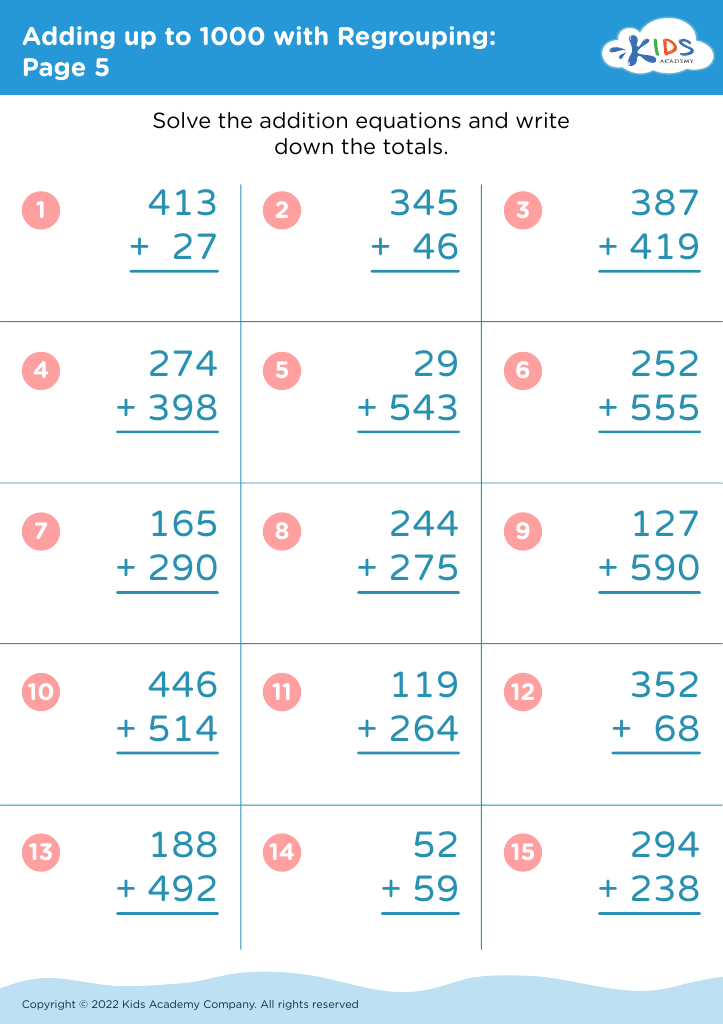
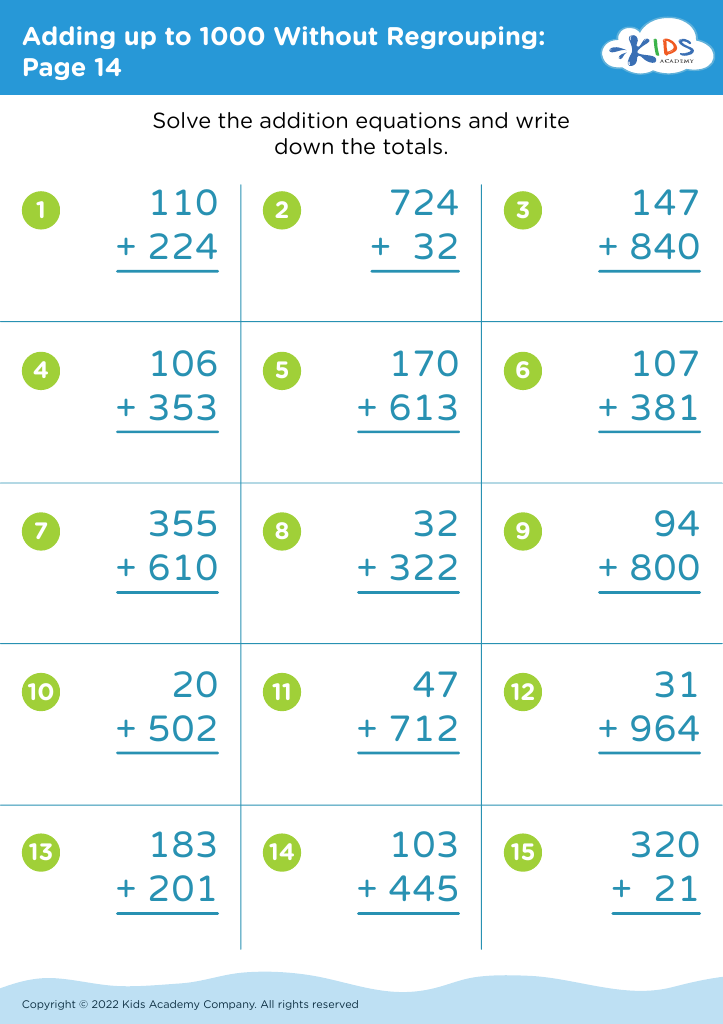
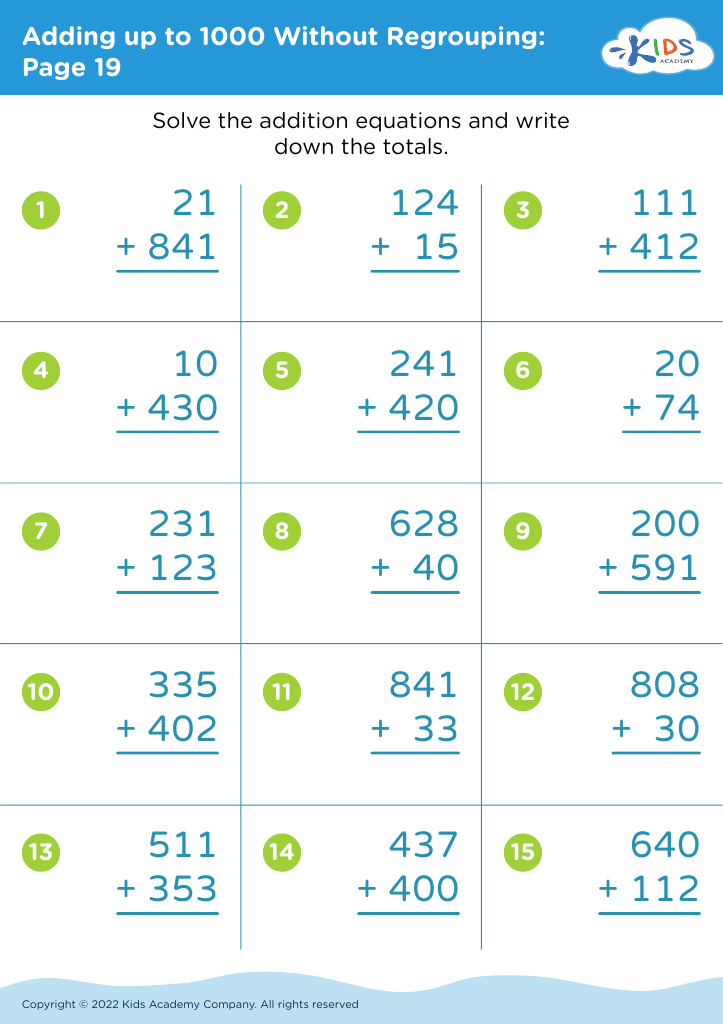
Unlock the joy of learning with our "Color Recognition Adding up to 1000 Worksheets" designed for ages 3-7! These engaging worksheets combine math and color identification, making the learning process exciting and interactive. Children will develop their color recognition skills while practicing addition up to 1000, enhancing their cognitive abilities in a fun way. Each worksheet provides a unique set of colorful visuals and problems that keep young learners focused and eager to practice. Ideal forhome use or classroom activities, our resources cater to various learning styles and help build a strong foundation for future math success. Start exploring today!



Color recognition is a fundamental skill that plays a significant role in early childhood development for children aged 3-7. It aids in cognitive growth, enhances language skills, and fosters social interaction. By learning to identify and name different colors, children enhance their vocabulary and improve their ability to express thoughts and emotions.
Understanding colors helps children categorize and make sense of the world around them. This skill is crucial as it lays the groundwork for more complex concepts such as sorting, matching, and even basic math, making it a cross-disciplinary tool. When teachers and parents introduce color activities, such as sorting colorful toys or painting, they support children’s exploration and creativity, allowing them to engage in meaningful play while learning.
Moreover, color recognition is linked to emotional development. Colors often evoke feelings and moods; discussing these emotions can help children articulate how they feel, building emotional intelligence.
From the perspective of teachers and parents, fostering color recognition not only enhances learning but also supports consistent developmental milestones. In shared activities focused on colors, opportunities for bonding arise, cultivating strong relationships that contribute to a child’s overall well-being and success in learning. Thus, recognizing and promoting this skill is vital in nurturing healthy development.








