Filters

16 filtered results

Clear all filters
Favorites
With answer key
Interactive

16 filtered results

Difficulty Level

Grade


Explore our engaging "Comparing Fractions Adding up to 1000 Worksheets" designed for young learners aged 3-7. These worksheets not only simplify the concept of comparing fractions but also integrate addition skills, making math fun and accessible. Perfect for early grade teachers and parents alike, these resources enhance critical thinking and promote a solid understanding of fractions in relation to larger numbers. With interactive activities and colorful graphics, children will feel excited as they learn and practice at their own pace. Help your child build a strong mathematical foundation with our thoughtfully crafted worksheets that encourage learning through play!
Check out this FREE Trial Lesson on Adding up to 1000 for age 3-7!

A

Favorites
With answer key
Interactive
  • 3-7
  • Comparing Fractions
  • Adding up to 1000
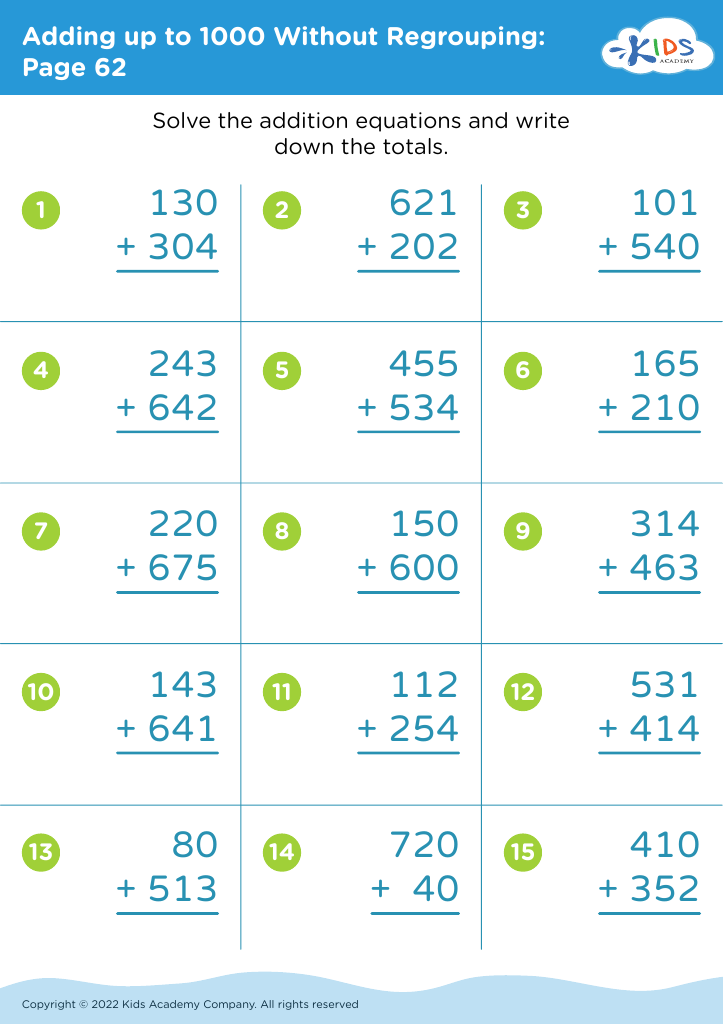
Adding up to 1000 with Regrouping: Page 63
Worksheet
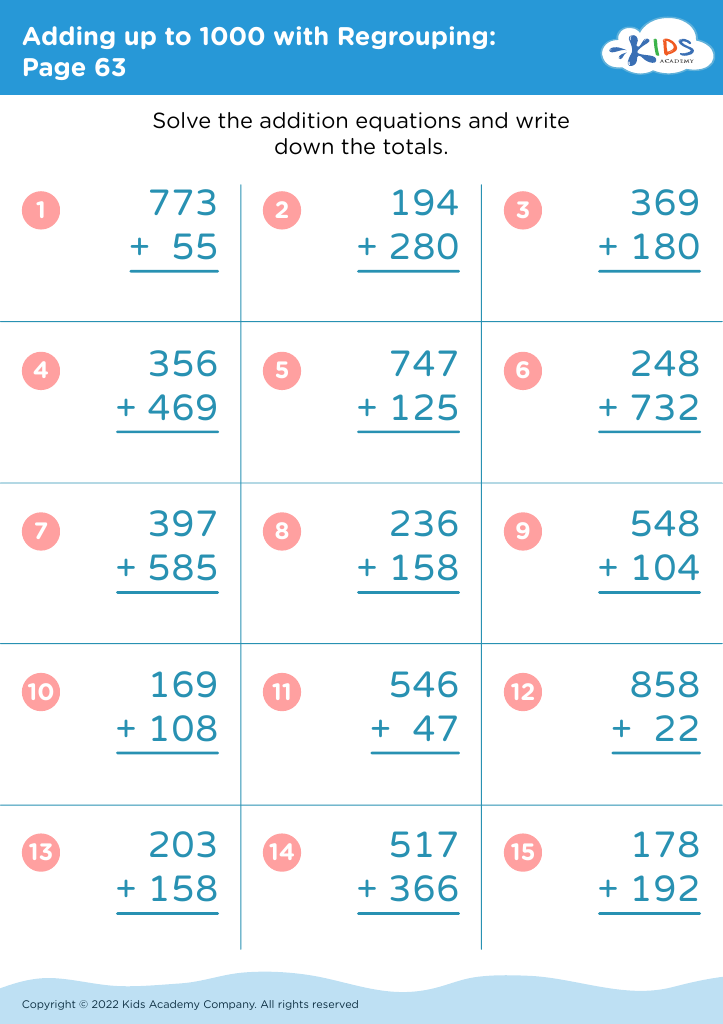
Adding up to 1000 with Regrouping: Page 26
Worksheet
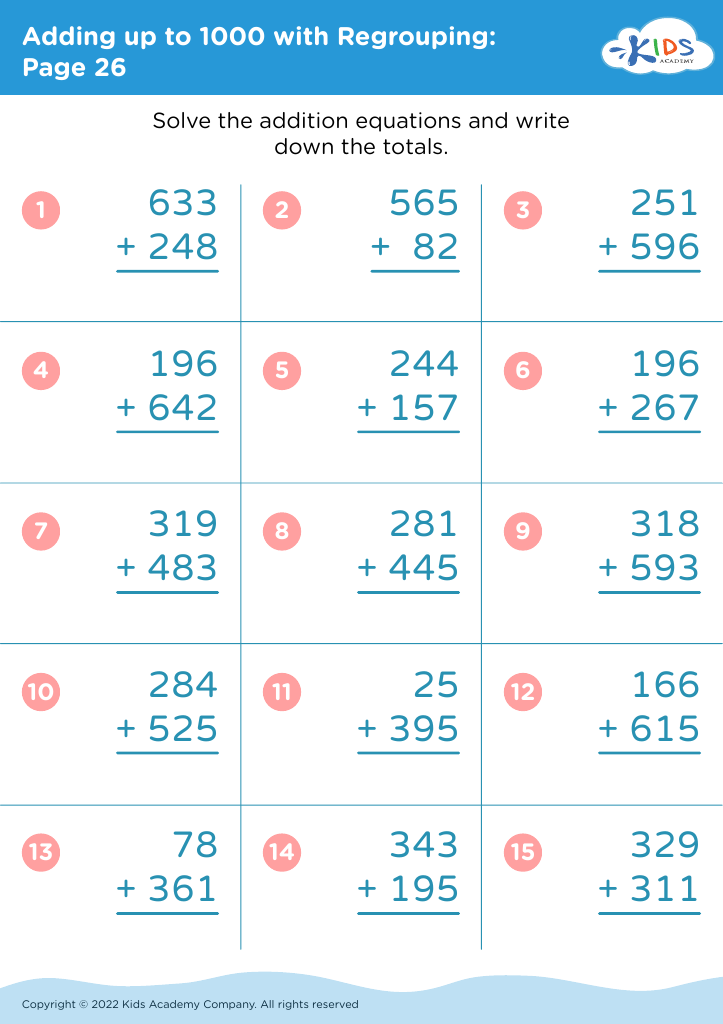
Adding up to 1000: Page 40

Adding up to 1000: Page 40

Adding up to 1000: Page 40
Worksheet
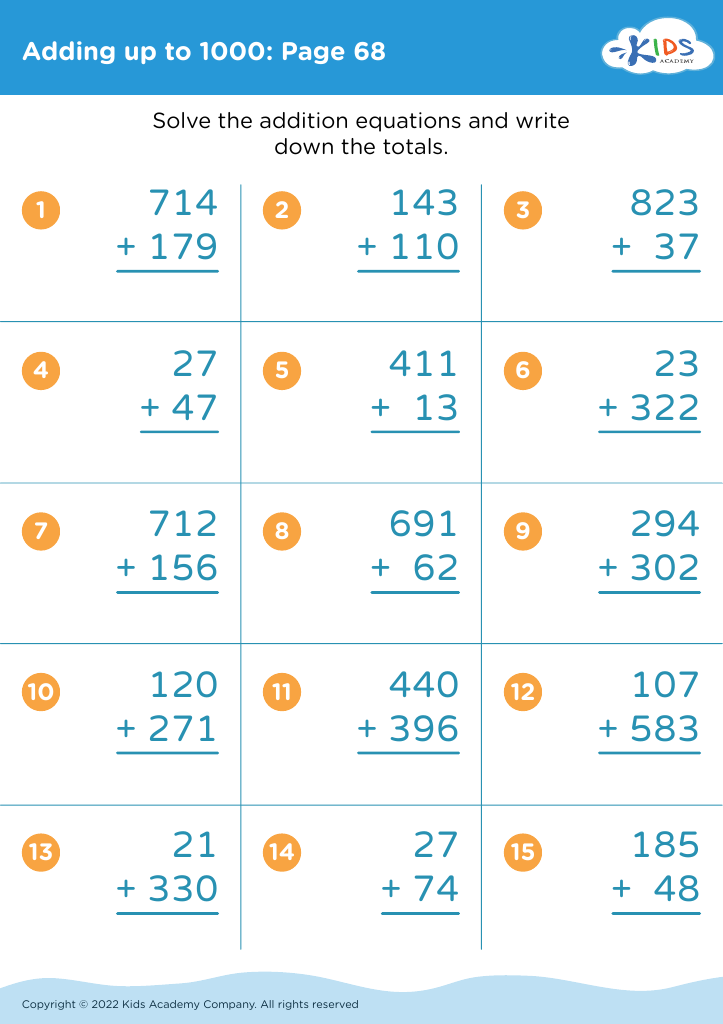
Adding up to 1000: Page 68

Adding up to 1000: Page 68

Adding up to 1000: Page 68
Worksheet
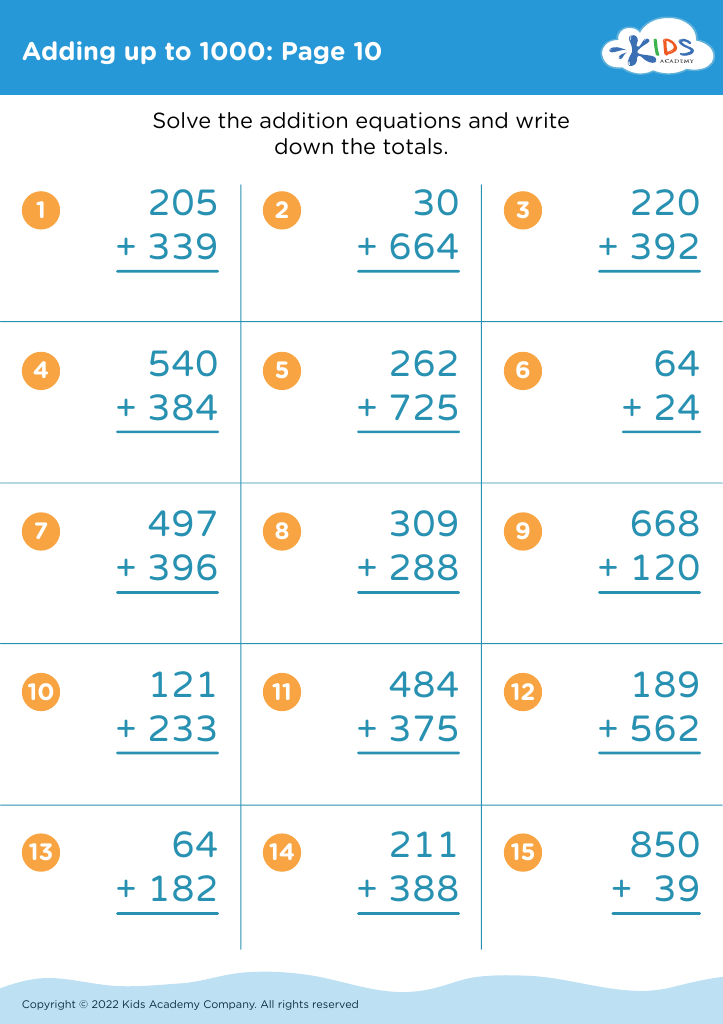
Adding up to 1000: Page 10

Adding up to 1000: Page 10

Adding up to 1000: Page 10
Worksheet
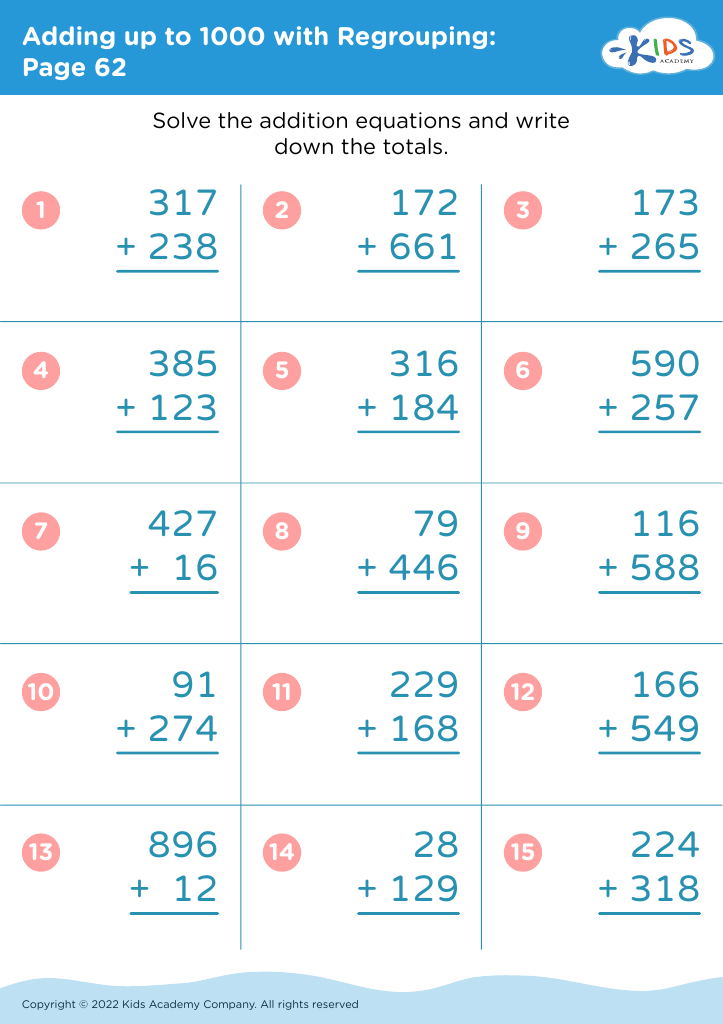
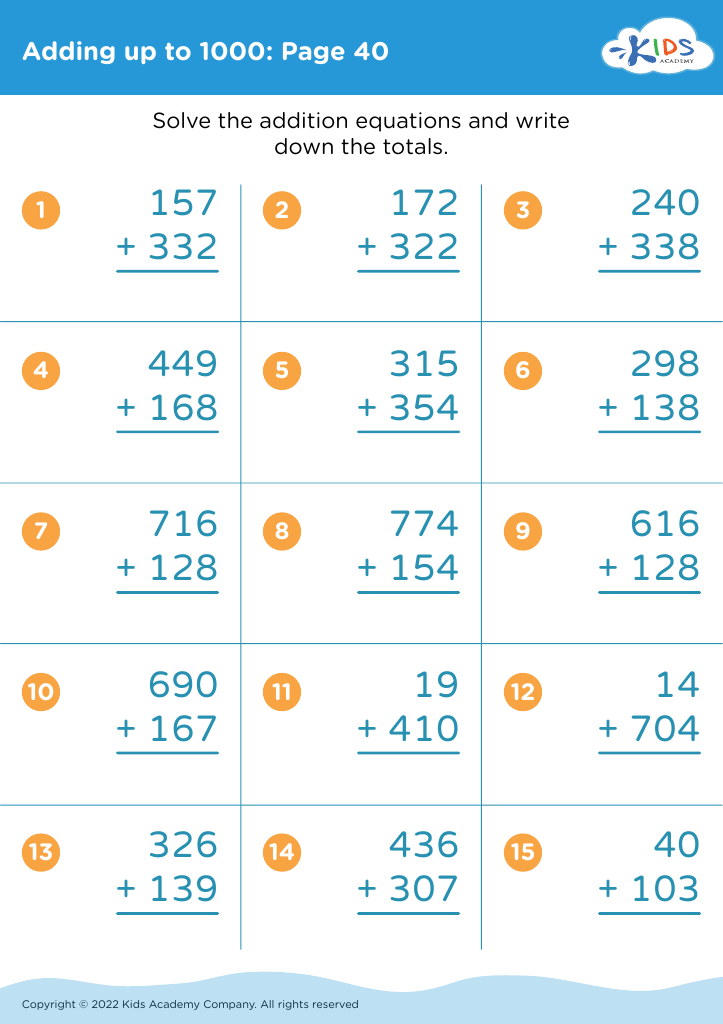
Adding up to 1000 with Regrouping: Page 62
Worksheet
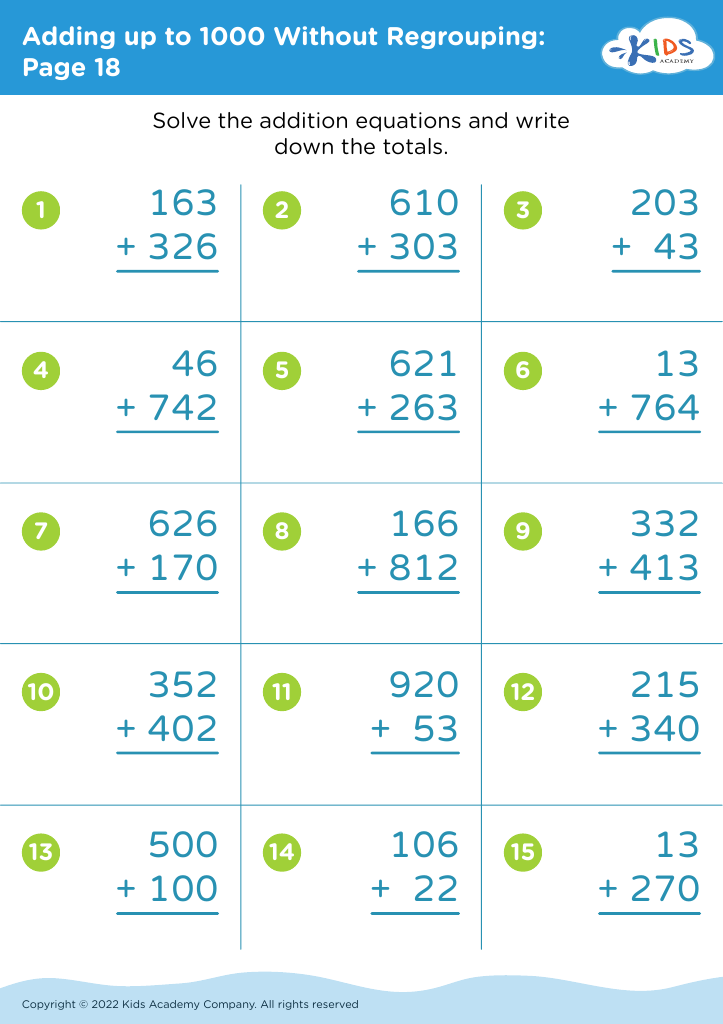
Adding up to 1000 Without Regrouping: Page 18
Worksheet
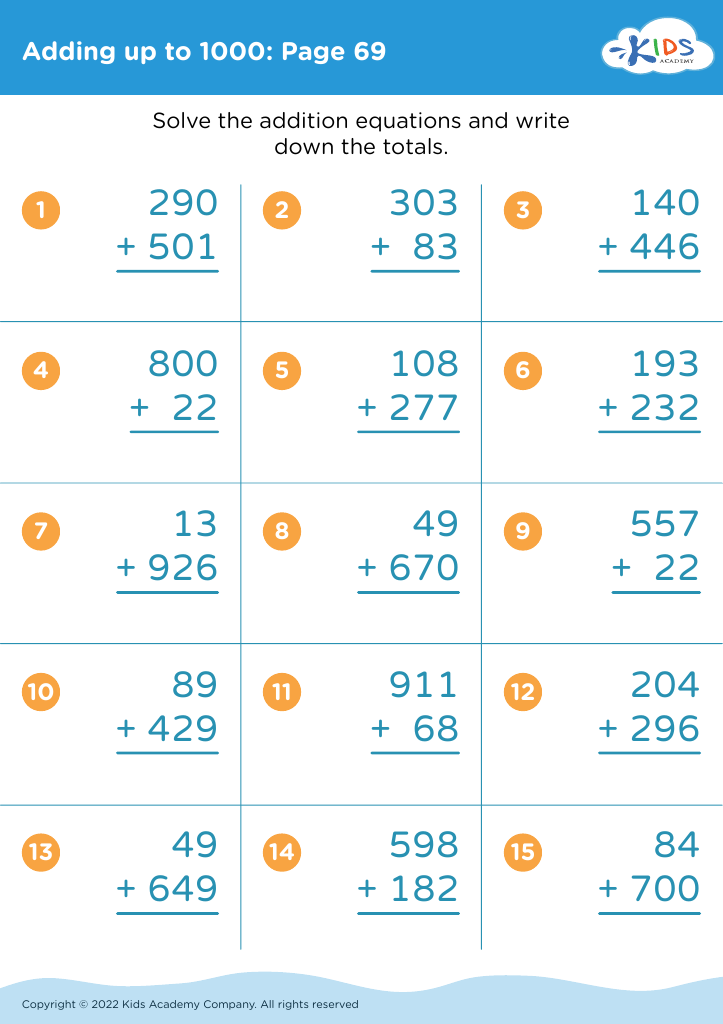
Adding up to 1000: Page 69

Adding up to 1000: Page 69

Adding up to 1000: Page 69
Worksheet
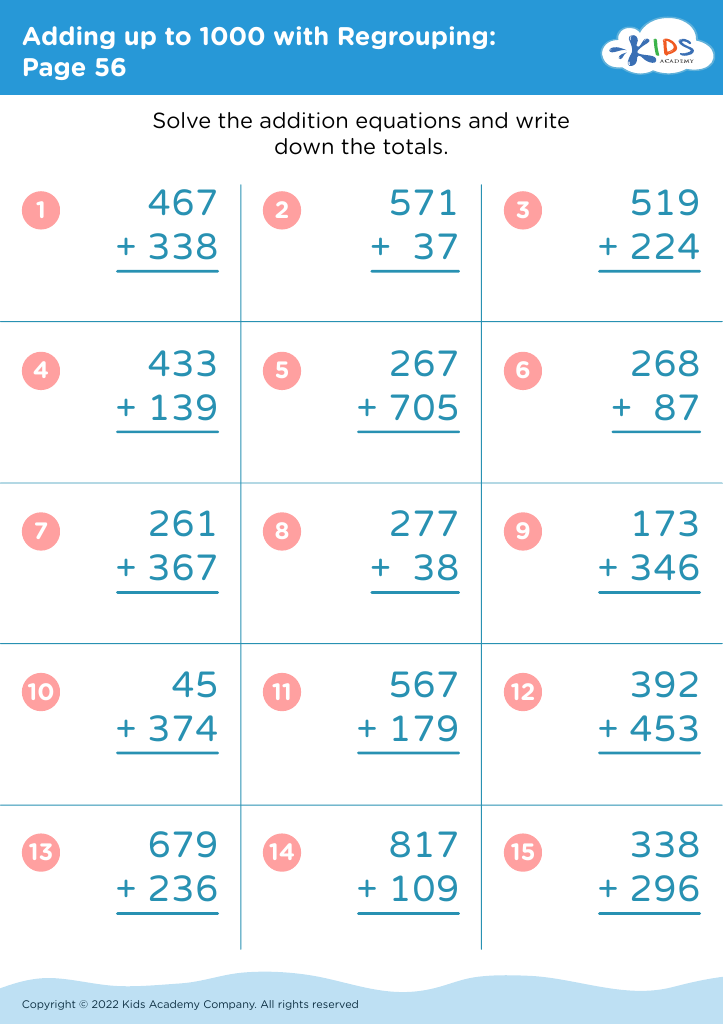
Adding up to 1000 with Regrouping: Page 56
Worksheet
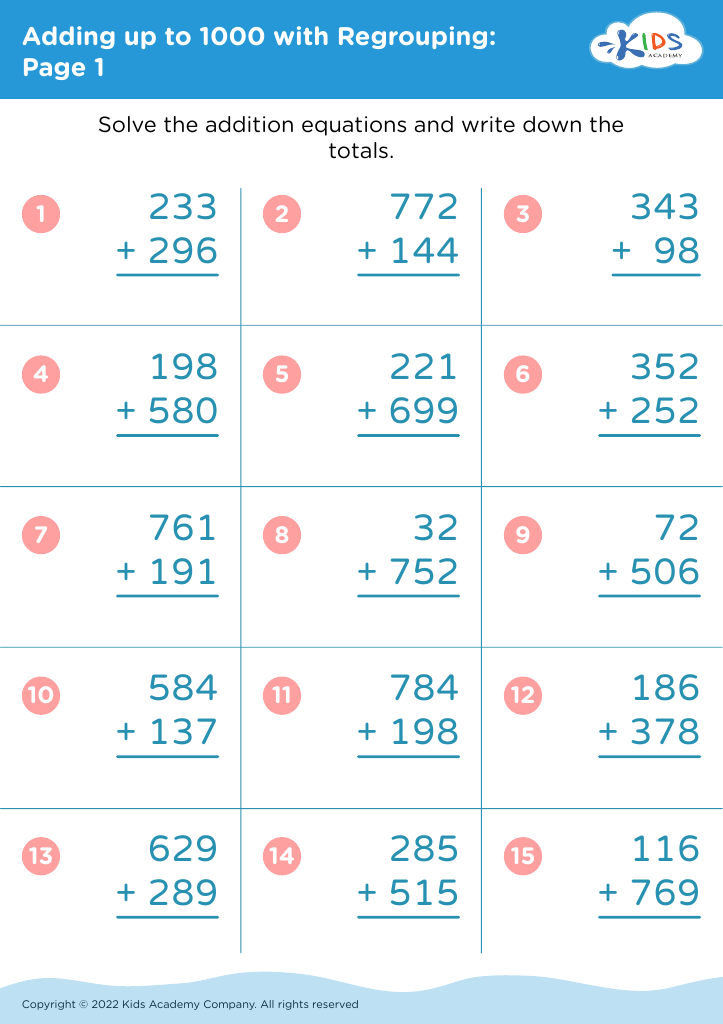
Adding up to 1000 with Regrouping: Page 1
Worksheet
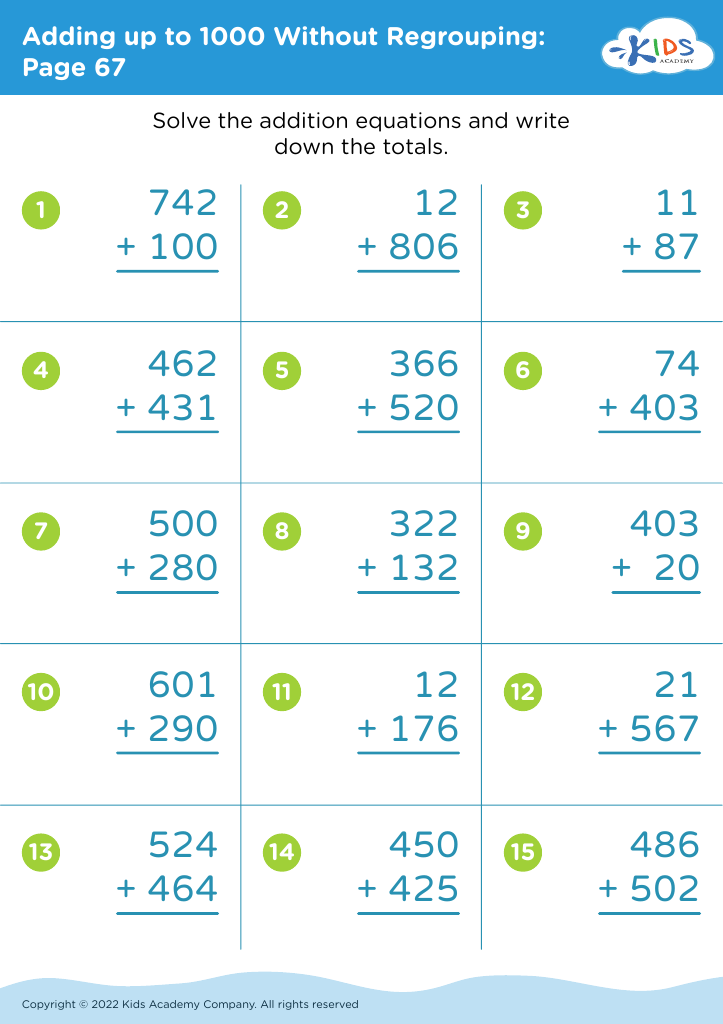
Adding up to 1000 Without Regrouping: Page 67
Worksheet
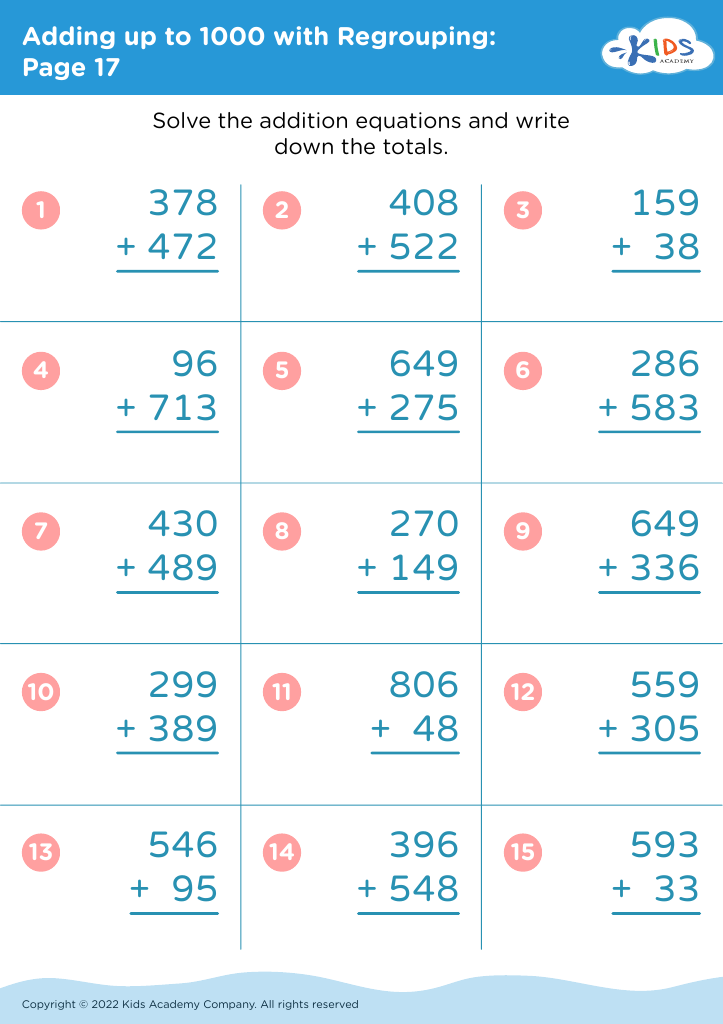
Adding up to 1000 with Regrouping: Page 17
Worksheet
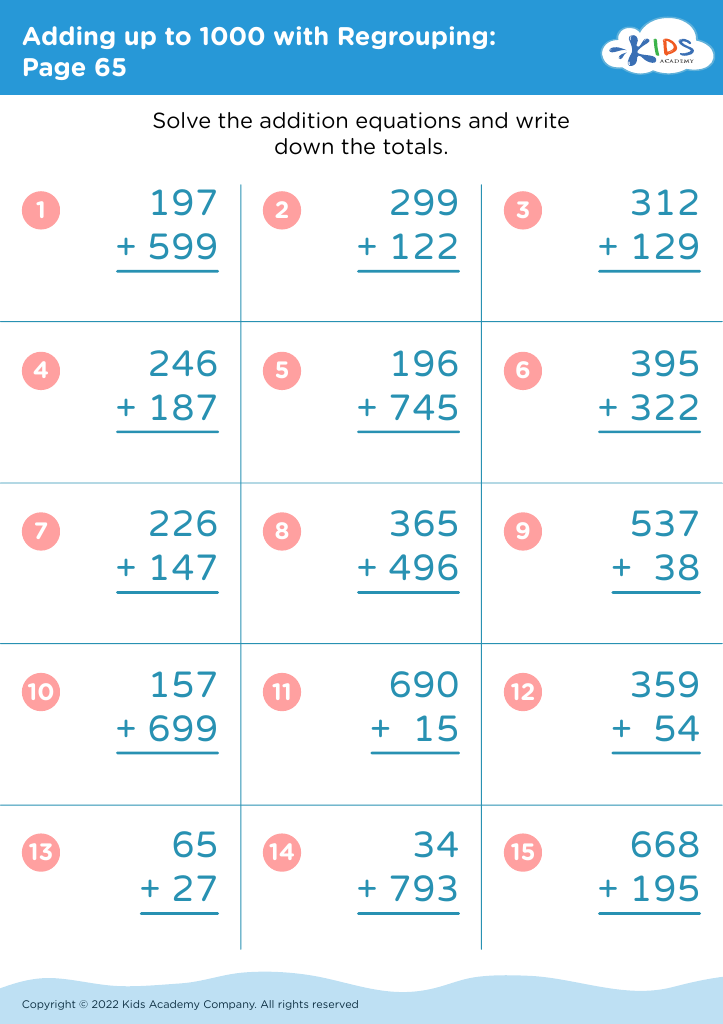
Adding up to 1000 with Regrouping: Page 65
Worksheet
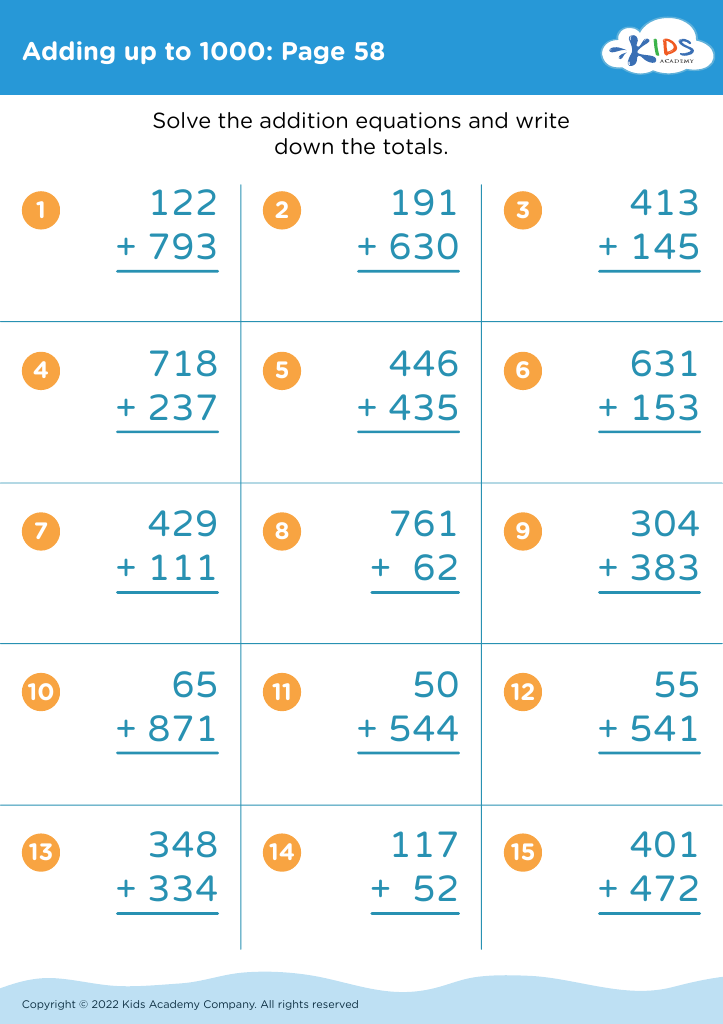
Adding up to 1000: Page 58

Adding up to 1000: Page 58

Adding up to 1000: Page 58
Worksheet
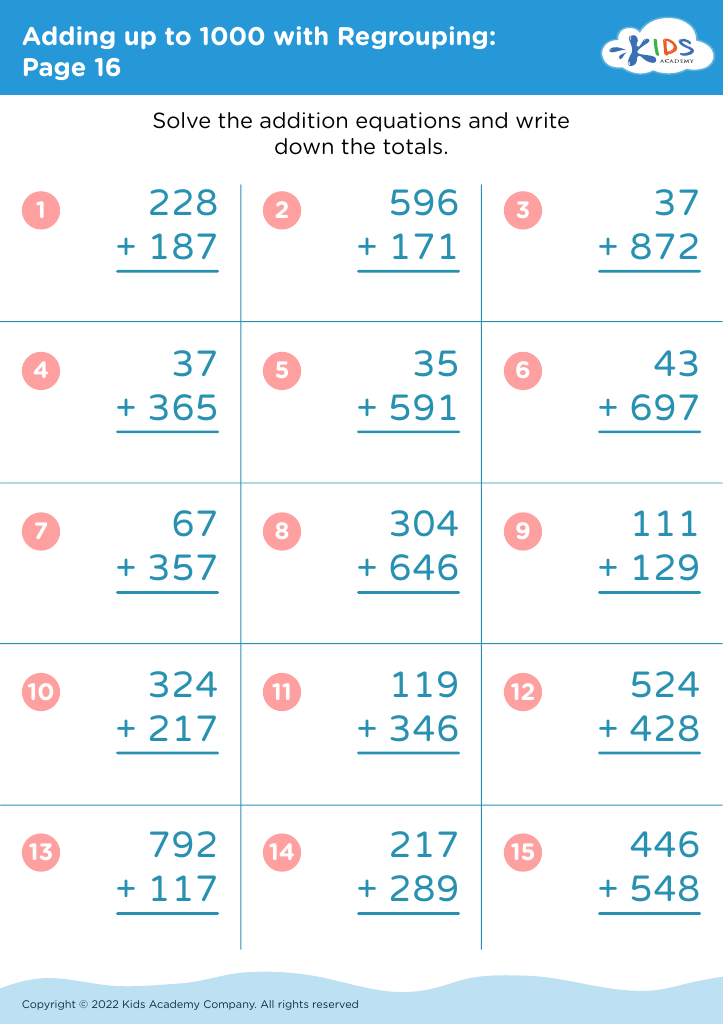
Adding up to 1000 with Regrouping: Page 16
Worksheet
Adding up to 1000 Without Regrouping: Page 62
Worksheet


Understanding fractions, even at a young age, is foundational for a child's cognitive development and mathematical proficiency. When parents or teachers emphasize comparing fractions for children ages 3-7, they are not just teaching numbers; they are nurturing critical thinking and problem-solving skills.

At this age, using visual aids and hands-on activities to represent fractions helps children grasp the concept of parts of a whole, fostering early number sense. Comparing fractions reinforces the idea of size and quantity, which is vital as they progress to more complex mathematical operations. For instance, recognizing that 1/4 is smaller than 1/2 lays the groundwork for later lessons in addition, subtraction, and even ratios.

Moreover, incorporating fractions into everyday life—whether through cooking, sharing snacks, or measuring—connects math to real-world experiences. This method makes learning engaging and relevant, enhancing children’s intrinsic motivation to learn.

Ultimately, when caregivers or educators prioritize fraction comparison, they help build a robust mathematical framework. This early intervention helps ensure children develop confidence and comfort with numbers and prepares them for future challenges they will encounter in their education. So, investing time in fractions has long-lasting benefits for cognitive and academic success.