Filters

19 filtered results

Clear all filters
Favorites
With answer key
Interactive

19 filtered results

Difficulty Level

Grade


Enhance your child's math skills with our engaging "Counting Practice Adding Up to 1000 Worksheets" designed for ages 3-7. These thoughtfully crafted worksheets simplify counting and reinforce essential addition concepts, helping young learners build a strong mathematical foundation. With fun illustrations and age-appropriate challenges, children will enjoy exploring numbers and improving their confidence. Whether at home or in the classroom, these interactive activities make learning enjoyable. By utilizing these worksheets, your child will easily progress towards mastering addition, preparing them for future academic success. Start your child's counting journey today and watch their mathematical skills blossom!
Check out this FREE Trial Lesson on Adding up to 1000 for age 3-7!

A

Favorites
With answer key
Interactive
  • 3-7
  • Counting practice
  • Adding up to 1000
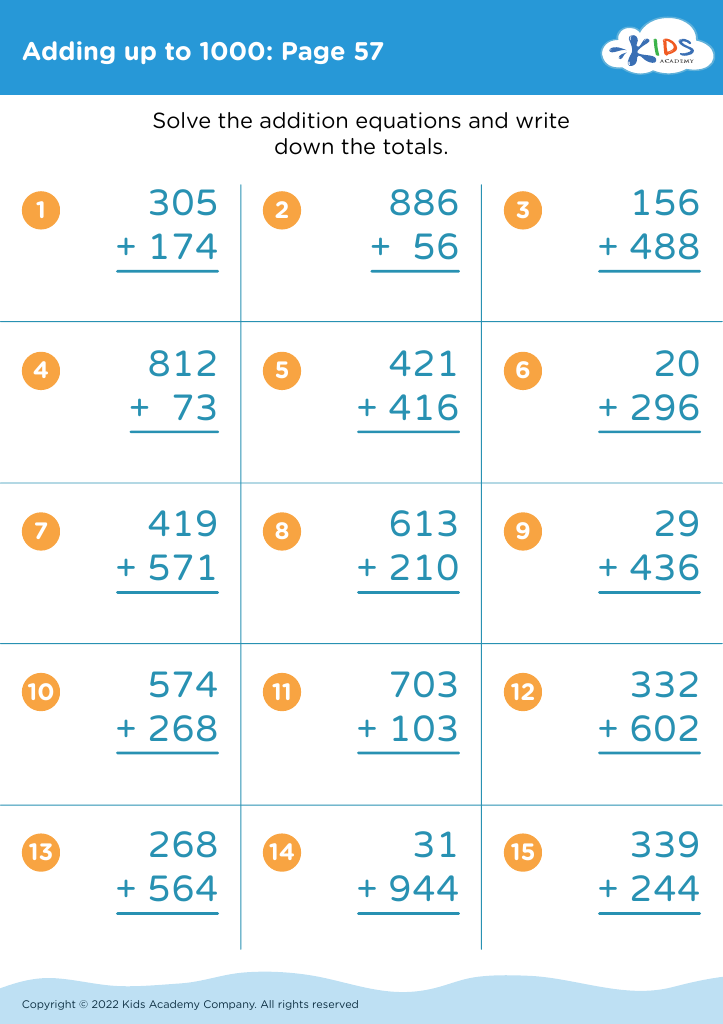
Adding up to 1000: Page 57

Adding up to 1000: Page 57

Adding up to 1000: Page 57
Worksheet
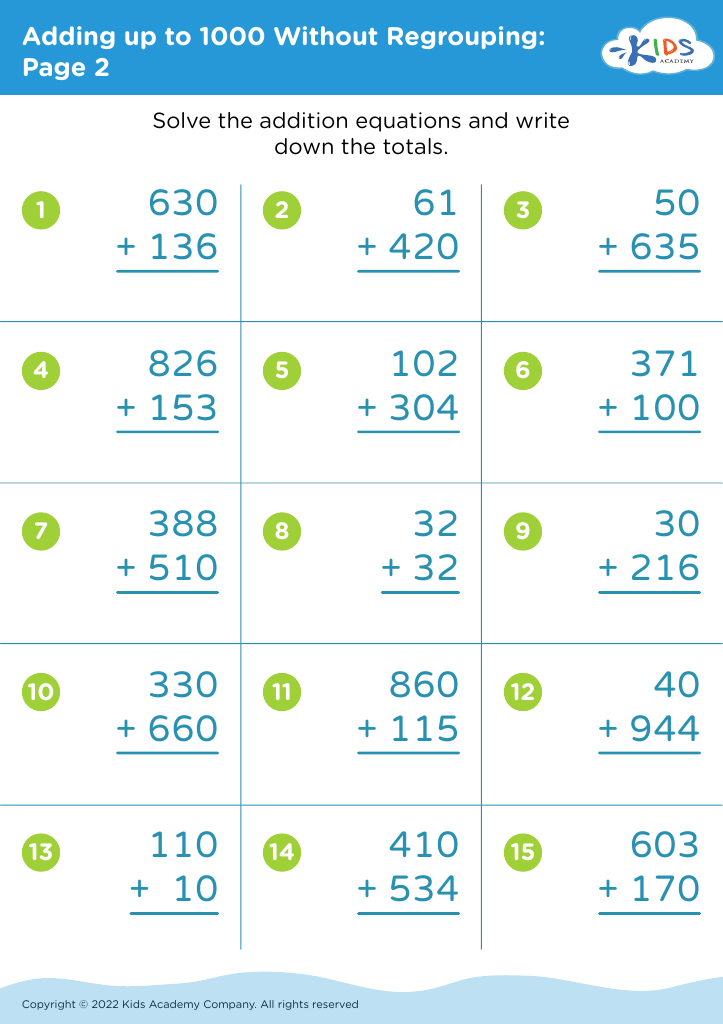
Adding up to 1000 Without Regrouping: Page 2
Worksheet
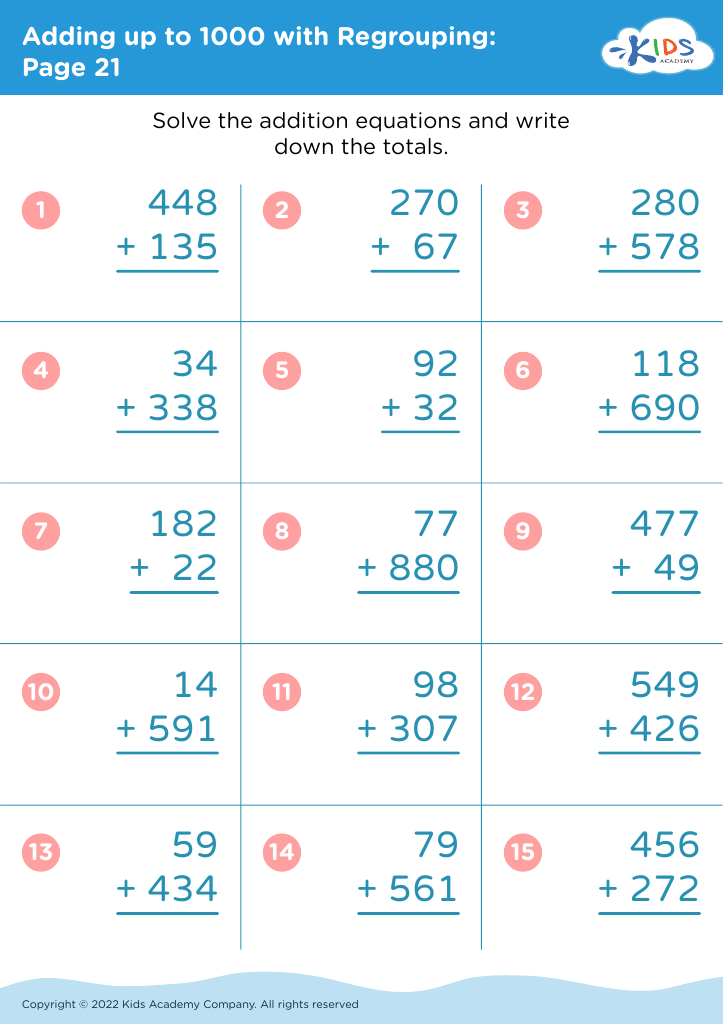
Adding up to 1000 with Regrouping: Page 21
Worksheet
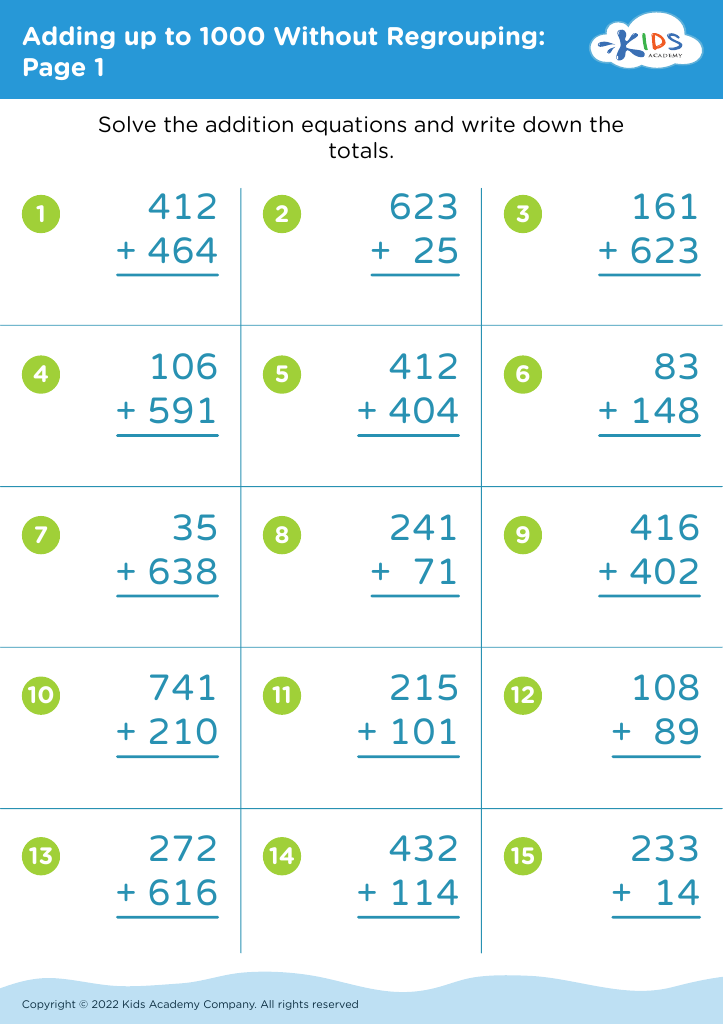
Adding up to 1000 Without Regrouping: Page 1
Worksheet
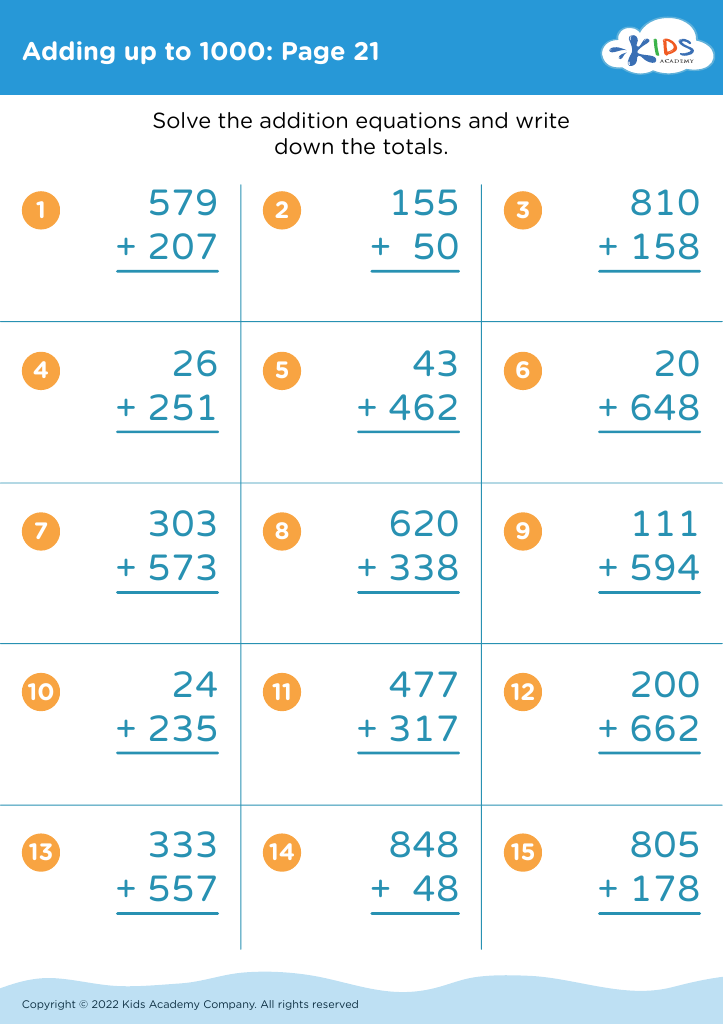
Adding up to 1000: Page 21

Adding up to 1000: Page 21

Adding up to 1000: Page 21
Worksheet
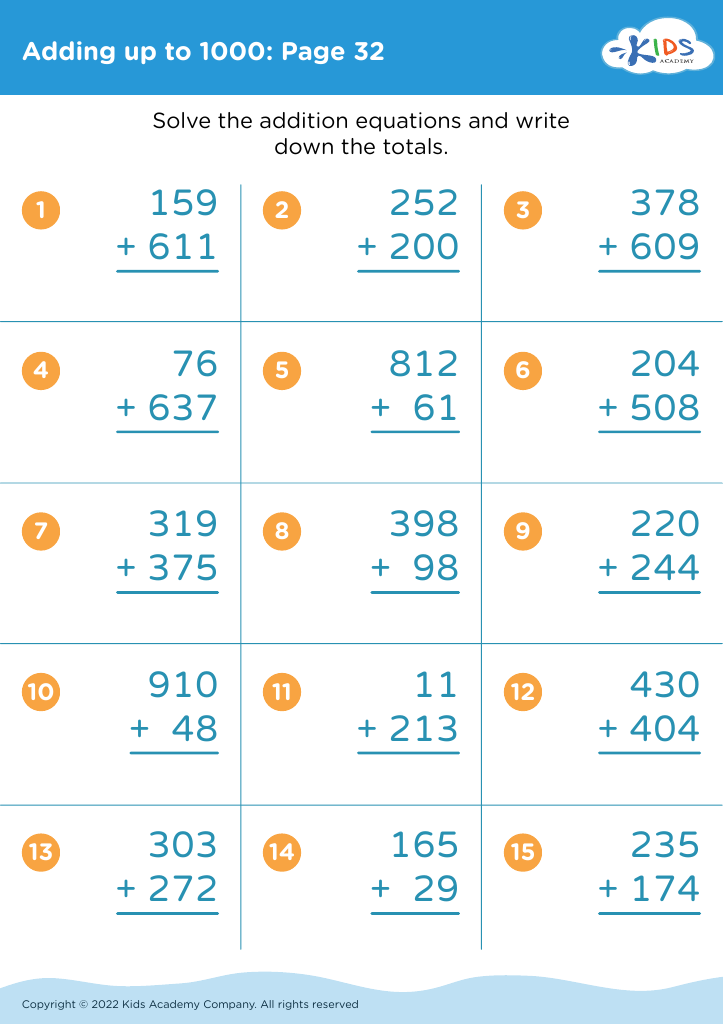
Adding up to 1000: Page 32

Adding up to 1000: Page 32

Adding up to 1000: Page 32
Worksheet
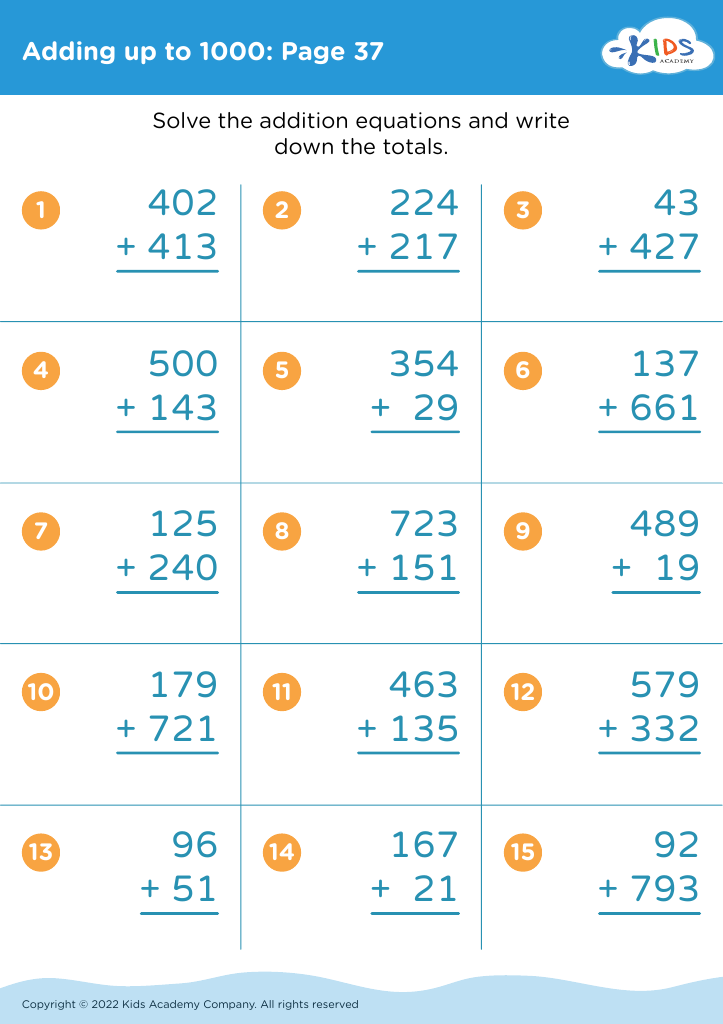
Adding up to 1000: Page 37

Adding up to 1000: Page 37

Adding up to 1000: Page 37
Worksheet
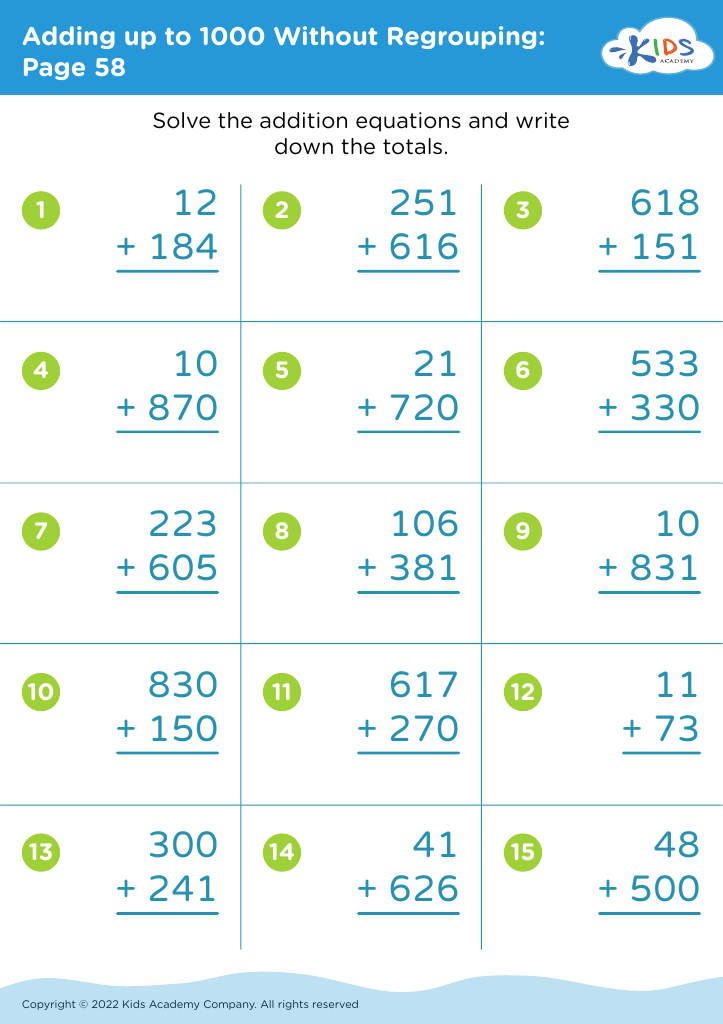
Adding up to 1000 Without Regrouping: Page 58
Worksheet
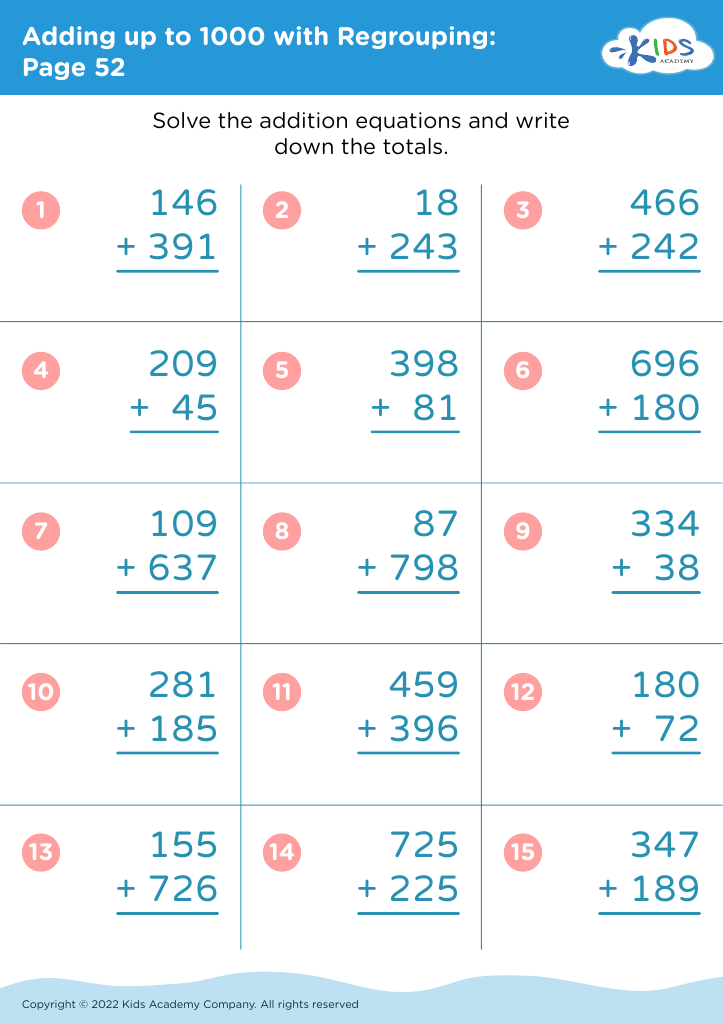
Adding up to 1000 with Regrouping: Page 52
Worksheet
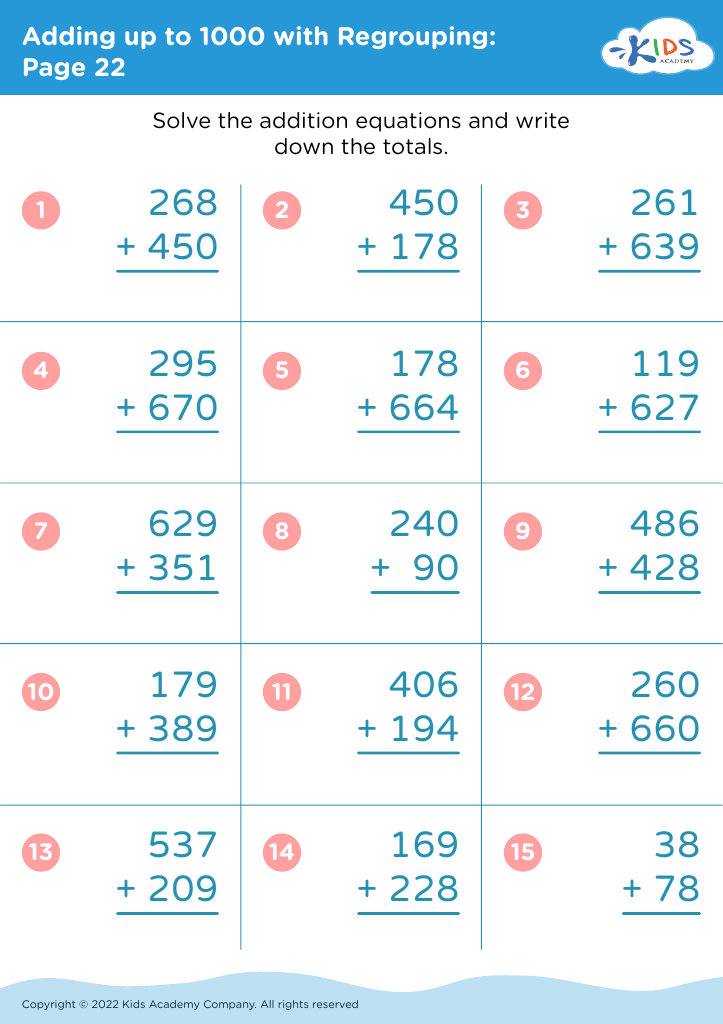
Adding up to 1000 with Regrouping: Page 22
Worksheet
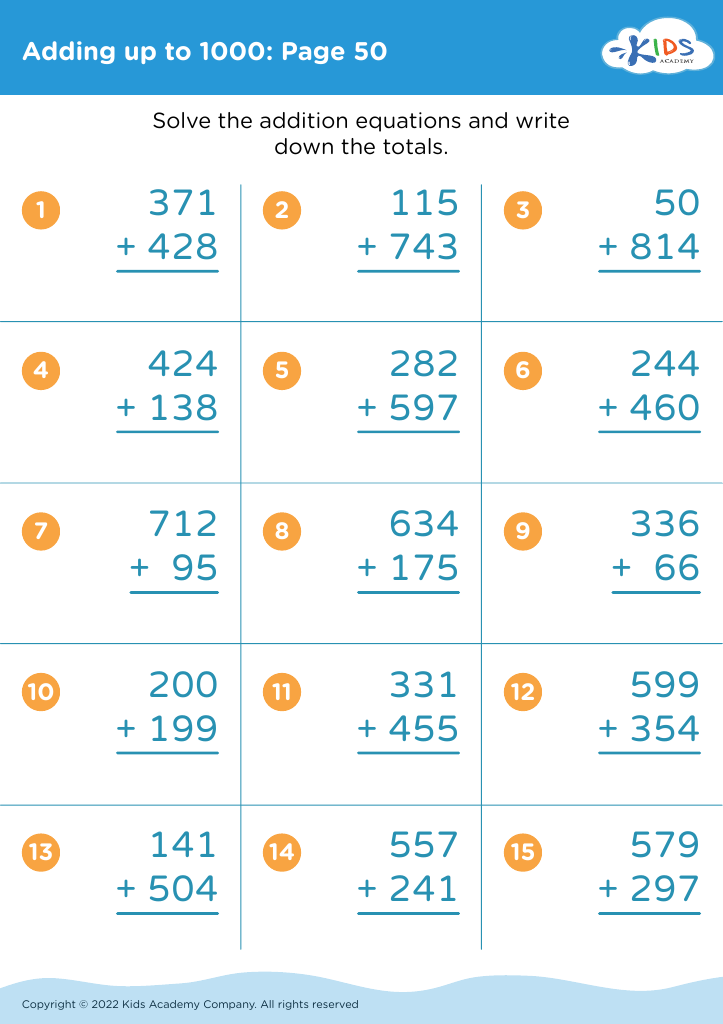
Adding up to 1000: Page 50

Adding up to 1000: Page 50

Adding up to 1000: Page 50
Worksheet
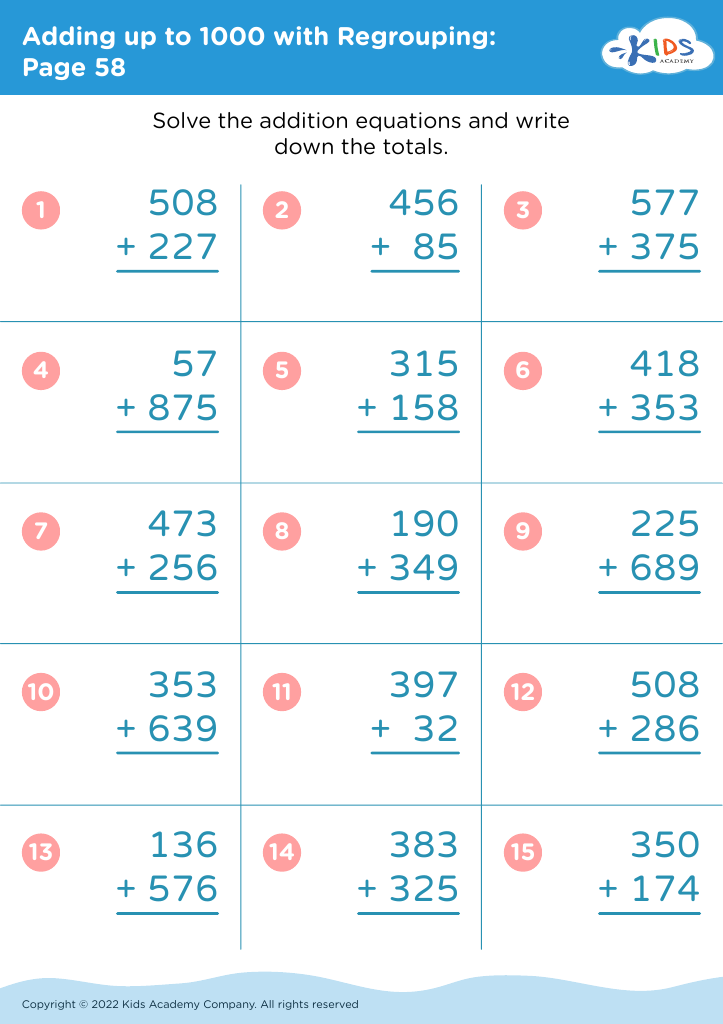
Adding up to 1000 with Regrouping: Page 58
Worksheet
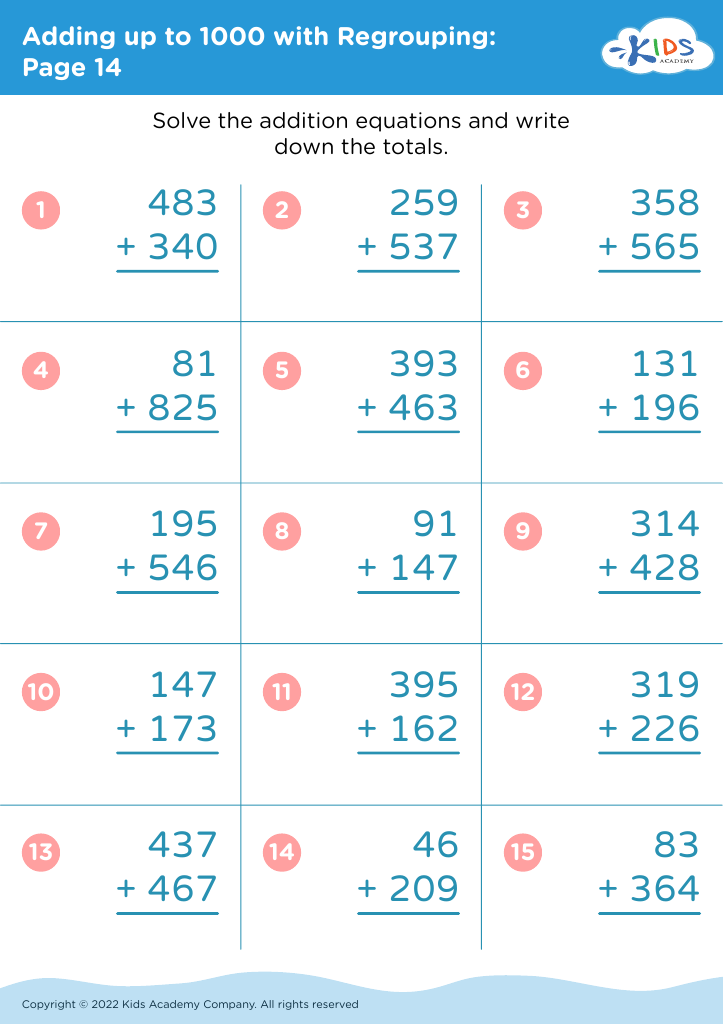
Adding up to 1000 with Regrouping: Page 14
Worksheet
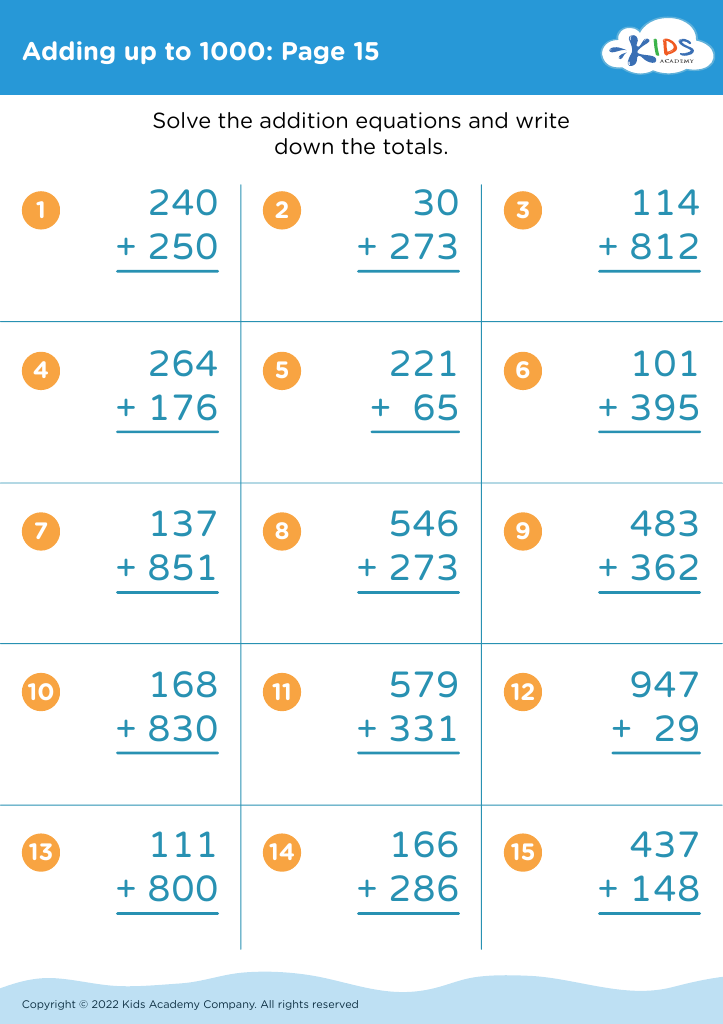
Adding up to 1000: Page 15

Adding up to 1000: Page 15

Adding up to 1000: Page 15
Worksheet
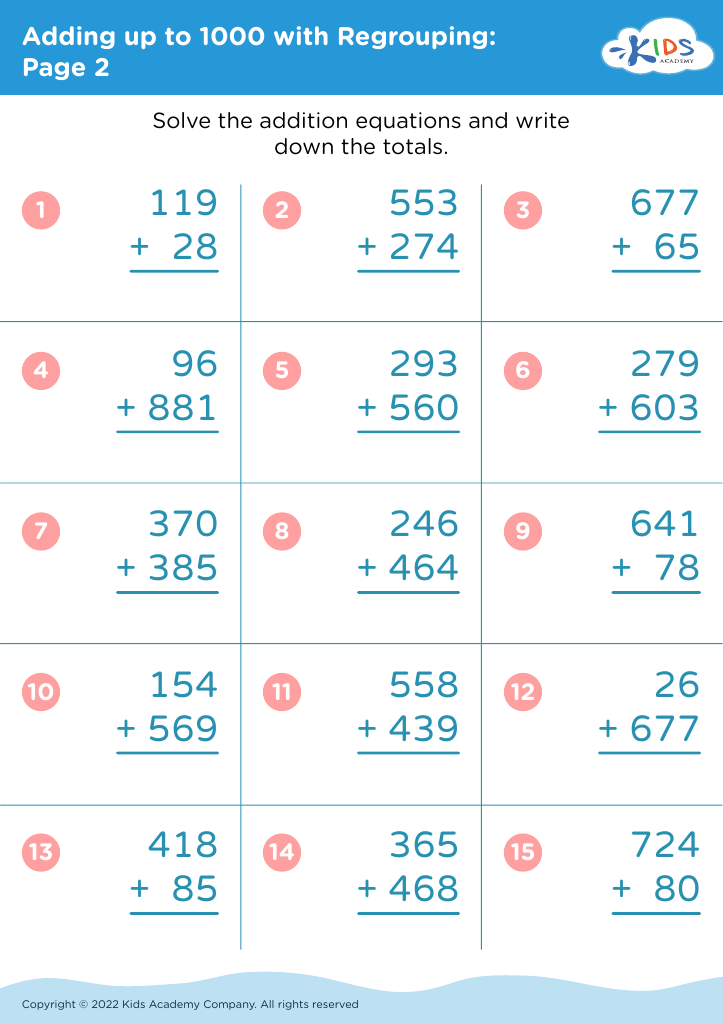
Adding up to 1000 with Regrouping: Page 2
Worksheet
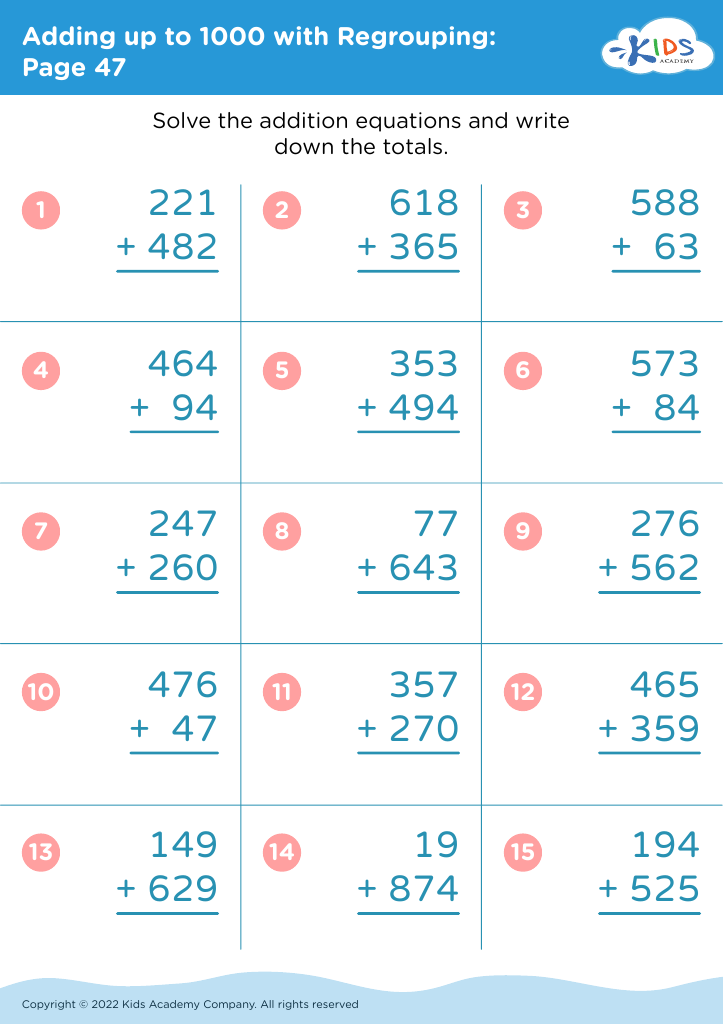
Adding up to 1000 with Regrouping: Page 47
Worksheet
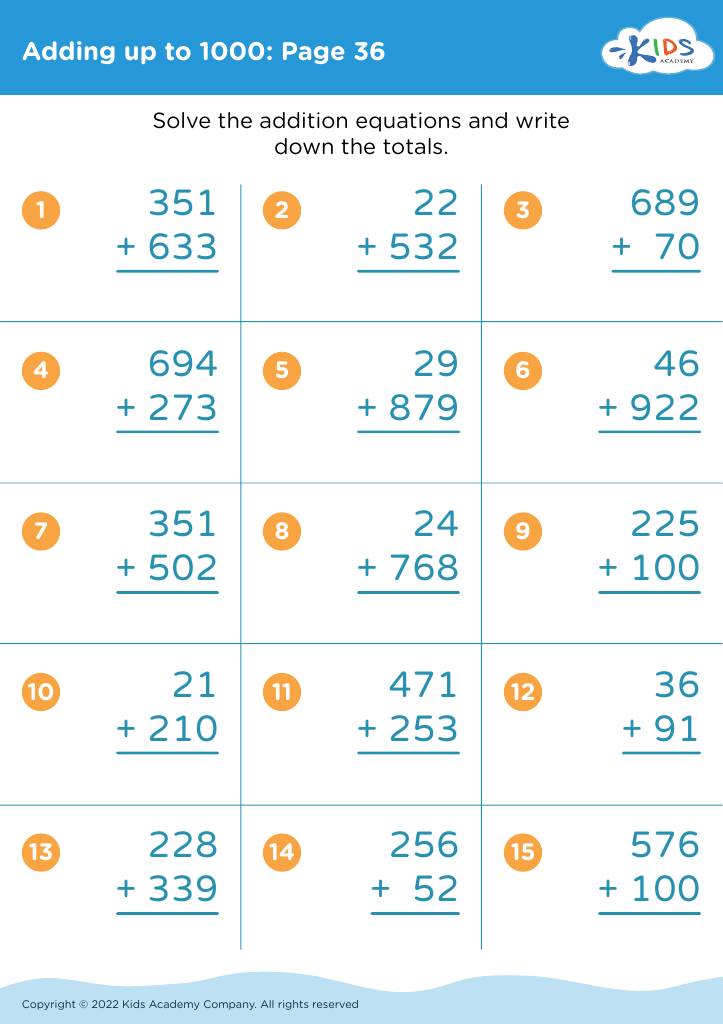
Adding up to 1000: Page 36

Adding up to 1000: Page 36

Adding up to 1000: Page 36
Worksheet
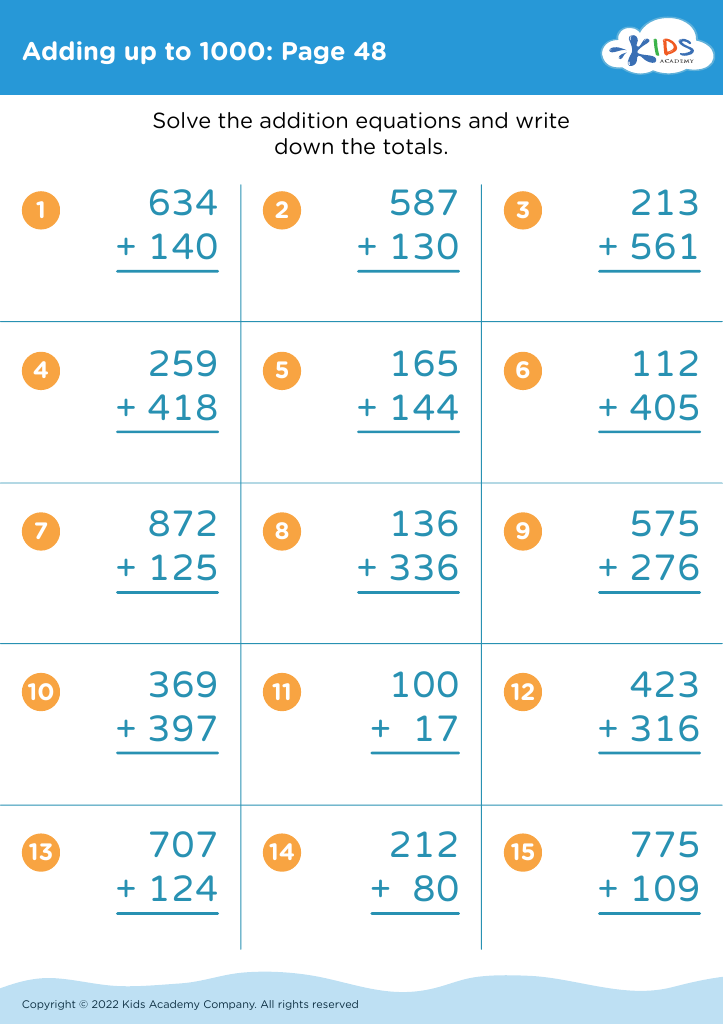
Adding up to 1000: Page 48

Adding up to 1000: Page 48

Adding up to 1000: Page 48
Worksheet
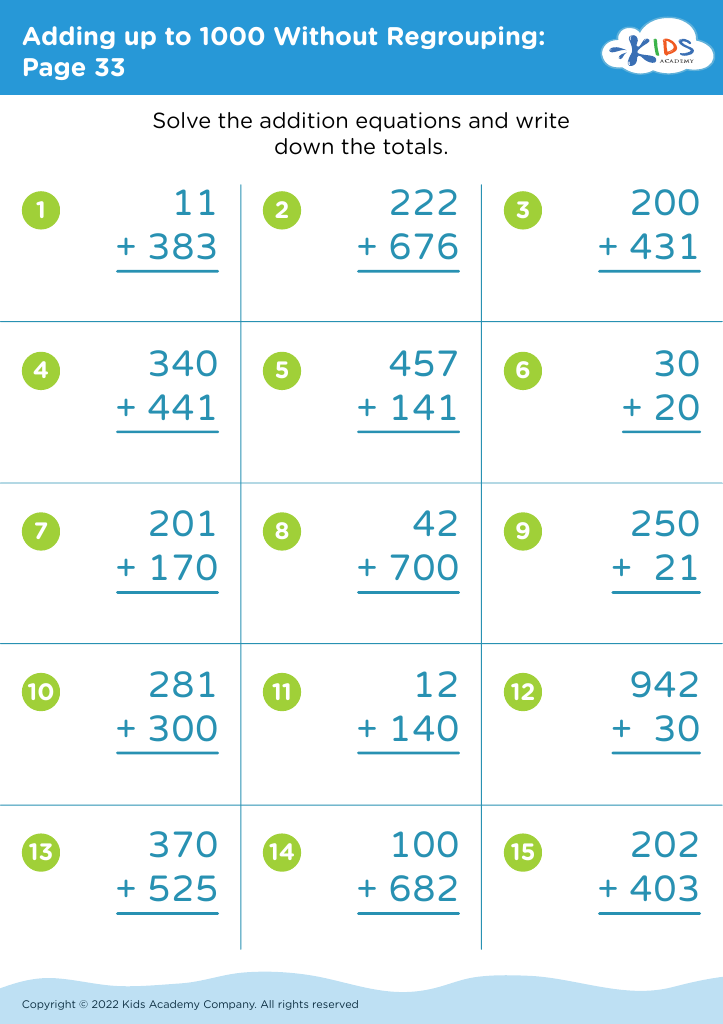
Adding up to 1000 Without Regrouping: Page 33
Worksheet


Counting practice, especially the ability to add up to 1000, is crucial for children aged 3-7 as it lays the foundation for their mathematical understanding. At this early stage, children's cognitive development is highly receptive to numerical concepts, and mastering counting reinforces their ability to recognize patterns, sequential order, and relationships between numbers.

Engaging in counting activities helps children develop fine motor skills as they manipulate objects like blocks or counters, and fosters critical thinking as they explore different ways to group and combine numbers. This skill is not just about rote memorization; it promotes problem-solving and decision-making abilities that are essential for future academic success.

Furthermore, strong counting skills bolster confidence in children, making them more willing to tackle math-related challenges as they progress in their education. As parents and teachers instill these core skills, they also help build a positive relationship with mathematics, demystifying the subject and reducing anxiety as children advance through their schooling.

In conclusion, prioritizing counting practice up to 1000 for young learners is imperative. It nurtures essential cognitive skills, enhances emotional well-being, and sets a robust groundwork for lifelong learning in mathematics.