Critical Thinking Adding up to 1000 Worksheets for Ages 3-7
5 filtered results
-
From - To
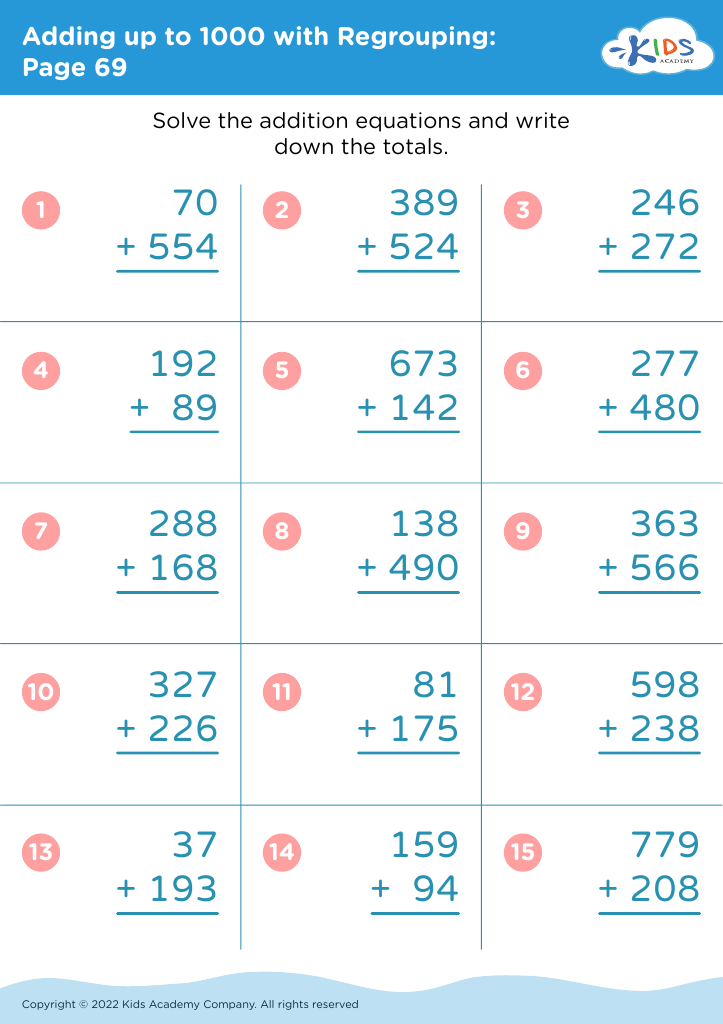
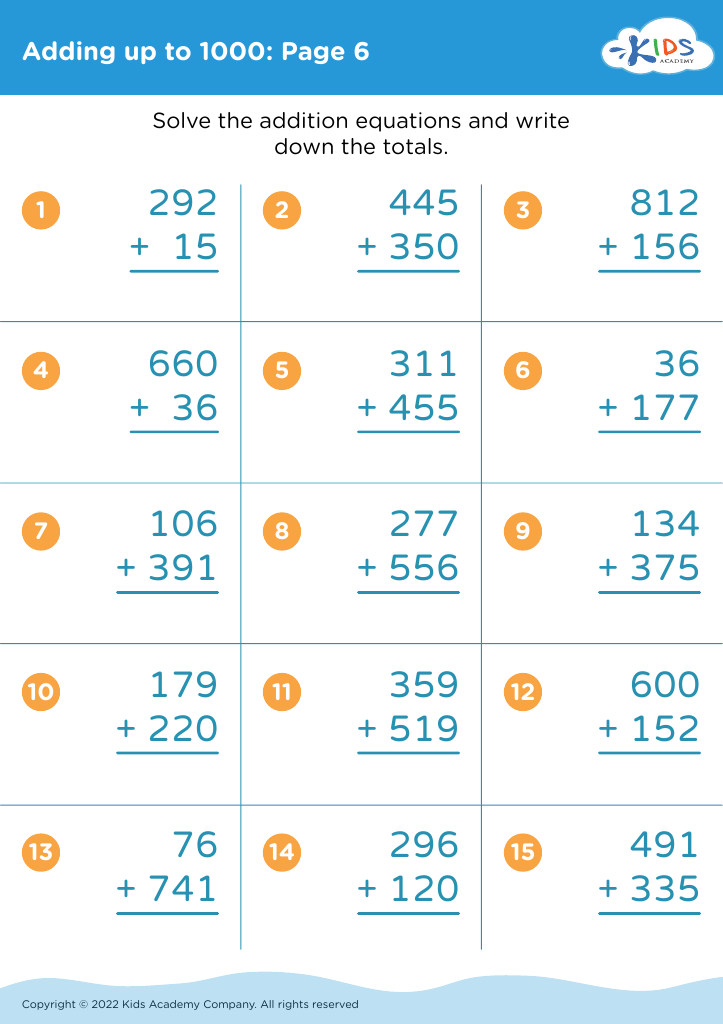
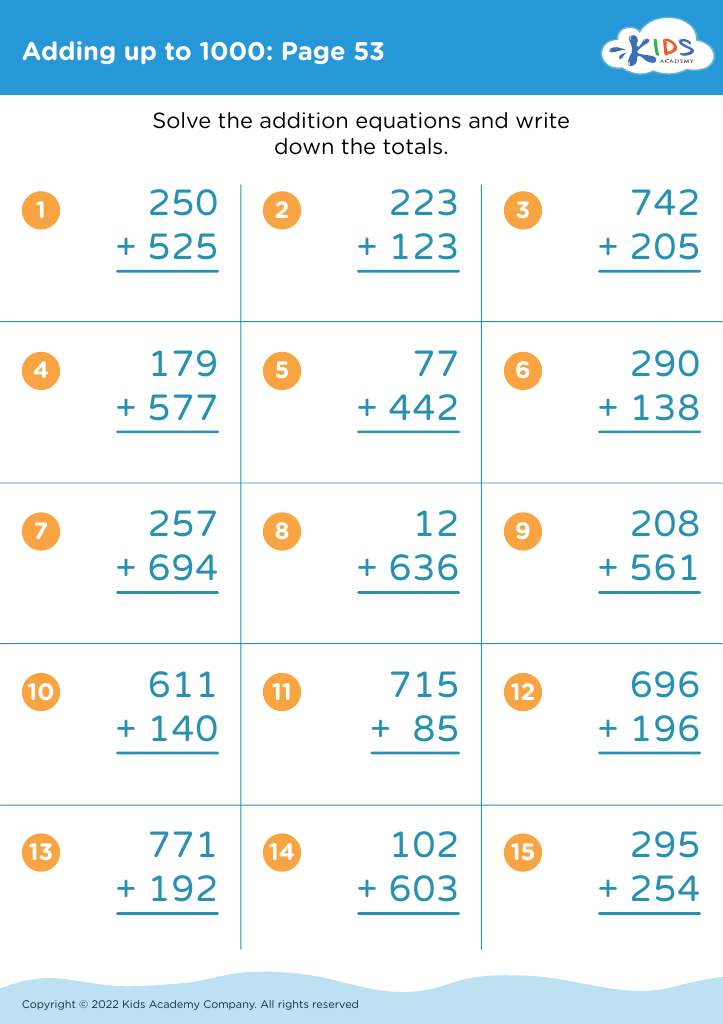
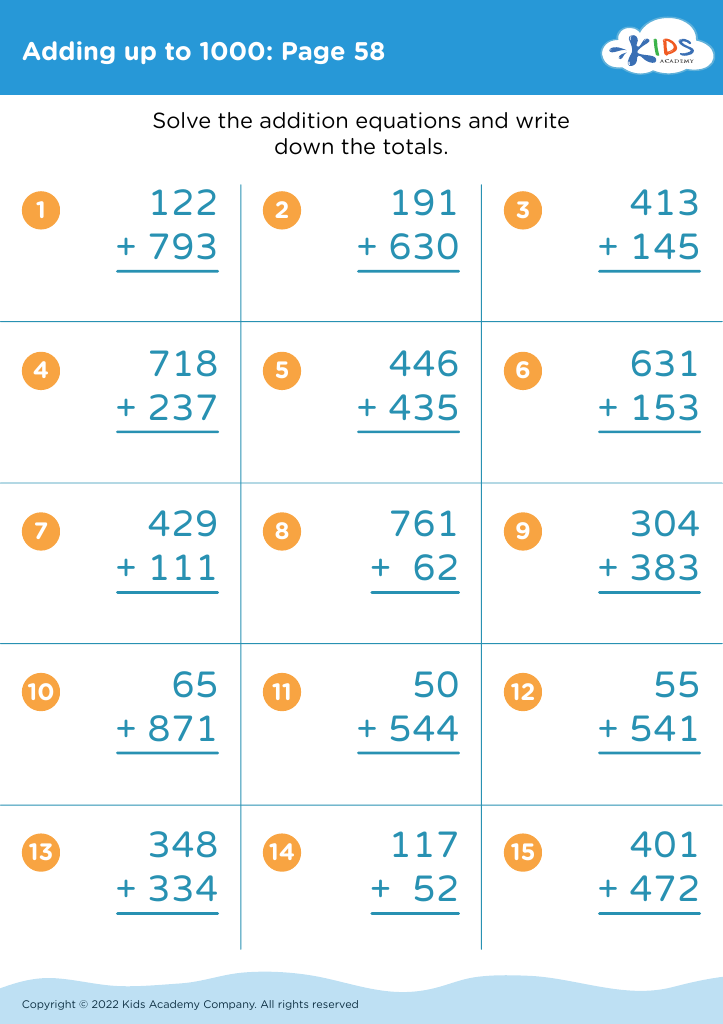
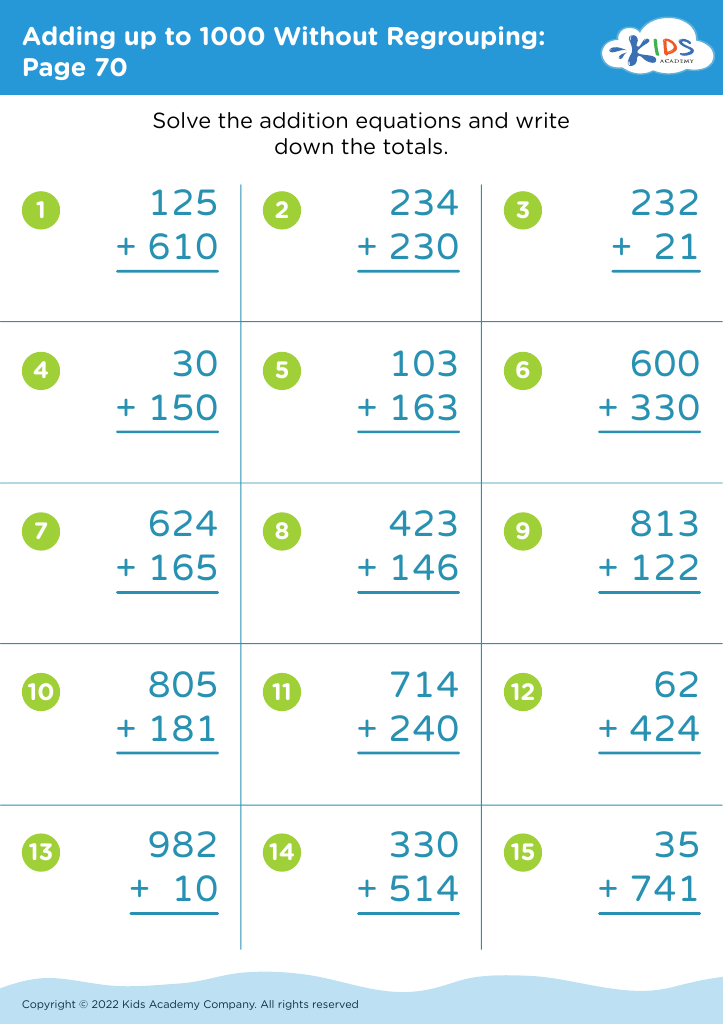
Unlock your child's potential with our "Critical Thinking Adding up to 1000" worksheets designed for ages 3-7! Tailored to enhance early math skills, these printable activities encourage young learners to think critically and solve problems effectively. Through fun and engaging exercises, kids will practice addition, develop numerical fluency, and strengthen their cognitive abilities. Our worksheets feature colorful illustrations and interactive tasks that make learning enjoyable. Perfect for home or classroom use, these resources foster a love for math while building essential critical thinking skills. Support your child's educational journey today with our comprehensive collection!



Critical thinking is essential for children aged 3-7 as it lays the foundation for lifelong learning. At this early stage, kids are naturally curious, and fostering critical thinking skills helps them explore the world more effectively. Parents and teachers should care about developing these skills because they enable children to analyze information, question assumptions, and make informed decisions.
Cultivating critical thinking encourages children to engage in problem-solving and creative thinking – vital skills for academic success and personal growth. When children learn to assess situations, weigh pros and cons, and come up with solutions, they become more confident in themselves and their abilities. Additionally, early exposure to critical thinking helps children develop social skills, as they learn to understand perspectives different from their own.
Moreover, instilling critical thinking skills lays the groundwork for resilience in an ever-changing world, ensuring that children are well-equipped to navigate challenges, adapt to change, and think independently. Parents and teachers play a crucial role in this process by providing an environment that stimulates curiosity, encourages questioning, and supports exploration. By prioritizing critical thinking, we prepare children for a successful and fulfilling future.








