Following instructions Adding up to 1000 Worksheets for Ages 3-7
5 filtered results
-
From - To
Discover our engaging "Following Instructions Adding Up to 1000 Worksheets," designed specifically for children aged 3 to 7. These worksheets promote essential math skills while enhancing the ability to understand and follow directions. Each activity encourages young learners to practice addition while carefully interpreting instructional prompts, fostering critical thinking and attention to detail. With colorful illustrations and fun formats, these worksheets make learning enjoyable and effective. Perfect for at-home practice or classroom use, they help children build a solid foundation in math while developing key educational skills. Explore our collection and empower your little ones with confidence in math and following instructions!
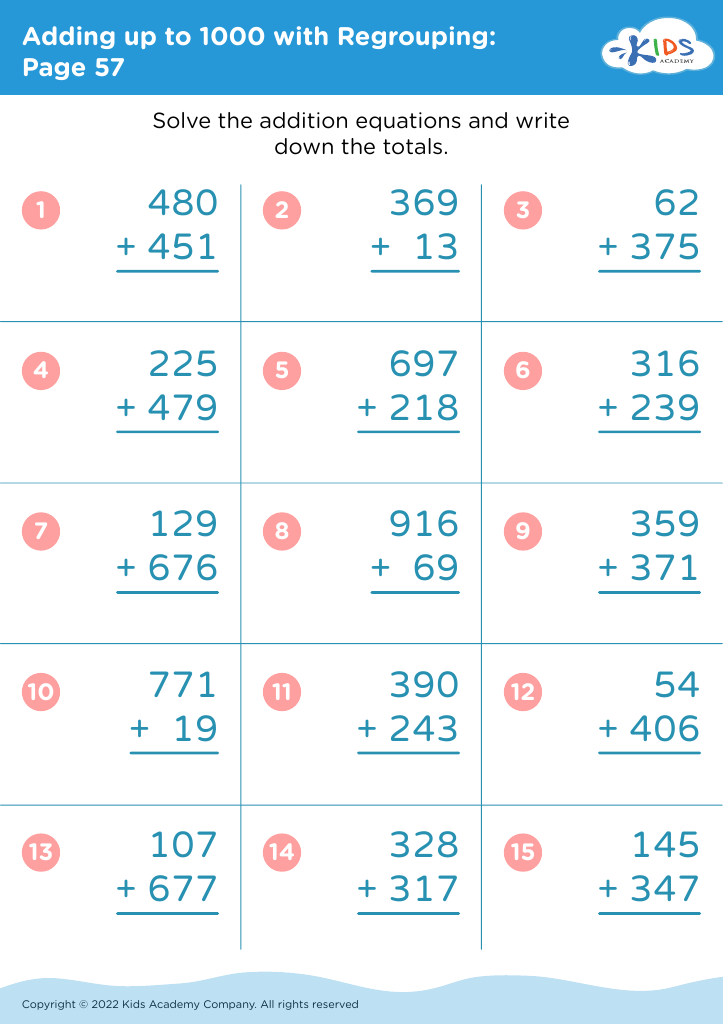
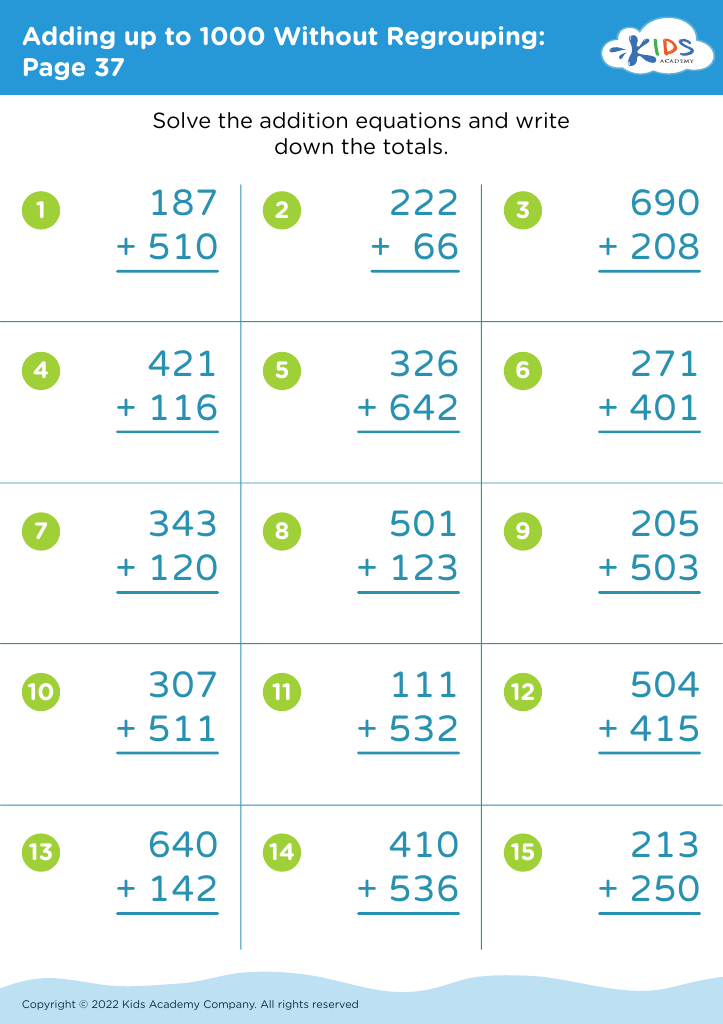
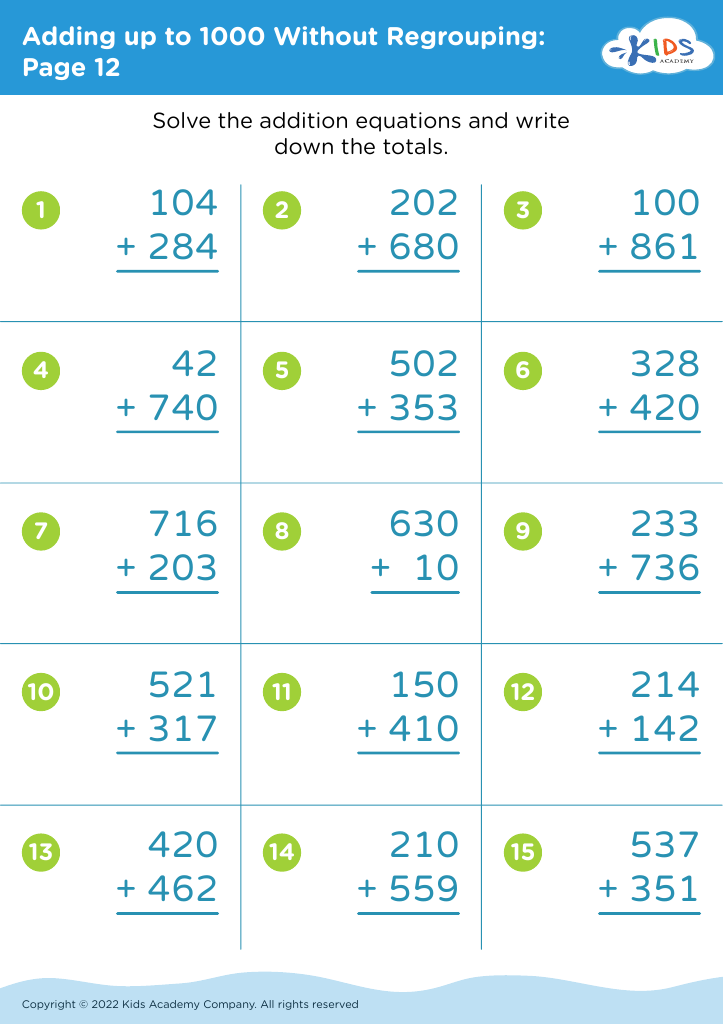
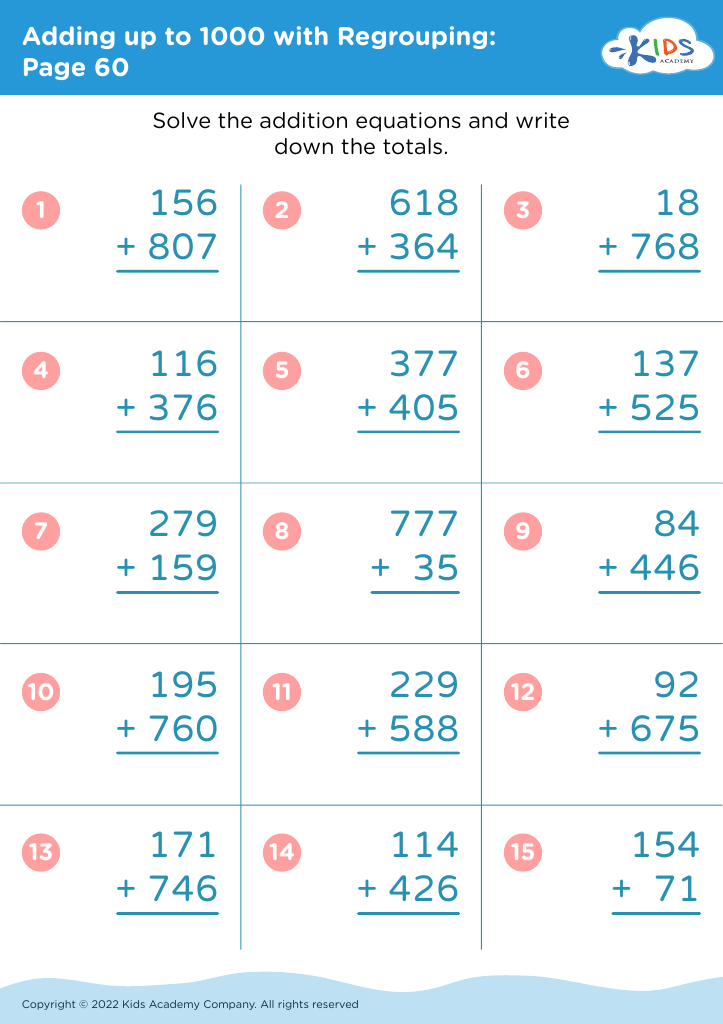
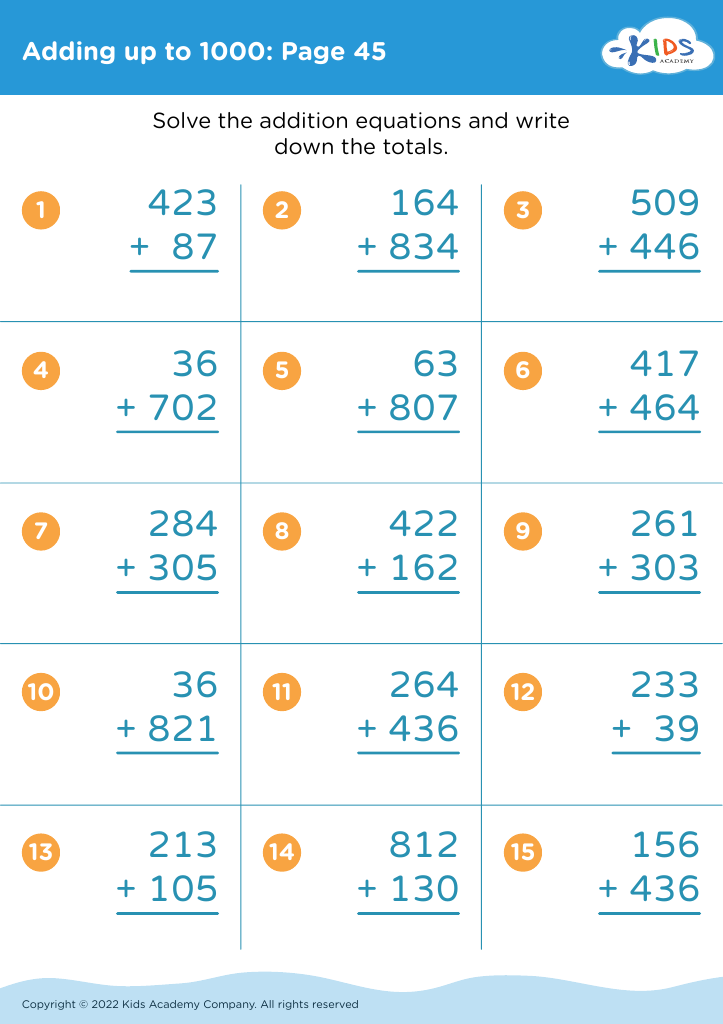



Following instructions, especially related to adding up to 1000, is crucial for young learners aged 3-7. Firstly, it fosters mastery of foundational mathematical skills. Early childhood is a formative time for cognitive development, and understanding how to manipulate numbers lays the groundwork for advanced math concepts later on.
Moreover, listening and following multi-step instructions enhances children’s executive functioning skills. These skills are essential for problem-solving, which aids not only in math, but in everyday situations. Practicing tasks that involve cumulative addition helps children develop patience and perseverance, essential attributes for lifelong learning.
Additionally, these activities often require collaboration, making them a perfect opportunity for social skill development. Children learn how to communicate, share ideas, and resolve conflicts, valuable skills both in and out of the classroom.
Lastly, engaging in these exercises with the support of parents or teachers reinforces the bond between adult and child, enhancing motivation and positive attitude towards learning. Overall, focusing on following instructions while adding up to 1000 builds math proficiency, encourages important cognitive skills, fosters teamwork, and creates a supportive learning environment, all vital for a child’s growth during these formative years.








