Fraction Addition Adding up to 1000 Worksheets for Ages 3-7
5 filtered results
-
From - To
Unlock your child’s mathematical potential with our “Fraction Addition Adding up to 1000 Worksheets for Ages 3-7”! Designed to foster a strong foundation in fractions, these engaging worksheets introduce young learners to basic fraction addition in a fun, approachable way. Perfect for kids aged 3-7, each sheet is crafted to simplify complex concepts and build confidence with visually appealing exercises. These resources align with educational standards, making learning both effective and enjoyable. Watch your child thrive in math as they practice adding fractions up to 1000, all while developing critical thinking and problem-solving skills. Start their math adventure today!
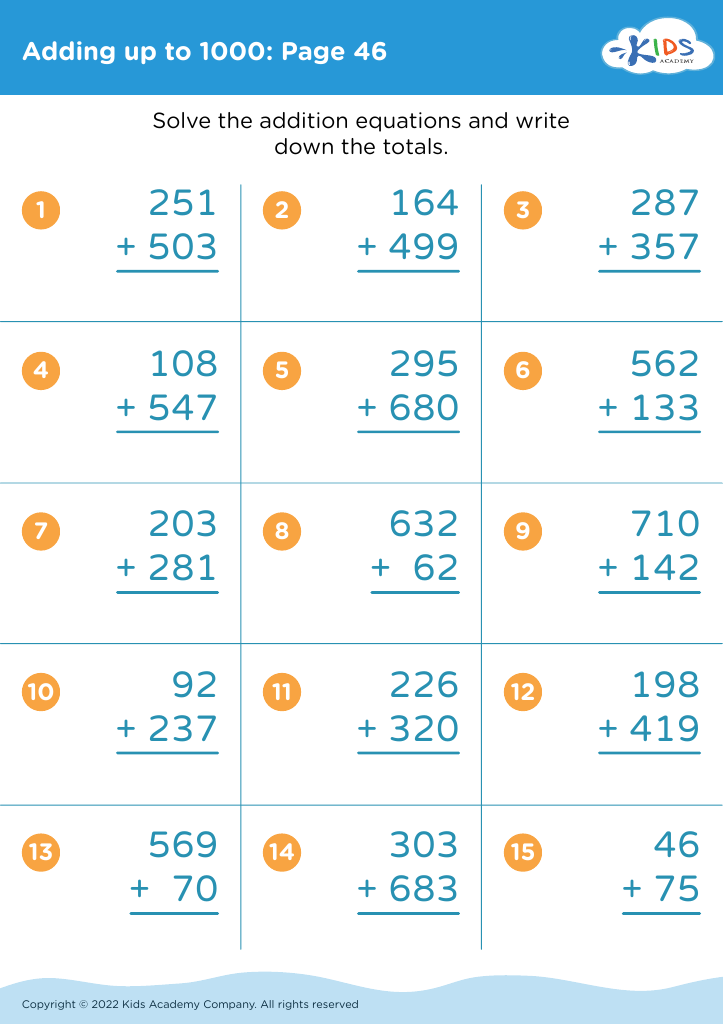
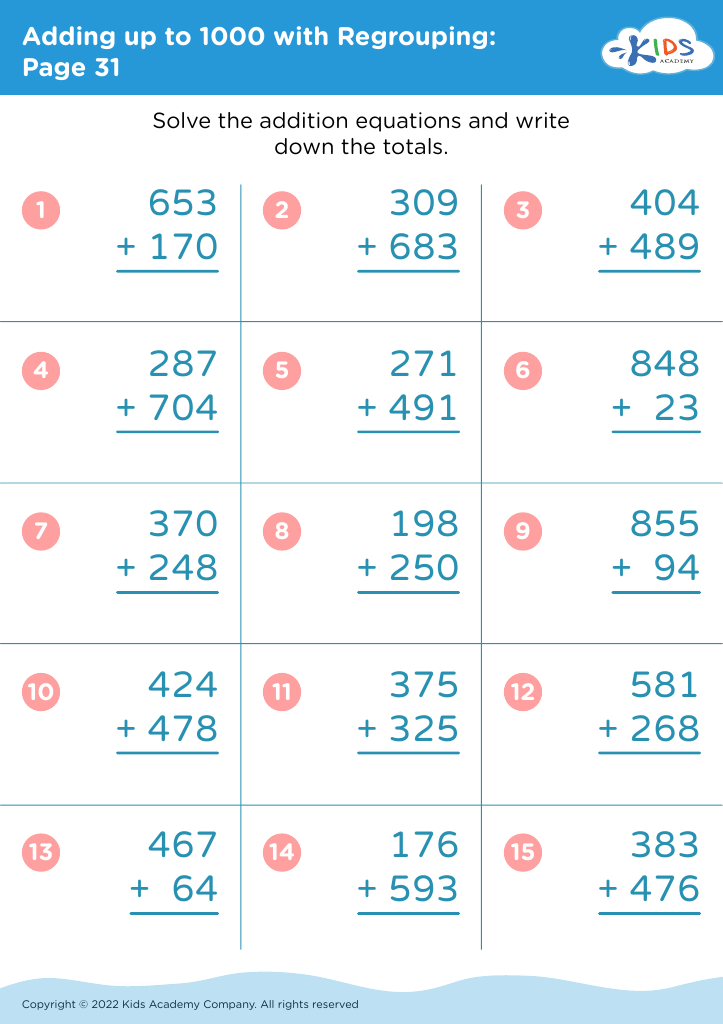
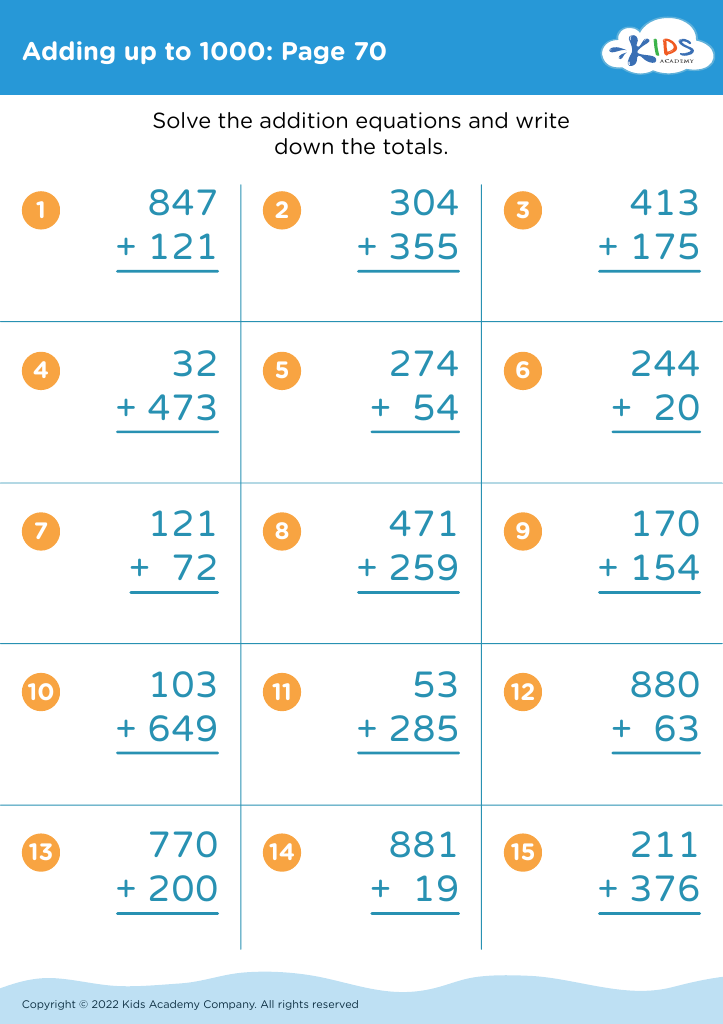
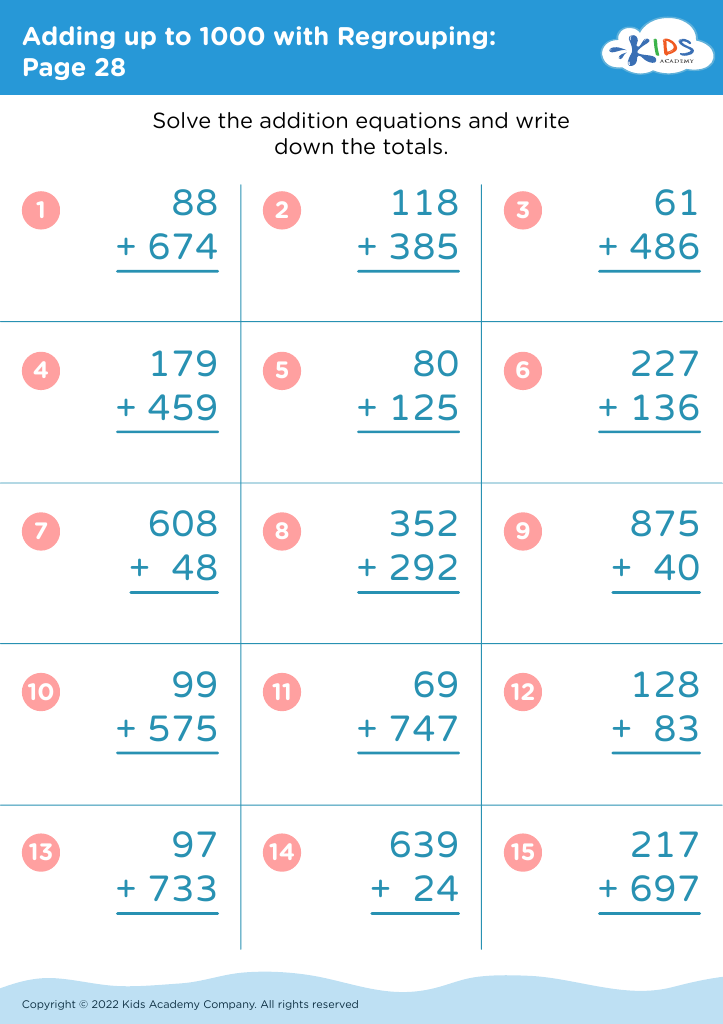
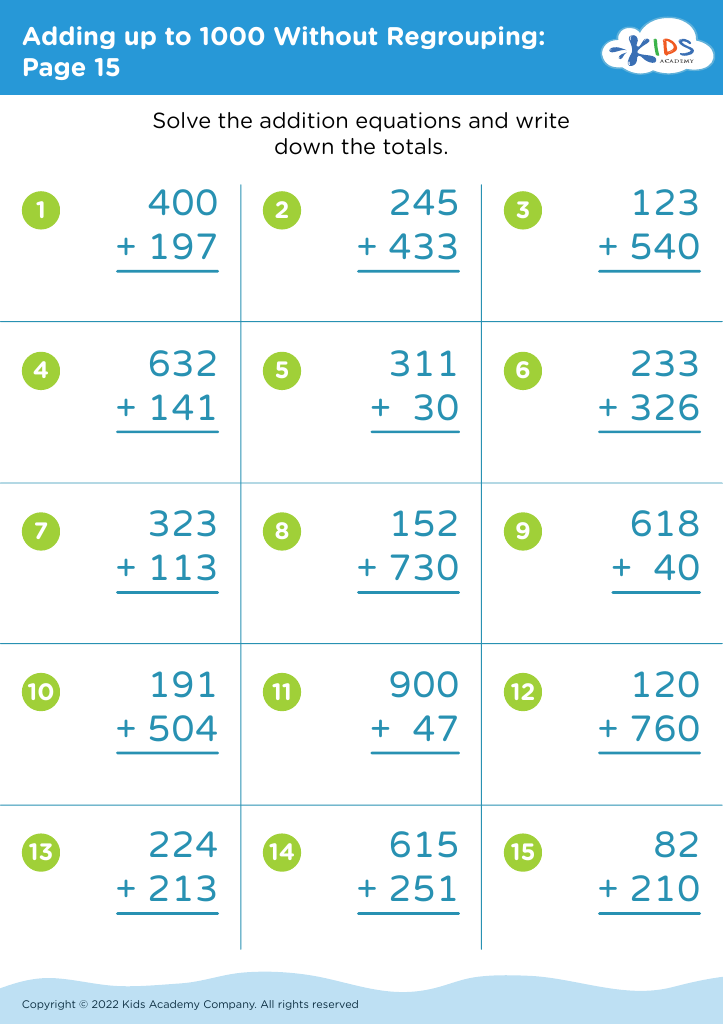



Introducing fraction addition to young children ages 3-7 and fostering skills up to sums of 1000 might initially sound ambitious, but it plays a crucial role in aiding their cognitive and mathematical development.
First, grasping basic fraction concepts empowers children with a solid foundation for more advanced mathematical concepts, promoting long-term academic success. At this developmental stage, children's brains are highly receptive to learning patterns, relationships, and connections between numbers. Teaching fraction addition early enhances their problem-solving abilities and critical thinking skills, vital for lifelong learning.
Secondly, kids frequently encounter situations in everyday life that involve fractions (like dividing a sandwich), and a basic understanding can make these experiences more meaningful. Engaging hands-on activities and visual aids can help make abstract concepts tangible and satisfying to explore, escalating their comprehension and enjoyment of math.
Creating positive early experiences with math also promotes confidence, reducing anxiety and negative attitudes towards the subject. When children feel capable and accomplished, they are more likely to approach future mathematical challenges with enthusiasm and persistence.
Therefore, parents and teachers should consider early exposure and mastery of fraction concepts important not only for academic readiness but also for holistic development, fostering a lifelong curiosity and passion for learning.








