Identify shapes Adding up to 1000 Worksheets for Ages 3-7
4 filtered results
-
From - To
Discover our engaging "Identify Shapes Adding Up to 1000 Worksheets" designed for young learners aged 3-7! These interactive worksheets provide a fun way for children to explore geometry while practicing their addition skills. By recognizing shapes and their attributes, kids can seamlessly integrate math with critical thinking. Each worksheet features vibrant illustrations and stimulating activities that make learning enjoyable. Perfect for at-home practice or classroom use, these resources will help build a solid foundation in both math and shape identification. Support your child’s educational journey and watch them thrive as they combine creative play with essential learning skills!
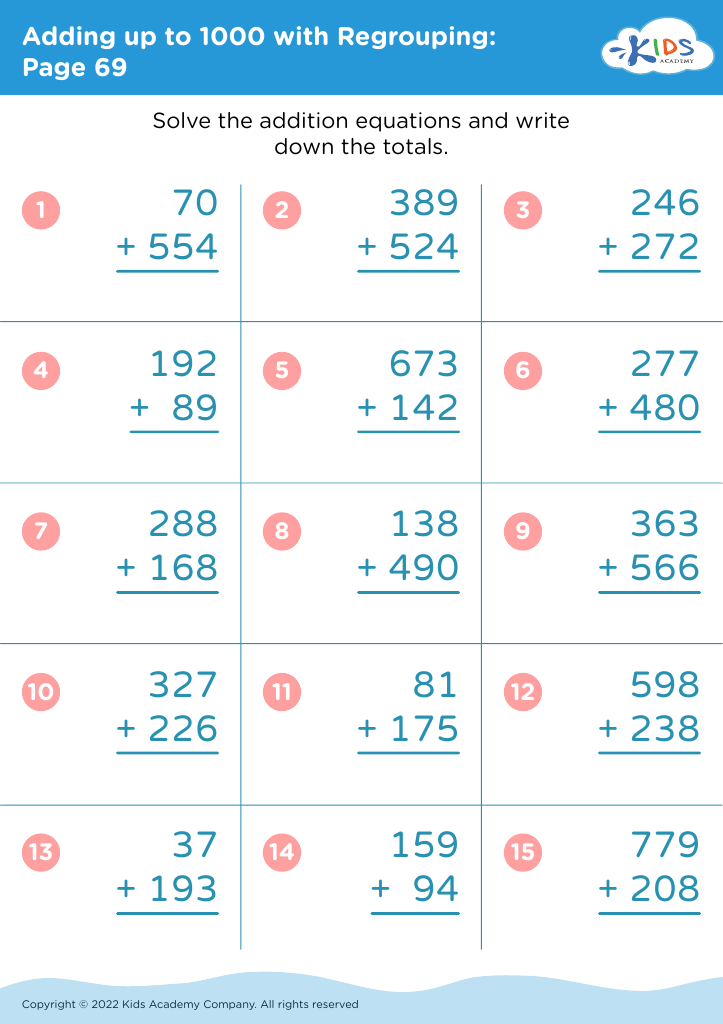
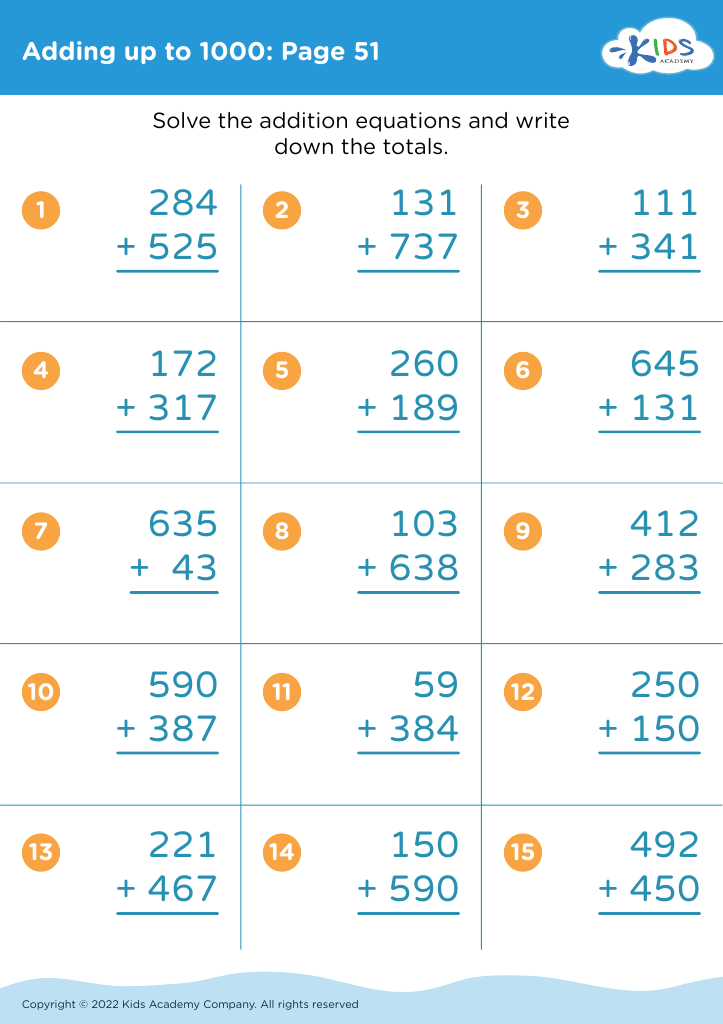
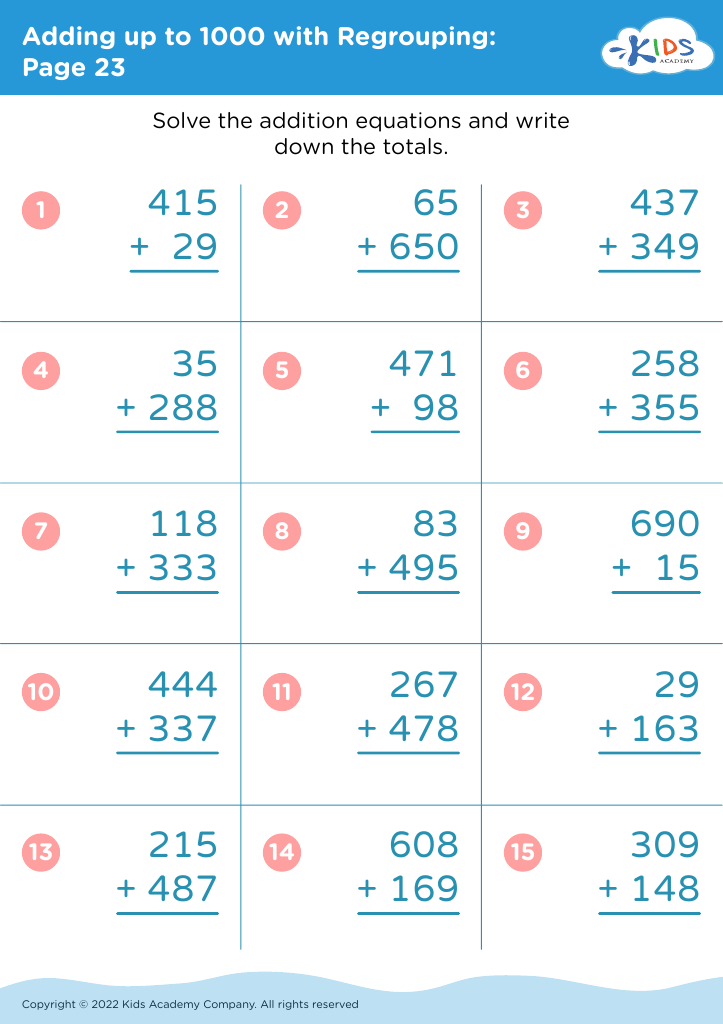
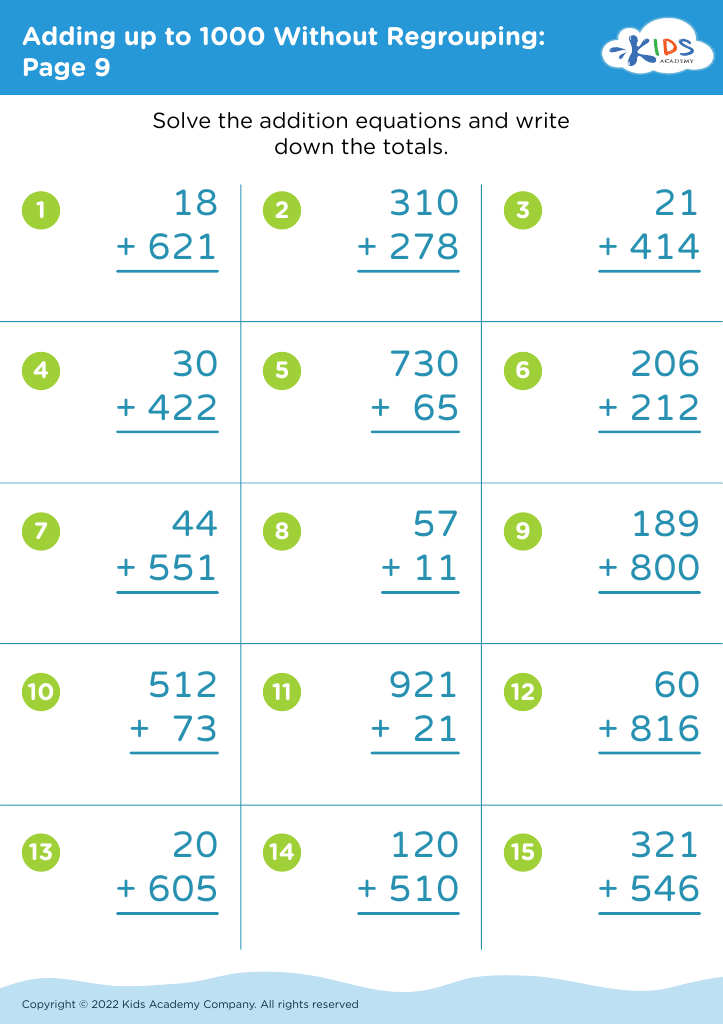



Identifying shapes and numbers is fundamental for children's cognitive development, making it crucial for parents and teachers to prioritize these skills for ages 3-7. Understanding shapes fosters spatial awareness, essential for problem-solving and critical thinking. It helps children recognize patterns and shapes in their environment, laying the groundwork for geometry concepts later in math education.
When children learn to identify and classify shapes, they engage in hands-on activities that enhance their fine motor skills and encourage active learning. Furthermore, incorporating numbers that add up to 1000 introduces early math concepts, such as addition, number sense, and place value. This foundational knowledge will support future math skills and promote confidence in handling more complex calculations.
Encouraging shape identification and numerical reasoning in fun and engaging ways fosters a love for learning and helps children feel more connected to their surroundings. Moreover, these skills are interconnected; as children explore shapes, they can create and manipulate them while applying basic math concepts, reinforcing learning through integration. Ultimately, investing time and resources into teaching these foundational skills empowers young children, preparing them for academic success and a stronger grasp of more advanced concepts in the future.








