Number identification Adding up to 1000 Worksheets for Ages 3-7
3 filtered results
-
From - To
Unlock your child's math potential with our "Number Identification Adding up to 1000 Worksheets for Ages 3-7." Tailored for young learners, these engaging activities effortlessly combine fun and education. Our printable worksheets help children identify and understand numbers, enhance counting skills, and gradually introduce addition, all while keeping them intrigued. Designed by experts, our worksheets support school readiness and continuous learning at home. Ideal for parents and educators, these resources lay a strong mathematical foundation, instilling confidence and enthusiasm for numbers in your child. Boost their numeracy skills and watch them thrive! Download our worksheets now.
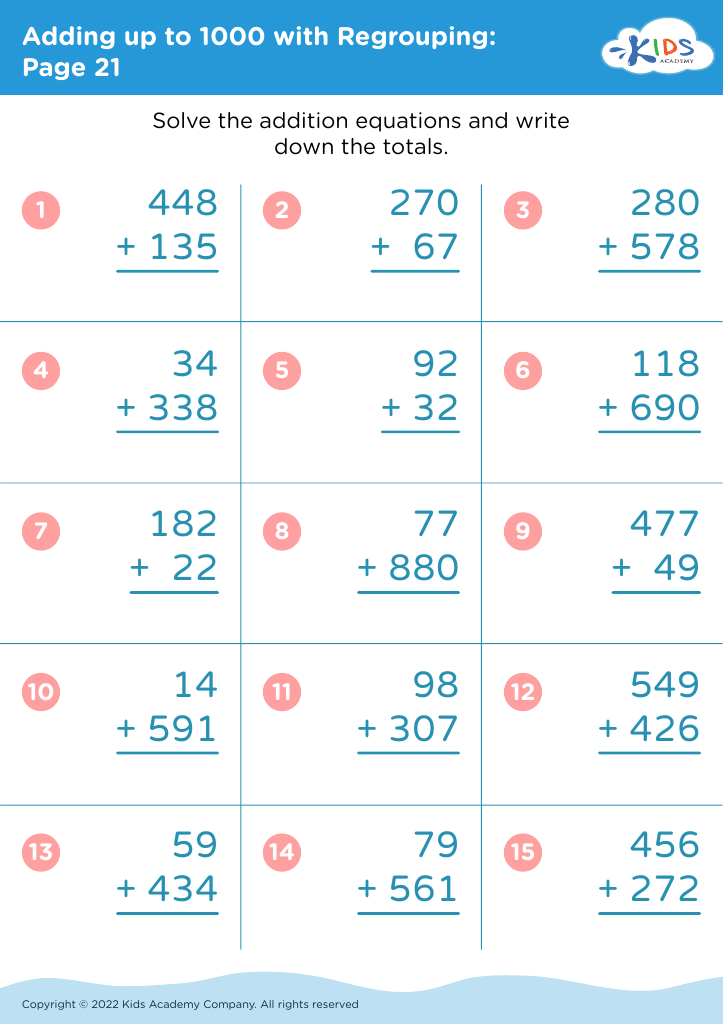
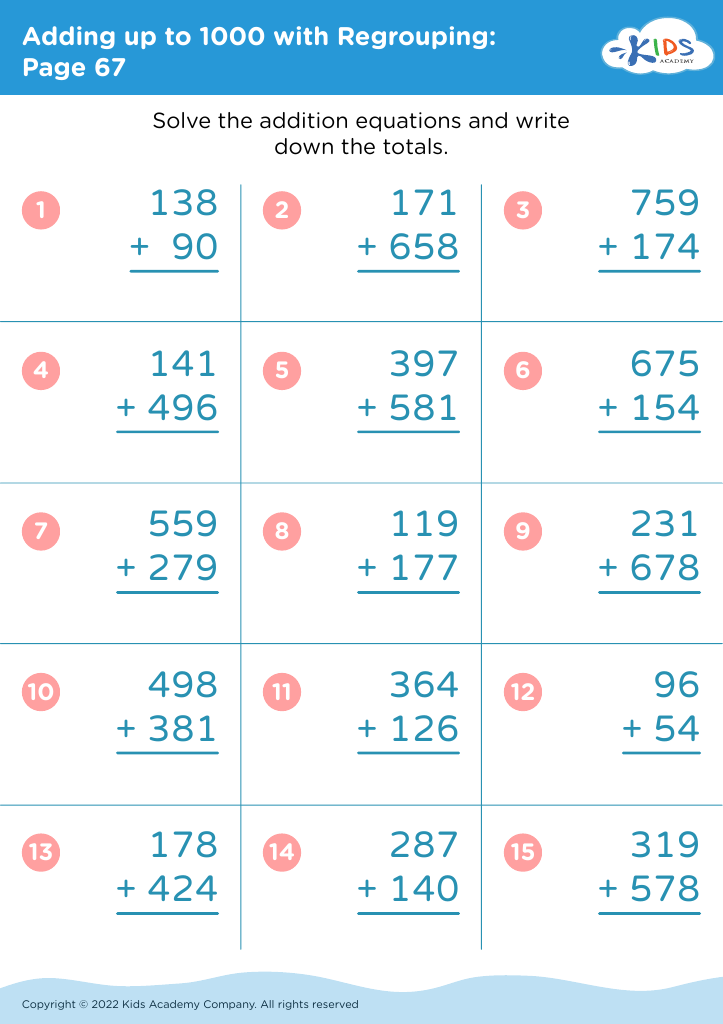
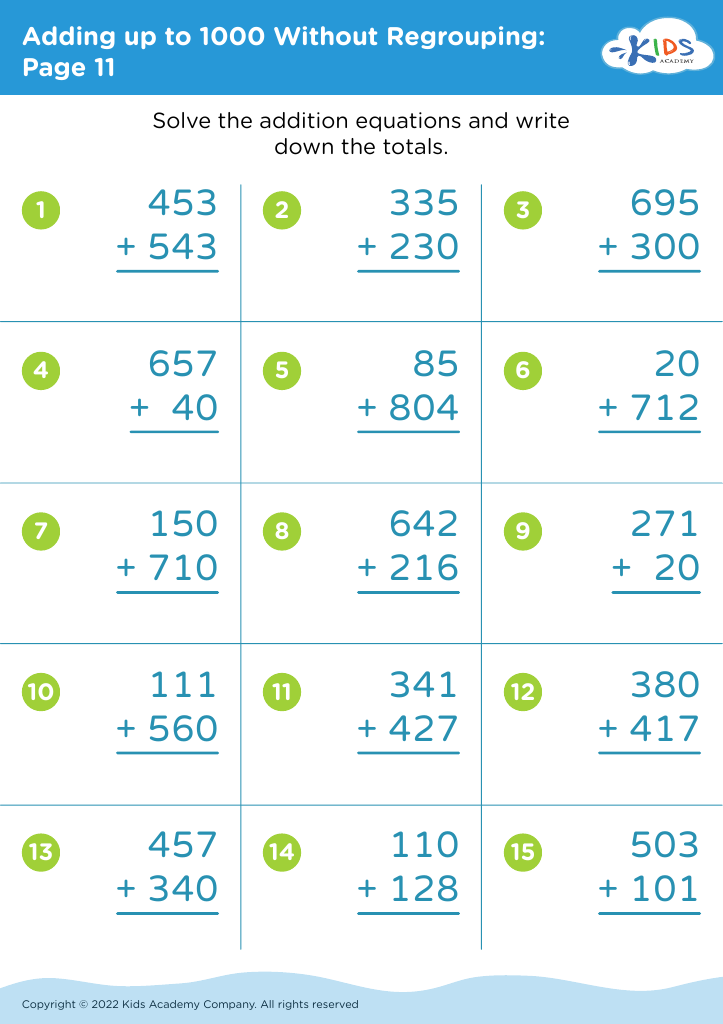



Number identification and the ability to add numbers up to 1000 are crucial foundational skills for children ages 3-7. Research shows that early numeracy skills are strong predictors of a child's future success in mathematics and other academic subjects. Understanding and recognizing numbers helps children develop essential cognitive skills such as logical reasoning, problem-solving, and memory.
When children can identify numbers and perform basic addition, they gain confidence that directly impacts their attitude toward learning. These skills also enable everyday activities, such as counting objects, following a sequence, or managing simple tasks requiring numerical understanding. Furthermore, early proficiency in these areas sets the stage for more advanced mathematical concepts, such as multiplication and division, which become essential in later grades.
For parents and teachers, fostering these skills early enhances a child's cognitive development and academic resilience. Engaging in interactive, hands-on activities such as counting games, puzzles, and practical exercises involving addition nurtures an enthusiasm for math in a fun and accessible way. This can make the transition to formal education smoother and more enjoyable, laying a strong academic foundation. By prioritizing early numeracy, parents and teachers help children embark on a path of lifelong learning and intellectual curiosity.








