Number Recognition Adding up to 1000 Worksheets for Ages 3-7 - Page 2
31 filtered results
-
From - To
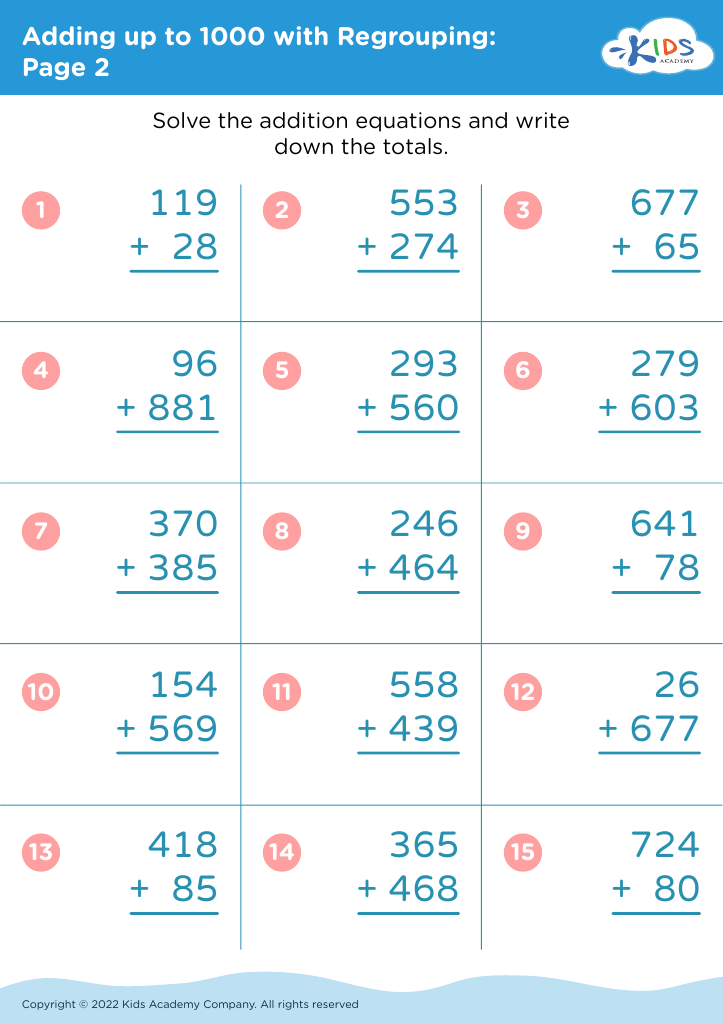
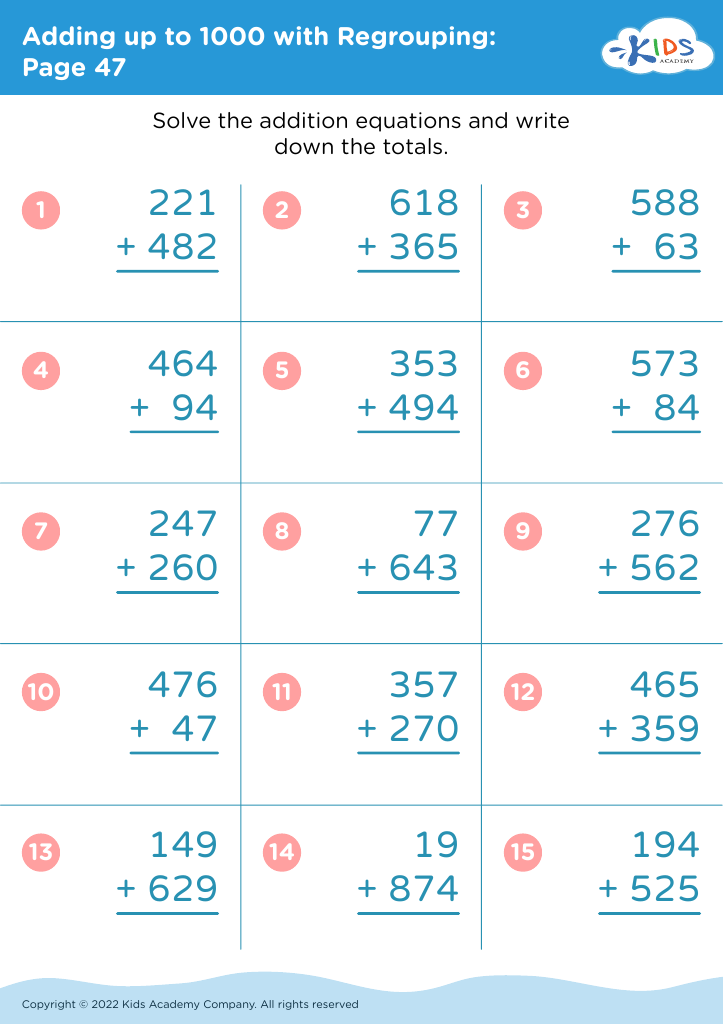
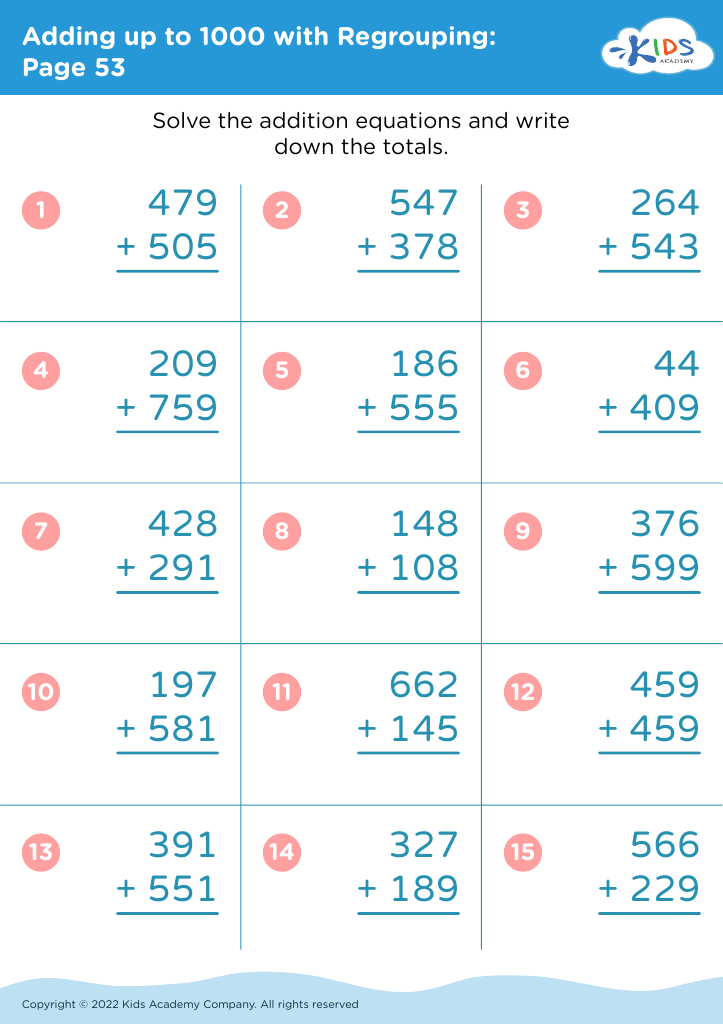
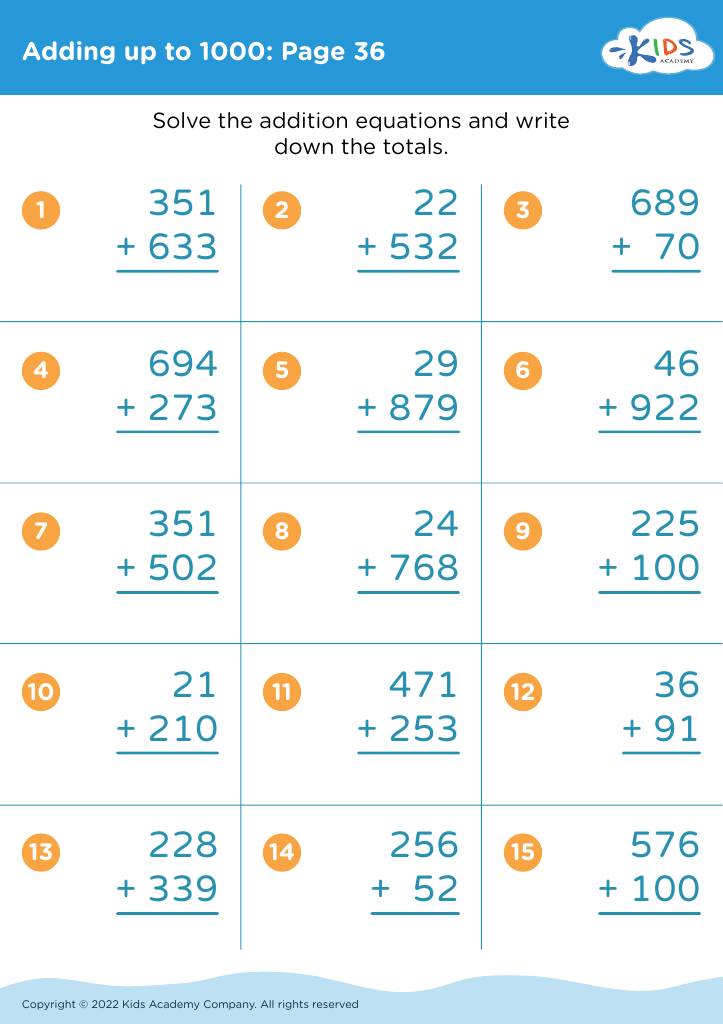
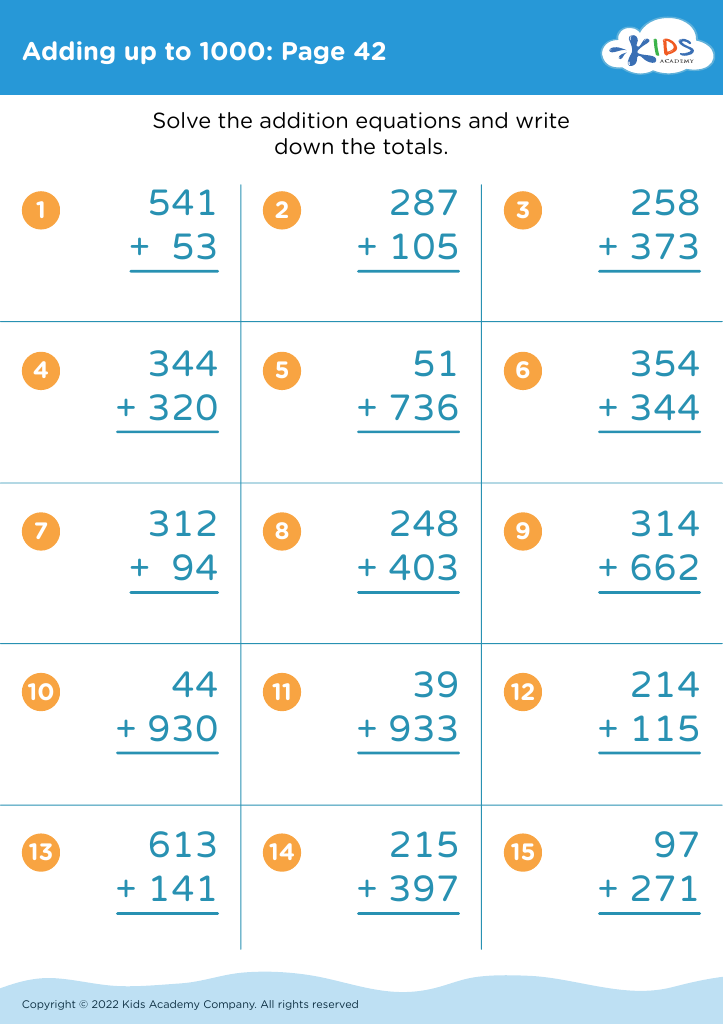
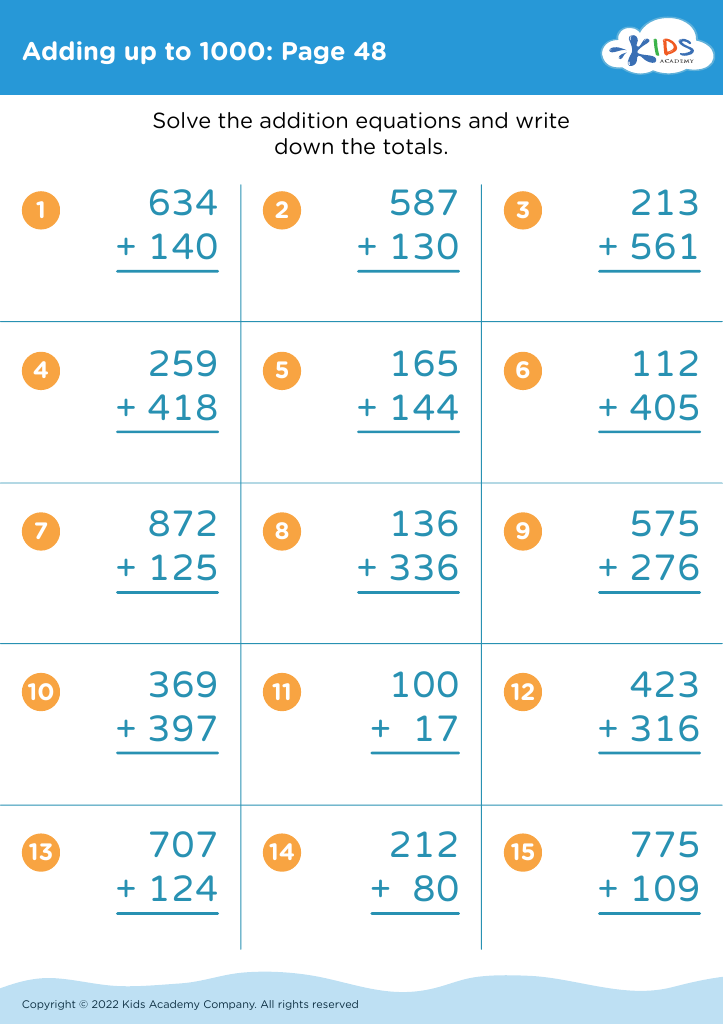
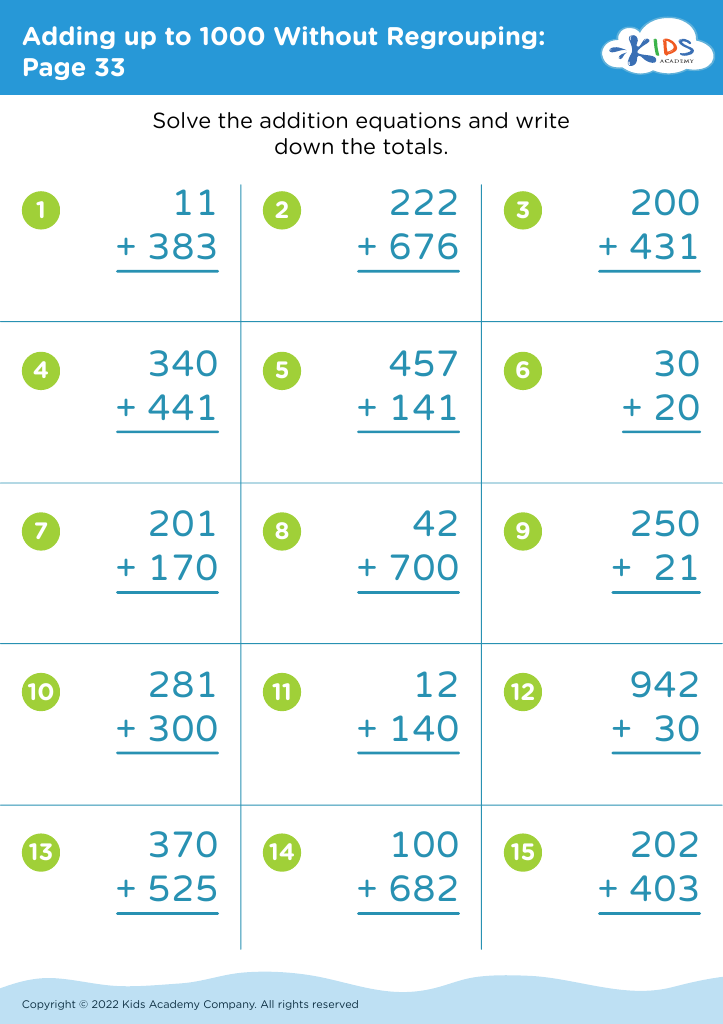




Number recognition, particularly for numbers up to 1000, is a crucial skill for children ages 3-7, laying the foundation for future mathematical understanding. It enables young learners to identify and understand number values, an essential precursor to developing more advanced skills such as addition, subtraction, and problem-solving.
From age three, children are naturally curious and eager to engage with numbers in everyday situations, from counting toys to recognizing numbers on street signs. As they progress, recognizing numbers up to 1000 allows children to comprehend larger values and grasp the concept of place value, critical for basic arithmetic and more complex math later on.
For teachers and parents, fostering number recognition not only helps children succeed academically but also builds their confidence and analytical skills. Engaging with numbers enhances cognitive development and promotes critical thinking, enabling children to approach challenges with agility. Furthermore, early proficiency in number recognition helps alleviate math anxiety and creates a solid foundation for understanding financial literacy concepts in the future.
Ultimately, prioritizing number recognition helps children thrive in their early academic experiences, preparing them for lifelong learning in mathematics and beyond.








