Number Sequencing Adding up to 1000 Worksheets for Ages 3-7
5 filtered results
-
From - To
Introducing our engaging "Number Sequencing Adding up to 1000 Worksheets" designed for children aged 3-7! These printable worksheets provide a fun and interactive way for young learners to enhance their number sequencing skills. By exploring numbers up to 1000, kids will develop essential math foundations while fostering critical thinking and cognitive abilities. Each worksheet is visually appealing and tailored to suit various learning styles, ensuring that children remain motivated and excited about math. Unlock your child's potential in number recognition and sequencing today with our expertly crafted worksheets, perfect for home or classroom use. Start their counting journey with confidence!
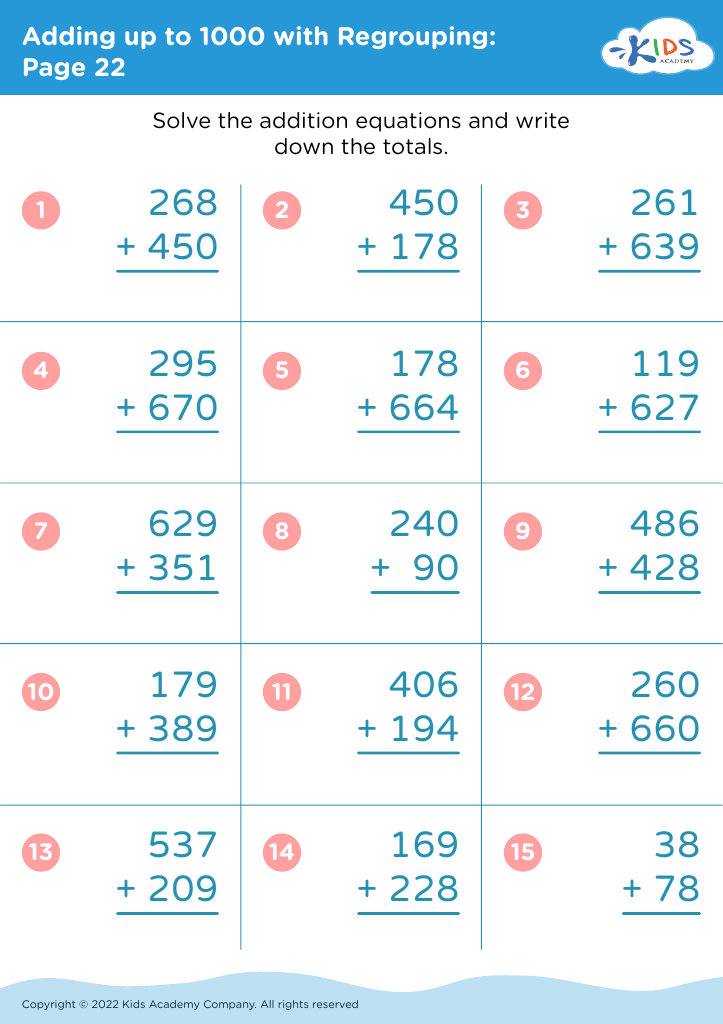
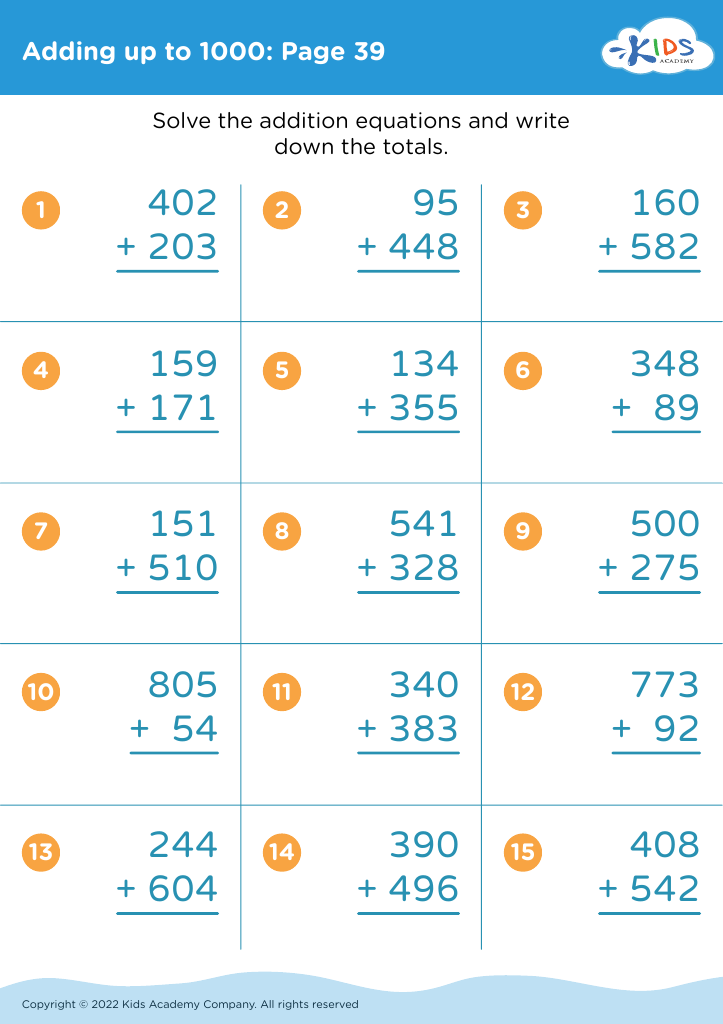
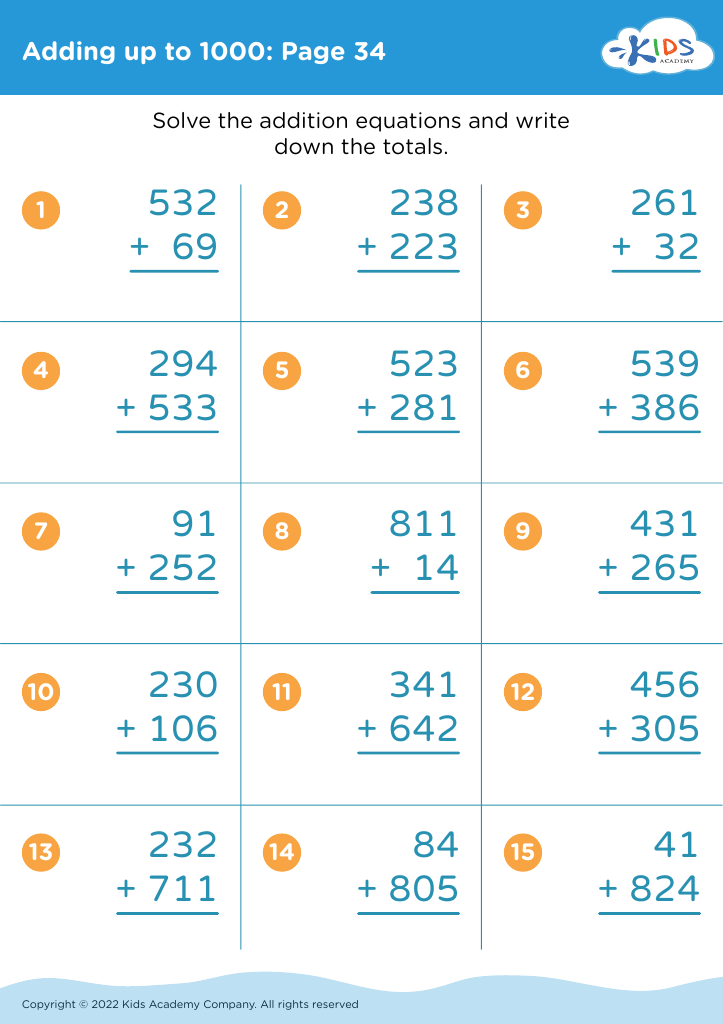
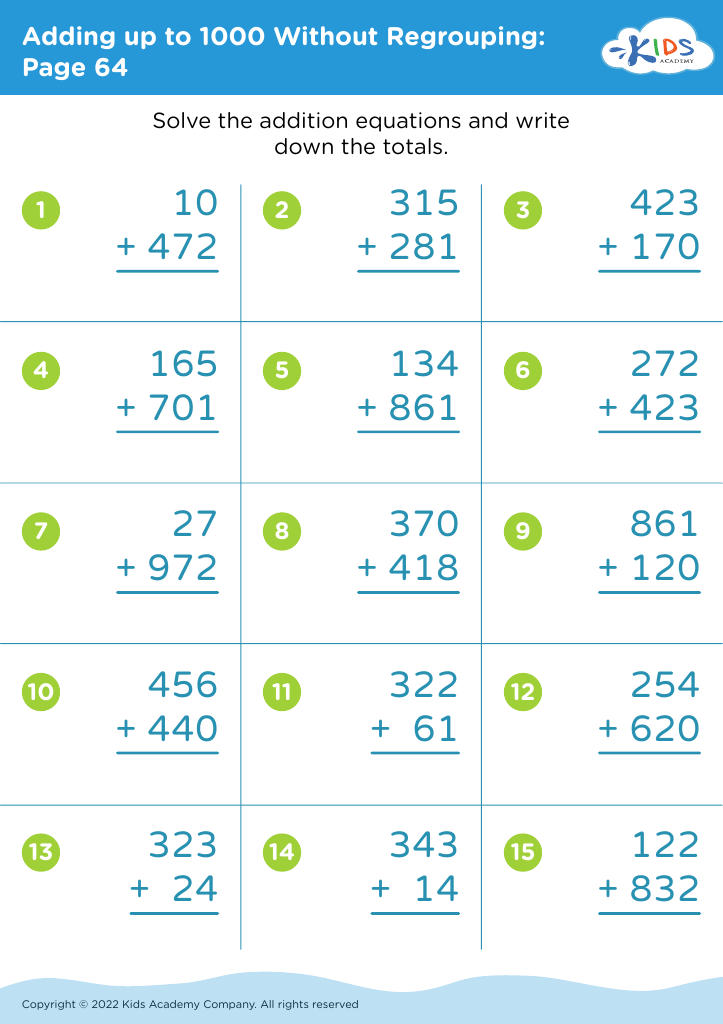
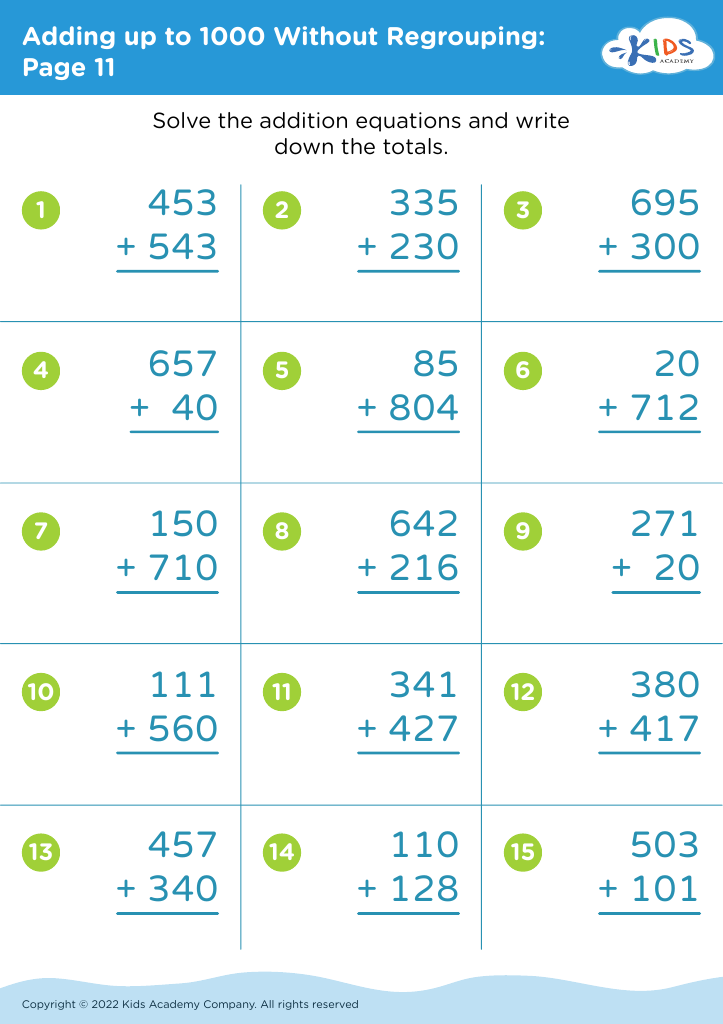



Number sequencing and addition concepts up to 1000 are foundational skills that significantly impact a child's mathematical development, particularly for ages 3 to 7. Early exposure to these concepts not only helps children understand the basic principles of counting and math but also fosters critical thinking and problem-solving skills. Mastering number sequences enhances their ability to recognize patterns, which is vital in more complex mathematics later on.
For parents and teachers, focusing on number sequencing creates opportunities for interactive activities, making math engaging and enjoyable. These formative years are crucial for building a positive attitude toward math; children who find joy in numbers are more likely to embrace the subject as they grow.
Moreover, mastering number sequencing and addition up to 1000 supports essential life skills. It enables children to make sense of the world around them, understand financial concepts, and develop organizational skills. This foundational knowledge forms the basis for future learning in mathematics and related subjects.
By prioritizing number sequencing, parents and teachers set children up for success in their academic journey and help them cultivate a lifelong love for learning. Investing time in these foundational skills ensures they are well-prepared for advanced mathematical concepts in the future.








