Problem-solving abilities Adding up to 1000 Worksheets for Ages 3-7
5 filtered results
-
From - To
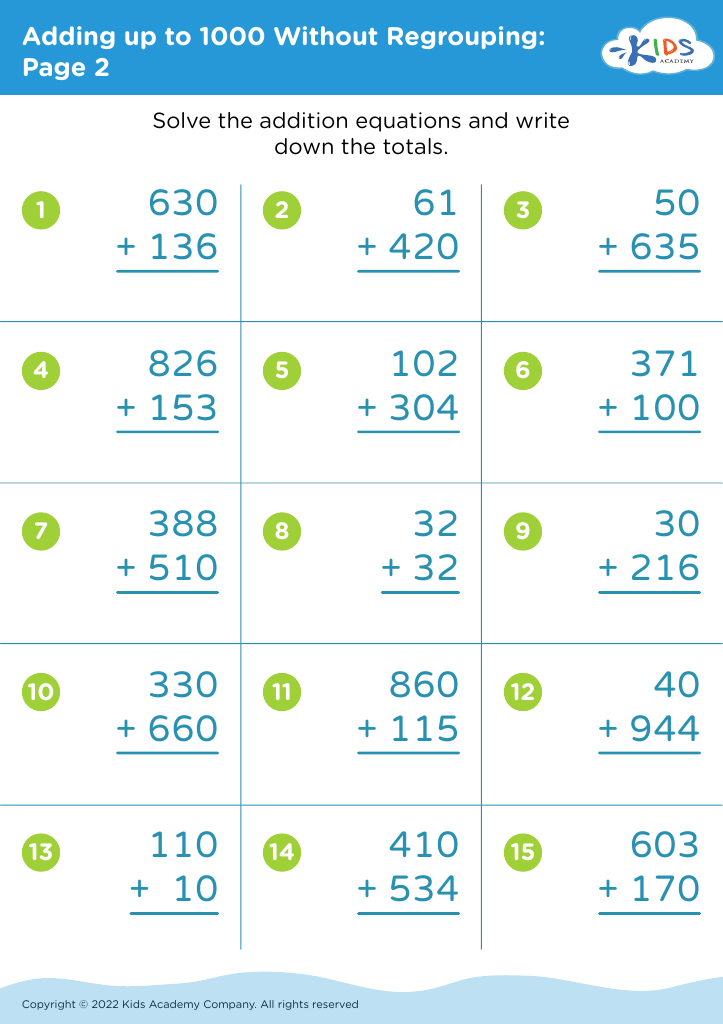
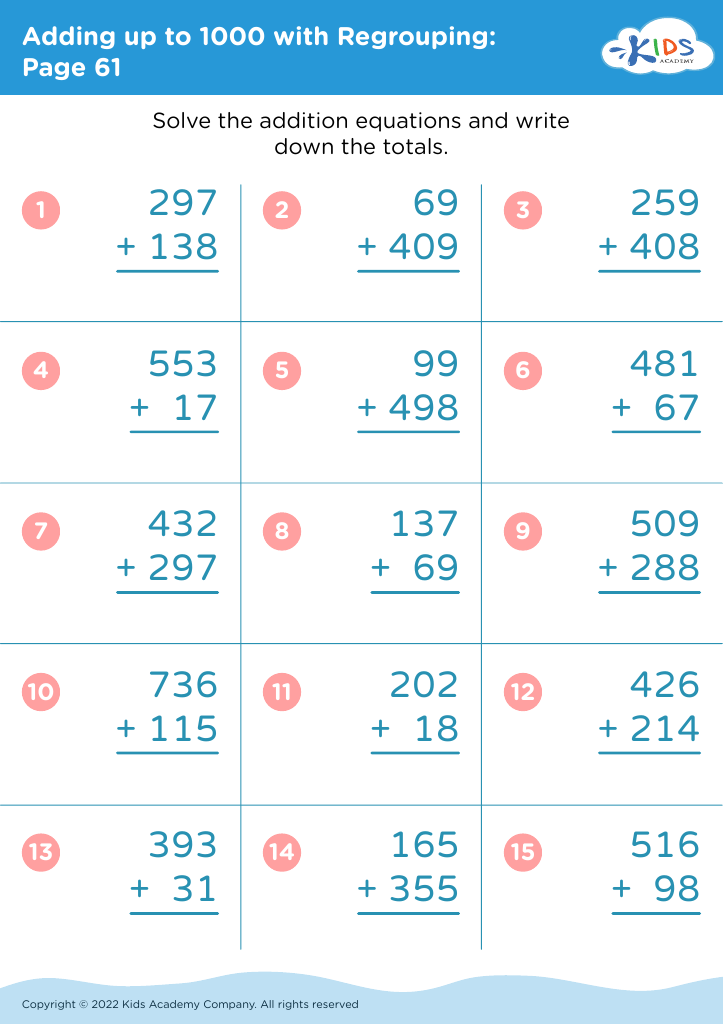
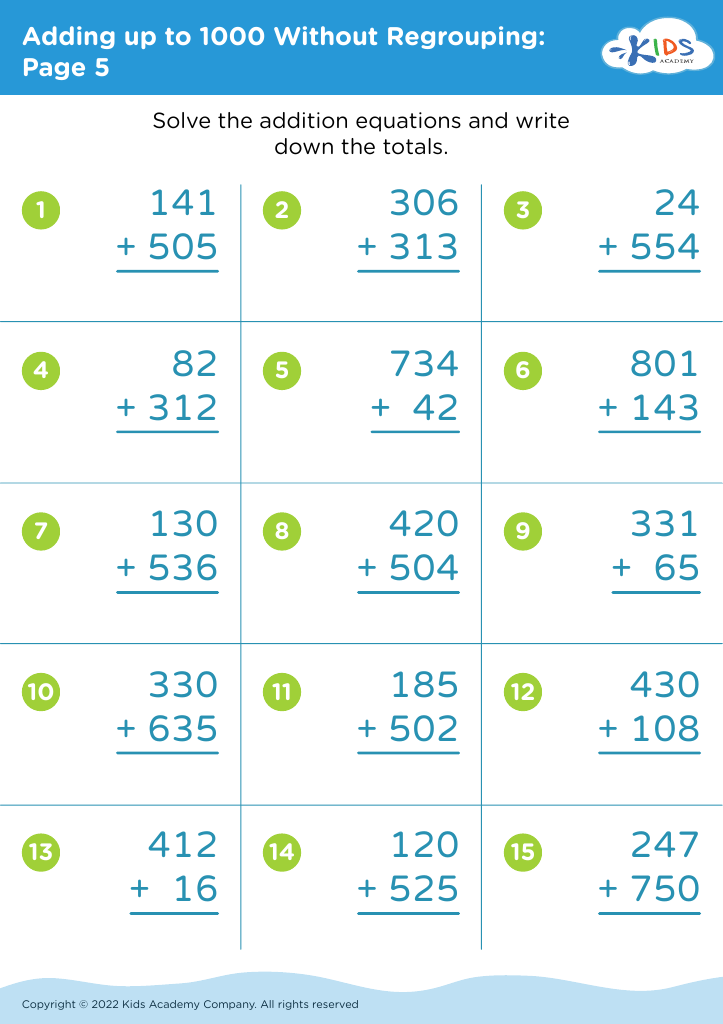
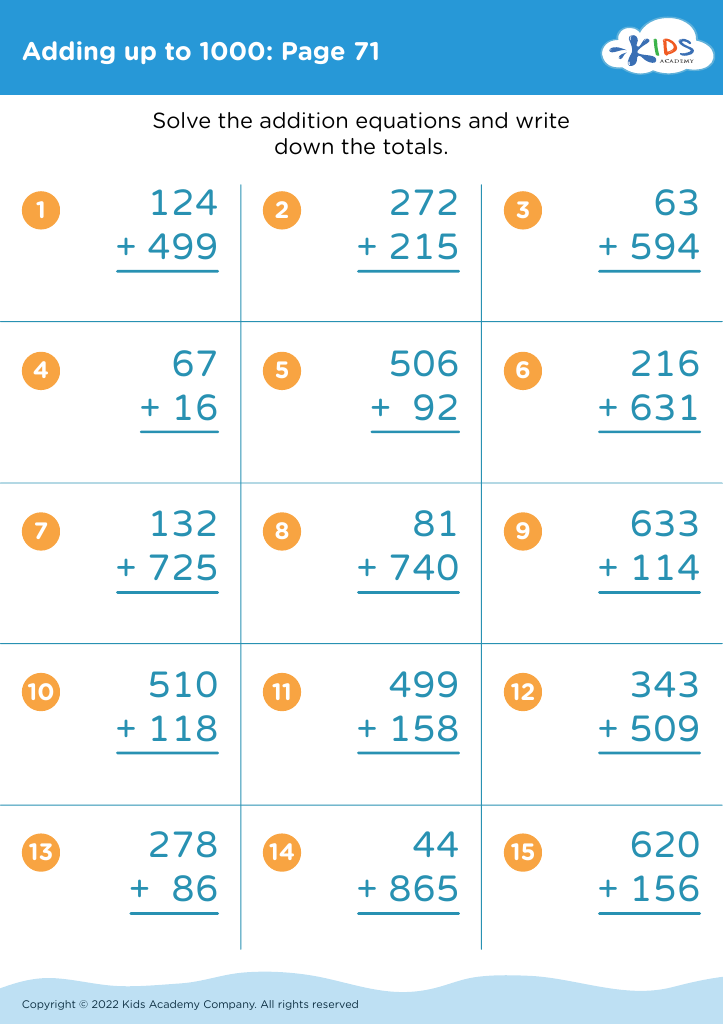
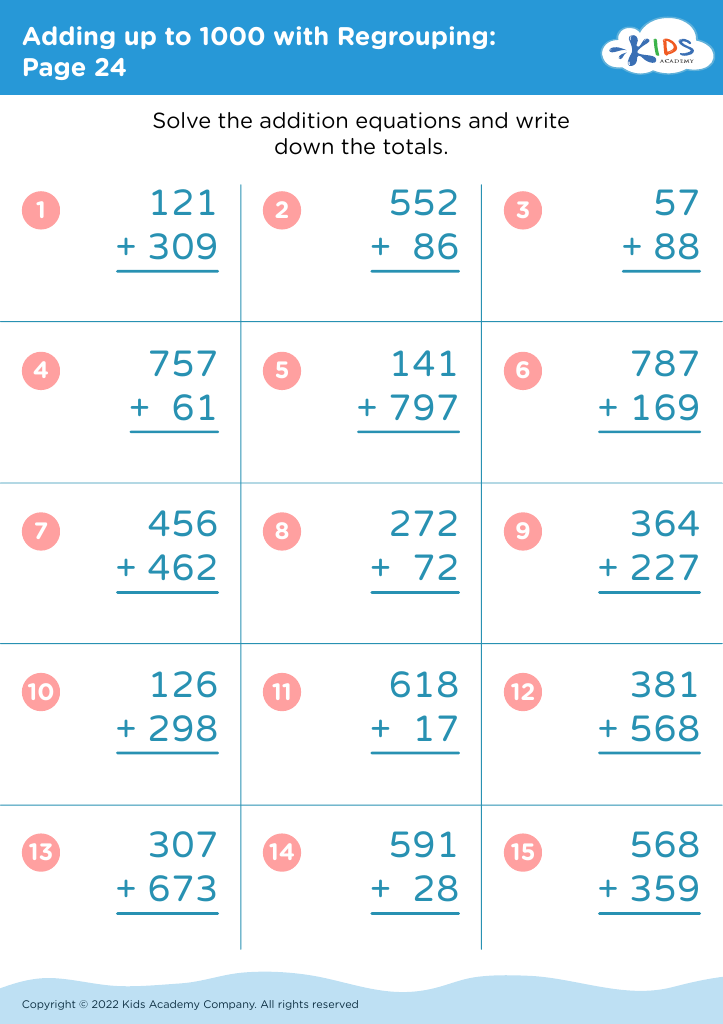
Enhance your child's problem-solving abilities with our "Adding Up to 1000" worksheets, designed specifically for ages 3-7. These engaging activities encourage young learners to tackle math challenges while developing critical thinking skills. Each worksheet offers a variety of problems that guide children through the exciting world of numbers, helping them build a solid foundation in mathematics. Interactive and fun, our resources promote independent thinking and creative problem-solving, making learning enjoyable. Perfect for at-home practice or classroom use, these worksheets ensure that your little ones not only understand addition but also cultivate essential skills they'll use throughout their educational journey.



Parents and teachers play a crucial role in the development of problem-solving abilities in children aged 3-7, and nurturing these skills is essential for several reasons. First, problem-solving encourages critical thinking, enabling children to analyze situations, generate options, and make sound decisions. These skills are foundational for academic success and real-world applications as children progress in age and school.
Furthermore, fostering problem-solving abilities promotes resilience. When children face challenges, learning to navigate these problems equips them with confidence and persistence, reducing frustration in the face of obstacles. This mindset is particularly important as they encounter increasingly complex tasks in school and life.
Moreover, problem-solving activities can enhance a child’s creativity. As they work their way through challenges, children are encouraged to think outside the box, leading to innovative solutions. Engaging in collaborative problem-solving with peers also develops crucial social skills, such as communication, negotiation, and teamwork.
Finally, through activities that center on problem-solving, children often find joy in exploration and discovery. This positive association with learning can cultivate a lifelong love for inquiry and knowledge. Thus, supporting these skills during early childhood lays a robust foundation for a child’s future development, both academically and personally.








