Problem-solving practice Adding up to 1000 Worksheets for Ages 3-7
3 filtered results
-
From - To
Discover our engaging problem-solving practice worksheets designed for children aged 3-7, centered around adding up to 1000! These interactive worksheets encourage young learners to explore math concepts in a fun and stimulating way. Kids will enhance their counting abilities, improve number recognition, and develop critical thinking skills as they tackle various addition challenges. Each worksheet is creatively crafted to capture children's interest while providing a solid foundation in math. Ideal for at-home learning or classroom activities, these problem-solving worksheets foster confidence and independence in young mathematicians. Print, practice, and watch your child's skills flourish with our thoughtfully designed resources!
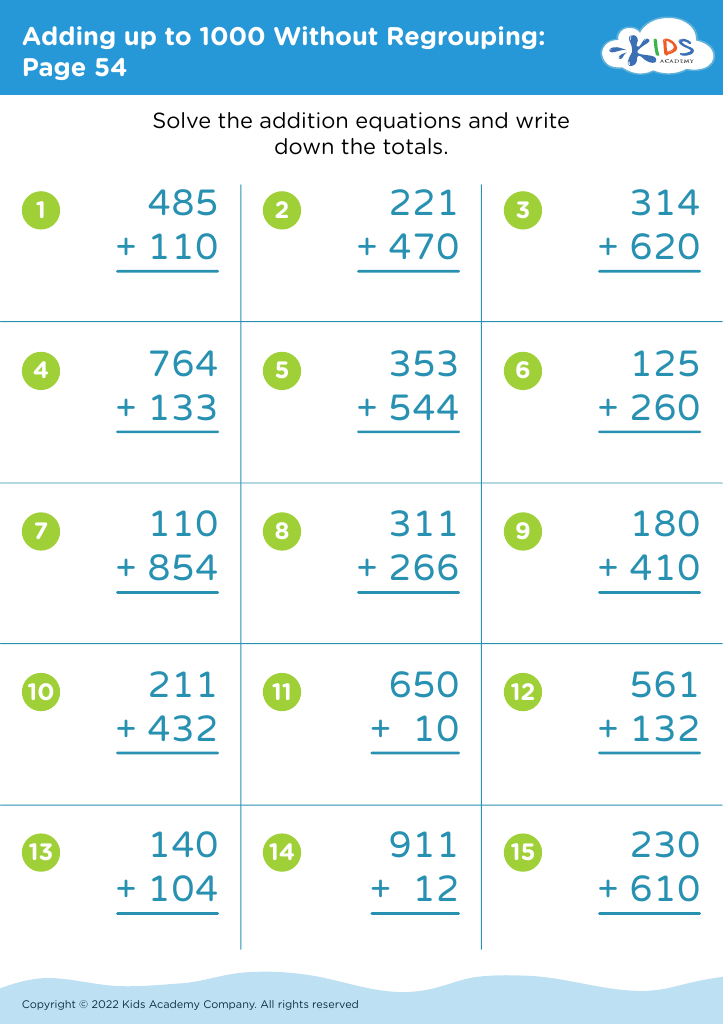
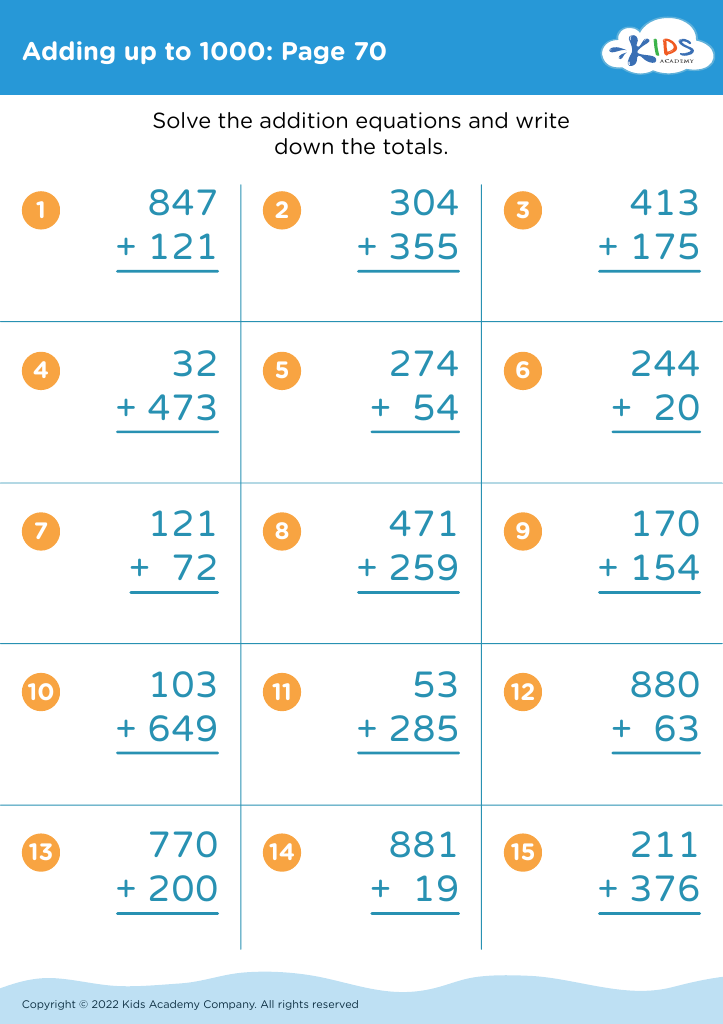
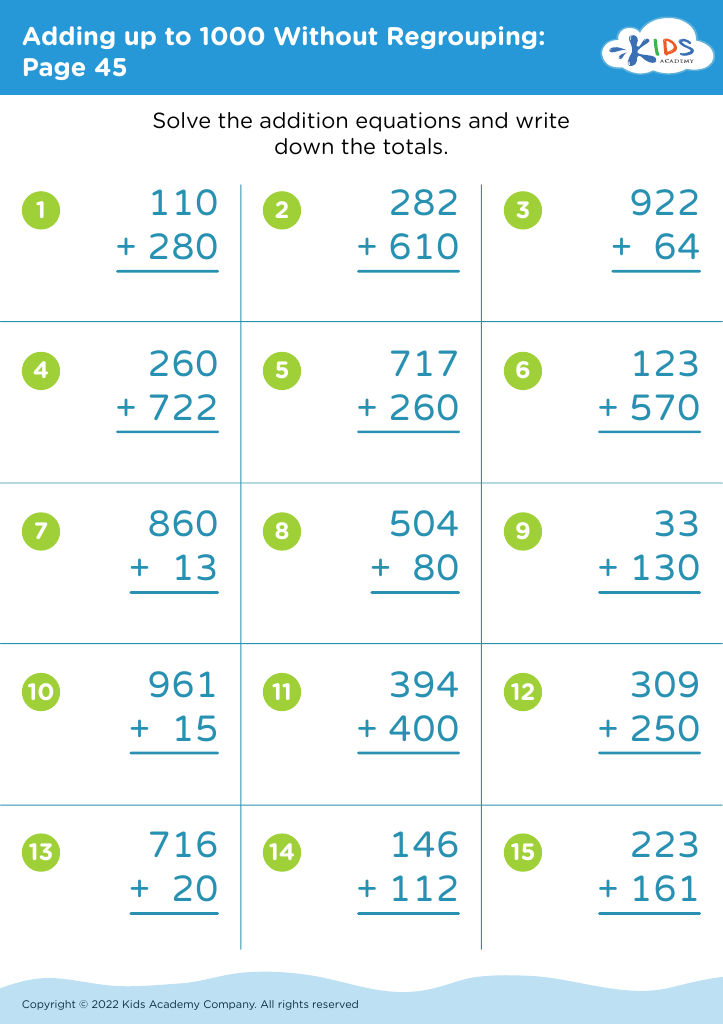



Problem-solving practice, especially activities focused on adding up to 1000, is crucial for children aged 3-7 as it lays a solid foundation for their mathematical understanding and critical thinking skills. Engaging in such exercises helps children develop vital cognitive abilities, including reasoning, analytical thinking, and the ability to approach challenges creatively.
For parents and teachers, emphasizing these activities fosters a love for mathematics early on, breaking down any potential math anxiety. By introducing problem-solving in a playful and engaging manner, children learn to enjoy the process of finding solutions, recognizing that mistakes are a natural part of learning. This prepares them for more complex concepts later in their education.
Additionally, these activities often integrate various skills, such as counting, recognizing patterns, and enhancing fine motor skills through hands-on tasks. Collaborative problem-solving promotes communication and teamwork, allowing children to learn from one another while also building their self-confidence.
Ultimately, parents and teachers should prioritize problem-solving practice because it nurtures essential skills that support academic success and adaptable learners in a rapidly changing world. By instilling resilience and curiosity in young learners, we equip them for future challenges and opportunities.








