Reading analog clocks Adding up to 1000 Worksheets for Ages 3-7
3 filtered results
-
From - To
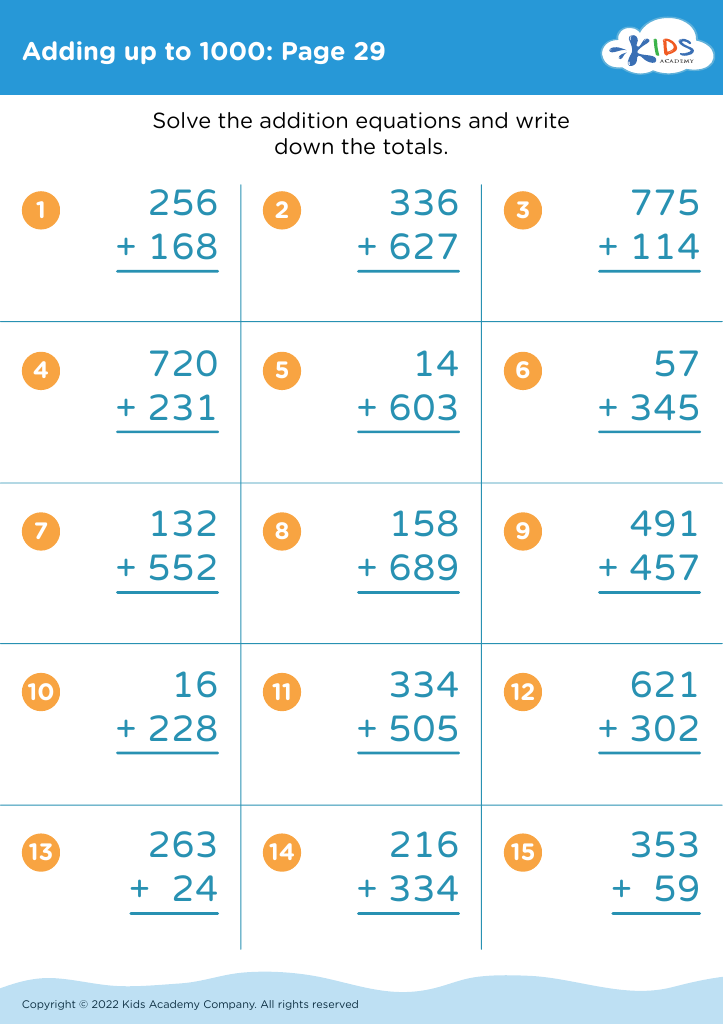
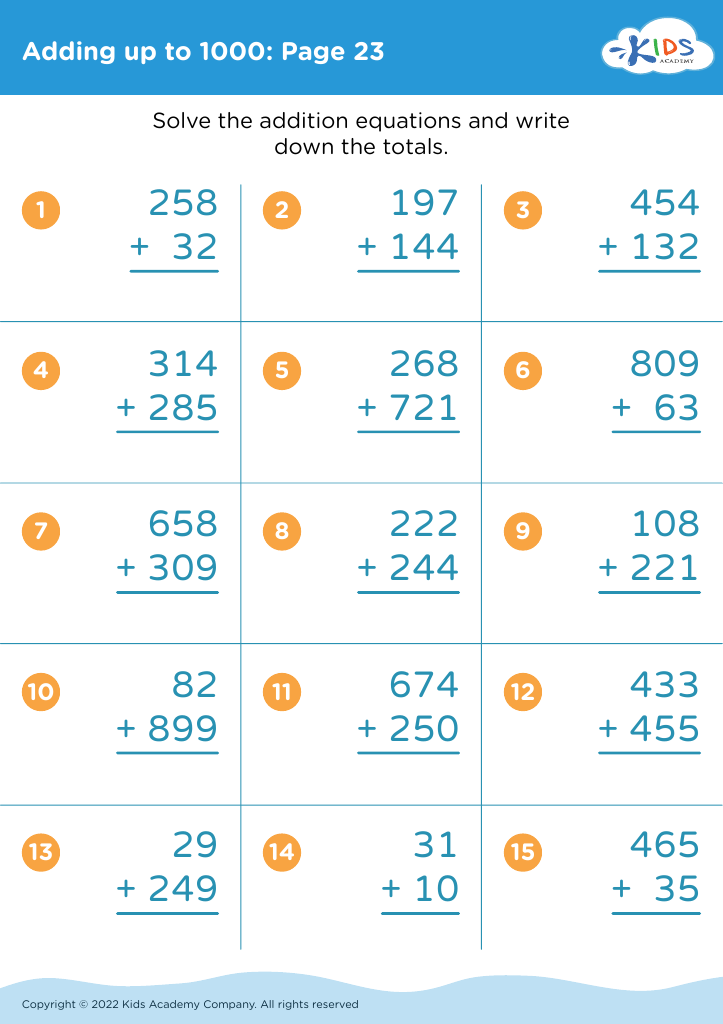
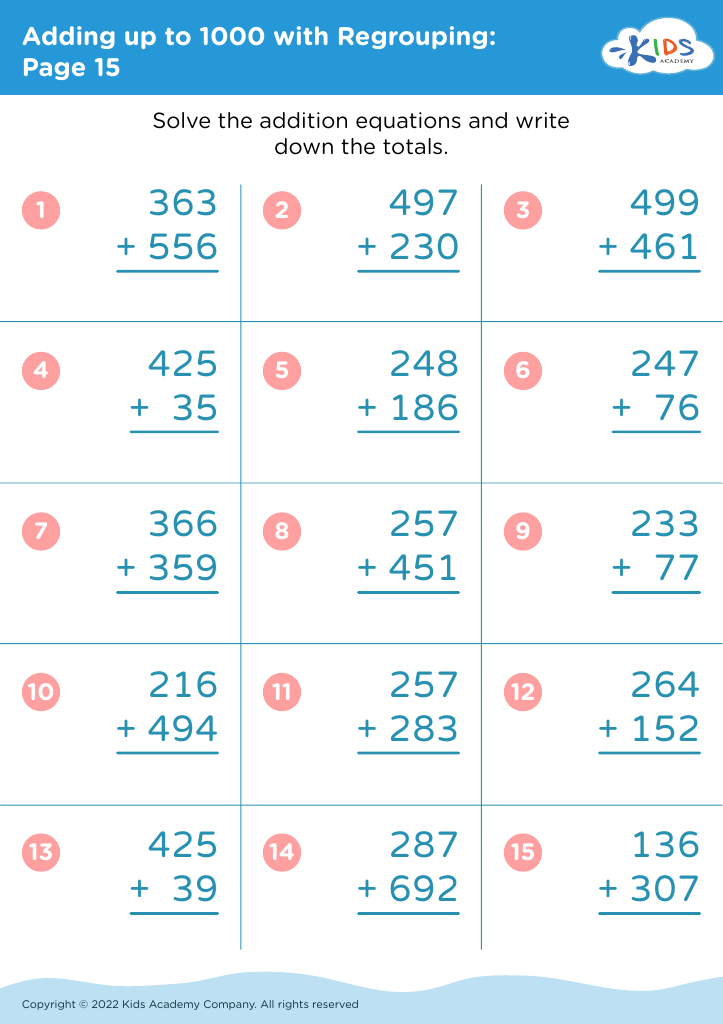
Introduce your child to the fundamentals of time-telling with our engaging "Reading Analog Clocks Adding up to 1000" worksheets, designed specifically for ages 3-7. These worksheets provide a fun and educational way for young learners to master reading analog clocks, while also enhancing their addition skills up to 1000. Each worksheet is thoughtfully crafted to combine visual aids with interactive exercises, making it easy for kids to grasp the concepts of time and arithmetic. Boost your child’s confidence and proficiency in math and time-telling with these effective and enjoyable worksheets from Kids Academy!



Parents and teachers play a crucial role in the early development of children, particularly ages 3-7, and focusing on skills like reading analog clocks and understanding basic arithmetic, like counting up to 1,000, lays a strong educational foundation. Firstly, the ability to read analog clocks teaches children to comprehend time more concretely, aiding in the development of essential life skills such as time management and routine setting. The physical motion of clock hands helps children connect visual and quantitative information, enhancing their spatial reasoning and cognitive skills.
In parallel, achieving familiarity with counting and basic arithmetic up to 1,000 equips children with numerical literacy, empowering them to tackle more complex math problems confidently in the years ahead. Early arithmetic practice also hones logical thinking and problem-solving abilities which are critical for academic success across various subjects.
Both skills cultivate discipline and independence, as students can monitor their own schedules and solve simple problems on their own, instilling early lessons of responsibility and self-reliance. Integrating these foundational abilities into early education greatly benefits overall intellectual growth, making students better prepared for future learning challenges. Therefore, parents and teachers should deeply care about such skills, as they are pillars of a well-rounded early educational experience.








