Recognize patterns Adding up to 1000 Worksheets for Ages 3-7
6 filtered results
-
From - To
Welcome to our "Recognize Patterns Adding up to 1000 Worksheets," specially designed for children aged 3-7! These engaging worksheets enhance early math skills by focusing on identifying patterns as a foundational concept for addition. Children will explore visual representations, number sequences, and simple equations, helping them see the relationship in numbers while adding up to 1000. Our fun activities are tailored to foster critical thinking and boost confidence in young learners. These printable worksheets make learning enjoyable and interactive, setting the stage for strong mathematical abilities. Start your child's journey to mastering addition and pattern recognition today!
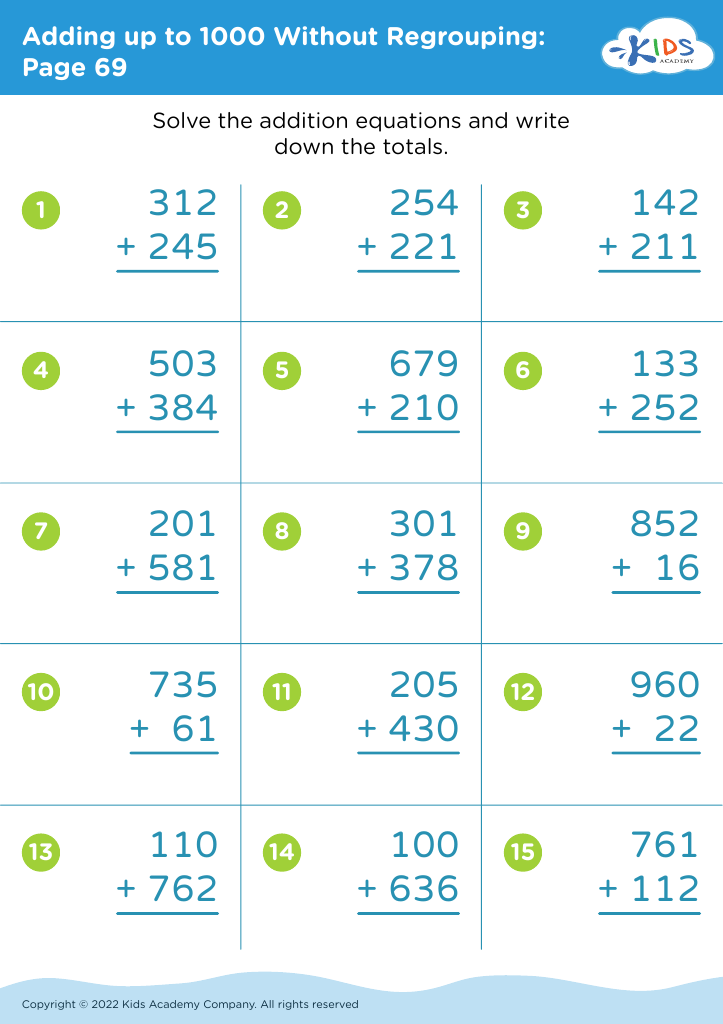
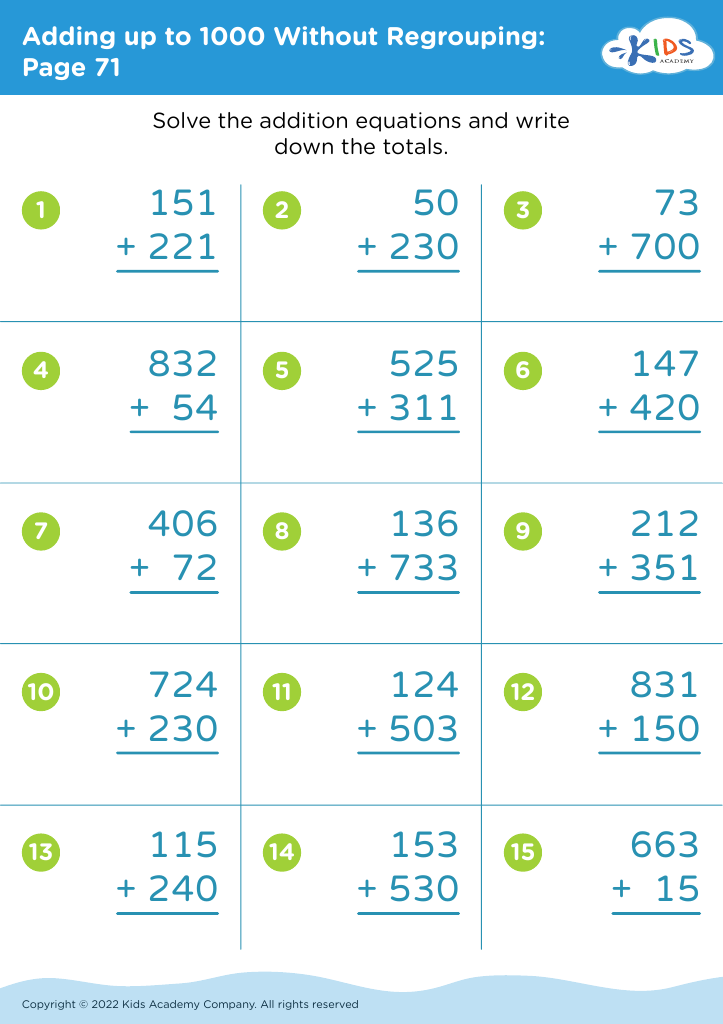
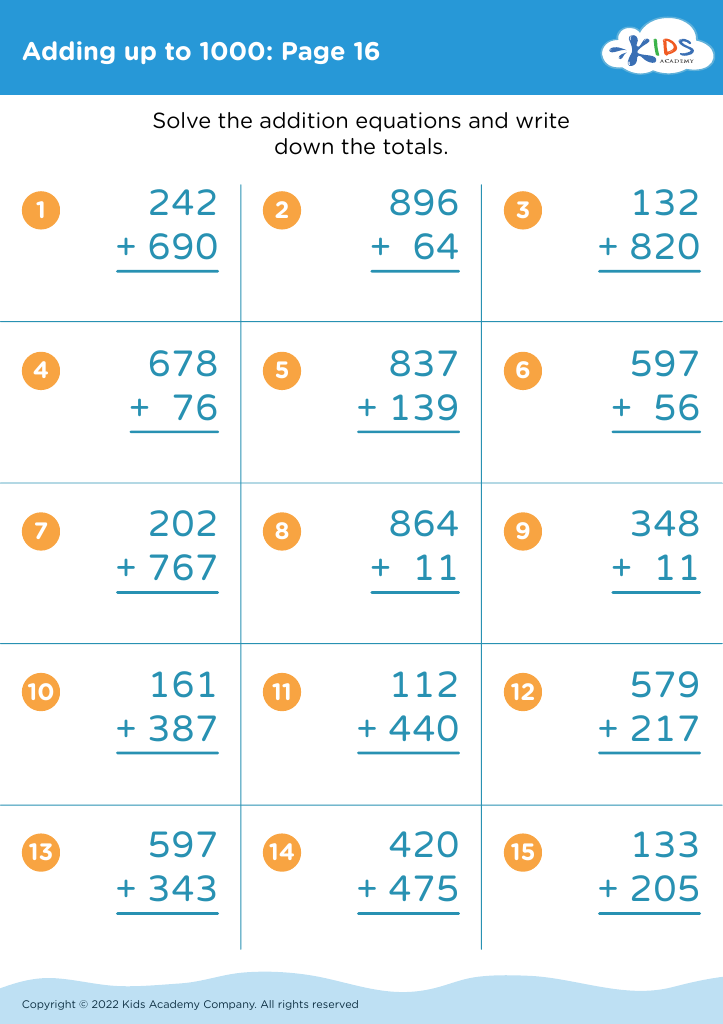
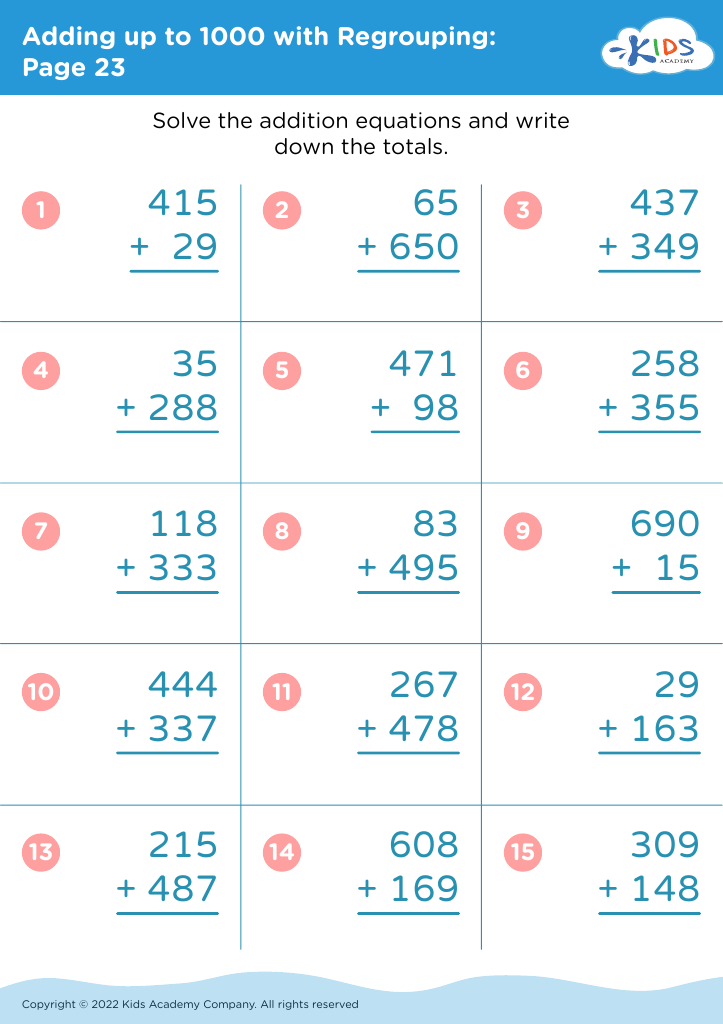
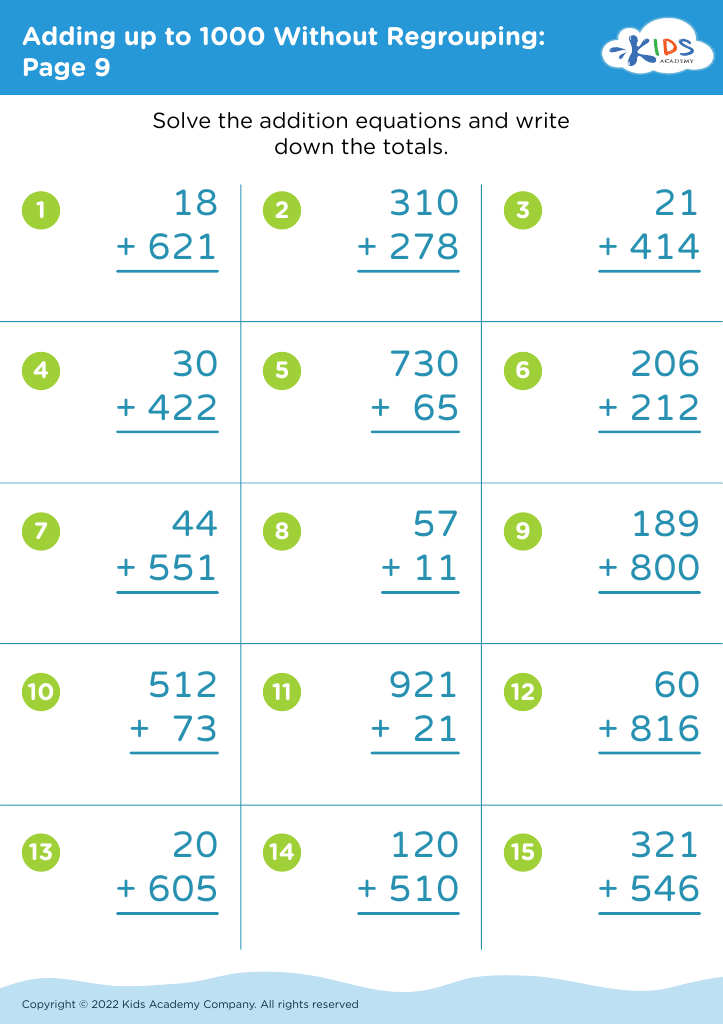
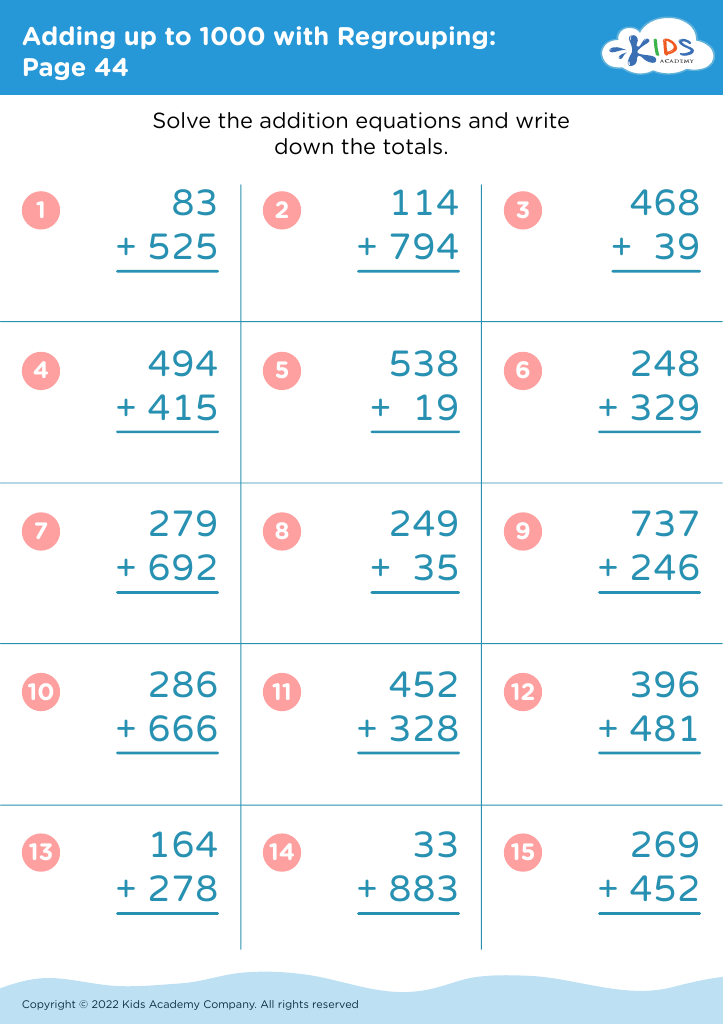



Recognizing patterns, especially when learning to add up to 1000, is crucial for children aged 3-7. This foundational mathematical skill is essential for their cognitive development and problem-solving abilities. For parents and teachers, understanding the importance of pattern recognition helps in cultivating an engaging learning environment where children can explore numbers effectively.
Patterns are everywhere in our daily lives—nature, art, music, and more—and understanding them equips children with tools to make sense of the world around them. When students are taught to recognize and extend numerical patterns, they build important connections between seemingly disparate mathematical concepts, such as addition and subtraction, sequences, and place value.
Moreover, adding up to 1000 encourages children to develop logical reasoning and critical thinking skills. As they identify patterns, they learn to predict and formulate strategies to solve more complex problems in the future. This fun, engaging approach nurtures a positive attitude toward numeracy, paving the way for future academic success.
Thus, prioritizing pattern recognition not only enhances children's mathematical fluency but also fosters a lifelong love for learning, preparing them for more advanced concepts as they grow. Parents and teachers play a crucial role in encouraging the exploration of these patterns early on.








