Shape identification Adding up to 1000 Worksheets for Ages 3-7
6 filtered results
-
From - To
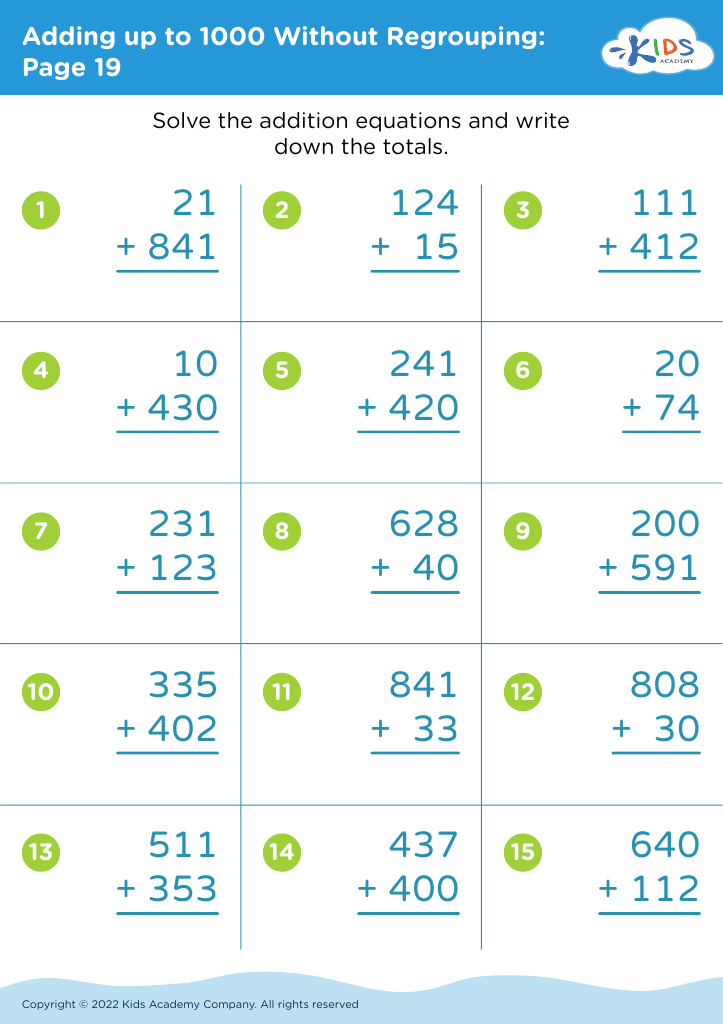
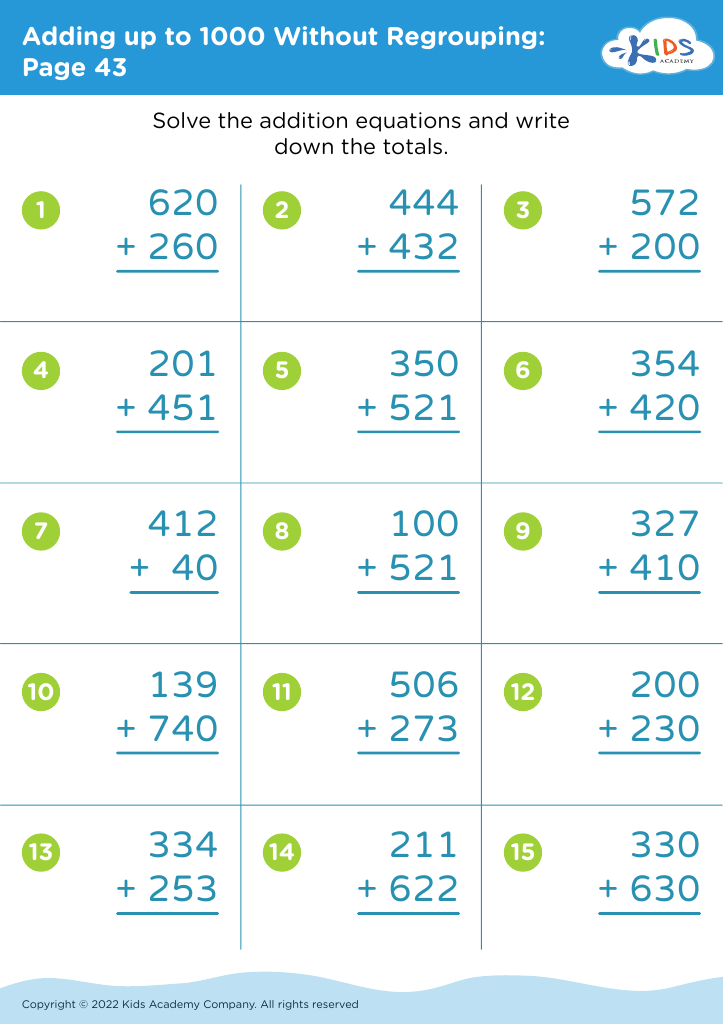
Unlock your child's math potential with our Shape Identification worksheets, designed specifically for ages 3-7. These engaging activities help young learners understand shapes while practicing their math skills, particularly adding up to 1000. With 1000 unique worksheets available, children will enjoy exploring geometric concepts through a variety of fun, interactive exercises. Our easy-to-follow formats ensure that learning is effective and enjoyable. Perfect for classroom settings or at-home practice, these worksheets promote critical thinking and problem-solving skills. Dive into the world of math and shapes today, and watch your child thrive in their educational journey!



Shape identification is a fundamental concept that plays a crucial role in early childhood development, particularly for children aged 3 to 7. For parents and teachers, recognizing and understanding shapes is much more than a simple academic exercise; it lays the groundwork for essential cognitive skills.
Firstly, engaging in shape identification helps children develop critical thinking and problem-solving abilities. As they categorize and differentiate shapes, they enhance their understanding of the world around them. Recognizing various shapes also fosters spatial awareness, influencing how children navigate spaces and interact with objects in their environment.
Moreover, shape identification is pivotal for early mathematical skills. It introduces children to basic geometry and helps them understand concepts such as size, volume, and angles, which are foundational for more advanced math topics later in their education. This mathematical literacy seeks to increase clarity in addition and subtraction, fractions, and more complex numerical relationships.
Additionally, teaching shape recognition boosts language development as children learn to articulate and describe shapes, enhancing their vocabulary and communication skills. Ultimately, investing time in shape identification can cultivate curiosity, creativity, and a strong academic foundation—qualities that benefit children in all areas of learning.








