Shape Recognition Adding up to 1000 Worksheets for Ages 3-7
11 filtered results
-
From - To
Introducing our "Shape Recognition Adding up to 1000 Worksheets for Ages 3-7" – a blend of fun and education perfect for young minds! These worksheets are designed to engage kids in identifying shapes while practicing addition up to 1000. Through vibrant illustrations and exciting challenges, children will enhance their math skills and shape recognition simultaneously. Ideal for ages 3-7, these activities support foundational learning in a playful manner. Empower your child’s growth with our expertly crafted worksheets, making math enjoyable and effective. Explore the perfect resource to spark curiosity and foster early academic success!
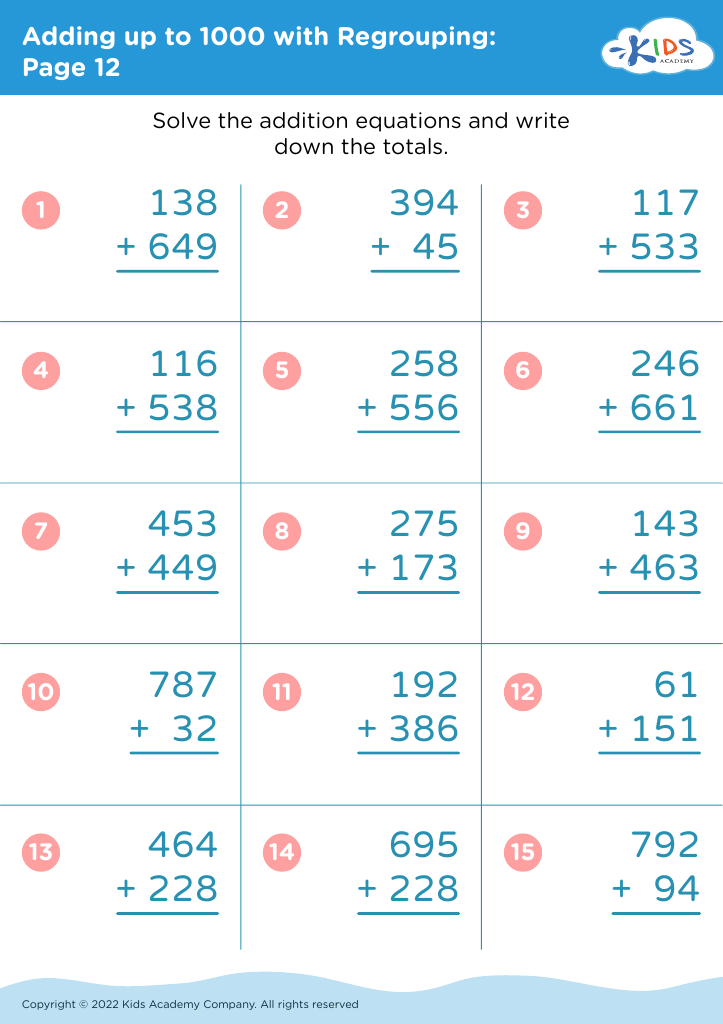
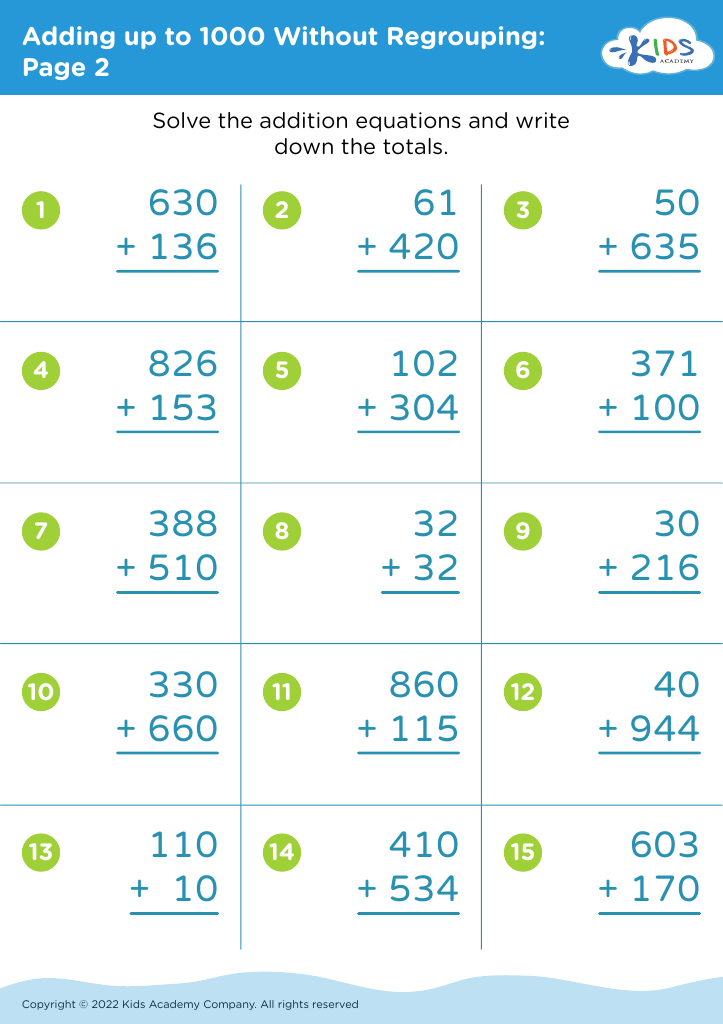
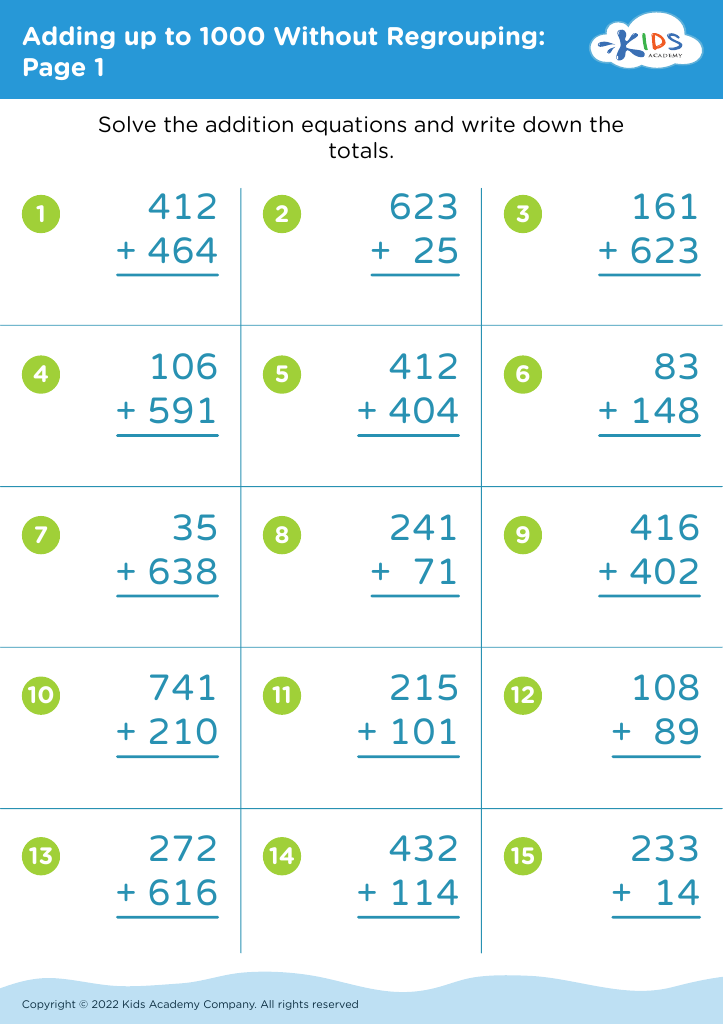
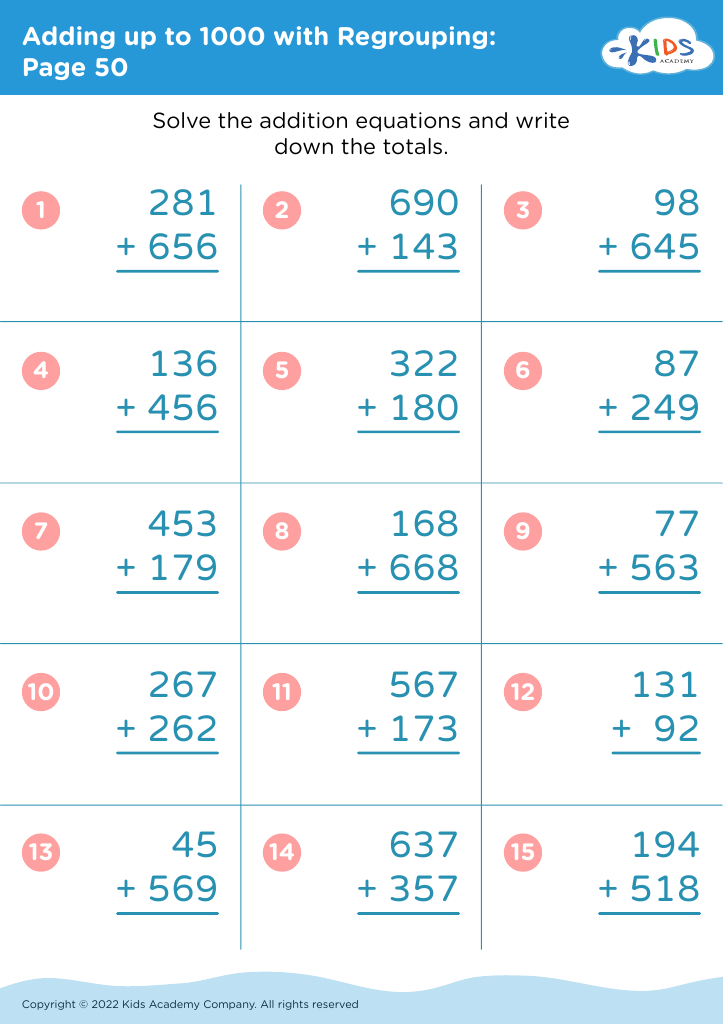
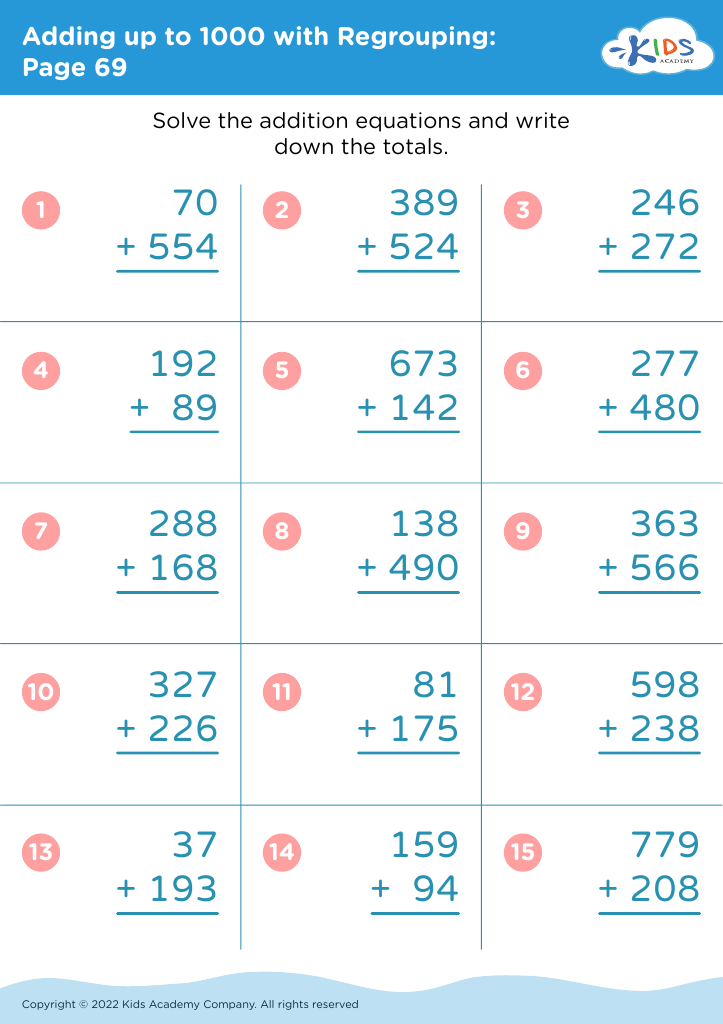
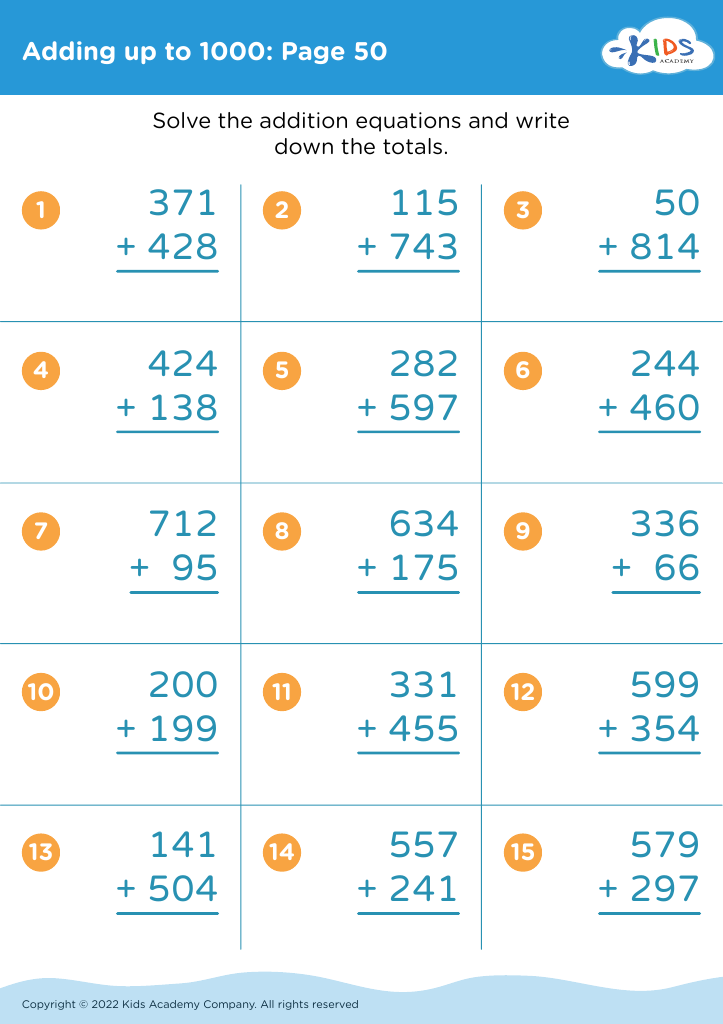
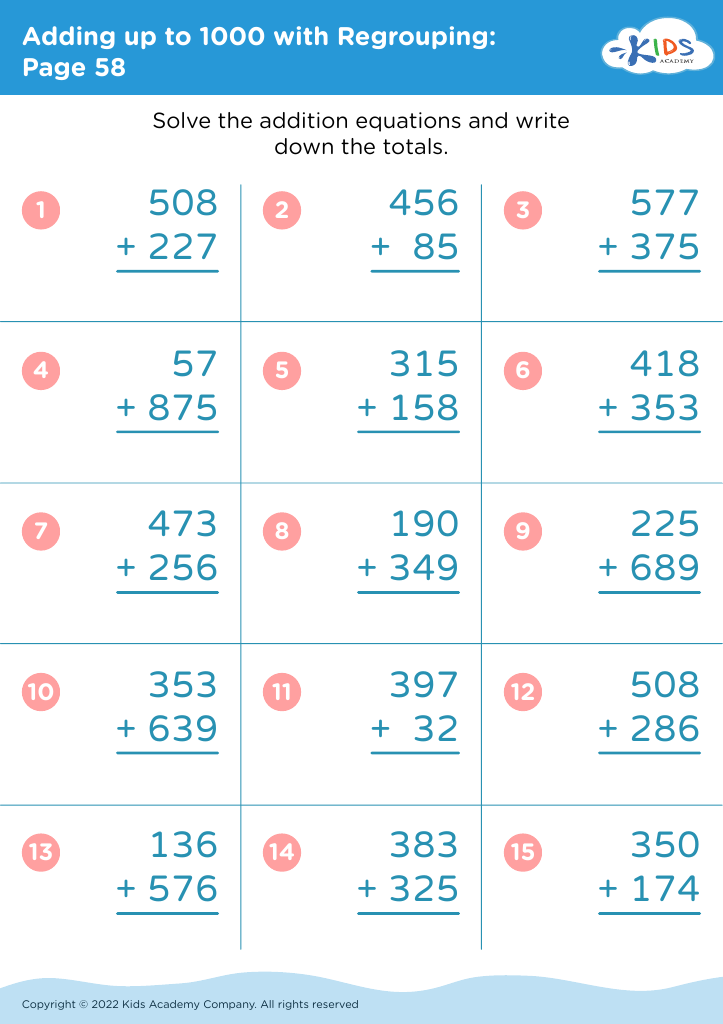
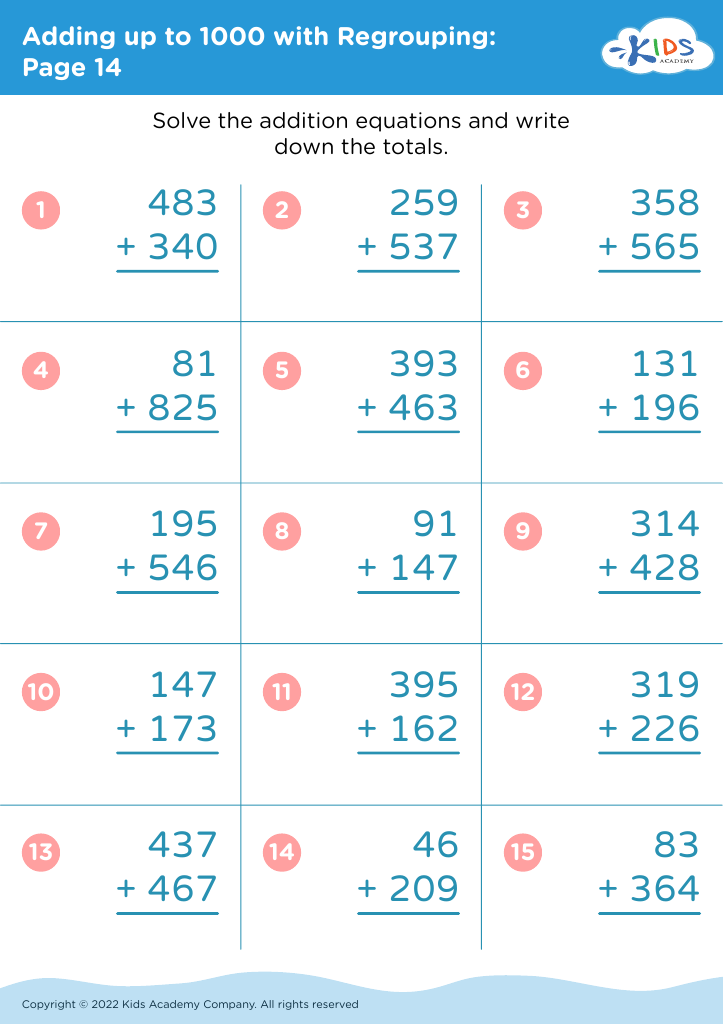
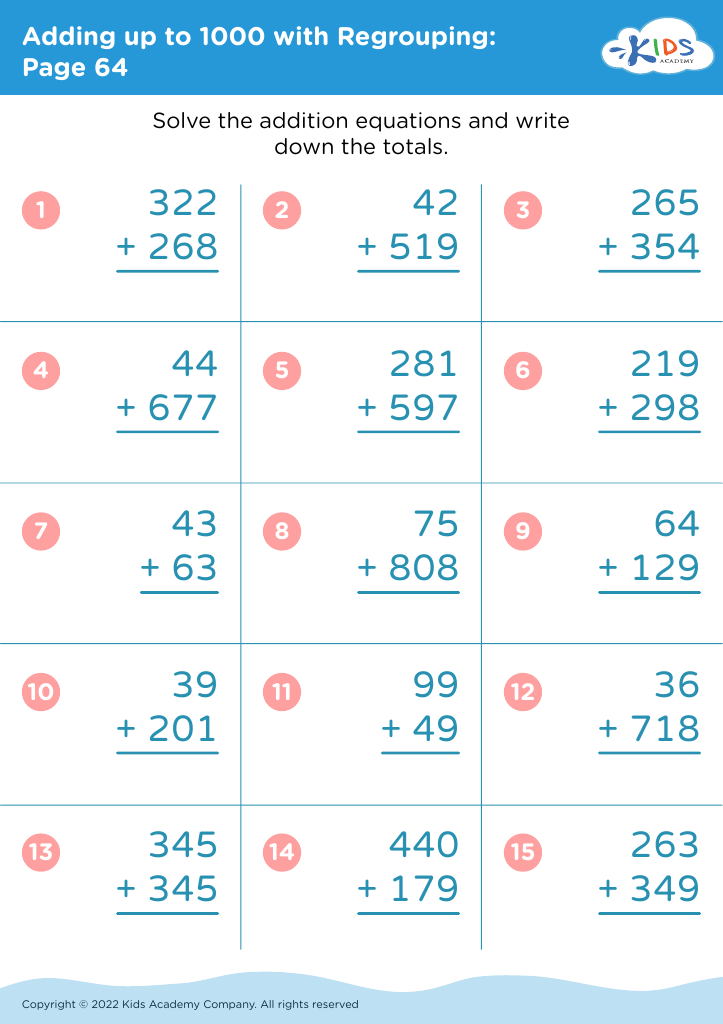
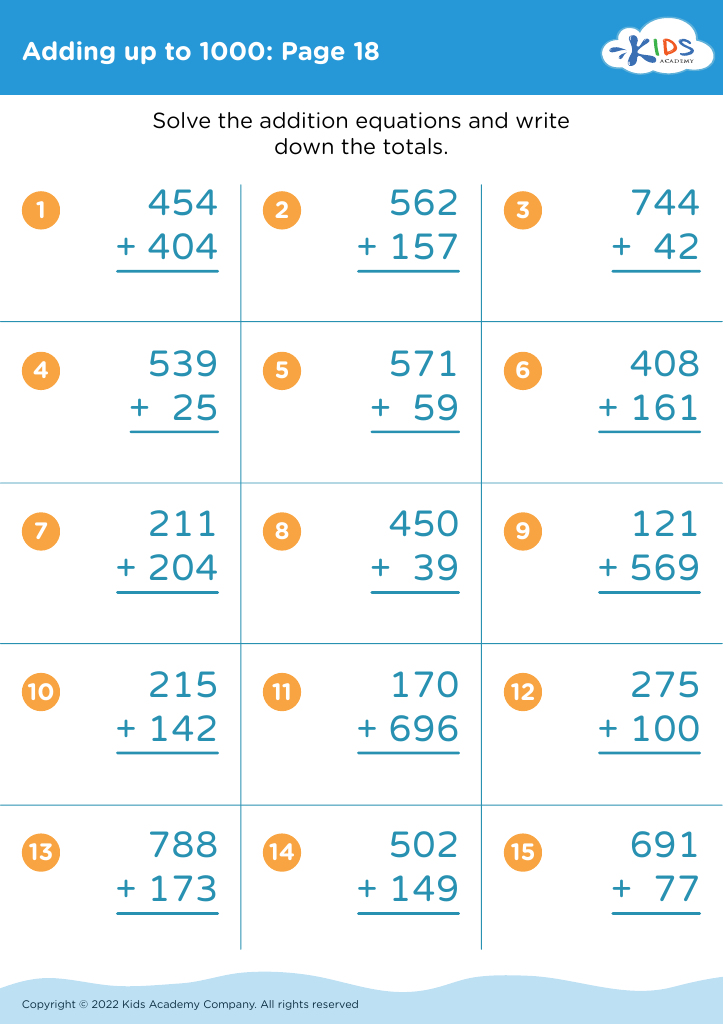
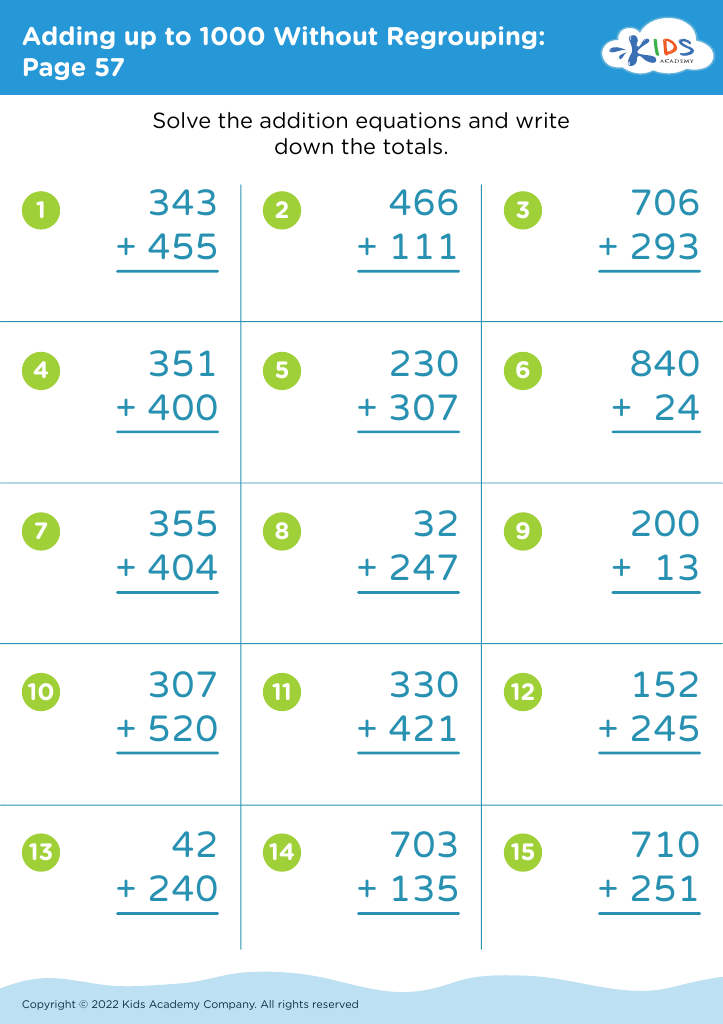



Shape recognition and early math skills, like adding numbers up to 1000, are foundational elements in a child's cognitive development, especially between the ages of 3 and 7. Parents and teachers should care about these skills for several reasons:
Firstly, shape recognition helps children comprehend and categorize the world around them. Recognizing shapes enhances their spatial awareness and visualization skills, which are crucial for solving problems in later math and science education. For instance, understanding that circles, squares, and triangles have distinct properties helps children grasp more complex concepts like geometry.
Secondly, early exposure to basic arithmetic, such as adding numbers up to 1000, builds numerical literacy and promotes confidence with numbers. This proficiency serves as a stepping stone for more advanced mathematical operations. Engaging in addition exercises also helps children develop critical thinking and attention to detail, as they learn to carefully count, add, and double-check results.
Integrating shape recognition with early math activities makes learning interactive and fun, fostering a positive attitude towards education. When parents and teachers effectively engage young children in these activities, they set the stage for academic success, enhance problem-solving abilities, and prepare them for a lifelong journey of learning and curiosity. Recognizing its long-term benefits, supporting these foundational skills in early childhood unquestionably merits attention.








