Understanding division Adding up to 1000 Worksheets for Ages 3-7
3 filtered results
-
From - To
Discover our engaging "Understanding Division Adding up to 1000 Worksheets" designed for young learners aged 3-7. These worksheets introduce foundational division concepts using approachable visuals and fun exercises, ensuring children grasp the relationship between division and subtraction. Each sheet features colorful illustrations and age-appropriate problems that encourage exploration and critical thinking. Perfect for parents and educators, these resources help children strengthen their math skills while setting a solid groundwork for future learning. Make division enjoyable and approachable with our tailored worksheets, helping your child gain confidence and competence in early mathematics. Download now and embark on a joyful learning journey!
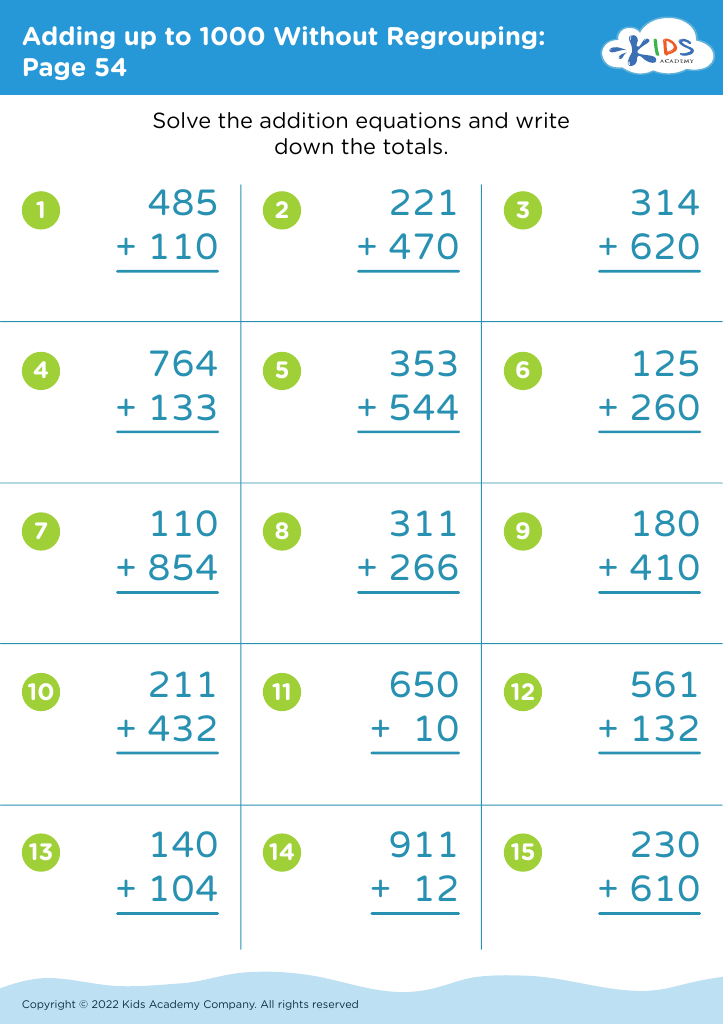
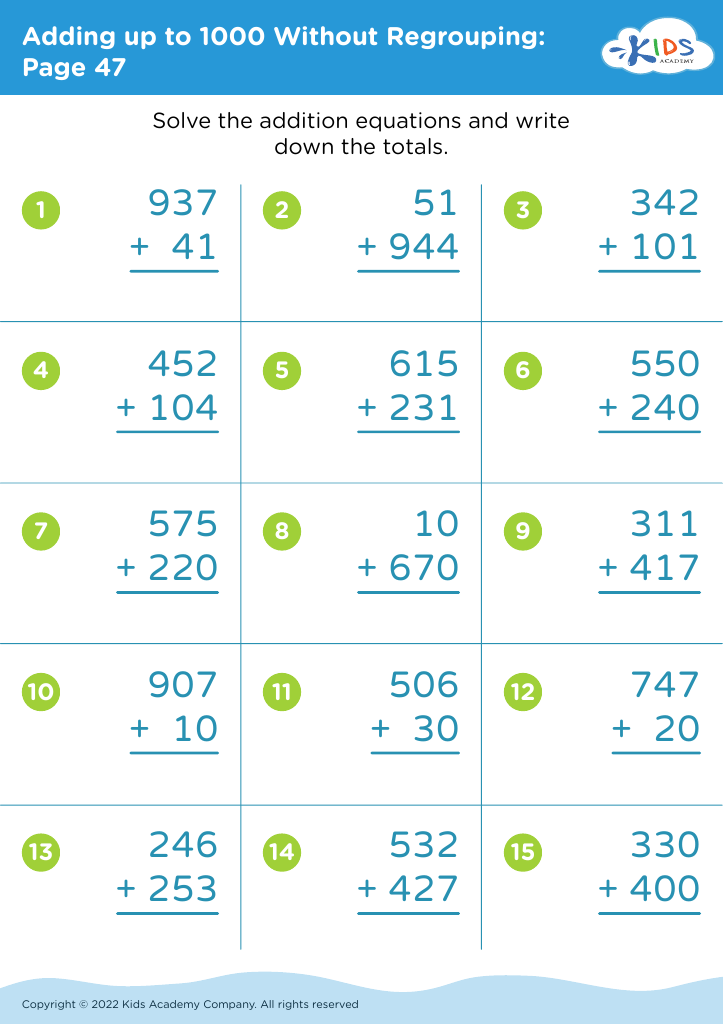
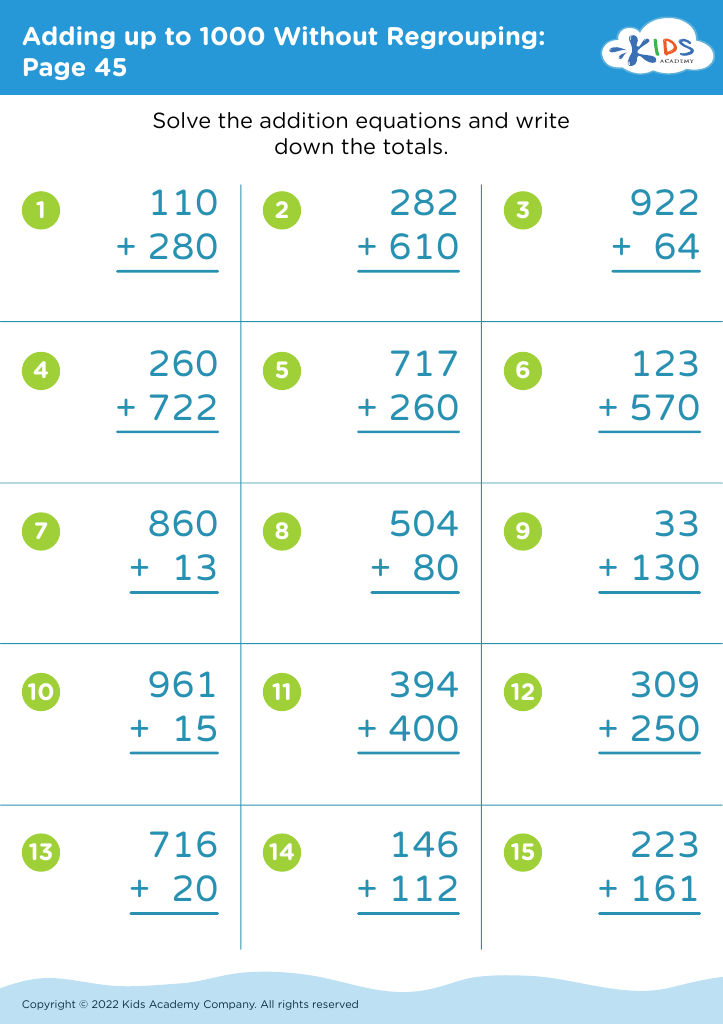



Understanding division concepts and the ability to add up to 1000 are essential skills for children aged 3-7, forming the foundation for their mathematical development. For parents and teachers, nurturing these skills is vital for several reasons.
Firstly, division is a fundamental mathematical operation that helps children learn sharing and equal grouping, essential for social and cognitive development. This nurturing of mathematical concepts helps children not only develop their understanding of numbers but also foster problem-solving skills and logical thinking.
Secondly, working with larger numbers like 1000 enhances a child's numerical fluency and confidence. Engaging with such numbers introduces children to patterns and a deeper understanding of place value, promoting more advanced arithmetic skills later on.
Moreover, early exposure to these concepts builds a child's enthusiasm for learning mathematics, counteracting math anxiety that many individuals face in later years. It can lead to long-term success not just in math but also in areas requiring analytical skills.
Lastly, parents and teachers play a critical role in creating an encouraging environment. Fostering understanding in these areas through fun activities and real-life applications can significantly impact a child's mathematical journey, ensuring they develop into competent and confident learners.








