Understanding patterns Adding up to 1000 Worksheets for Ages 3-7
5 filtered results
-
From - To
Discover our engaging "Understanding Patterns: Adding up to 1000 Worksheets" designed specifically for young learners ages 3-7. These interactive worksheets focus on the foundational skills of recognizing and creating patterns, laying the groundwork for early math concepts. Children will enjoy fun activities that not only enhance their pattern recognition abilities but also introduce them to the idea of addition within the context of numbers up to 1000. Our thoughtfully crafted worksheets make learning math engaging and enjoyable, providing a perfect blend of challenge and ease. Support your child's mathematical journey today with our curated resources that foster confidence and understanding!
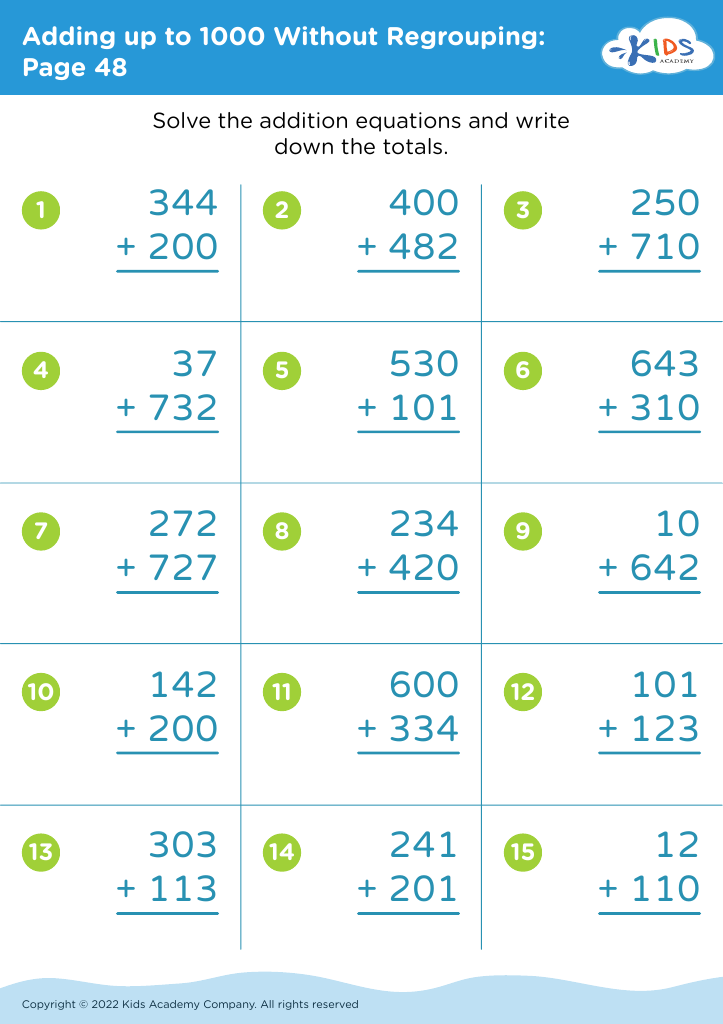
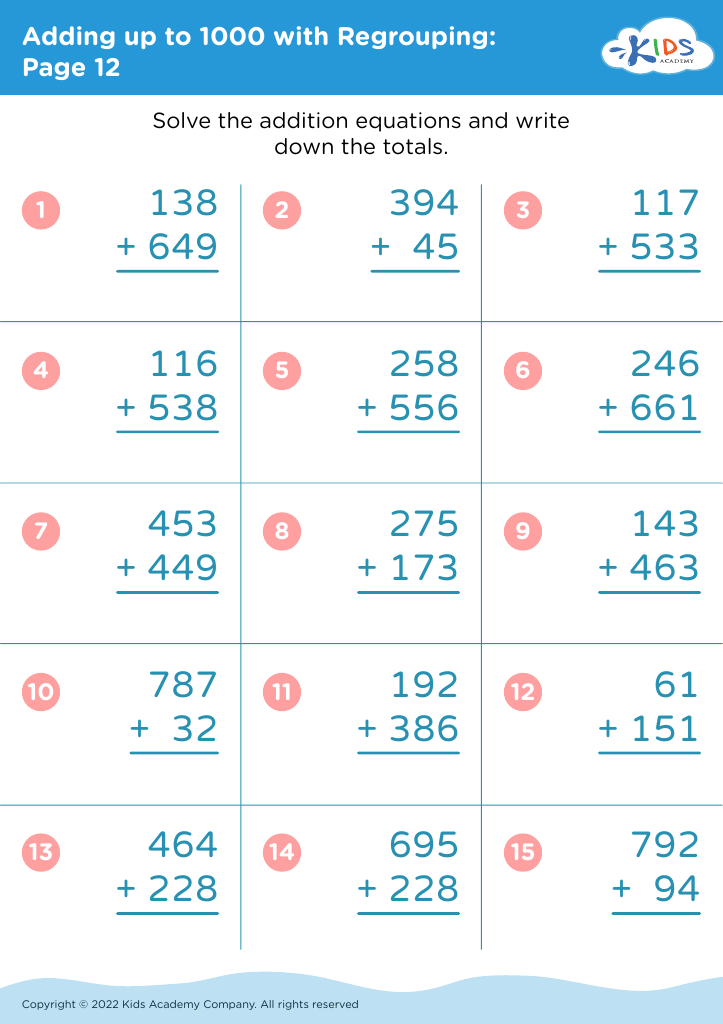
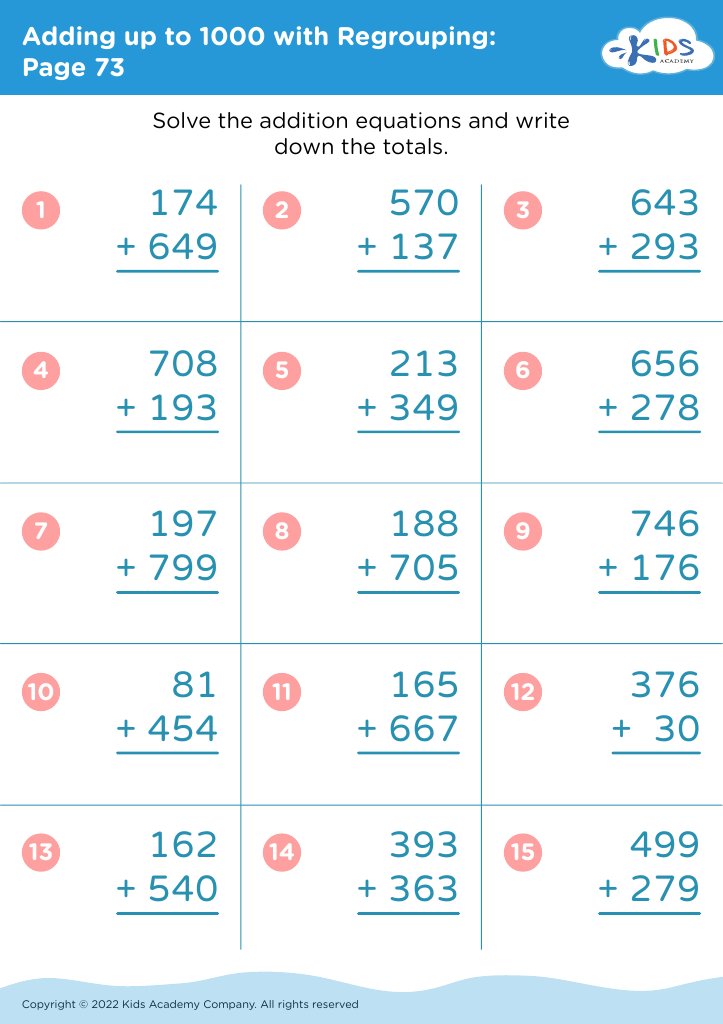
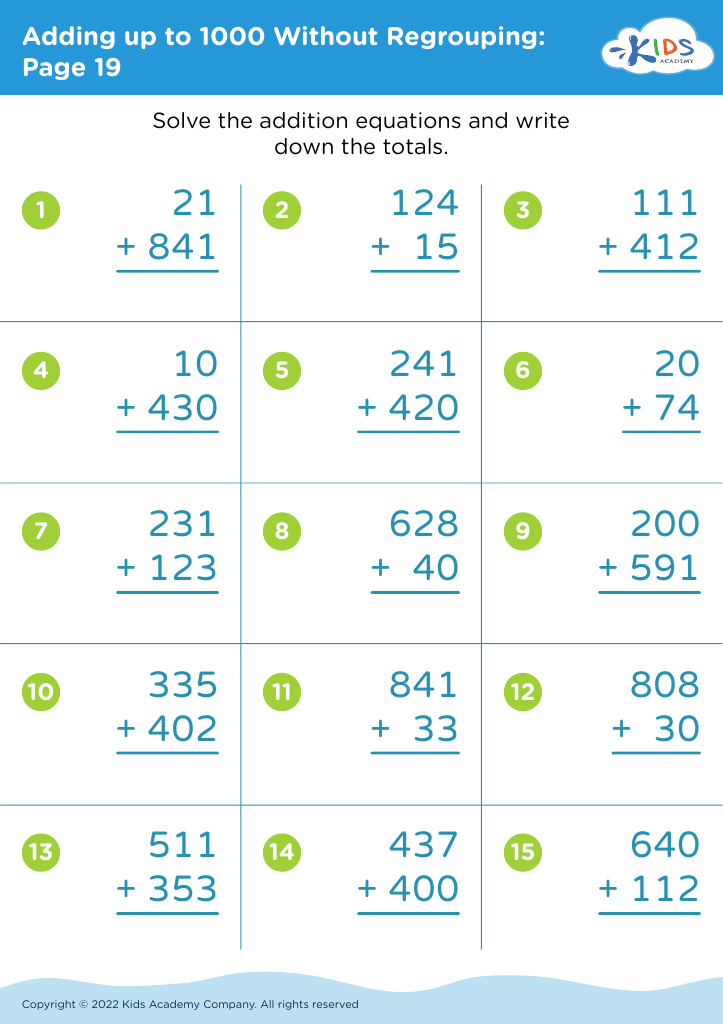
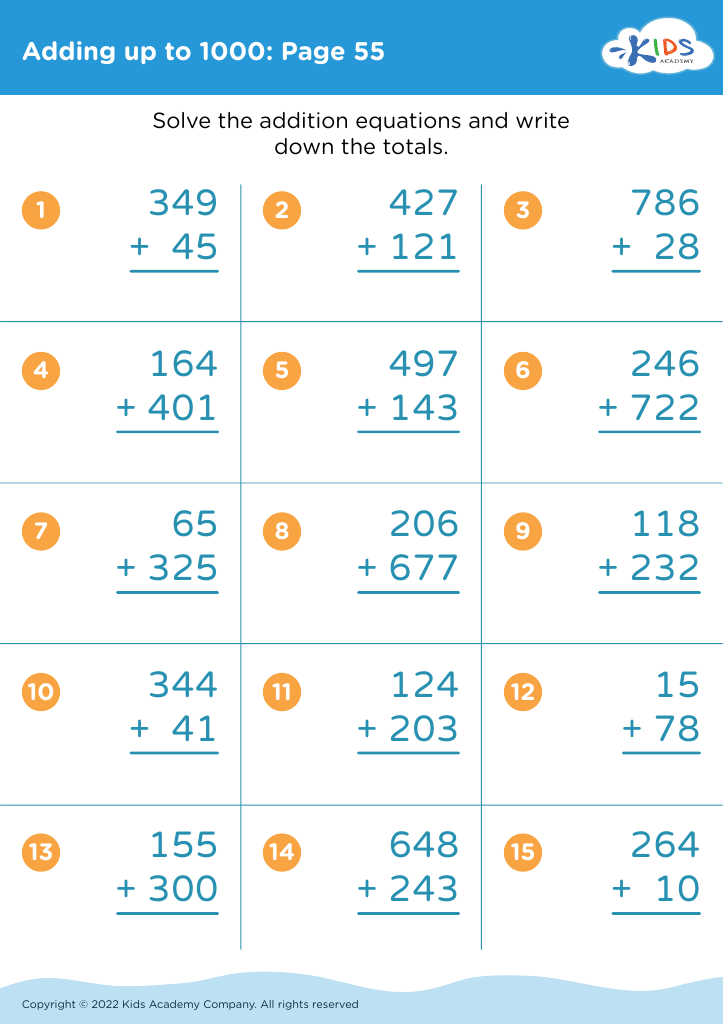



Understanding patterns and the concept of adding up to 1000 is essential for young children's cognitive development, especially for ages 3-7. At this age, children are naturally curious and eager to explore mathematical concepts; recognizing patterns helps them identify relationships in numbers, which forms the foundation of advanced mathematics. When children learn how numbers can be organized and sequenced, they develop problem-solving skills that will benefit them across various subjects.
Moreover, grasping the idea of addition, especially in the context of accumulating to 1000, cultivates mathematical fluency. This fluency is not just about memorizing facts; it encompasses understanding how numbers interact. When children encounter patterns in addition (for instance, recognizing that 500 + 500 equals 1000), they become more confident in their abilities and can tackle more complex problems.
For parents and teachers, focusing on these skills fosters a supportive learning environment. It encourages discussion around numbers and patterns, promoting critical thinking and cooperative learning in group settings. Ultimately, laying this groundwork in early education not only enhances mathematical understanding but also inspires a lifelong love for learning, setting the stage for academic success.








