Understanding symmetry Adding up to 1000 Worksheets for Ages 3-7
4 filtered results
-
From - To
Unlock the magic of math with our enchanting "Understanding Symmetry Adding up to 1000 Worksheets for Ages 3-7." Specially designed for young minds, these worksheets seamlessly blend fun and education, guiding children through the basics of symmetry and addition up to 1000. Perfect for nurturing early problem-solving and critical thinking skills, these engaging exercises encourage pattern recognition and mathematical fluency. Ideal for both classroom and home learning, our easy-to-follow and vividly illustrated worksheets create a solid foundation for future math success, ensuring every child develops a love for numbers and an intuitive understanding of symmetry. Join the journey of mathematical discovery today!
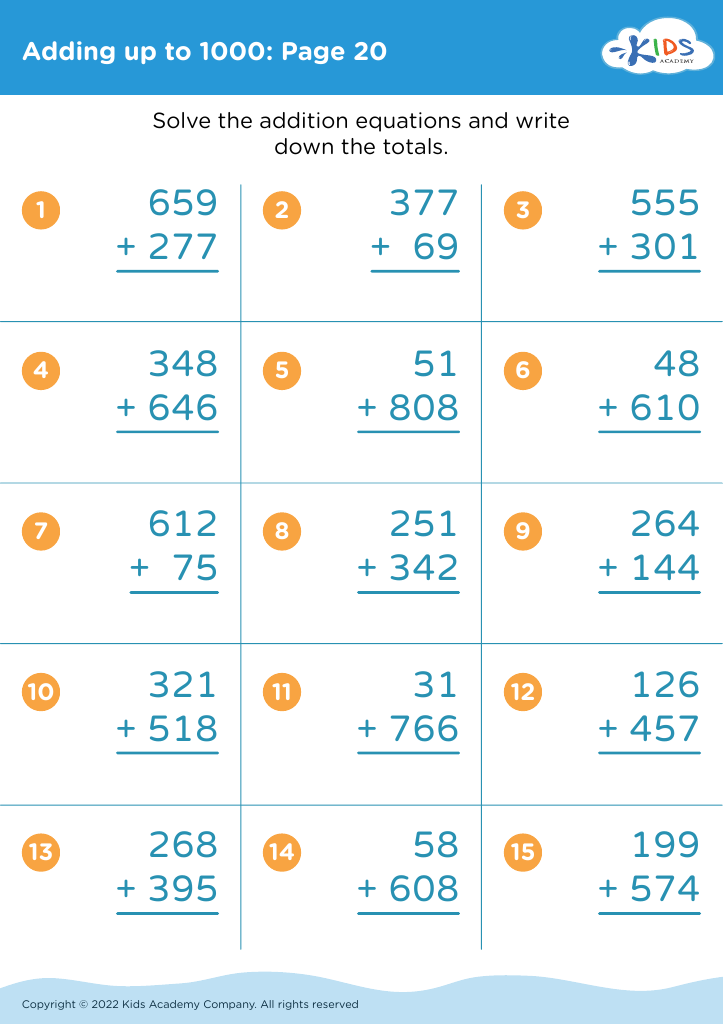
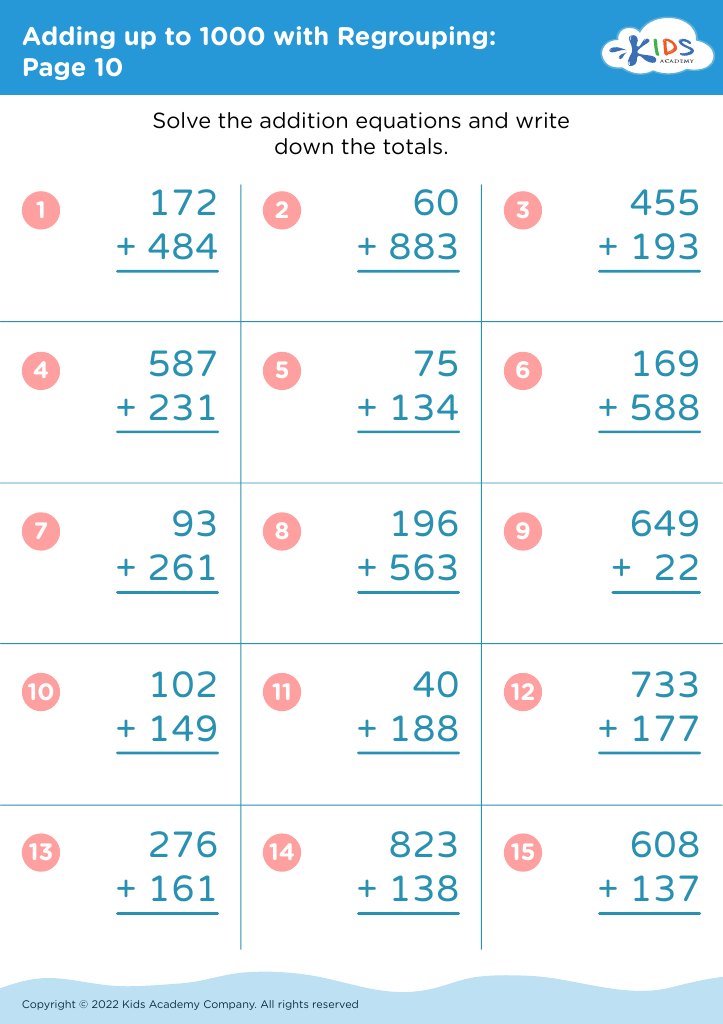
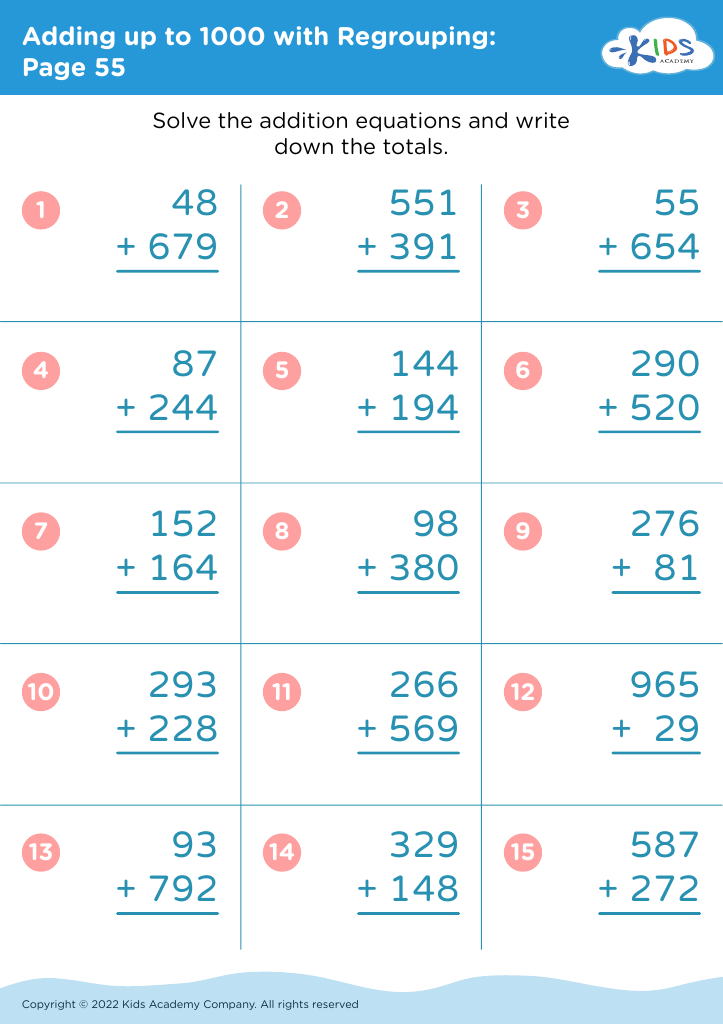
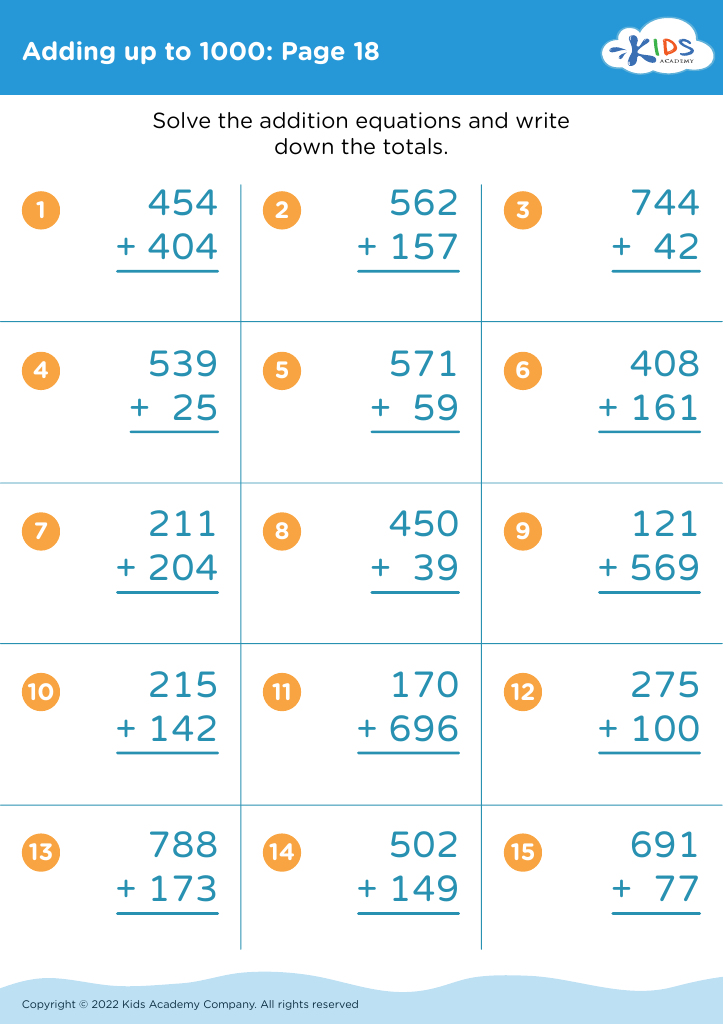



Understanding symmetry and adding up to 1,000 are fundamental concepts with far-reaching benefits for young children aged 3-7. For parents and teachers, fostering these skills early on can lay the groundwork for a child's future academic success and cognitive development.
Symmetry is more than just a concept; it plays a crucial role in a child's spatial awareness and pattern recognition. When children explore symmetry, they're learning to recognize relationships between different parts of an object, enhancing their visual and motor skills. This strengthens their ability to comprehend more complex mathematical ideas later on and promotes critical thinking.
Adding up to 1,000, even in the simplest terms, nurtures a child's numerical proficiency and mental arithmetic skills. This foundational arithmetic paves the way for more complex mathematical operations. By practicing these early on, children build confidence in handling larger numbers, which is essential for future math topics.
Moreover, engaging with these concepts can make learning interactive and fun. Hands-on activities such as symmetry drawing or counting games embed learning in everyday play. Early numeracy skills and an understanding of symmetry are stepping stones for problem-solving and logical reasoning. Ultimately, investing time in these areas during the formative ages between 3-7 can have lasting benefits for children's academic and personal growth.








