Visual interpretation Adding up to 1000 Worksheets for Ages 3-7
3 filtered results
-
From - To
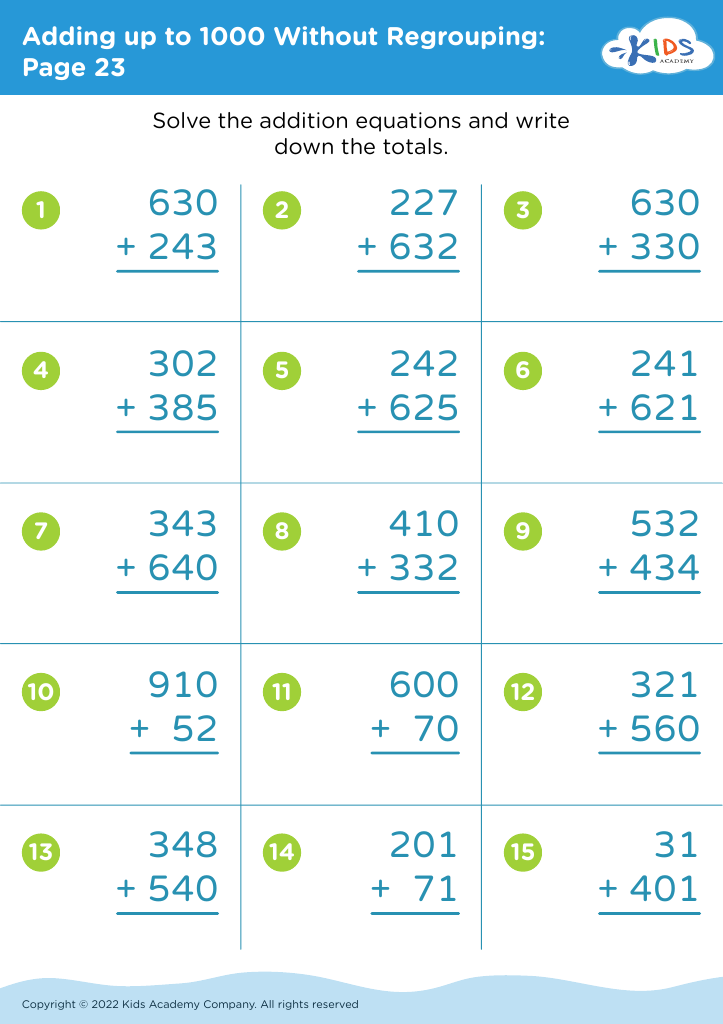
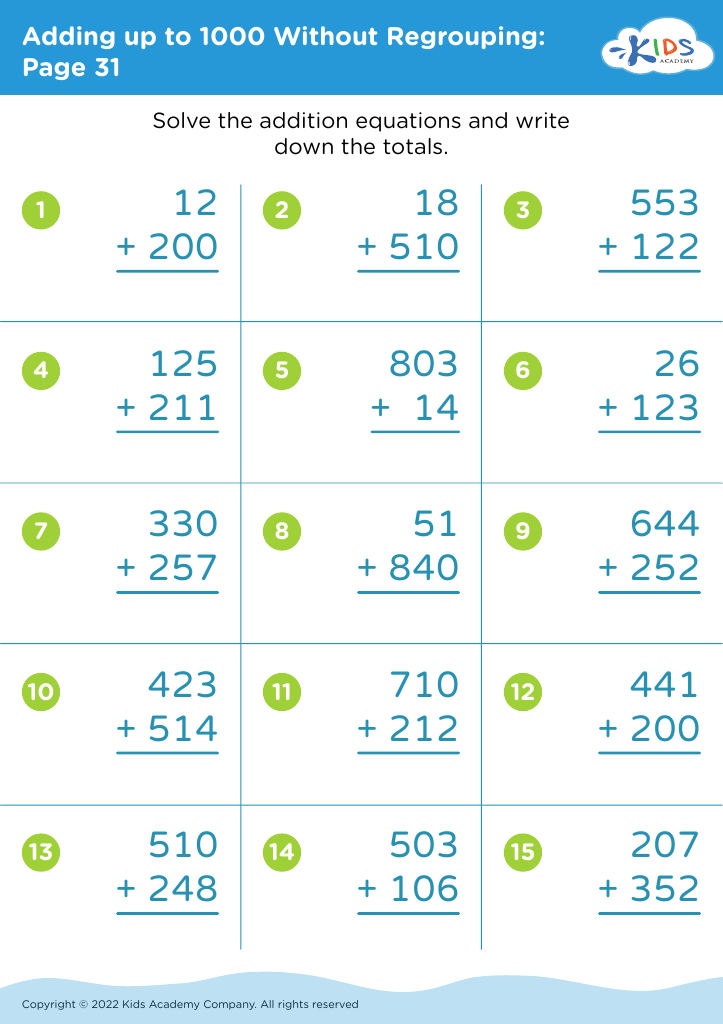
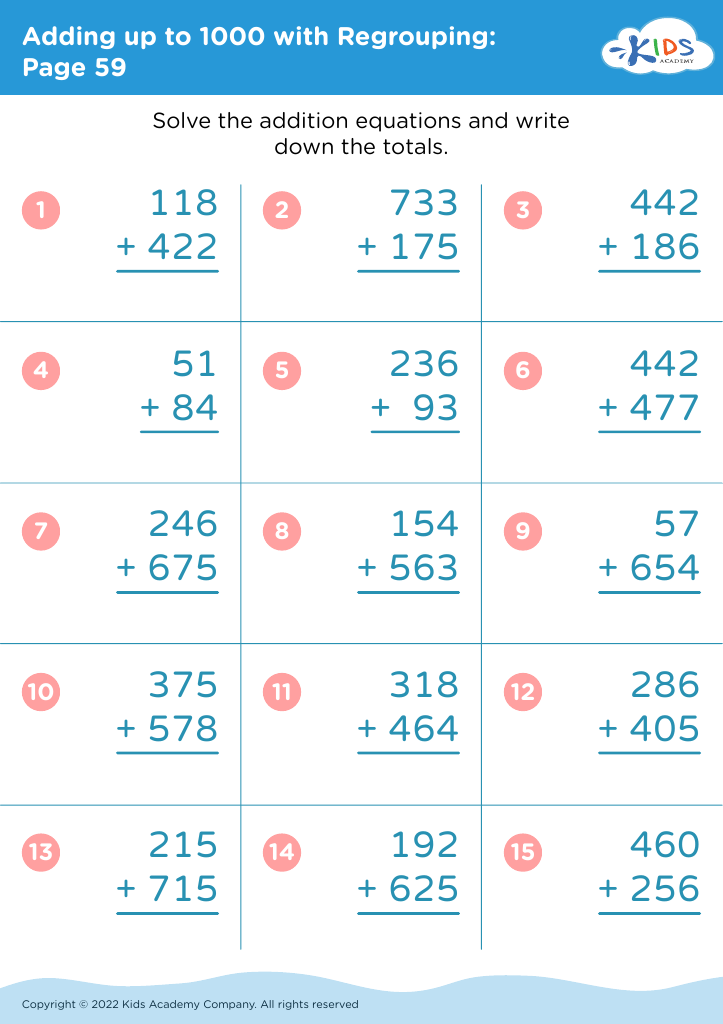
Explore our "Visual Interpretation Adding Up to 1000 Worksheets" designed for young learners aged 3-7! These engaging, printable worksheets support foundational math skills while making learning fun and interactive. Through appealing visuals and relatable contexts, children will build number sense and enhance their ability to visualize mathematical concepts. Our resources reinforce addition skills up to 1000, encouraging exploration and practice to boost confidence in young mathematicians. Perfect for use in the classroom or at home, these worksheets facilitate meaningful learning experiences while developing critical thinking and problem-solving abilities. Dive into our collection today and watch your child thrive in mathematics!



Visual interpretation skills are crucial for young learners aged 3–7, as they lay the foundation for literacy, critical thinking, and overall cognitive development. When children engage with visual materials—such as pictures, charts, and diagrams—they enhance their ability to understand and analyze information. This skill promotes deeper comprehension of stories, aids in recognizing patterns, and strengthens memory retention.
For parents and teachers, fostering visual interpretation skills opens pathways for meaningful discussions and learning experiences. As children learn to decode visual cues, they become adept at relating them to context and information. This fosters their verbal skills, as they can articulate their observations and thoughts more effectively.
Moreover, visual interpretation plays a vital role in problem-solving. Children learn to assess visual information and make informed decisions, which helps them in navigating both academic challenges and daily life situations. In a world increasingly driven by images, strengthening these skills prepares children to navigate visual media critically and thoughtfully as they grow.
Ultimately, parents and teachers should prioritize visual interpretation activities—such as storytelling with pictures, interactive games, and hands-on projects—to cultivate a richer learning environment essential for their child’s holistic development. Thus, investing time in these activities benefits children immensely in their early educational journey.








