Word Recognition Adding up to 1000 Worksheets for Ages 3-7
3 filtered results
-
From - To
Unlock your child's potential with our "Word Recognition Adding up to 1000 Worksheets" designed for ages 3-7. These engaging math and literacy activities combine the fun of word recognition with the challenge of addition, helping young learners strengthen both skills simultaneously. Ideal for both classroom and home use, our worksheets offer colorful and interactive problems that captivate children while reinforcing key concepts. Perfect for early learners eager to master foundational math and improve their reading proficiency, these worksheets ensure a well-rounded educational experience that will set the stage for future academic success. Dive in and watch your child's skills soar!
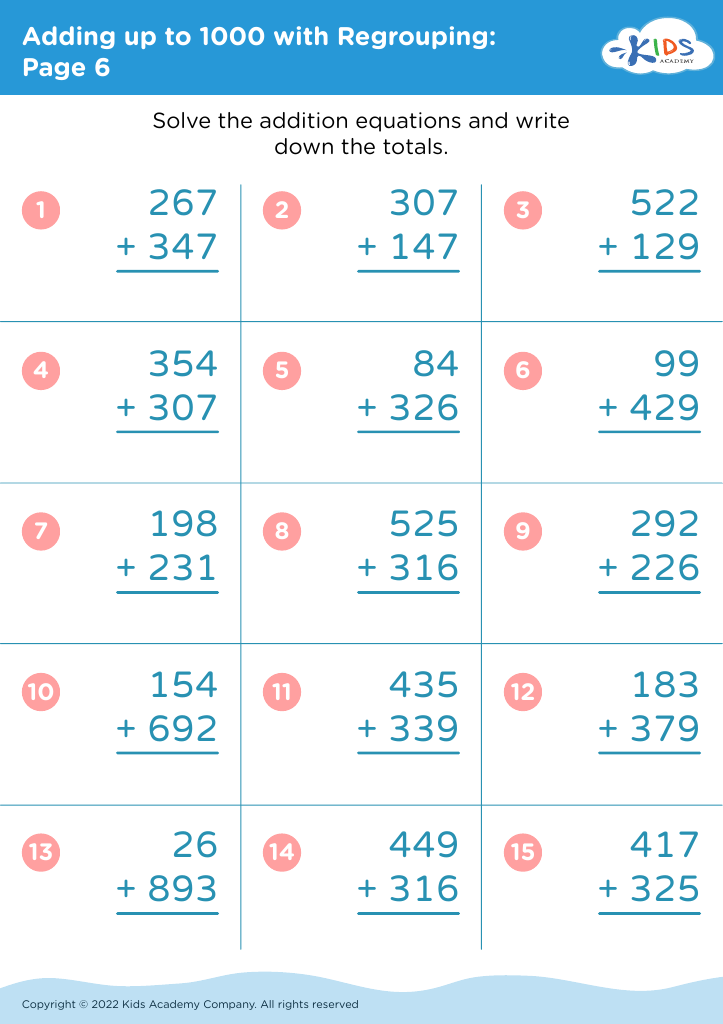
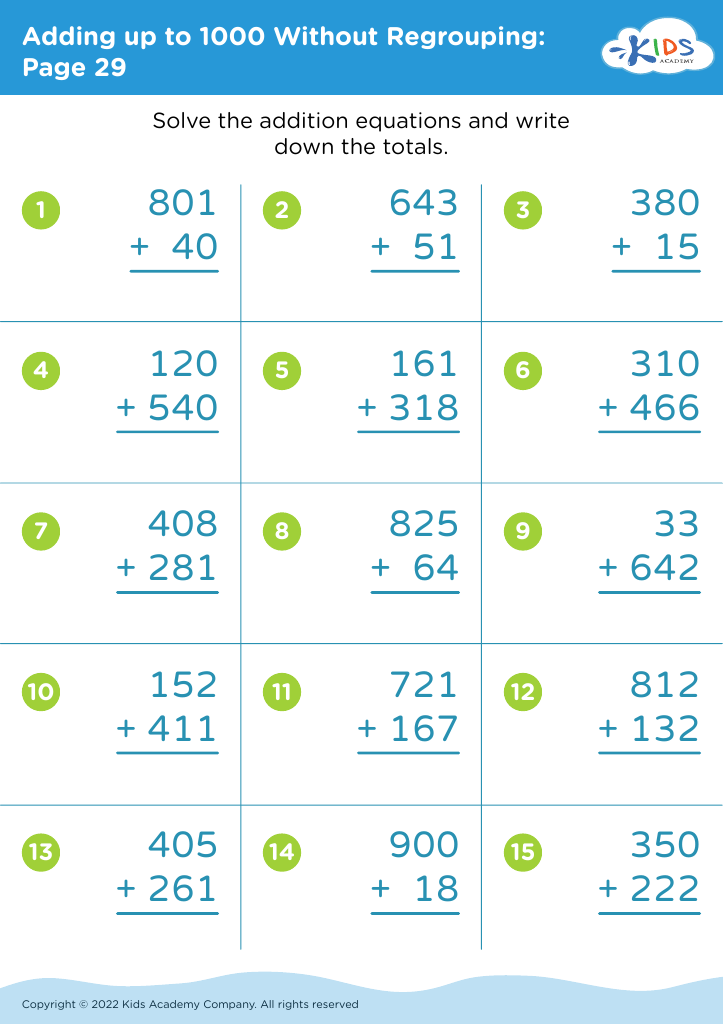
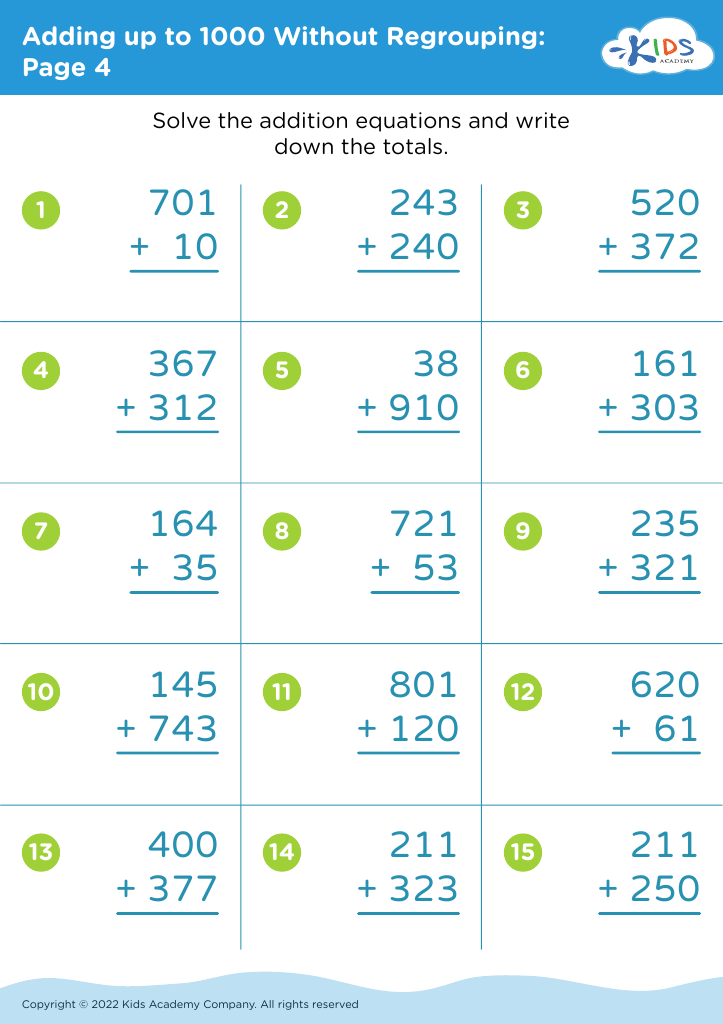



Word recognition is a foundational skill crucial for early literacy development in young children aged 3-7. This ability enables kids to identify, understand, and recall words efficiently, forming a necessary bridge to reading fluency. For parents and teachers, fostering word recognition with numbers involved — such as counting or adding up to 1,000 — offers a dual benefit. It goes beyond simple reading skills by incorporating basic math concepts, bolstering cognitive development.
When young learners engage with numbers and words simultaneously, they build strong neural pathways in their brains that support multifaceted learning. For instance, comprehending numeric words like one, ten, or hundred aids in their mathematical understanding while also enhancing their linguistic abilities. These early experiences set a solid groundwork for more advanced topics in later grades, including mathematics, science, and critical thinking.
Furthermore, promoting word recognition through numeric contexts encourages a love for learning by making it interactive and relatable. It creates an engaging environment where kids can see the practical application of what they learn, reinforcing their motivation and confidence.
To summarize, prioritizing word recognition and simple numeric concepts for young children is integral in developing well-rounded, skilled, and enthusiastic learners. This practice equips them with essential tools for academic success and fosters lifelong curiosity and competence in both literacy and numeracy.








