Addition up to 5 Adding Up to 5 Worksheets for Ages 3-7
4 filtered results
-
From - To
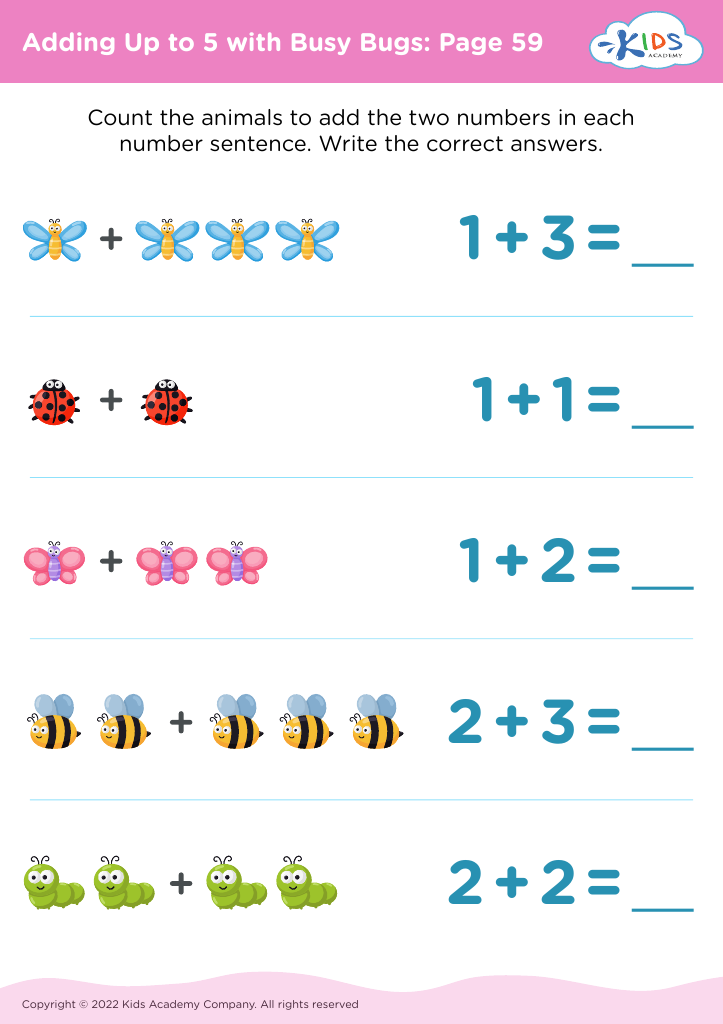
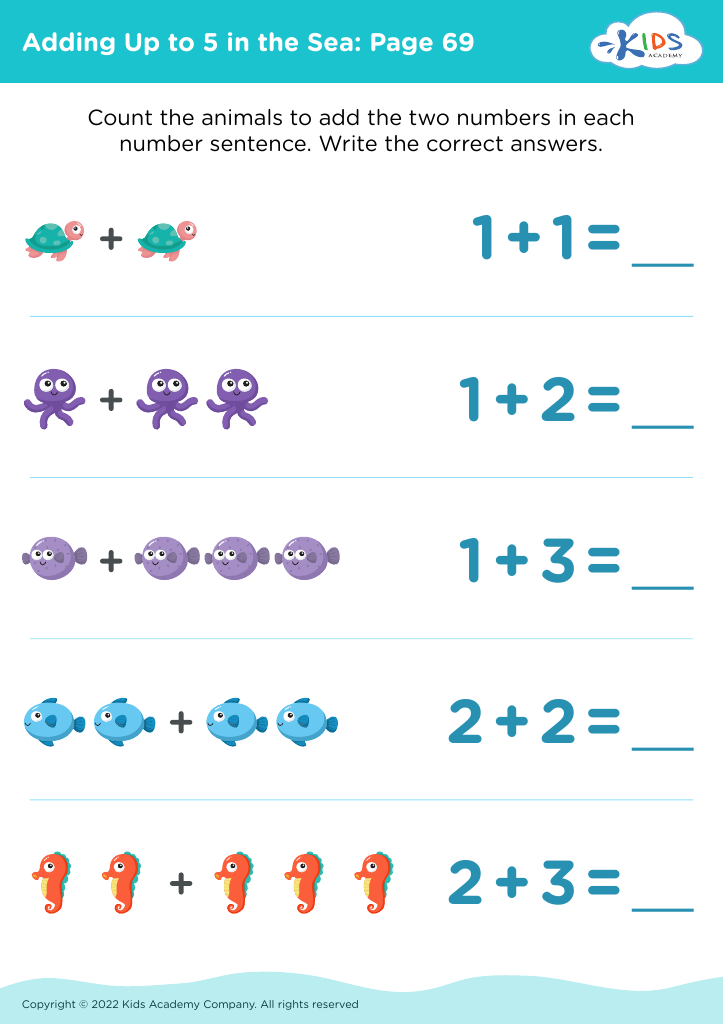
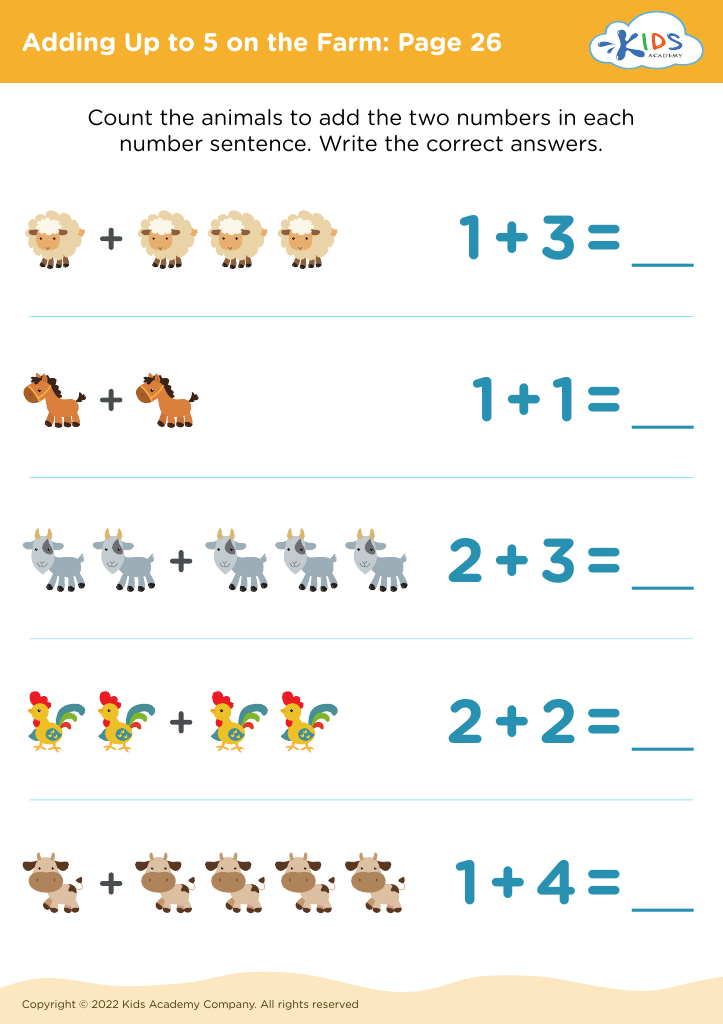
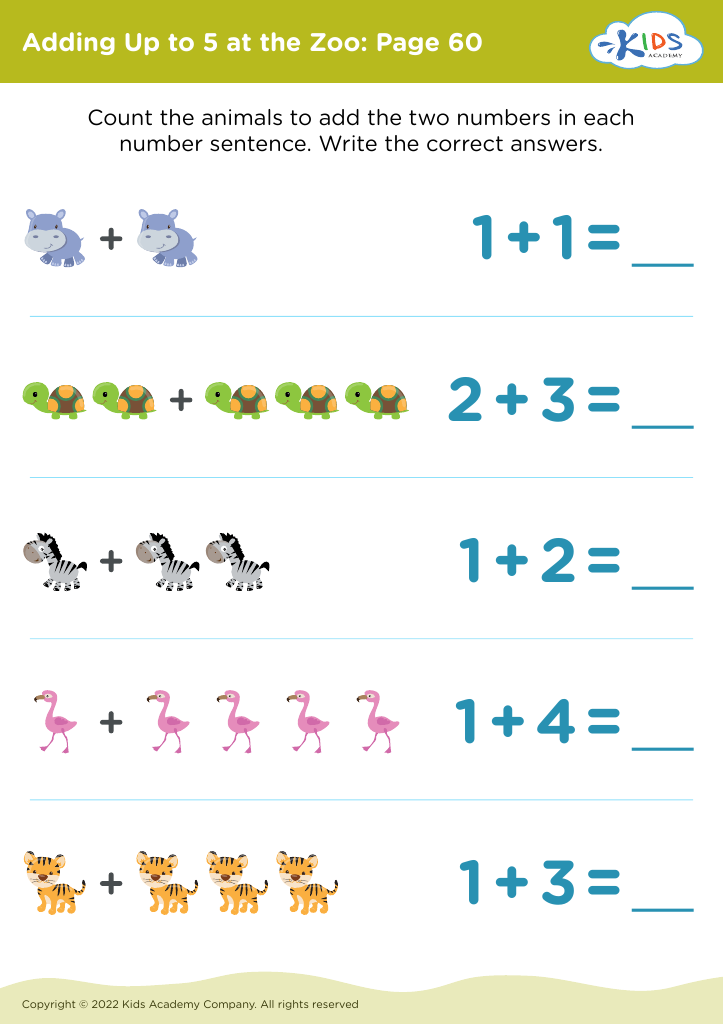
Welcome to our "Addition Up to 5 Worksheets" page, designed specifically for children aged 3-7! These engaging worksheets are perfect for introducing young learners to the basics of addition, helping them gain confidence in their early math skills. Each worksheet features fun illustrations and interactive problems that encourage children to practice adding numbers up to 5. As they work through simple equations and visual aids, kids will develop fundamental math concepts while building their problem-solving abilities. Perfect for use at home or in the classroom, our addition worksheets offer a delightful way for children to learn and enjoy math!





%20(1).jpg)


Understanding addition up to 5 is a foundational skill crucial for young children's cognitive development and future math success. For children aged 3-7, mastering this concept lays the groundwork for more complex mathematical operations. At this early stage, children are developing their number sense—the ability to understand and manipulate numbers. Addition exercises help them grasp the idea of quantities, as well as the principles of grouping and combining.
Parents and teachers should prioritize this skill because it builds confidence and prepares children for everyday problem-solving scenarios. Engaging in fun, interactive addition activities encourages a love for math and enhances critical thinking. Furthermore, these exercises can be integrated into daily routines, making learning seamless and enjoyable.
Additionally, understanding basic addition fosters social skills when children work with peers or adults, reinforcing important communication abilities. It also serves as a stepping stone for other academic areas, such as reading comprehension and logical reasoning.
Investing time in teaching addition up to 5 not only equips children with essential knowledge for their educational journey but also helps them cultivate a positive attitude toward learning. Ultimately, these early experiences will benefit them throughout their schooling and in life.








