Basic arithmetic practice Adding Up to 5 Worksheets for Ages 3-7
8 filtered results
-
From - To
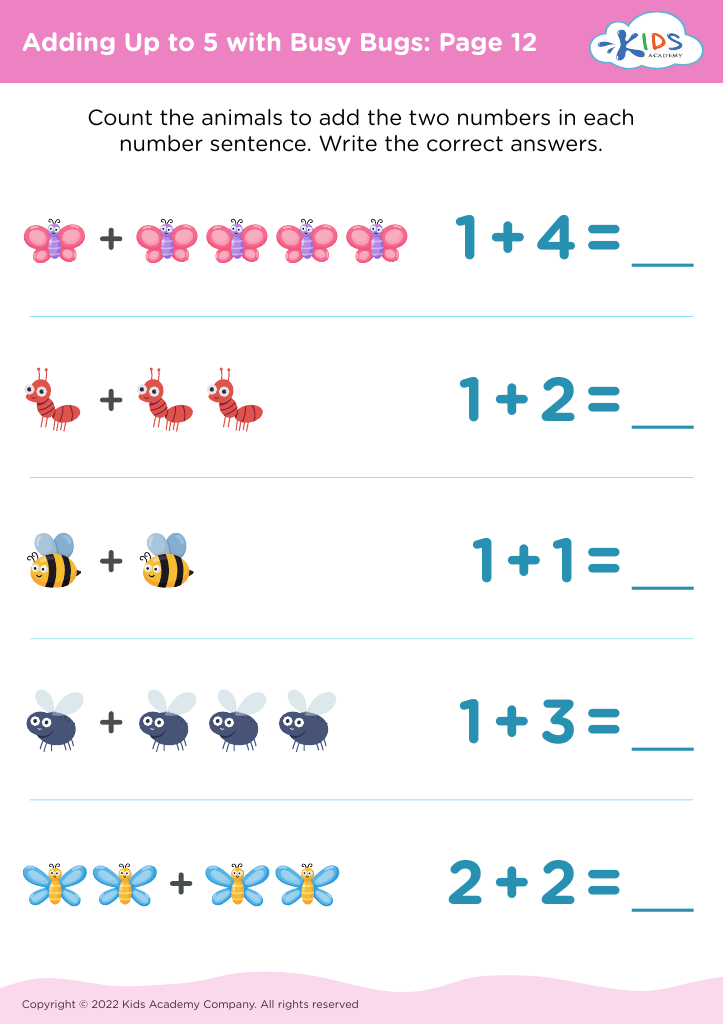
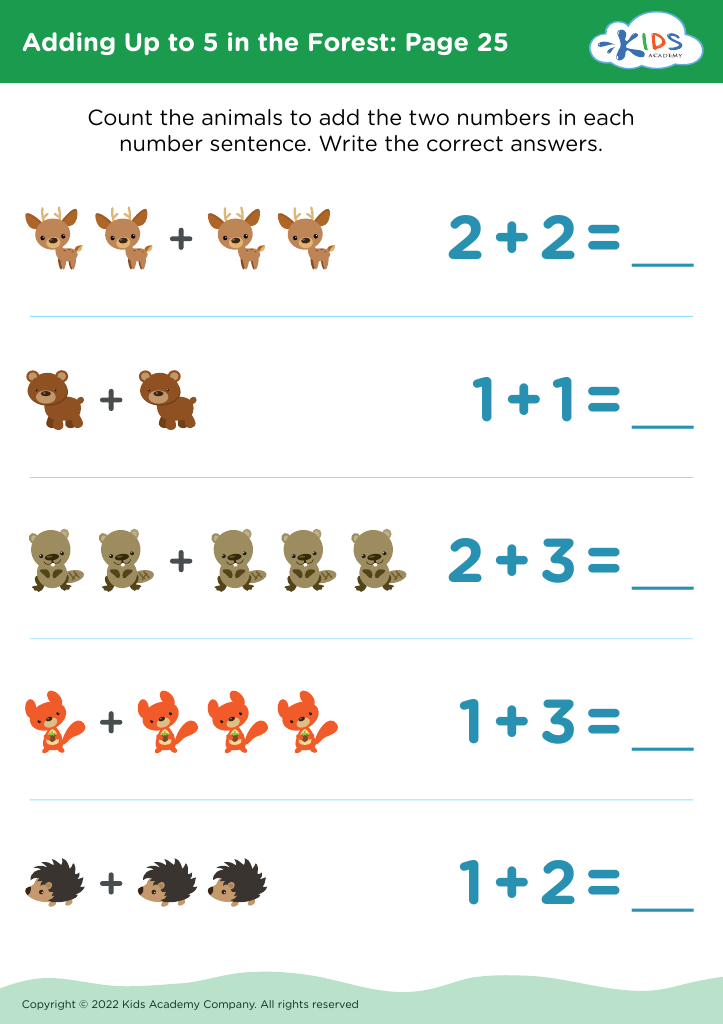
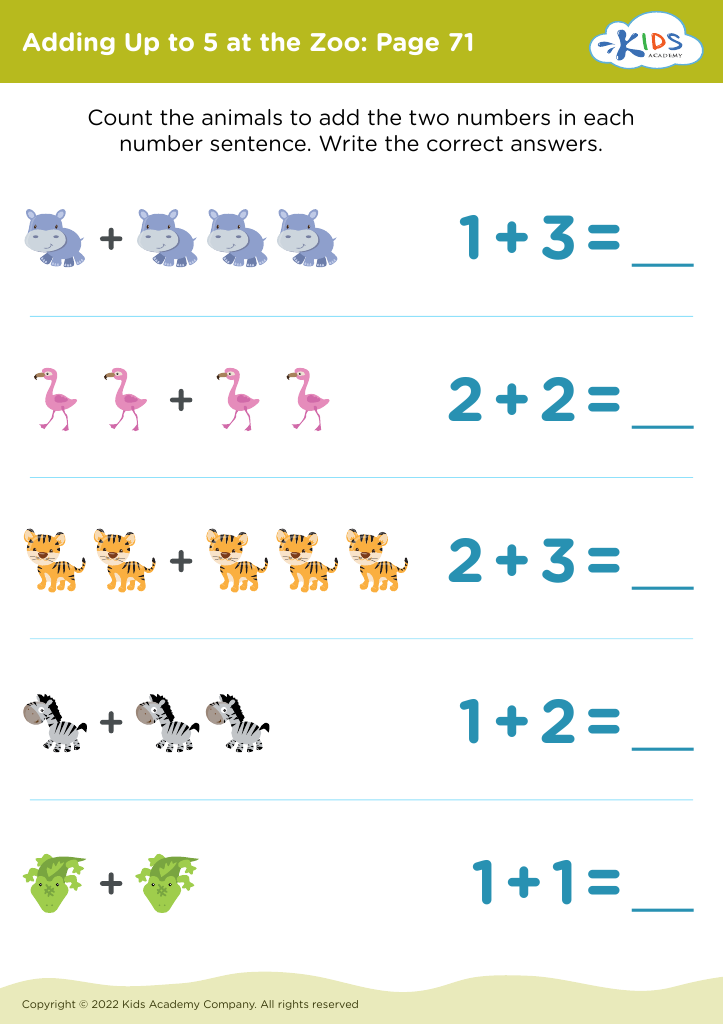
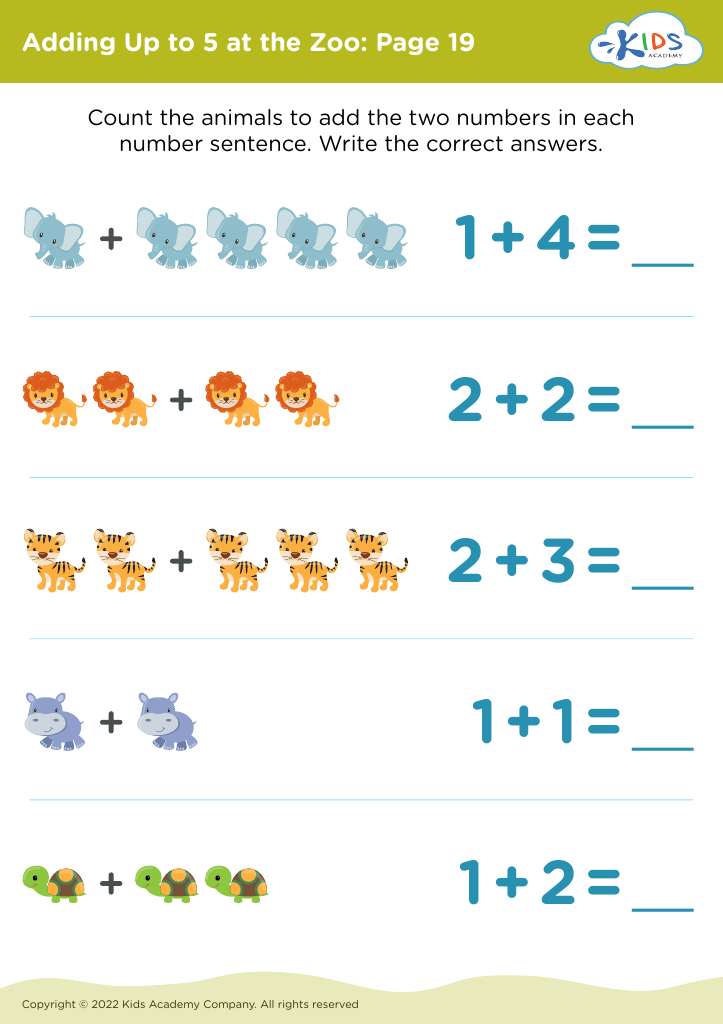
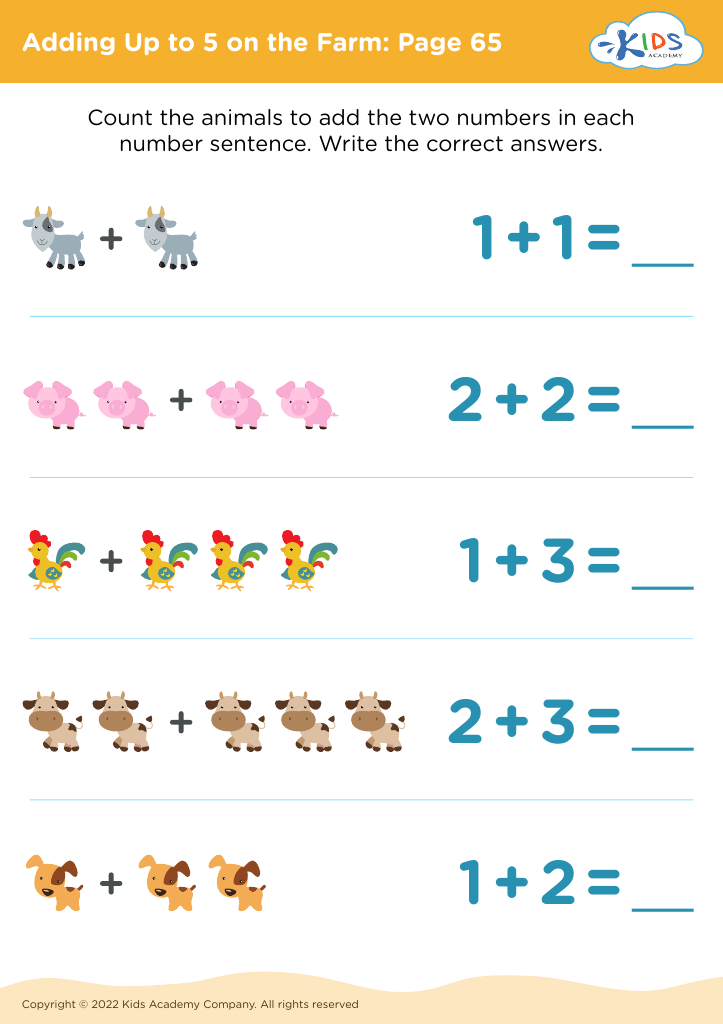
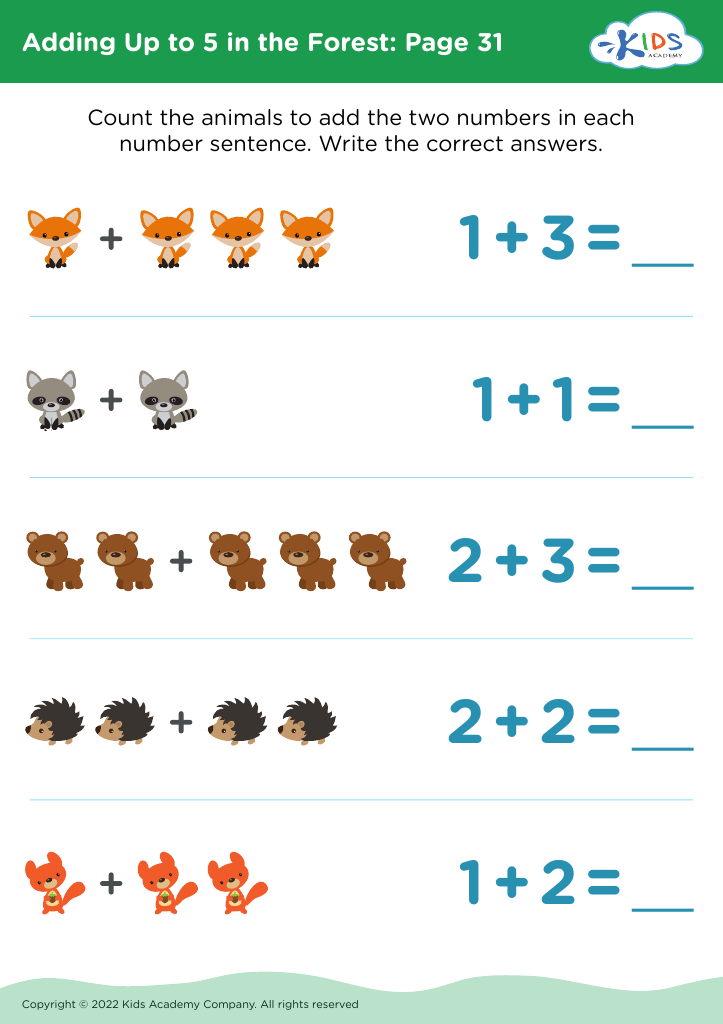
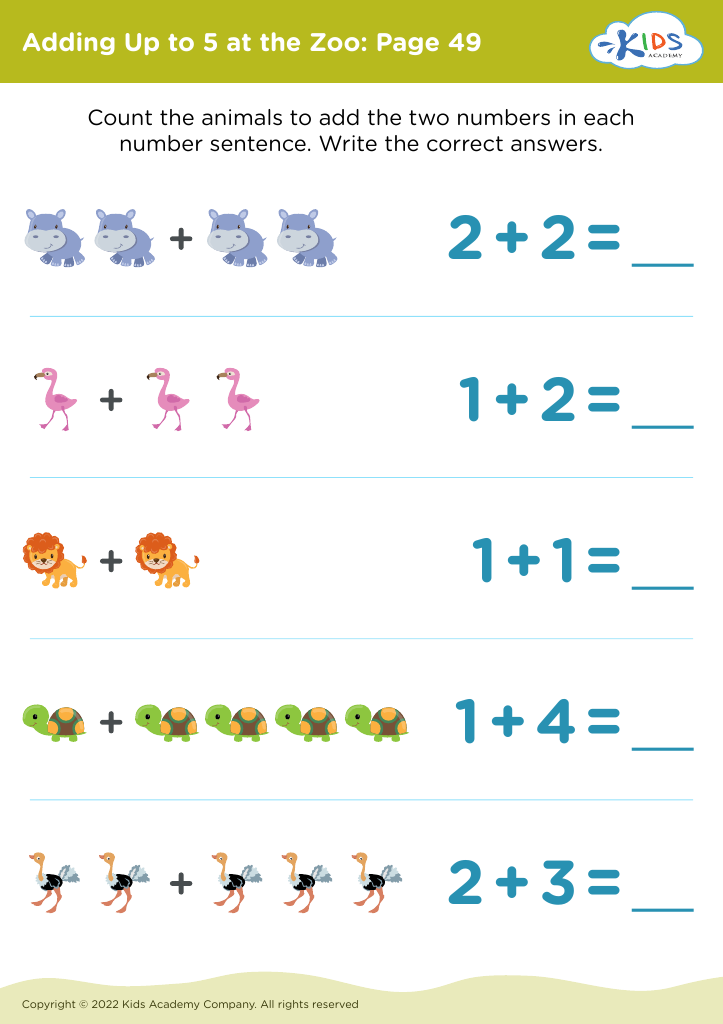
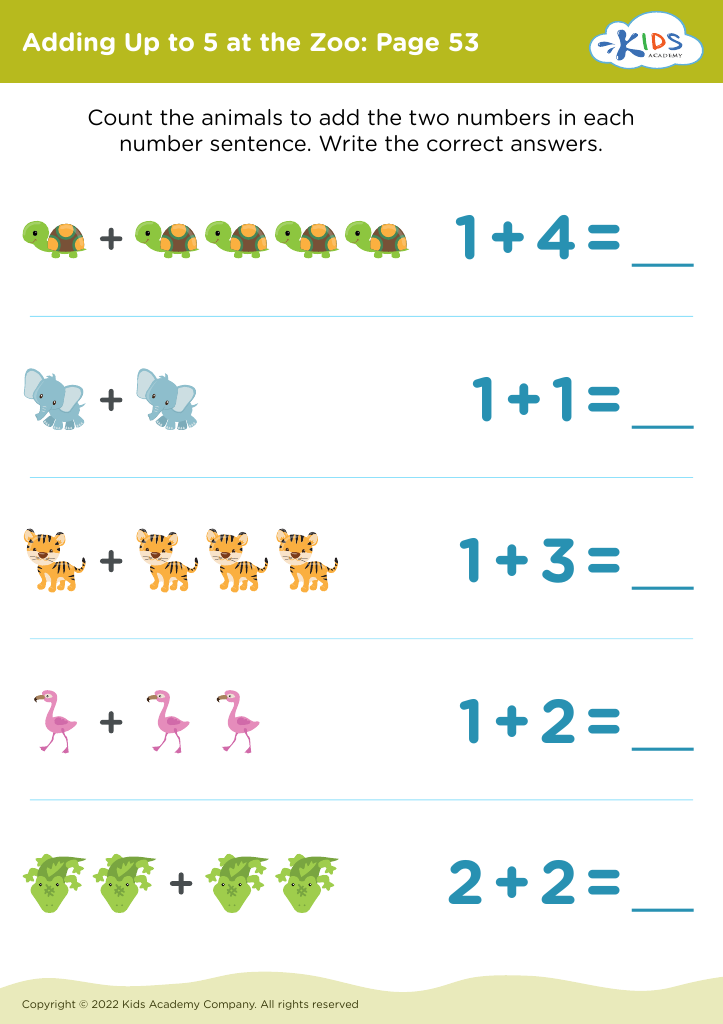
Introducing our "Basic Arithmetic Practice: Adding Up to 5" worksheets, designed specifically for young learners aged 3-7! These engaging and interactive worksheets help your child develop foundational math skills through fun activities that make learning enjoyable. With a focus on addition concepts, our worksheets provide ample practice opportunities, enabling children to confidently master adding numbers up to 5. Perfect for preschool and early elementary children, these resources foster essential problem-solving skills and build a strong numerical foundation. Download our worksheets today and watch your child thrive in their arithmetic journey, making math an exciting part of their early education!



.jpg)

%20(1).jpg)


Basic arithmetic practice, particularly adding up to 5, is essential for children aged 3-7, as it lays the foundation for their future mathematical understanding and problem-solving skills. Mastering simple addition enhances cognitive development, helping children recognize patterns and logical relationships, which are critical for their overall academic growth.
When parents and teachers focus on this early stage of arithmetic, they foster confidence and a positive attitude towards math. Engaging children in activities that involve counting and adding objects, such as toys or snacks, makes learning interactive and enjoyable. This hands-on experience not only solidifies their comprehension but also helps them connect math to real-life situations.
Additionally, basic addition strengthens fine motor skills and language development, as children practice articulating their thought processes during problem-solving. Moreover, early math skills have been linked to later academic success, impacting students’ performance in subjects beyond mathematics.
By instilling these foundational skills early, parents and teachers empower children with the tools necessary for lifelong learning. Ultimately, prioritizing practice in adding up to 5 cultivates a strong mathematical mindset, ensuring children are well-prepared for more complex concepts as they progress in their education.








