Cognitive Development Adding Up to 5 Worksheets for Ages 3-7 - Page 4
95 filtered results
-
From - To


.jpg)



%20(1).jpg)

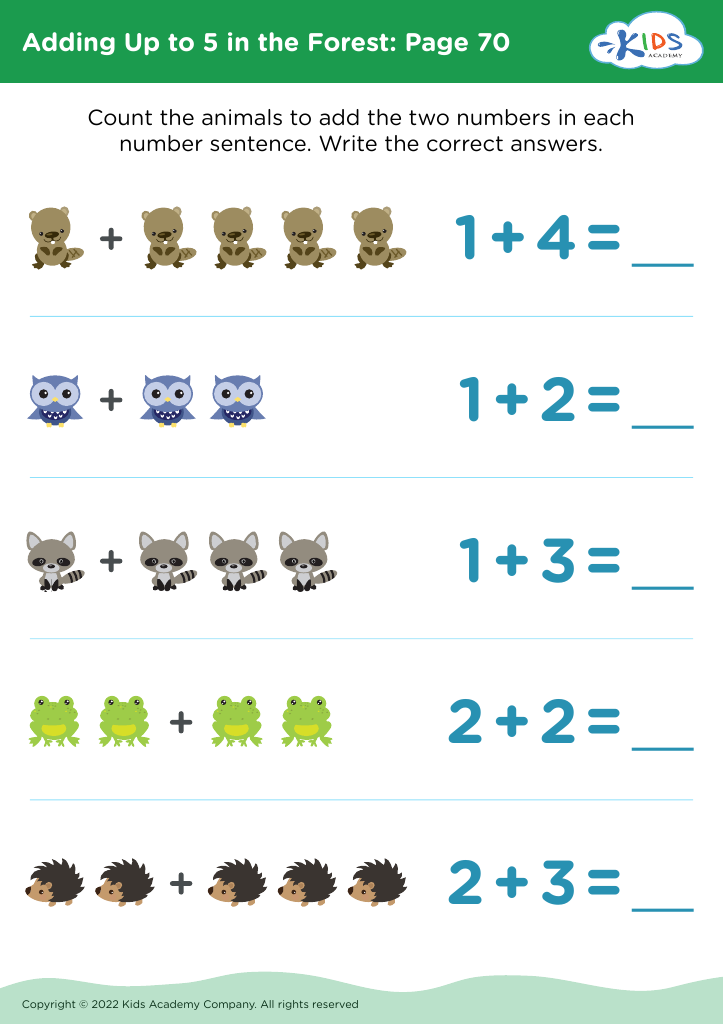
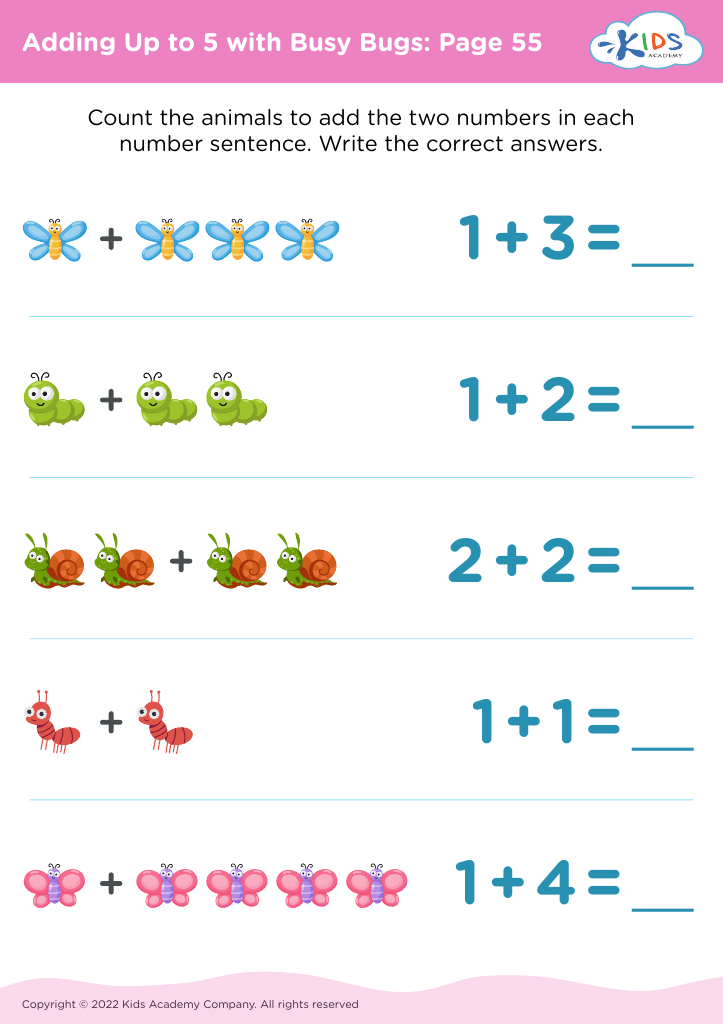
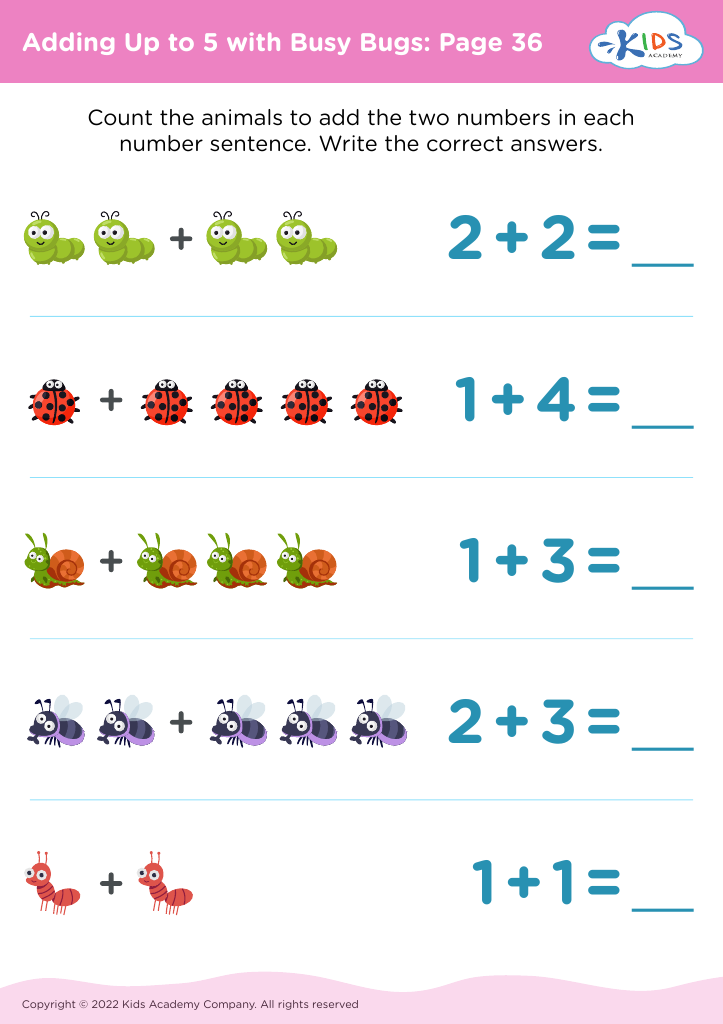
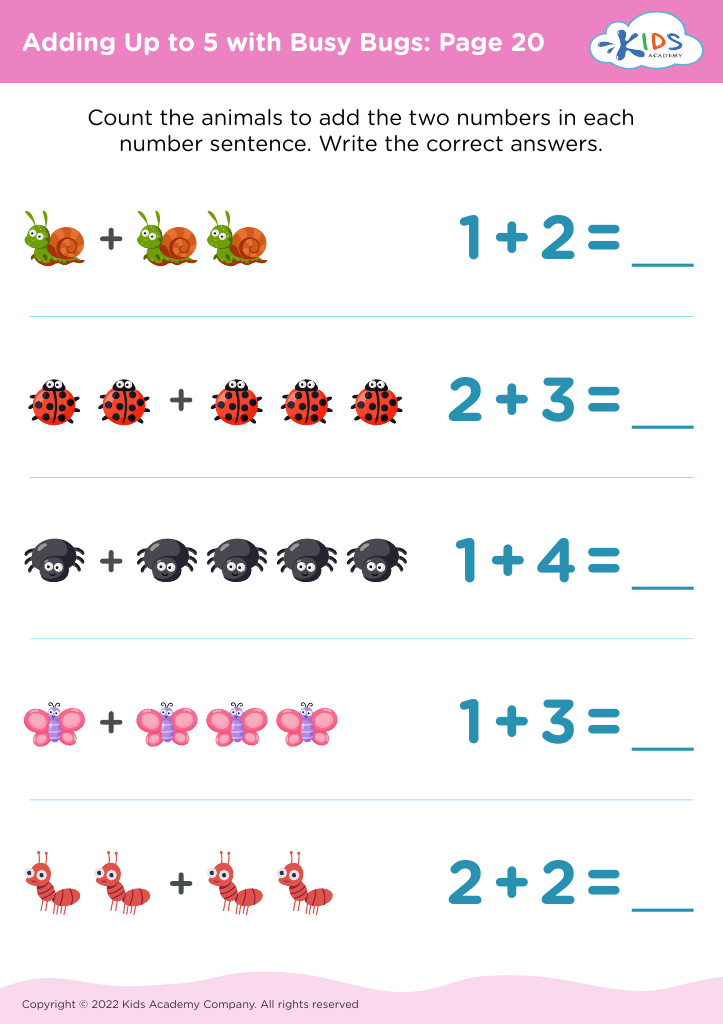
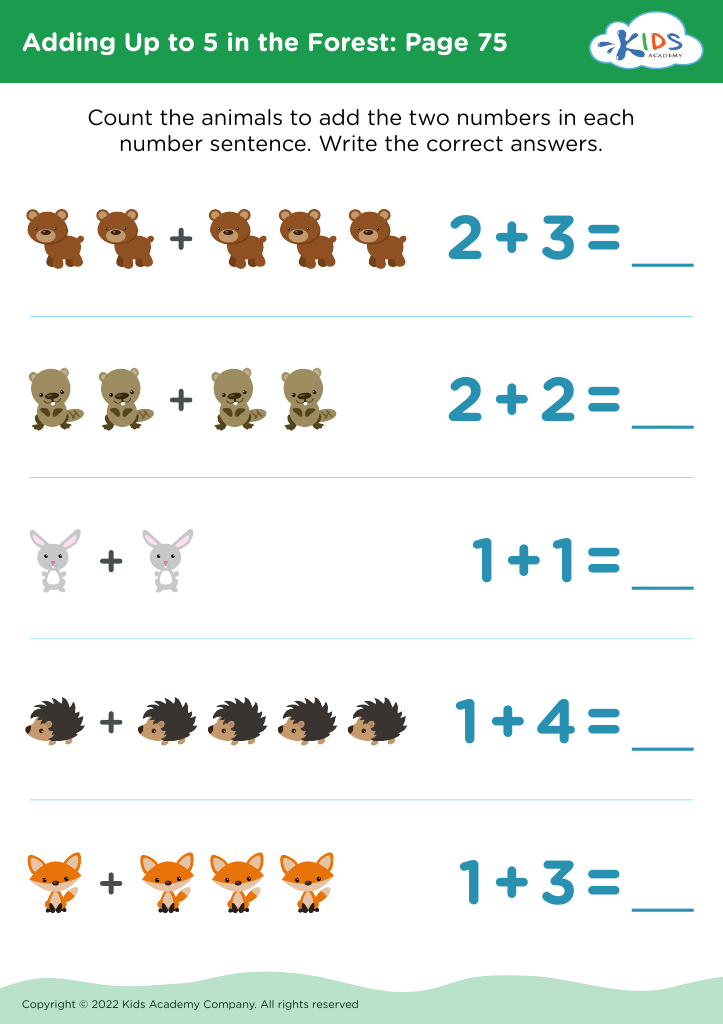
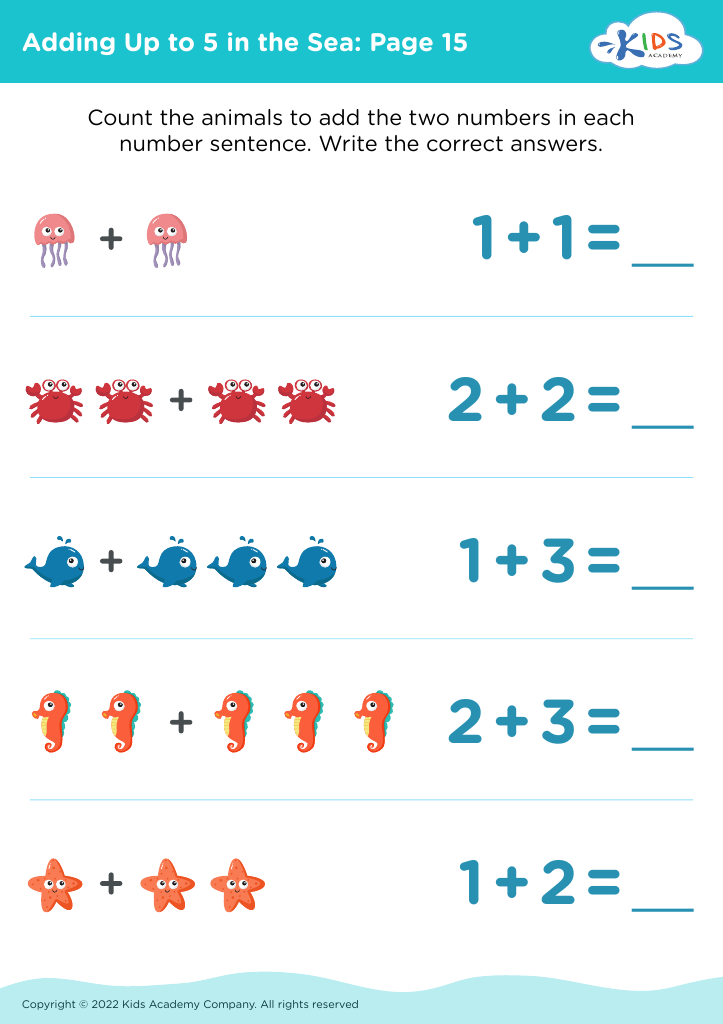
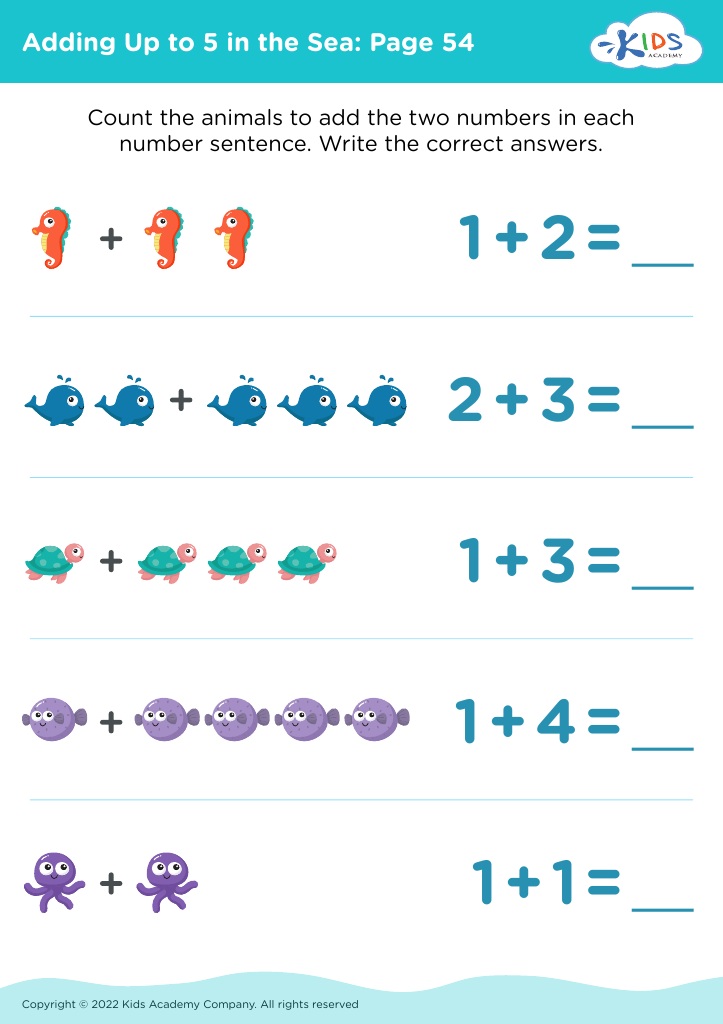
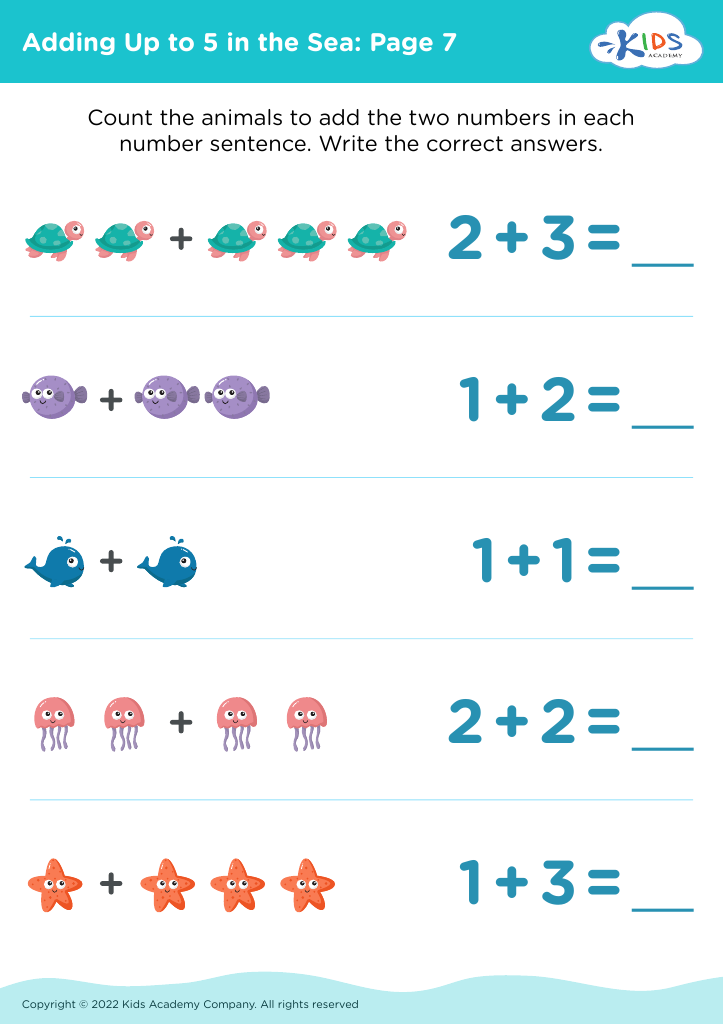
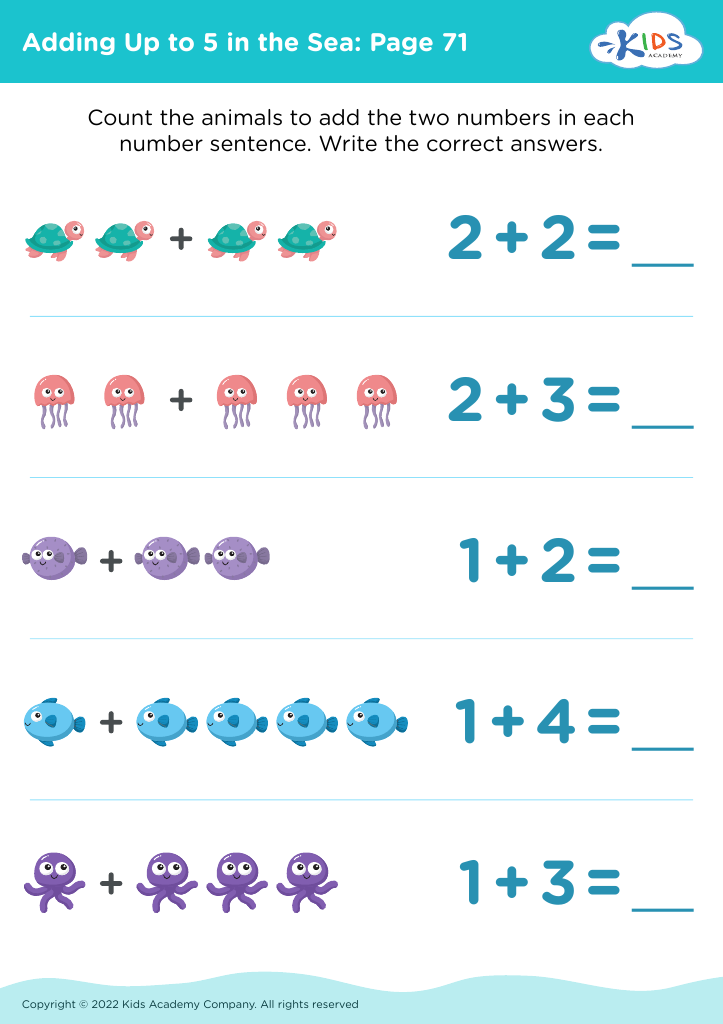
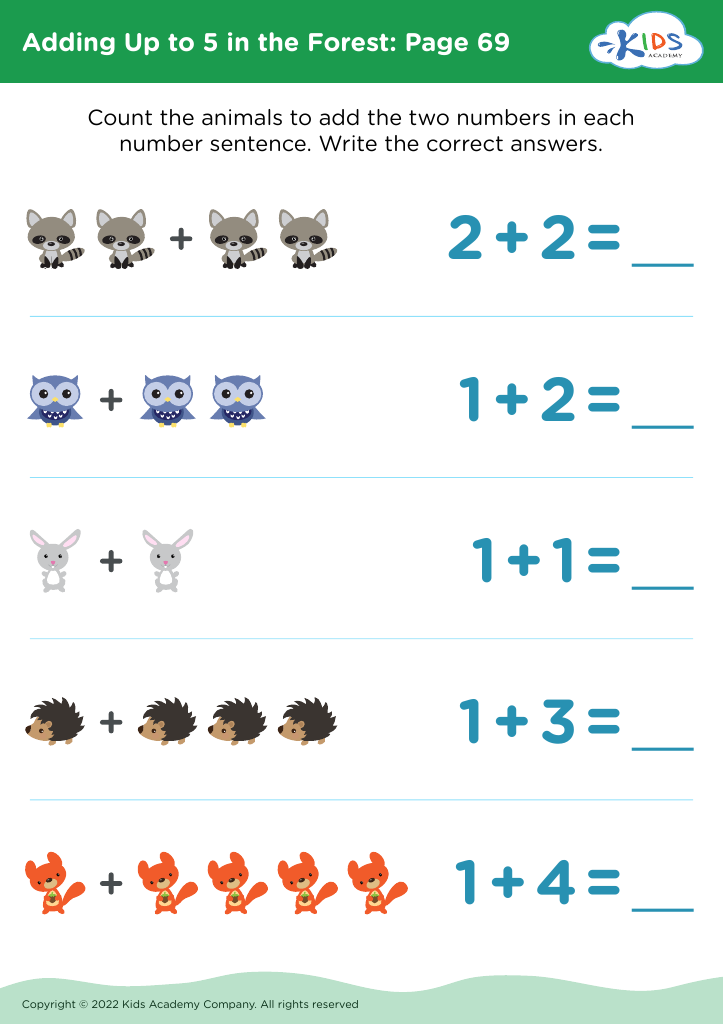
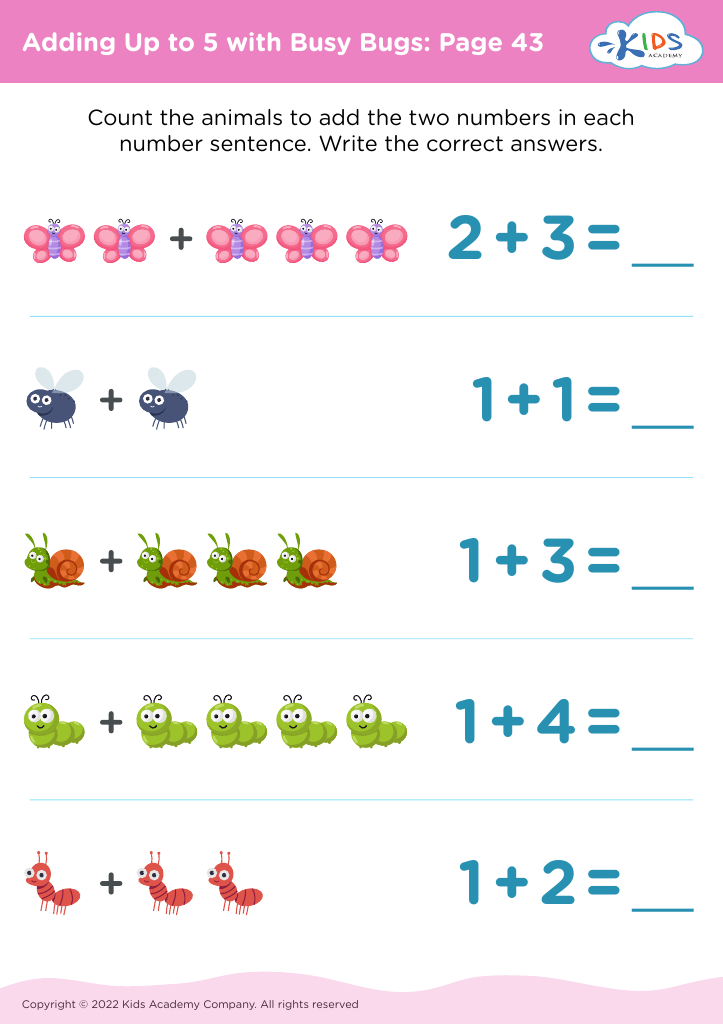
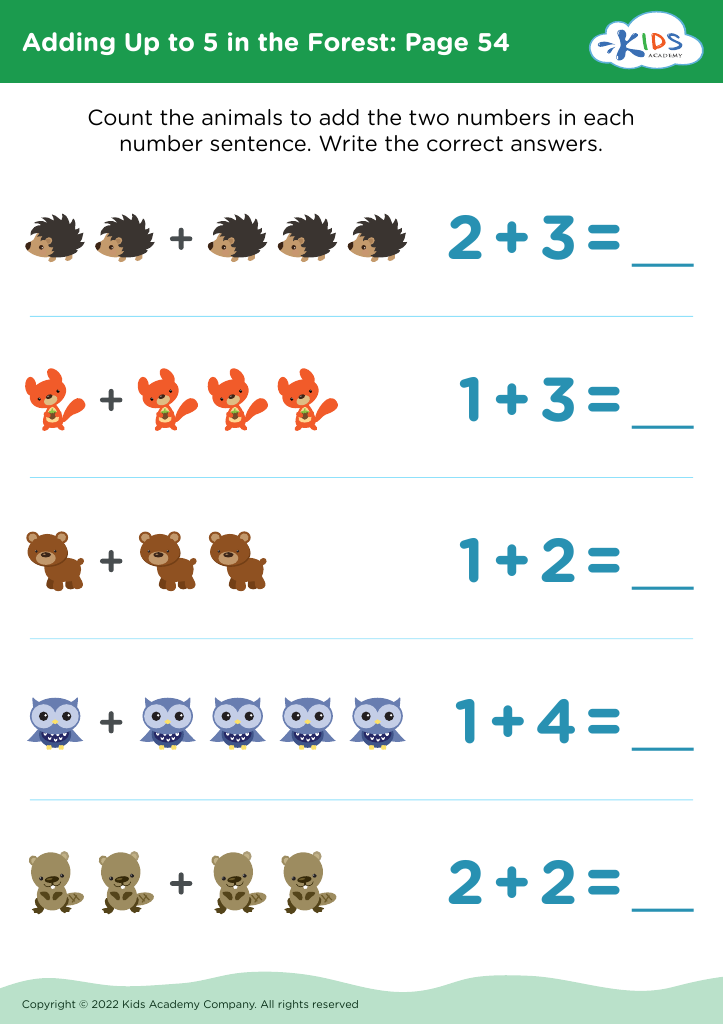
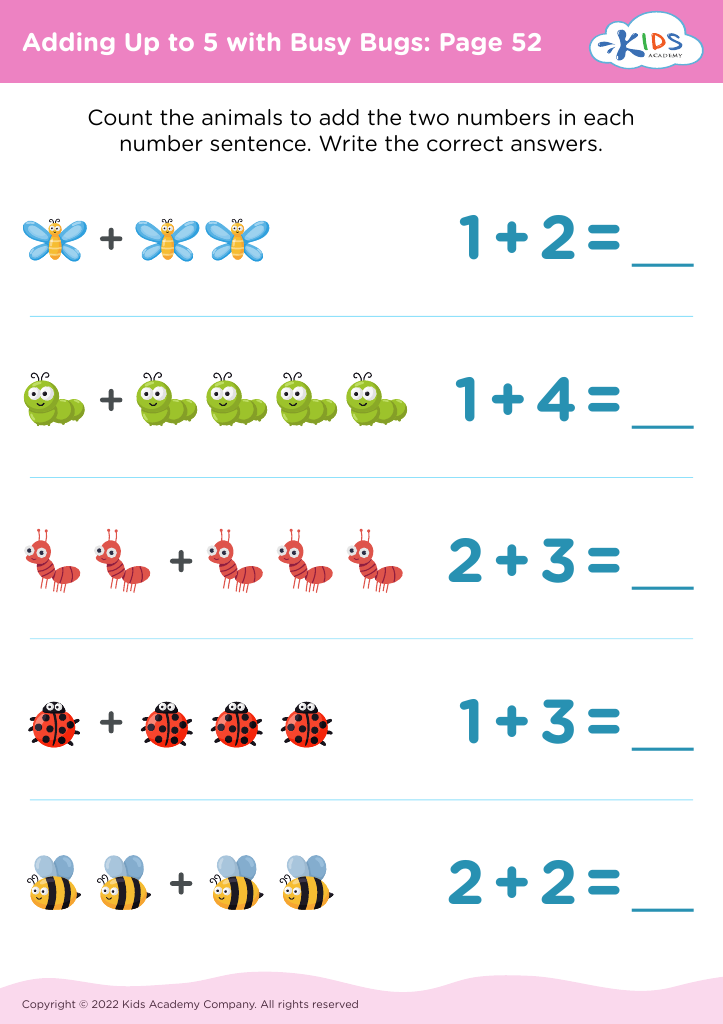
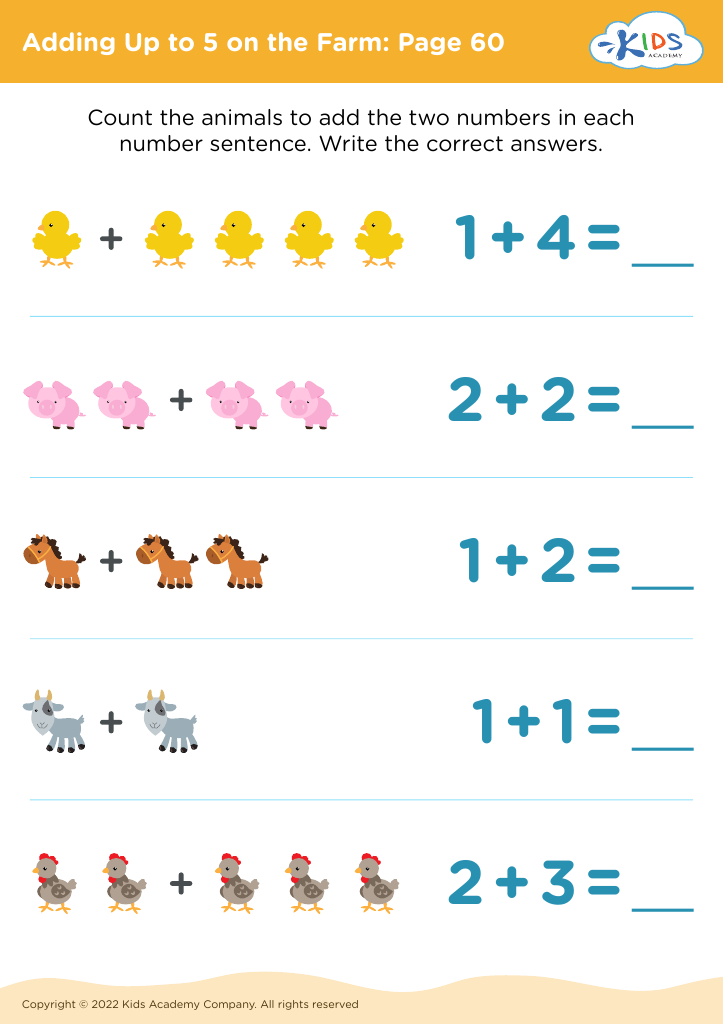
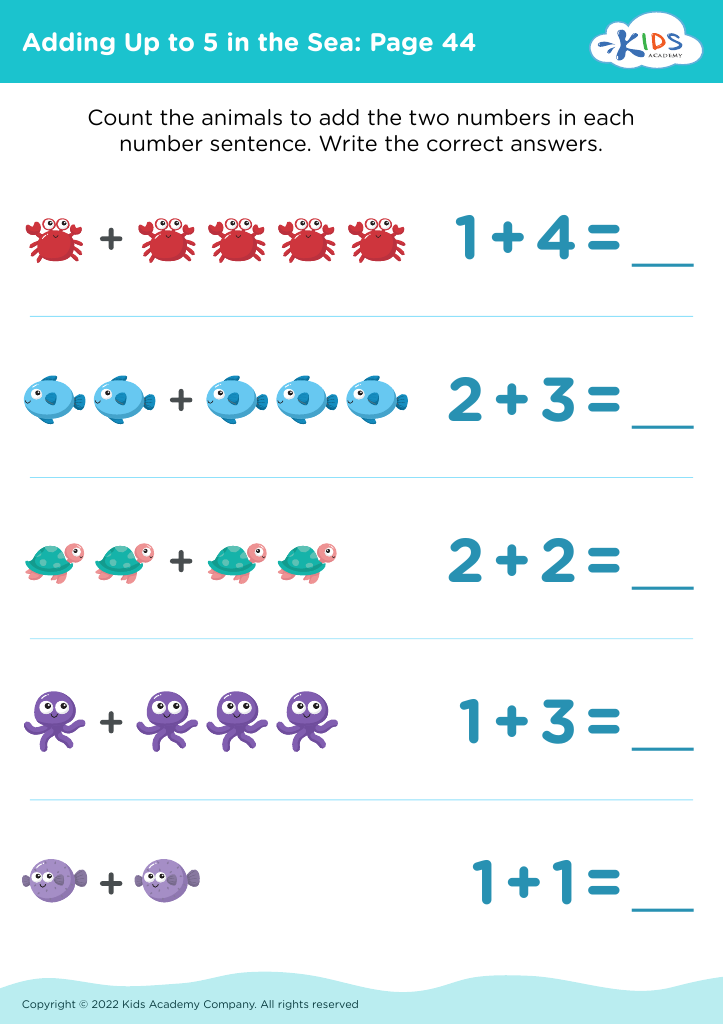
Cognitive development, especially in early childhood, is crucial as it lays the foundation for a child's future learning and problem-solving abilities. For children aged 3-7, developing comprehension of numbers and early math concepts—like adding up to 5—supports critical thinking skills and enhances mathematical understanding.
By focusing on this aspect of cognitive development, parents and teachers play a pivotal role in preparing children for more complex mathematical concepts encountered later in their education. When children grasp the idea of addition within this limited range, they learn not only basic arithmetic but also how to apply logical reasoning to real-world situations, fostering an understanding of quantities and relationships.
Additionally, practicing addition in playful ways can increase enthusiasm for learning math, transforming it from a daunting subject into an engaging one. This can build confidence in their abilities, reducing math anxiety that often begins in early schooling.
Furthermore, emphasizing cognitive development can enhance memory, attention, and social skills through collaborative play and learning activities. Overall, a strong basis in basic number concepts helps children thrive academically and socially as they progress through their academic journey, making it essential for parents and teachers to prioritize these early cognitive milestones.








