Enhances concentration Adding Up to 5 Worksheets for Ages 3-7
4 filtered results
-
From - To
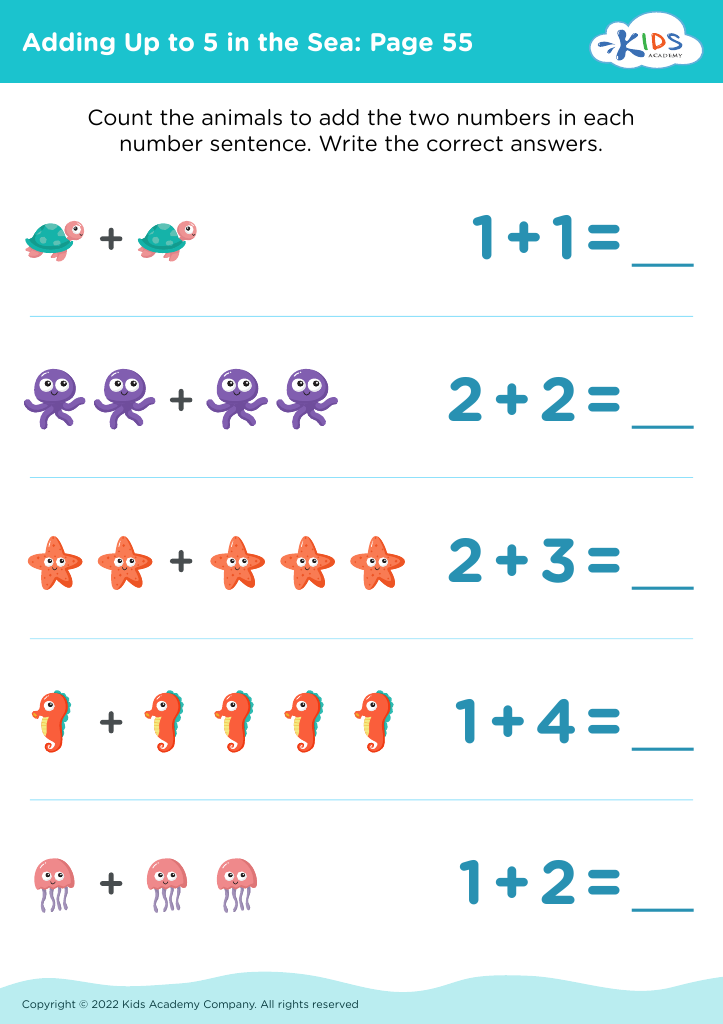
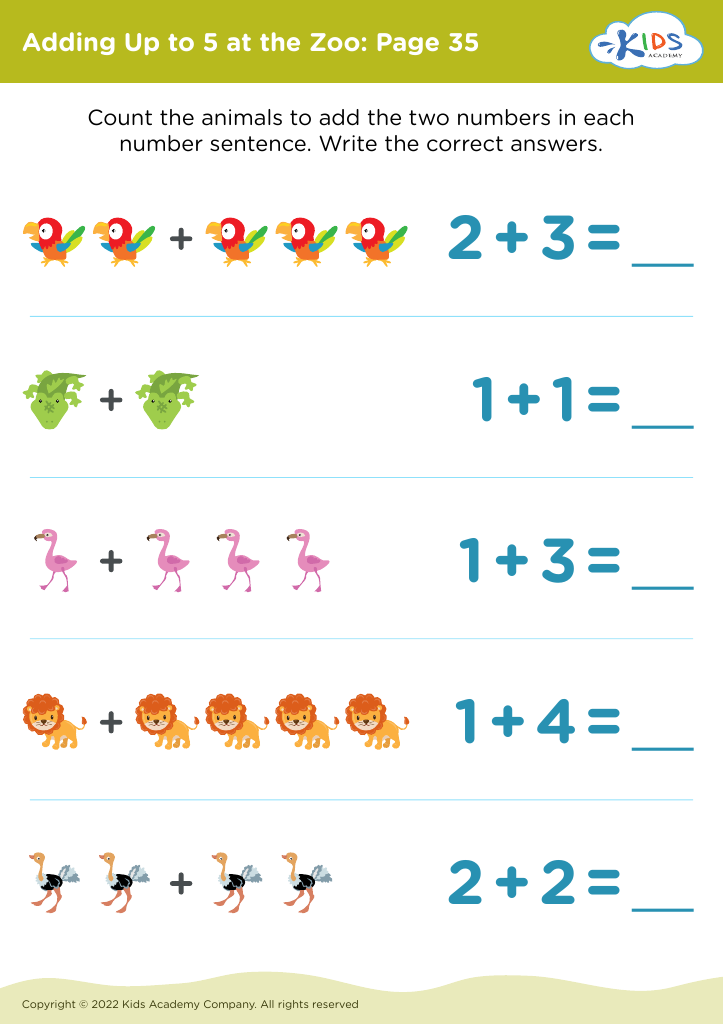
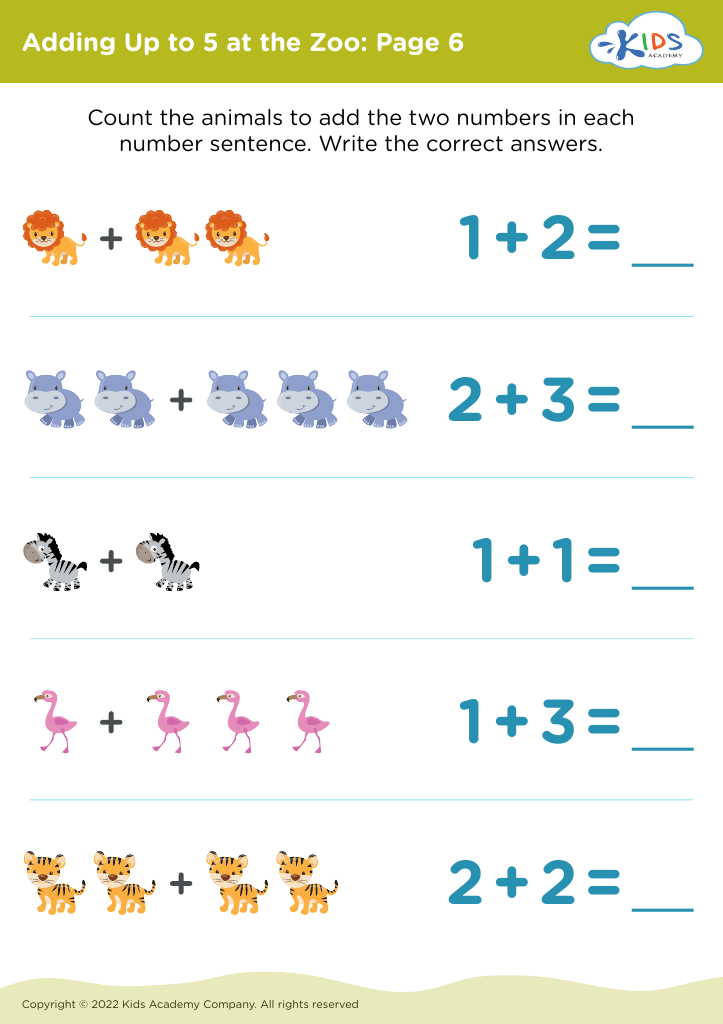
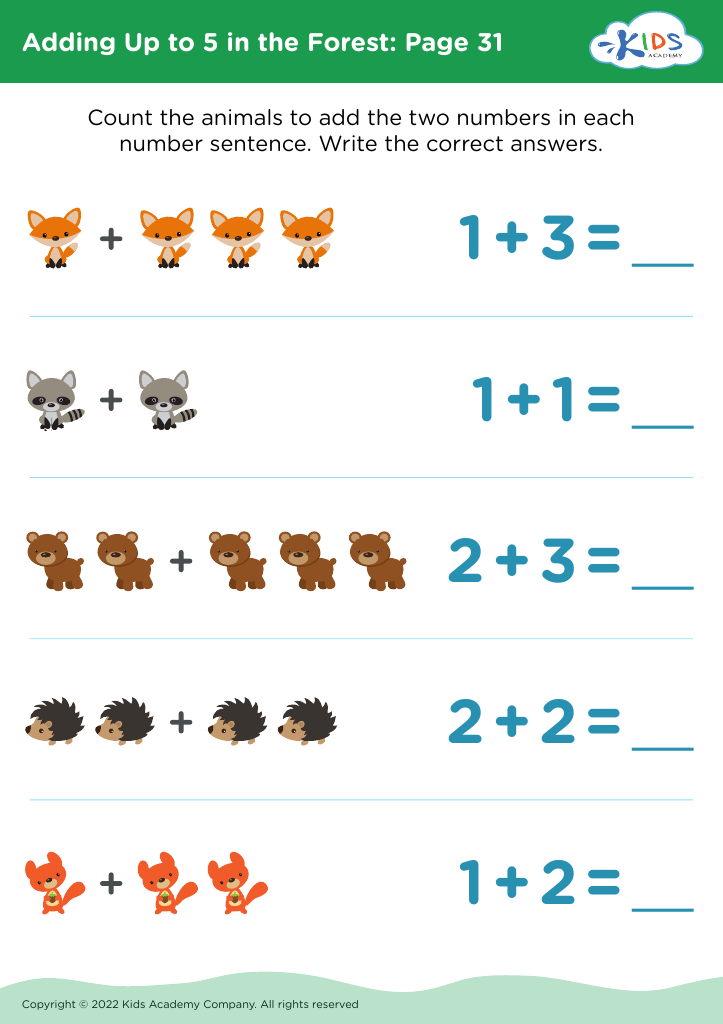
Discover our "Enhances Concentration: Adding Up to 5 Worksheets" designed specifically for children ages 3 to 7! These engaging worksheets focus on simple addition concepts while helping young learners improve their concentration skills. Each activity is crafted to capture children's attention and keep them focused as they explore basic math through fun, interactive tasks. By incorporating colorful visuals and relatable themes, our worksheets make learning enjoyable and effective. Ideal for classroom use or at-home practice, our resources support early math development and lay the foundation for future success in mathematics. Enhance your child's focus today with our delightful addition worksheets!



%20(1).jpg)




Enhancing concentration through activities like "Adding Up to 5" is vital for children aged 3-7, as it sets the foundation for their academic success and cognitive development. Parents and teachers should care for several key reasons.
Firstly, focused attention helps children grasp fundamental mathematical concepts, fostering spatial and numerical skills crucial for future learning. "Adding Up to 5" employs engaging methods that captivate young learners, encouraging them to think critically, solve problems, and develop a love for math.
Secondly, improved concentration in these early years translates to better behavior in group settings, enhancing social interactions and collaboration. Engaging in structured activities provides children with opportunities to practice sharing, turn-taking, and respectful listening, essential social skills.
Furthermore, when concentration exercises are incorporated into everyday routines, children develop self-regulation—a skill that aids not just in academics but in various life situations. This self-discipline helps them focus in other subjects and activities.
In addition, for young learners who face challenges with attention, targeted activities provide a playful yet effective way to strengthen their focus gradually. Overall, caring about concentration-building activities like "Adding Up to 5" is profoundly beneficial for fostering well-rounded children ready for educational challenges ahead.








