Fine motor skills (drawing lines) Adding Up to 5 Worksheets for Ages 3-7
3 filtered results
-
From - To
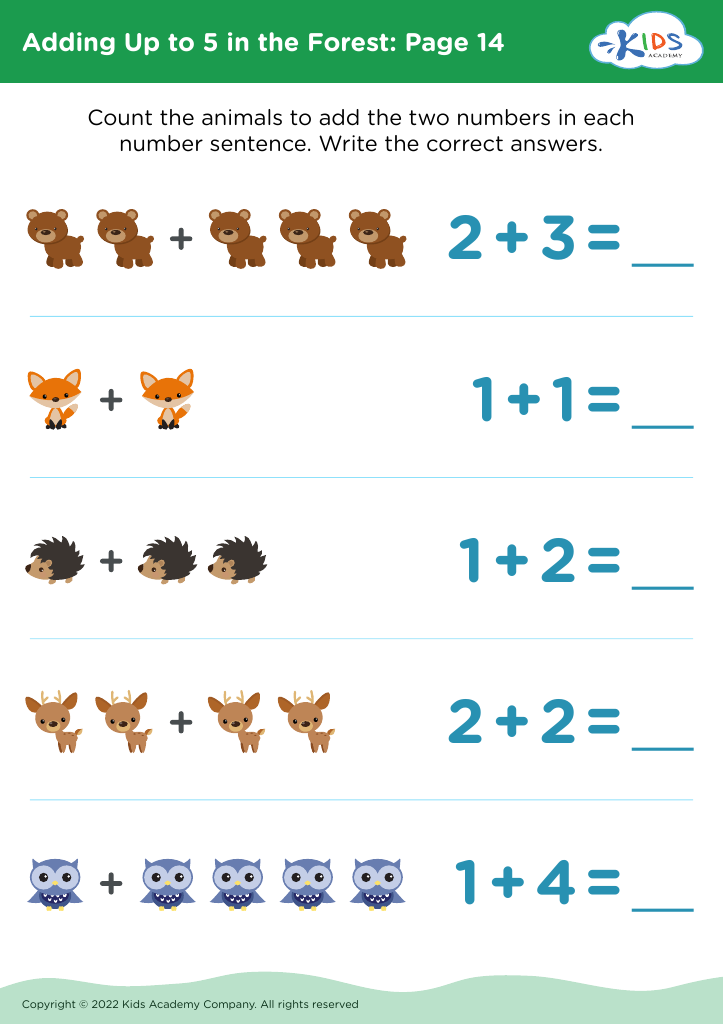
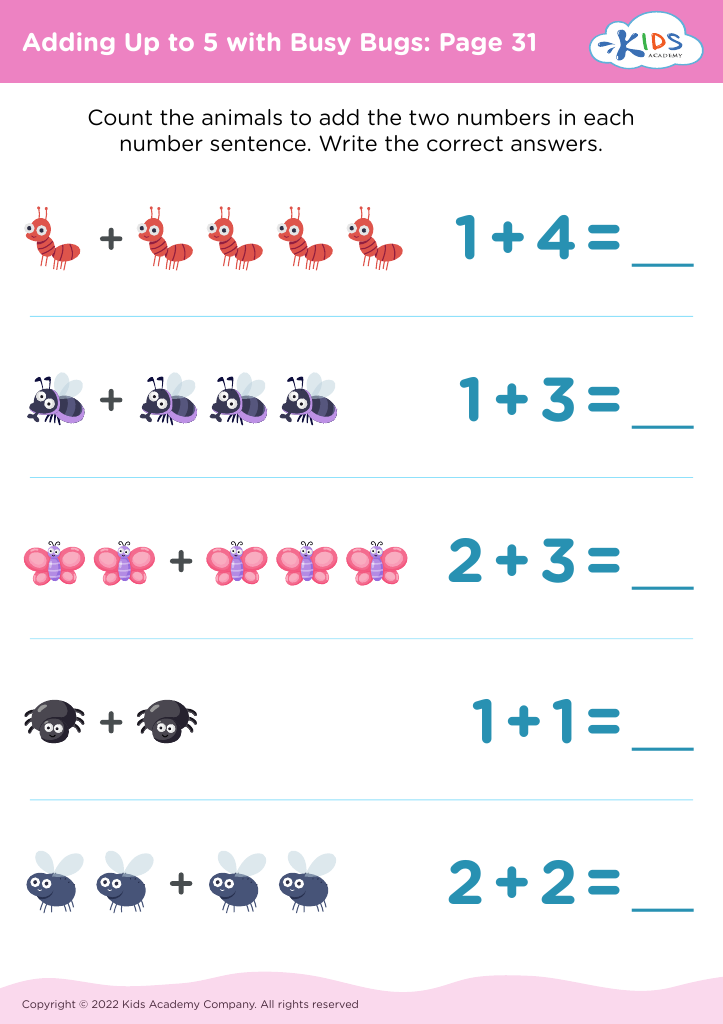
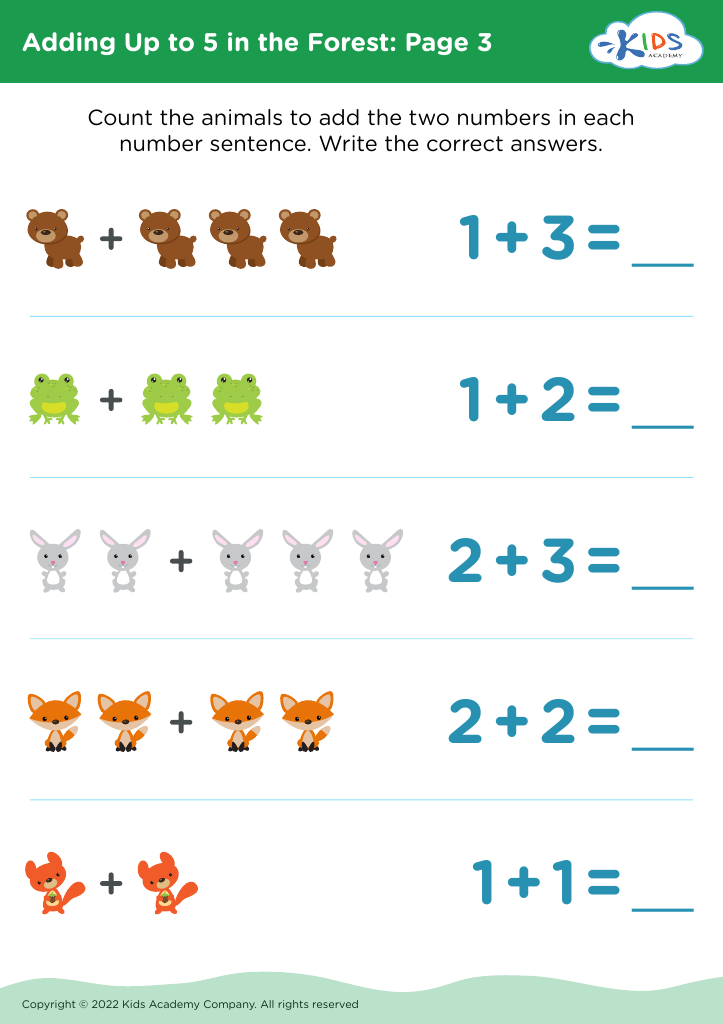
Enhance your child's fine motor skills with our engaging "Drawing Lines: Adding Up to 5" worksheets, designed specifically for ages 3-7. These colorful and interactive activities help young learners develop the coordination and control necessary for early writing and artistic expression. Each worksheet combines fun line-drawing exercises with simple addition, allowing children to practice their counting skills while mastering fine motor movement. Perfect for preschool and kindergarten settings, these worksheets promote cognitive growth and motor development in a playful manner, making learning enjoyable. Download now to boost your child's skills while fostering a love for math and creativity!




.jpg)



Fine motor skills are essential for young children's overall development, particularly in the early years of learning. Engaging in activities that involve drawing lines and manipulating small objects helps children develop the coordination and control needed for tasks such as writing, coloring, and manipulating classroom materials. Between the ages of 3-7, children are becoming more independent in their learning, and enhancing fine motor skills lays a foundation for academic success.
On the other hand, the concept of adding up to 5 is crucial in early mathematics education. It encourages number recognition, counting, and basic problem-solving skills, which are essential components of mathematical reasoning. When teachers and parents focus on these skills together, they facilitate an integrated approach to learning that combines motor skills with critical cognitive abilities.
Moreover, strong fine motor skills and numeracy not only boost a child’s confidence, but also prepare them for future challenging tasks, both academically and in everyday life. Thus, ensuring that young learners can effectively perform these tasks is a significant investment in their development, equipping them with the necessary tools to thrive in both school and social settings. Encouraging these abilities promotes holistic growth for children during these formative years.








