Fine motor skills (writing) Adding Up to 5 Worksheets for Ages 3-7 - Page 2
32 filtered results
-
From - To






%20(1).jpg)

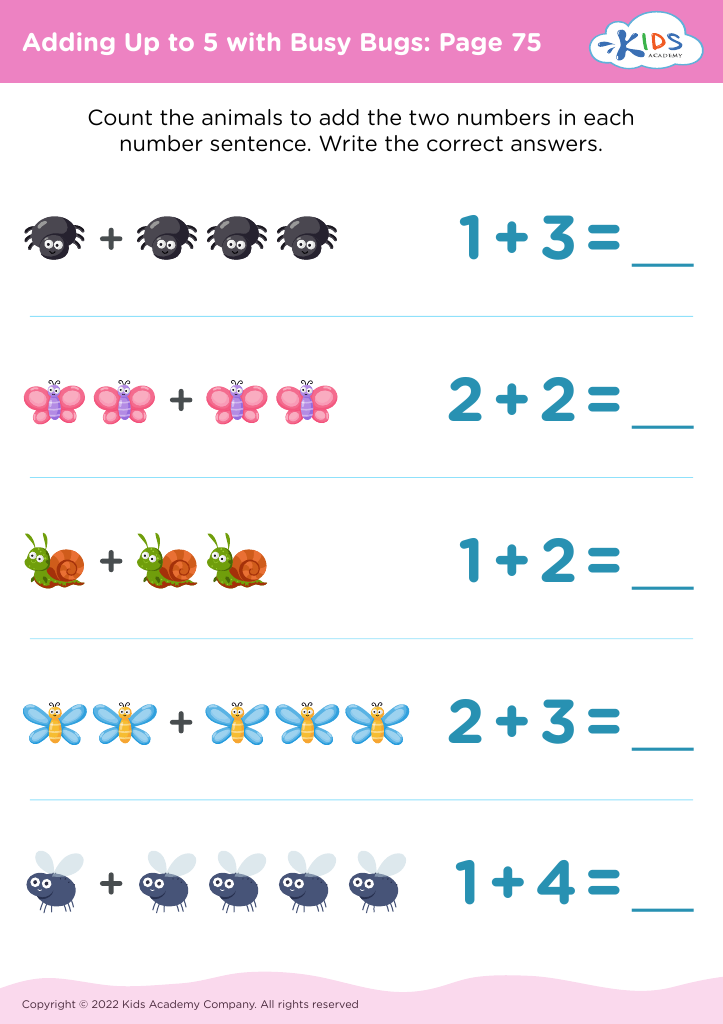
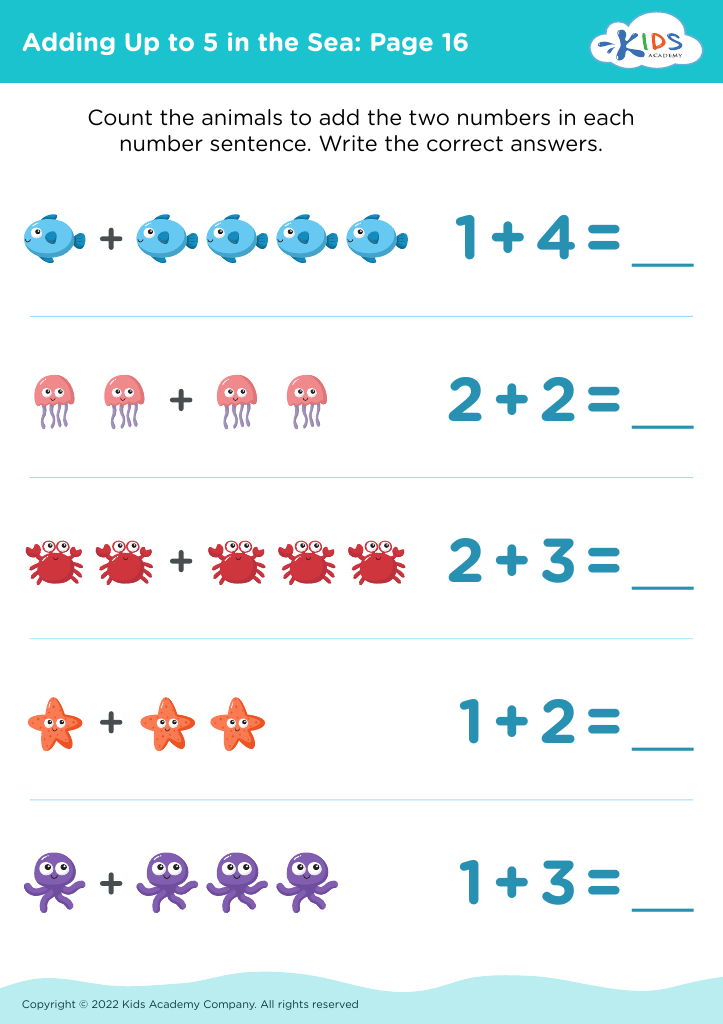
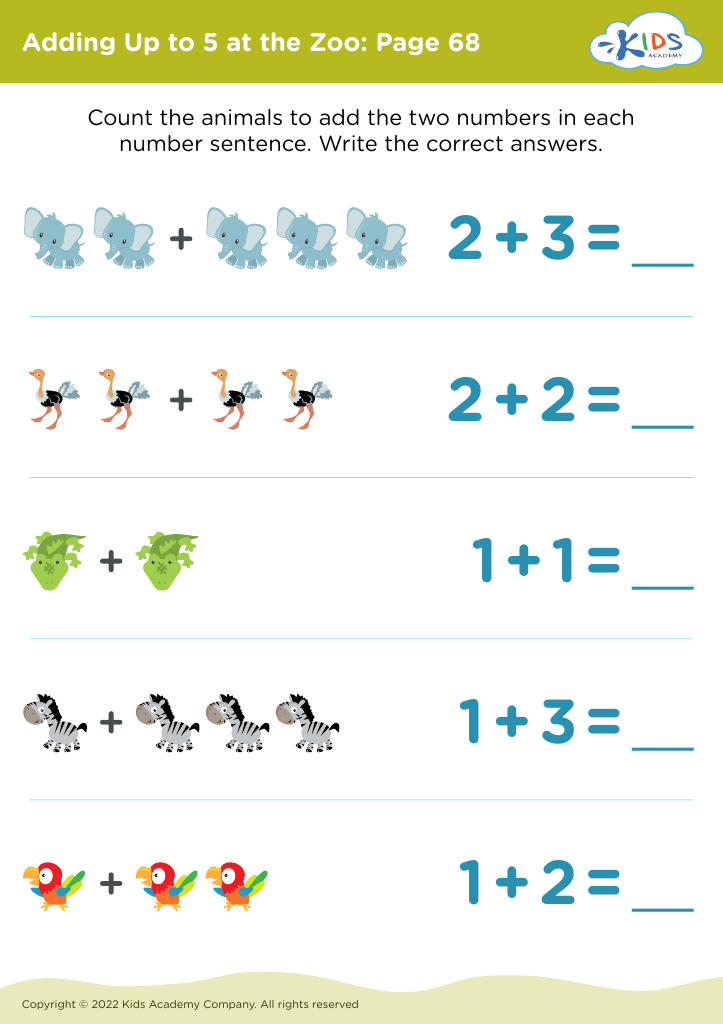
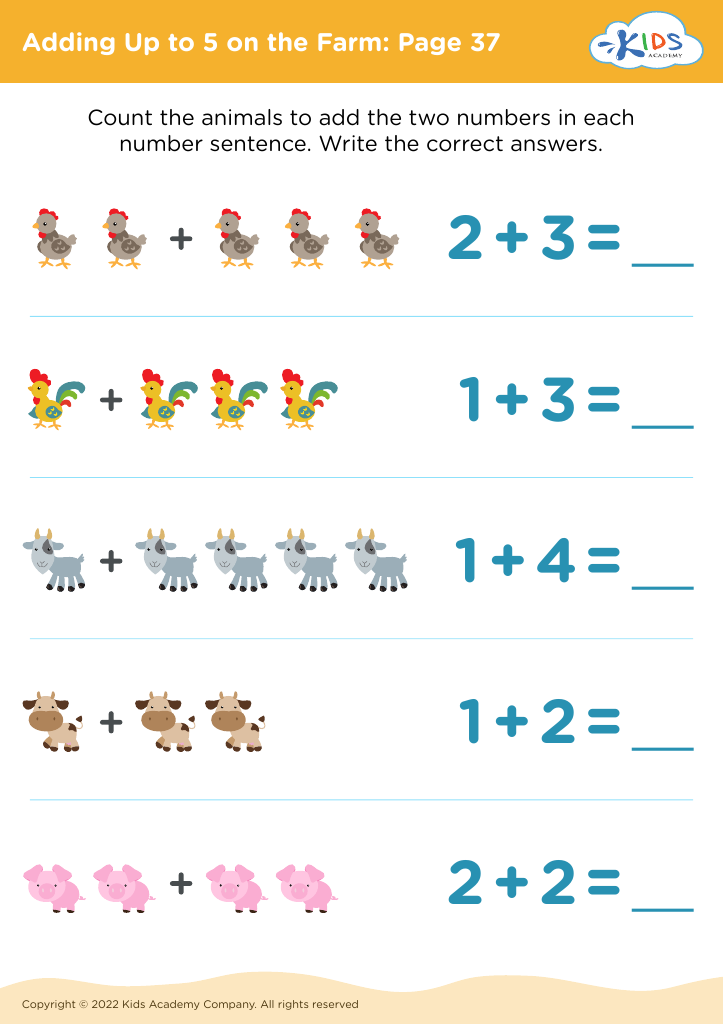
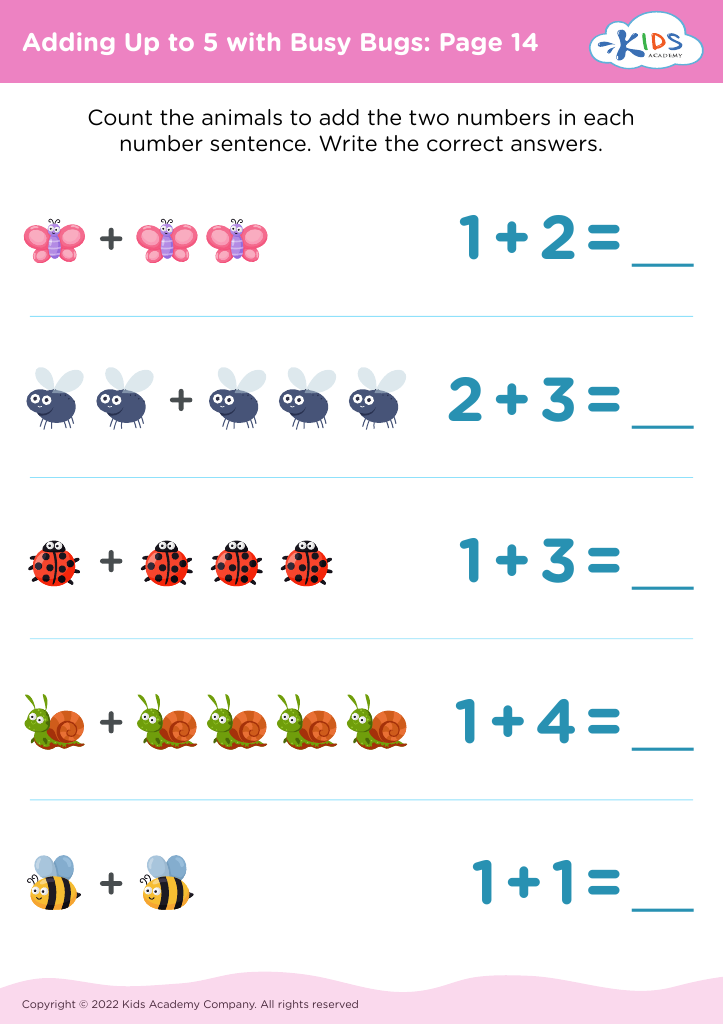
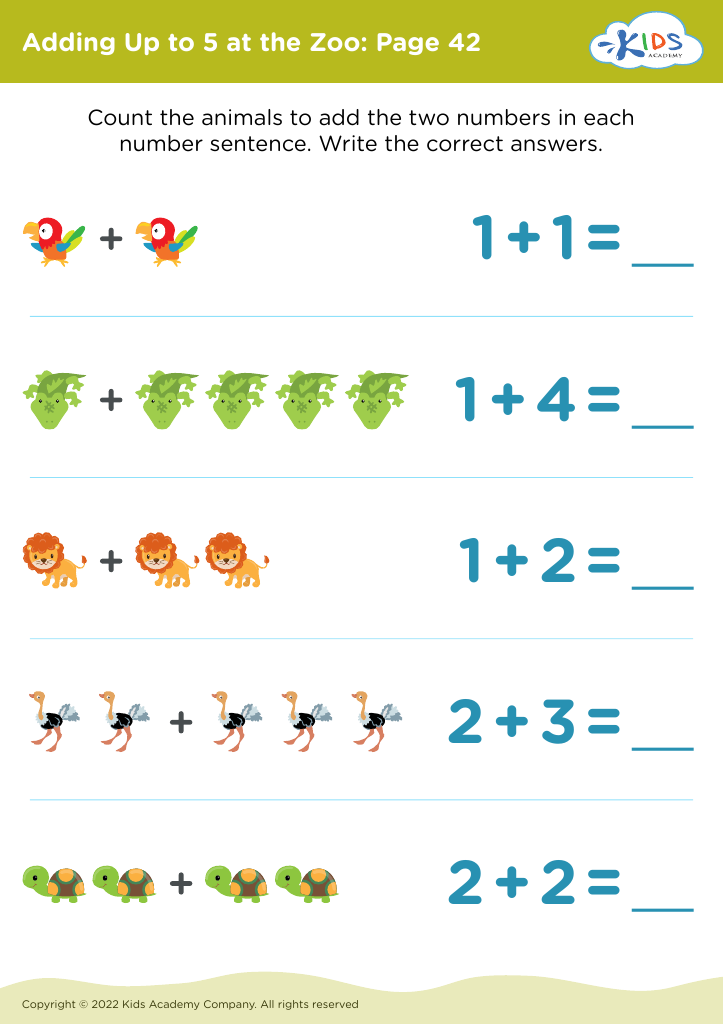
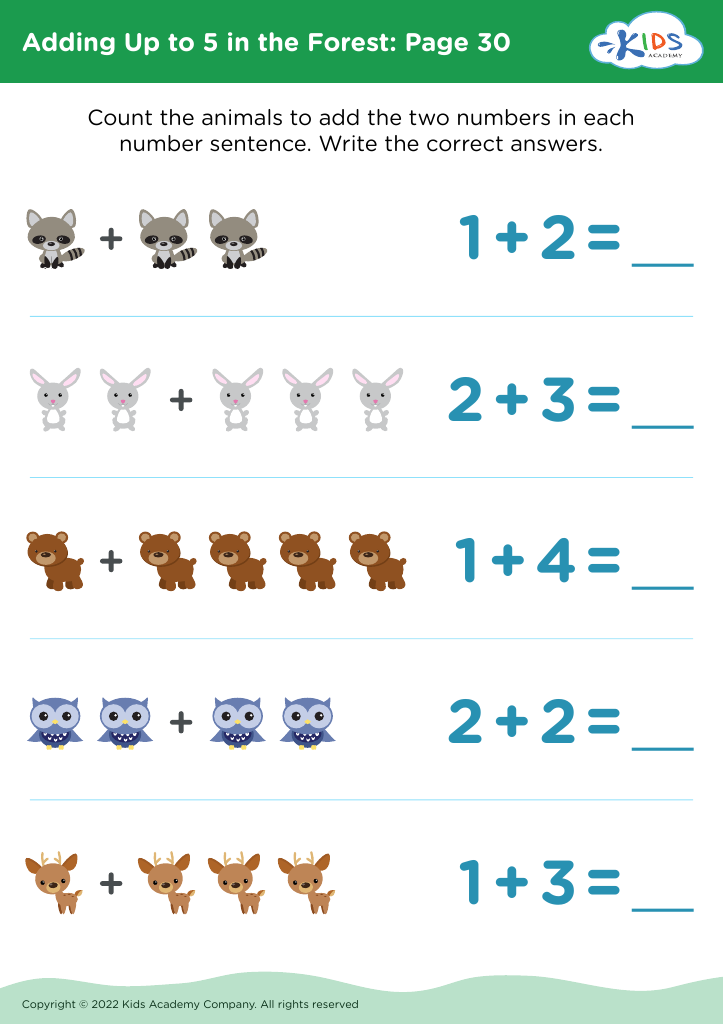
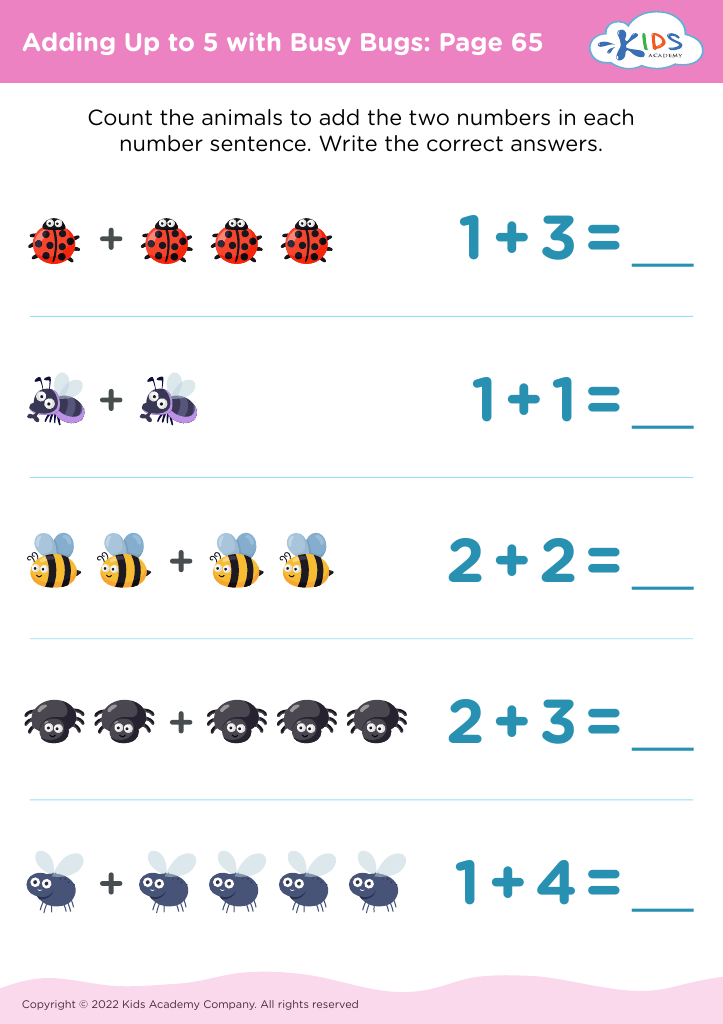
Fine motor skills, particularly in activities such as writing and simple arithmetic (adding up to 5) for ages 3-7, are vital for children's overall development and future academic success. Developing fine motor skills through writing not only enhances a child's hand-eye coordination but also strengthens the small muscles in their hands, which are essential for everyday tasks such as buttoning clothes or tying shoelaces.
For young children, combining the practice of writing with basic math problems like adding up to 5 is significant on multiple levels. It plays a dual role in cognitive and physical development. Cognitive benefits include improved memory, problem-solving abilities, and the fundamental understanding of numeracy, setting a strong foundation for more complex mathematics in later years. For example, being able to add up to 5 lays the groundwork for understanding number sequences, item quantities, and basic arithmetic operations.
Moreover, mastering these skills early boosts children's confidence and encourages positive attitudes towards learning. This can have long-lasting effects, fostering a growth mindset and aiding academic and social integration in school environments. Parents and teachers should prioritize these activities to ensure that children develop the necessary tools to navigate educational challenges successfully, ultimately contributing to their comprehensive growth.








